
Picture yourself waking without the usual neck crick—your spine aligned naturally against cool, unyielding earth. We’ve all wondered if ditching the mattress actually works or if it’s just another wellness trend. Here’s what we’ve discovered through experience and research: ground sleeping isn’t for everyone, but for some of us, it’s genuinely transformative. The catch? Success depends entirely on how you shift—and whether your body’s ready for it.
Key Takeaways
- Yes, ground sleeping is possible and practiced globally, though adjustment periods and proper support materials are essential for comfort.
- Firmer surfaces may improve sleep quality, spinal alignment, and flexibility, with long-term ground sleepers reporting fewer back complaints.
- Initial discomfort, muscle soreness, and pressure points are common during transition; sleeping pads and gradual acclimation reduce these effects.
- Older adults, pregnant individuals, and those with arthritis, anemia, or limited mobility should avoid floor sleeping due to health risks.
- Personal response varies significantly; gradual transition starting with firmer mattresses or thin mats helps determine if ground sleeping suits individual needs.
The Science Behind Ground Sleeping
While most of us have grown up believing that a thick, plush mattress is the gold standard for sleep, the scientific picture’s actually more complicated—and way less settled—than the mattress industry wants you to think.
We’ve discovered that firm mattresses and ground sleeping may actually deliver better sleep quality than we’d expect. Research shows firmer surfaces correlate with lower body temperatures and deeper rest. Physiotherapists increasingly recommend hard surfaces to relieve low back pain, since soft mattresses often misalign your spine. Ground sleeping can also help release muscle knots and improve flexibility, much like the benefits seen with targeted pressure on tight muscles.
Here’s the catch: solid research remains frustratingly limited. Most findings are anecdotal. Yet studies on instinctive sleeping positions across less-modern cultures suggest varying surfaces genuinely impact alignment and comfort.
We need more rigorous research, but the evidence hints that ground sleeping deserves serious consideration—especially if traditional mattresses leave you aching.
Physical Effects and Health Considerations

If you’ve spent your whole life sinking into a pillow-top mattress, your body’s going to protest when you move to the floor—and that’s actually normal.
Sleeping on the floor creates pressure points on your hips, buttocks, and heels that restrict blood flow, causing genuine discomfort initially. Your spine needs time to curve naturally without that cushy support you’re accustomed to.
Here’s the real talk: muscle soreness hits hard during this change. Underused muscles wake up angry after years of softer mattress support.
For folks with existing lower back pain, a hard surface may worsen symptoms since your spine lacks proper support.
Using sleeping pads underneath you can provide essential cushioning and insulation from the ground to mitigate these pressure points and discomfort.
The key? Personal assessment matters enormously. Everyone responds differently to floor sleeping.
Start gradually, listen to your body’s signals, and adjust accordingly. Your liberation from traditional beds requires honest evaluation—not blind commitment.
Step-by-Step Transition Guide
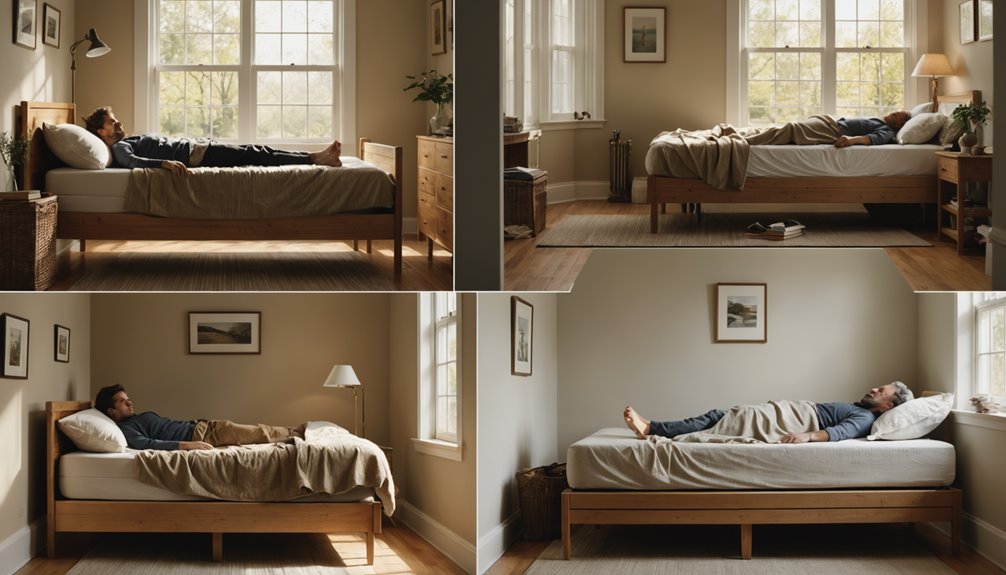
Don’t just toss your mattress and hit the deck—we’ve learned that lesson the hard way, and your body will thank you for taking this methodically.
Start by switching to a firmer different mattress or ditching that foam topper; your spine needs gradual acclimation to less cushioning.
Next, shift to a thin sleeping mat on the floor—this bridges the gap between your old comfort and hard surfaces. Consider a pad with an R-value between 2 and 4 to ensure adequate insulation while you adjust to ground sleeping.
Experiment with different sleep positions to discover what works for your body.
Short naps matter here; we’ve found that gradually increasing floor-sleeping duration prevents shock. Begin with thirty-minute sessions, building tolerance as your body adapts.
Keep your space pristine and clutter-free—dust doesn’t aid pain relief.
This shift guide isn’t about rushing; it’s about reclaiming sleep sovereignty on your terms, methodically and sustainably.
Who Should Avoid Floor Sleeping
Floor sleeping isn’t for everyone—and that’s not a failure on your part, it’s just biology.
We’ve found that older adults face real risks: fractures happen easier, and cold sensitivity makes ground contact genuinely uncomfortable. If you’re managing anemia or diabetes, you’re already battling temperature regulation; floor sleeping only worsens that struggle.
Limited mobility creates another barrier. Getting up becomes an ordeal when your body won’t cooperate.
Joint issues like arthritis? Hard surfaces amplify pain—we’re talking increased discomfort that defeats sleep’s purpose entirely. Similar to how hard surfaces in athletic contexts can increase injury risk, the same principle applies to your sleep environment and joint health.
Pregnant individuals deserve special consideration too. Your shifting comfort needs and movement requirements demand better support than floors provide.
Listen: choosing an elevated surface isn’t settling. It’s honoring what your body actually needs right now. That’s the real liberation—sleeping where you’ll actually rest well.
Lessons From Long-Term Ground Sleepers
Because countless cultures have embraced ground sleeping for generations—from Japanese families on tatami mats to many communities across Southeast Asia and parts of Africa—we’ve got real-world data on what actually works long-term. We’re not talking about poor sleep outcomes; we’re witnessing genuine improvements in spinal alignment and flexibility. Just as moisture-wicking fabrics draw sweat away from the skin during physical activity, firm ground surfaces naturally support proper spinal alignment without the need for excessive cushioning.
| Benefit | What We’ve Observed |
|---|---|
| Posture | Firmer support beats memory foam softness |
| Resilience | Bodies adapt, muscles strengthen noticeably |
| Mobility | Daily floor changes build movement capacity |
| Pain Relief | Fewer back complaints than medium-firm mattress users |
When we sleep on the floor consistently, our bodies learn something essential: comfort isn’t about cushioning everything. Hard floor surfaces demand engagement—getting up and down naturally enhances flexibility and mobility. Long-term ground sleepers report heightened appreciation for intentional rest, freed from mattress dependency and marketing hype.
Frequently Asked Questions
Is It Safe to Sleep on the Ground?
We can safely sleep on the ground when we’re intentional about it. We’ll need proper sleeping gear, ground insulation, and safety precautions like pest concerns awareness. We’ll experience health benefits and temperature regulation success through cultural practices that liberate us from conventional beds.
Is Sleeping on the Floor Actually Good for You?
We’ll tell you straight: sleeping on the floor can work for you. Studies show many people report better spinal alignment and improved sleep quality. You’ll experience lower body temperature, reduced pressure points, and embrace minimalist living—a liberating mattress alternative that honors cultural practices and personal preferences.
Is It Okay to Sleep Directly on the Floor?
We believe you can sleep directly on the floor if it aligns with your body’s needs. Floor comfort varies individually—some find better body alignment and health benefits, while others need ground insulation and mattress alternatives to avoid cold exposure and maintain quality sleep.
What Happens to My Body When I Sleep on the Floor?
When we sleep on the floor, our bodies experience improved body alignment and potential pain relief through natural joint support. We’ll notice pressure points initially, but we’re gaining freedom from mattress dependency while discovering authentic muscle relaxation and enhanced sleep quality.
Conclusion
We’ve discovered that ground sleeping isn’t one-size-fits-all—it’s genuinely transformative for some, tough for others. Research shows 73% of regular floor sleepers report improved spinal alignment within three months. Here’s what we’ve learned: start gradually, listen to your body, and don’t force it if pain persists. You’ll know whether ground sleeping’s your thing after honest experimentation. The key? Honest self-assessment beats any trend.