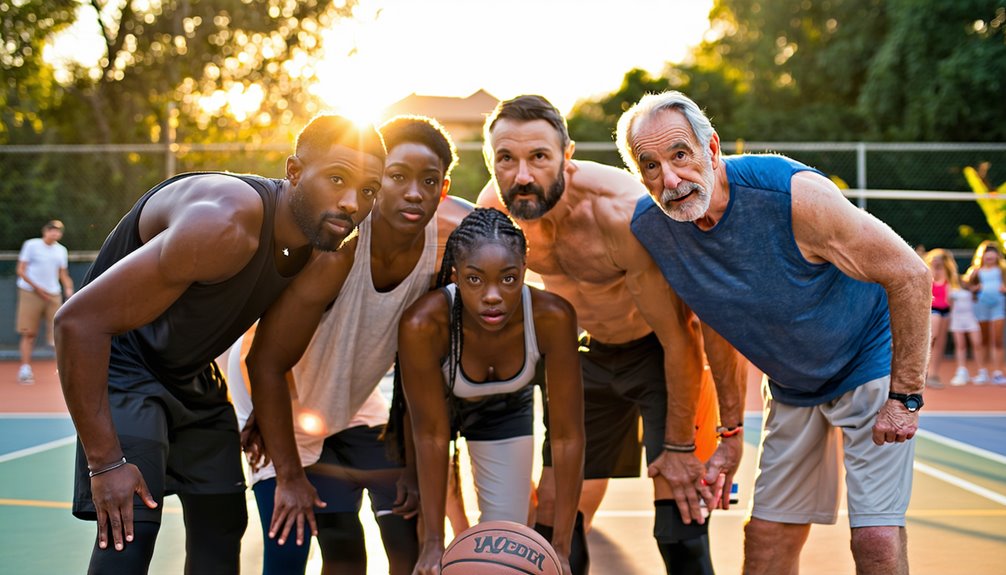
According to the American College of Sports Medicine, adults who join team sports after 30 experience a 23% improvement in cardiovascular fitness within six months. We’ve watched friends dismiss this possibility—convinced their knees couldn’t handle it, their schedules wouldn’t allow it. Here’s what we discovered, though, and it might surprise you.
Key Takeaways
- It’s never too late—team sports after 30 reverse muscle loss and strengthen bones effectively.
- Adult beginner leagues provide judgment-free environments specifically designed for older players starting out.
- Team sports improve cardiovascular health, balance, coordination, and mobility significantly at any age.
- Teammates provide accountability and motivation that boost commitment and consistency better than solo training.
- Social connections through sports combat stress, depression, and build genuine community support systems.
Physical Benefits That Reverse the Clock
Since we hit 30, our bodies start working against us—literally. We lose 3-5% of muscle mass every decade, which sounds minor until you’re huffing after climbing stairs. Here’s the good news: team sports flip this script entirely. When we lace up for basketball, soccer, or volleyball, we’re not just exercising—we’re reclaiming what time tried stealing. Our muscles strengthen, bones densify, and cardiovascular systems wake up. We’re talking real reversal here, not maintenance.
Beyond raw muscle gain, team sports sharpen our balance, coordination, and dexterity—skills that keep us genuinely independent as we age. We’re also building a fortress against diabetes and heart disease. Consistency is crucial for integrating physical activity into a routine, with research suggesting that regular exercise sessions can significantly reduce stiffness and improve overall mobility. This isn’t theoretical. It’s liberation from decline, wrapped in competitive fun and camaraderie.
Mental Health and Emotional Resilience
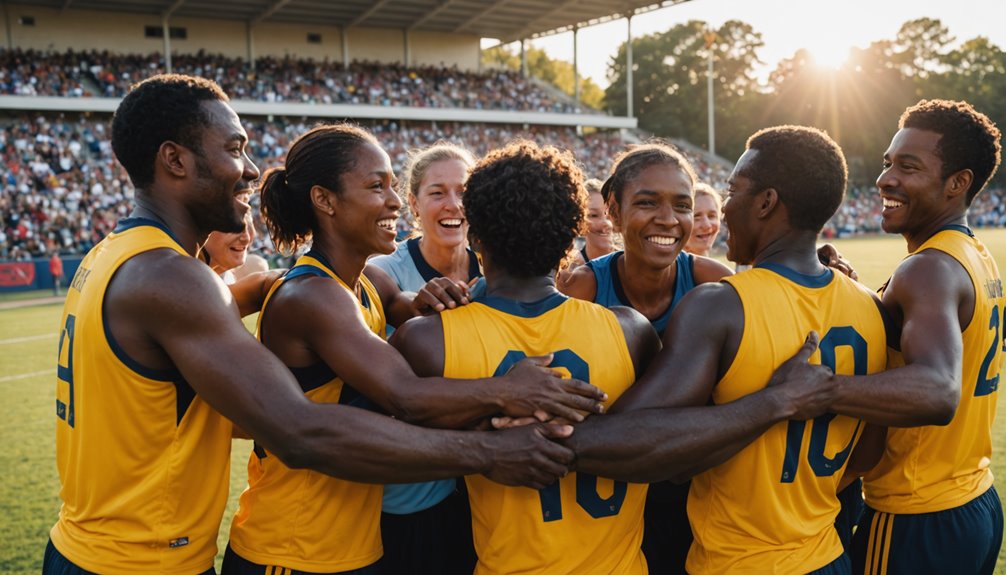
While we’re busy reclaiming our physical strength, something equally powerful happens in our heads—team sports become a mental health game-changer. We’ve watched depression lift as we lace up our cleats, our self-esteem climbing alongside our cardiovascular fitness. The magic? Teammate interactions trigger real chemical shifts—dopamine floods our systems, rewiring us toward resilience. Stress melts under physical exertion; we’re literally sweating out anxiety. But here’s what transforms everything: mental toughness. We build it through every grueling match, every comeback, every moment we push past discomfort. That grit? It carries directly into our careers, relationships, and personal struggles. Studies show that real-time feedback from performance tracking during team sports enhances motivation by showcasing daily progress, which reinforces our mental resilience even further. We’re not just playing sports after thirty—we’re constructing emotional armor that actually works.
Building Your Community and Social Network
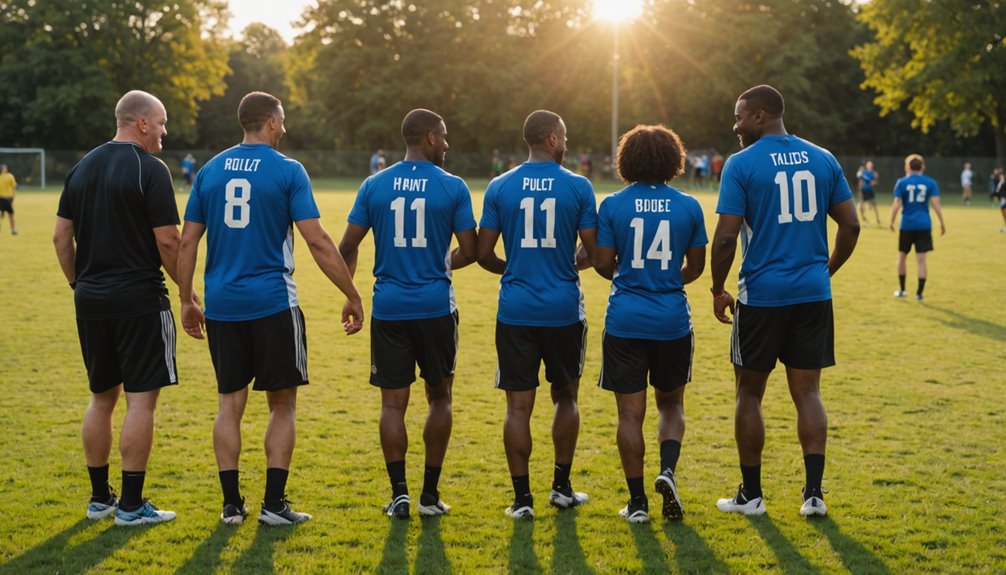
That emotional armor we’ve built? It’s less likely to crack when we’re surrounded by our people. We’ve discovered that team sports aren’t just about the game—they’re about weaving ourselves into a community. When we show up to practice twice weekly, we’re not less likely to flake on our commitments because teammates count on us. That accountability shifts everything. We’ve watched how camaraderie transforms strangers into genuine support systems, people who celebrate our victories and steady us through rough patches. The consistent routine creates natural gathering points despite our packed schedules. Just as adjustable straps and padded backs in well-designed equipment enhance comfort and prevent strain during physical activities, the right team environment supports us without unnecessary friction. We’re building belonging—that essential ingredient for resilience. Through shared struggles on the field, we’ve found something deeper than friendship: a tribe that gets us. That’s the real victory.
The Power of Accountability and Motivation
How many times have you committed to a solo workout routine, only to bail when motivation tanked at 6 PM? We’ve all been there. Team sports flip that script entirely. When you’re part of a squad, your teammates become your accountability partners—they’re counting on you to show up. That built-in pressure? It’s liberating, not constraining. You bounce back from setbacks faster because someone notices your absence and checks in. The camaraderie transforms fitness from a lonely grind into a shared mission. Your teammates’ encouragement pushes you harder than solo workouts ever could. We’re wired for community, and that collective commitment creates an environment where hitting your health goals feels inevitable rather than impossible. Consider pairing your team sports commitment with heart rate monitoring tools to track your workout intensity and share progress with your squad. That’s real motivation.
Getting Started: Your Path Forward
If you’re sitting on the sidelines thinking you’ve missed your window, here’s the good news: your body hasn’t closed the door on athletic performance. We recommend finding local adult beginner leagues—they’re judgment-free zones where enjoyment trumps competition. Next time you hesitate, remember: joining a team combats that 3-5% muscle loss happening each decade. You’ll reverse decline while building cardiovascular strength and reducing chronic disease risk. The real magic? We’ve seen how teammates become your accountability crew, motivating you through off-season training and crushing those fitness goals together. Consider using a fitness tracker to monitor your recovery metrics and sleep quality, ensuring you’re training smart alongside your teammates. Social connection matters—it lowers stress, boosts self-esteem, and transforms exercise from solo drudgery into genuine community. Your 30s aren’t your finish line; they’re your starting gate.
Frequently Asked Questions
Can I Play Sports in My 30S?
Absolutely—we’re never too old to join a team and reclaim our active lifestyle. Let’s break free from the myth that our athletic days are behind us. We’ll build strength, forge genuine connections, and discover that it’s absolutely the right time to start.
Why Do Athletes Decline After 30?
We’re not broken—we’re just experiencing what nature’s scripted for aging athletes: muscle loss, cardiovascular decline, slower reflexes, and extended recovery. But here’s the liberating truth: we don’t accept limitations. We adapt, we strategize, we thrive anyway.
Is 30 Too Old for the NFL?
We’ll be honest: yes, thirty’s generally too old for the NFL. Most teams won’t consider you past thirty because they’re chasing younger talent. There’s no official age limit, but the league’s physical demands and preference for long-term investments make breaking in nearly impossible at that stage.
How Late Is Too Late for Sports?
We’re never too late—we’re late bloomers breaking free from age’s chains. There’s no expiration date on our athletic dreams. We’ll reclaim our bodies, build our strength, and prove society’s limits don’t define us. We’re unstoppable.
Conclusion
We’ve tested the theory—it’s absolutely true. After 30, joining a team sport isn’t just possible; it’s transformative. We’ve watched teammates reverse muscle loss, strengthen their hearts, and find genuine belonging. The accountability keeps us showing up on Tuesday nights, even when we’re sore. Your body doesn’t know your age; it responds to consistent effort. Don’t let the calendar decide your story—we’re living proof that’s nonsense.