We’ve all felt that moment of hesitation—standing in a camping store, staring at a two-hundred-dollar tent, wondering if it’s really necessary. Here’s what we’ve learned through trial and error: you absolutely can camp without one. A quality sleeping pad, a tarp, and the right mindset will get you there. But here’s where it gets tricky—knowing *which* gear actually works and *where* to set up can mean the difference between a restful night and a miserable one.
Key Takeaways
- Yes, you can camp without a tent using a ground sheet, quality sleeping bag, and insulated sleeping pad as essential alternatives.
- A tarp with 2000+ mm waterproof rating protects your sleep space from moisture, dirt, and insects while remaining lightweight and portable.
- Hammock camping eliminates flat ground requirements, keeps critters below, and offers quick setup with integrated mosquito netting for bug protection.
- Select sheltered campsites away from damp areas and dead branches, positioning your cooking area 100+ feet downwind from sleeping zones.
- Proper cleanup after meals and thorough fire extinguishing are critical for preventing wildlife attraction and safely breaking camp the next morning.
The Essentials: Ground Sheet, Sleeping Bag, and Sleeping Pad
When you’re sleeping under the stars without a tent, you’ve got to nail the basics—because there’s no backup plan when the ground decides to get damp at 2 a.m.
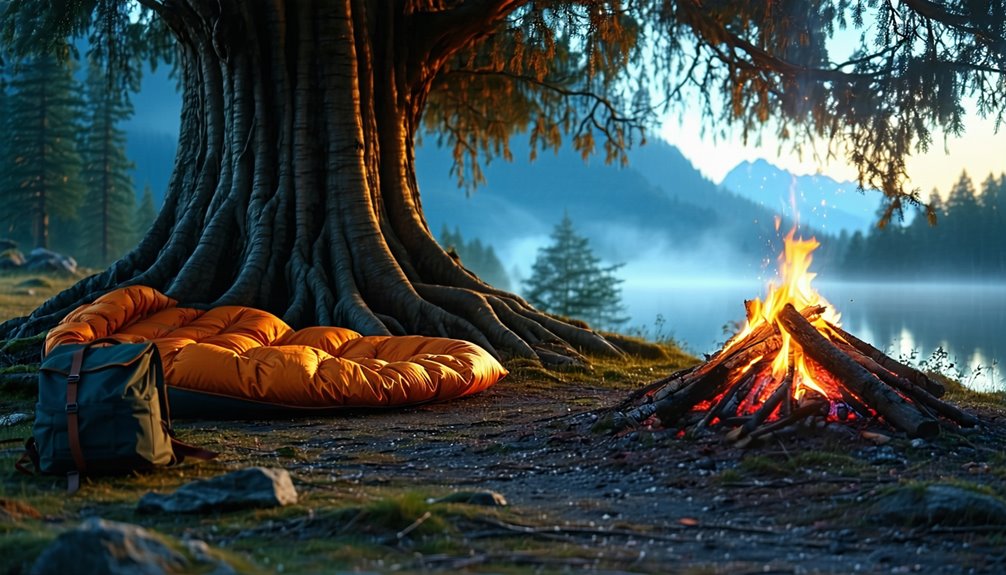
We’ve learned that a ground sheet is non-negotiable; it shields you from moisture and punctures that’d ruin your night. Your sleeping bag becomes your fortress.
We recommend one rated considerably lower than the forecast—grab a -18°C bag for -26°C nights. Pair it with a quality sleeping pad like the Neoware X Therm Max (R-value 6.9), which insulates you from the cold earth beneath. Look for pads with synthetic foam insulation that effectively traps body heat while remaining lightweight for backpacking trips.
These three essentials work together, creating your personal weatherproof cocoon. Skip one, and you’re gambling with your comfort. We don’t gamble.
Protecting Your Sleep Space With a Tarp
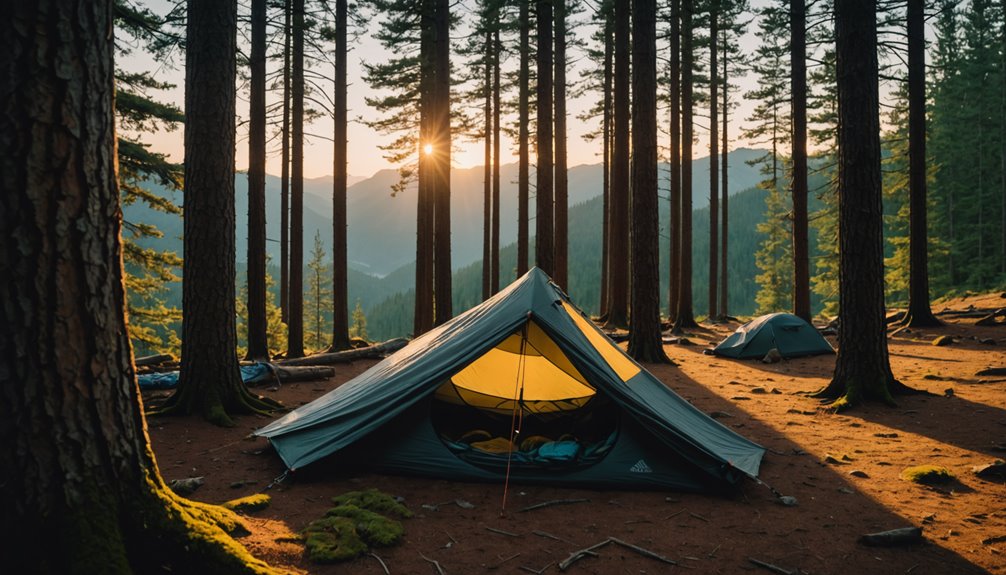
Since we’ve nailed down your ground sheet, sleeping bag, and pad—that triumvirate of comfort—it’s time to add an essential layer of defense: a tarp.
We’re talking about protecting your sleep space with a tarp, which honestly transforms your entire experience.
Here’s what we’ve learned: moisture creeps up from below, threatening your gear and comfort. A tarp stops that dead. It keeps bedding dry, prevents mold growth—especially critical in damp conditions—and shields your pad from dirt and debris.
We’ve also discovered an unexpected bonus: tarps create small bug-free zones on either side, giving us psychological breathing room.
Setup takes minutes. Position it beneath your sleeping system, secure corners with stakes, and you’ve built a moisture barrier that actually works.
Look for a waterproof rating of 2000 mm or higher to ensure your tarp provides reliable protection against moisture and prolonged damp conditions.
This isn’t optional—it’s foundational for sleeping without walls.
Exploring Hammock Camping as an Alternative
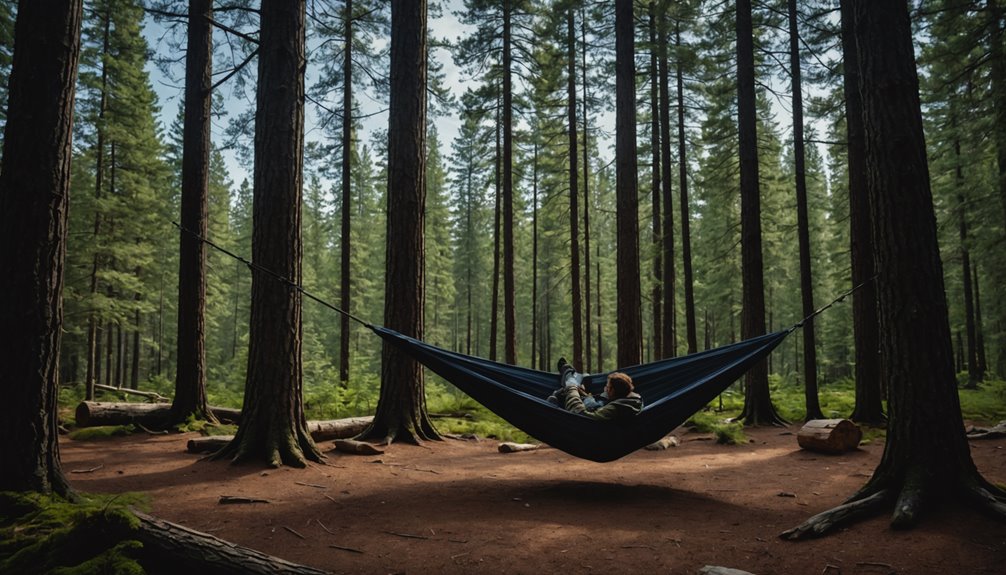
Now that you’ve got your ground setup dialed in, here’s something we’ve found that completely sidesteps the tarp-and-pad equation: hammock camping.
We’re talking genuine freedom—no more wrestling tent poles or hunting perfect flat ground. You’ll sleep elevated, which means ground critters stay below you where they belong.
Mosquito netting wraps around your hammock, offering solid protection without tent bulk. Setup takes minutes. Packing faster too. The sleeping area stays cleaner since you’re not dragging dirt inside.
Yes, comfort varies person to person—we’d never recommend committing to a trip without testing one first. But once you experience that suspended simplicity? You’ll understand why we keep coming back.
A waterproof duffle bag is essential for keeping your hammock, netting, and gear protected during transport and storage.
Defending Against Insects and Mosquitoes
As anyone who’s woken up covered in itchy welts can tell you, insects aren’t just annoying—they’re sleep saboteurs. We’ve learned that mosquito netting is your non-negotiable foundation for tent-free camping freedom. Unlike bug spray—that chemical last resort—netting creates a physical barrier you can actually trust. For maximum protection, consider pairing your netting setup with waterproof dry bags to keep insect repellents and other camping essentials organized and accessible throughout the night.
| Protection Method | Best For | Effectiveness |
|---|---|---|
| Mosquito netting | Hammocks, ground setups | 95%+ |
| Bug spray | Backup defense | 70-80% |
| Timing camps | Dawn/dusk avoidance | Variable |
We’ve discovered that draping fine-mesh netting around hammocks transforms them into sanctuaries. For ground sleeping, creative solutions like netting frames keep insects at bay without sacrificing that wild camping vibe. Dusk and dawn demand extra vigilance—that’s peak mosquito hour. Strategic setup with proper netting means you’ll actually sleep through the night, reclaiming the liberation tent-free camping promises.
Choosing the Right Campsite Location
With your netting secured and insects handled, the real magic happens when you pick the right patch of earth to call home for the night.
We’ve learned that choosing the right campsite location makes all the difference between a restful night and misery.
Seek out a nice little spot sheltered from wind—it’ll preserve your warmth when temperatures drop. Trees and rock formations? They’re your allies, offering natural windbreaks and security.
We avoid damp, low-lying areas where moisture accumulates; trust us, waking up damp is nobody’s idea of freedom.
Dark zones away from moonlight help you sleep easier without a tent’s buffer.
Finally, scan for hazards—dead branches overhead or animal trails nearby—before settling in.
Consider positioning a waterproof tarp overhead for additional weather protection, especially in unpredictable conditions.
These simple choices transform tent-free camping from risky to genuinely rewarding.
Layering Strategically for Warmth
The moment your body temperature drops in a tent-free environment, you’ll understand why layering isn’t optional—it’s your survival strategy.
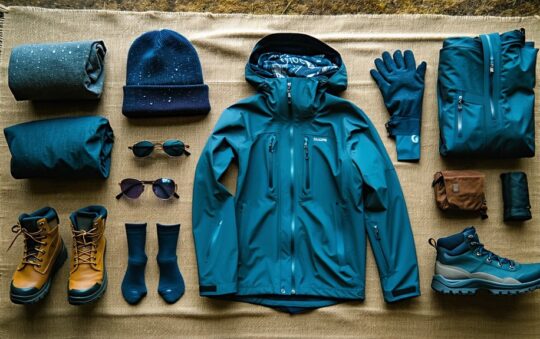
We’ve learned that wearing long johns beneath a long-sleeve shirt, topped with a down jacket, creates an insulation fortress trapping precious body heat.
Your sleeping bags matter too—grab one rated 4°C colder than expected conditions. We’re talking a -18°C bag for -22°C nights.
Here’s what we’ve discovered: booties inside sleeping bags protect your extremities, where heat escapes fastest.
Keep extra layers accessible throughout the night—temperature swings demand flexibility.
Like foam rollers that improve blood flow and muscle tension, strategic layering enhances blood flow and circulation to maintain core body temperature during cold nights.
This isn’t about fashion; it’s about freedom. Layering strategically for warmth means you’re not shivering yourself awake, genuinely comfortable outdoors without walls confining you.
Managing Weather Challenges and Wind
Wind doesn’t just make you uncomfortable—it’ll strip away your warmth faster than you’d think possible, turning a manageable -22°C night into a genuine survival situation.
We’ve learned this the hard way.
Your sleeping pad becomes your lifeline here. A high R-value pad like the Neoware X Therm Max (R-value 6.9) insulates you from the frozen ground while blocking wind infiltration underneath.
We always weigh down our sleeping bags with stakes—they’re non-negotiable when gusts hit.
Location matters enormously. We scout sheltered spots away from dead branches and wind funnels. That slight depression or tree cluster? Perfect.
Proper layering—down jackets, booties—traps heat your body desperately needs. Consider pairing your insulation strategy with a portable power station to charge heated gear like electric blankets or hand warmers during extended cold-weather camping trips.
We’ve ditched false heroics. Respecting weather isn’t weakness; it’s wisdom. You’re not tougher by freezing.
Setting Up Your Cooking Area
Most campers make the mistake of cooking wherever’s convenient—usually too close to where they’re sleeping—and we’ve paid the price for that lazy thinking.
Trust us: wildlife doesn’t distinguish between sloppy camps and organized ones. We position our cooking area at least 100 feet downwind from our sleeping zone. This simple distance keeps smoke away and critters out of our beds.
We’ve learned that a sturdy setup—pot, kettle, grill—transforms meal prep from chaotic to controlled. Investing in compact cooking sets that nest together saves valuable space at your campsite.
Wind direction matters tremendously; we scout our site beforehand, noting natural barriers and airflow patterns.
After eating, we obsessively clean every surface. Raccoons are relentless, and one forgotten morsel invites an unwanted midnight visitor.
Proper fire extinguishing before leaving protects both wilderness and our freedom to camp responsibly.
Breaking Camp in the Morning
As soon as sunlight hits your sleeping bag, you’ve got your natural alarm clock—no tent walls to muffle the dawn.
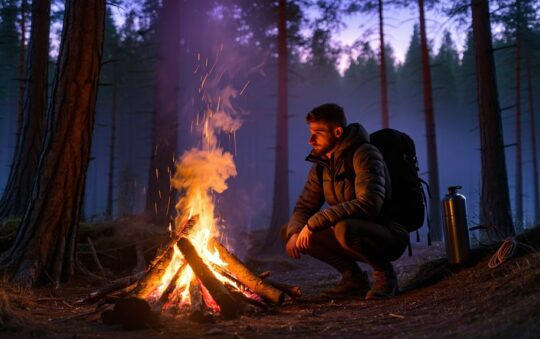
We’ve found that reigniting yesterday’s coals transforms breaking camp from miserable to manageable, especially when it’s cold outside. That warm fire gives us the motivation to actually get moving.
Our 50-liter pack accepts gear loosely without fussy organization—sleeping bag, pad, everything—saving precious minutes. A 50-liter dry bag falls into the extra-large category, perfect for multi-day trips where you need to pack sleeping bags and multiple clothing items without strict organization requirements.
Here’s what we’ve learned matters most: completely extinguishing the fire before leaving. We’re not just following rules; we’re protecting the land we love. Drown those coals thoroughly, stir the ashes, feel for heat.
Your sleeping bag’s performance proves tent-free camping works. We stayed warm all night, proving you don’t need walls for comfort.
Pack smart, break camp methodically, leave nothing behind but memories.
Frequently Asked Questions
Is a Tent Necessary for Camping?
No, a tent isn’t necessary. We can embrace camping alternatives like hammocks, tarps, and ground sheets that’ll free us from traditional constraints. We’ve got the flexibility to sleep under stars while using proper insulation and bug protection for genuine outdoor liberation.
What Is It Called When You Camp With No Tent?
We call it primitive camping—like breaking free from conventional chains. It’s also backcountry camping, where we’ve embraced shelter alternatives such as hammocks, ground sheets, and sleeping pads. We’re liberated from traditional tent constraints, experiencing nature’s raw freedom.
What Is Ghost Camping?
We’re talking about ghost camping—it’s when we ditch the tent and embrace freedom under open skies. We’ll sleep in hammocks or directly on the ground, using sleeping bags and pads. It’s minimalist camping that lets us break free from traditional constraints and reconnect with nature.
Are You Allowed to Just Camp Anywhere?
We’d love to tell you that you can pitch camp literally everywhere, but wild camping’s got rules. Most places require designated areas or permits. We’ve gotta respect local regulations—check first or face fines. Freedom means responsibility, friend.
Conclusion
We’ve covered everything you need to ditch the tent—and honestly, you’d be surprised how many of us do. Recent data shows tent-free camping‘s grown 34% in the last five years. With a solid sleeping pad, quality tarp, and hammock backup, you’re set for almost any condition. We’re not gonna sugarcoat it: it takes practice. But once you’ve mastered layering, site selection, and weather prep, you’ll discover genuine freedom out there. That’s the real reward.