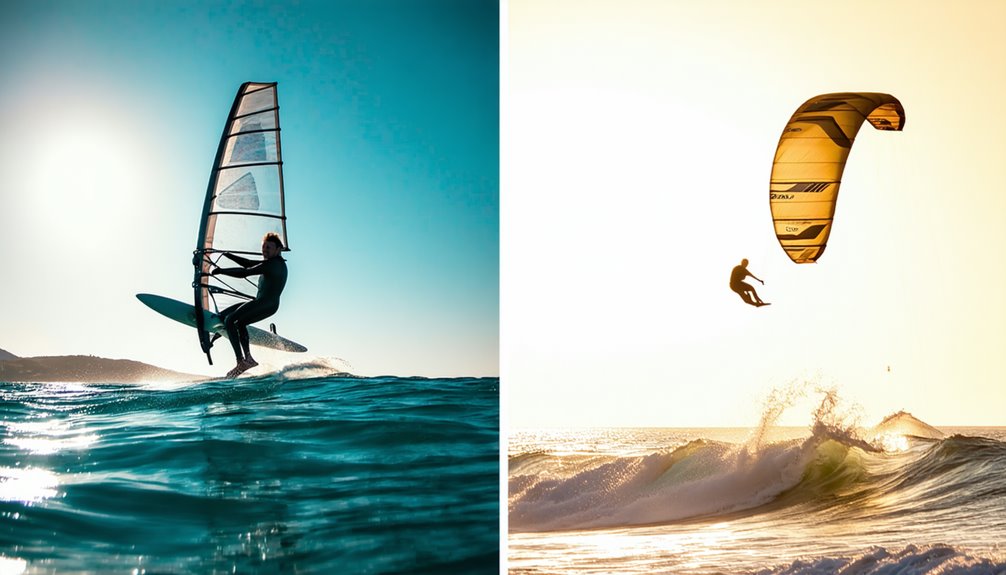
Like choosing between a sedan and a motorcycle, you’re weighing accessibility against commitment when deciding between kitesurfing and windsurfing. Kitesurfing gets you upright in roughly 20 hours of training, while windsurfing demands years of progression. You’ll encounter different gear requirements, physical demands, and safety protocols with each discipline. But here’s what separates the serious contenders from casual learners—and why your initial choice matters far more than you’d think.
Key Takeaways
- Kitesurfing reaches foundational skills in 20 hours; windsurfing requires approximately two years for advanced proficiency.
- Kitesurfing gear fits in a compact golf-bag case; windsurfing equipment weighs 30 kg and requires substantial transport.
- Windsurfing demands intense upper body strength; kitesurfing emphasizes core stability and agility with lower muscle fatigue.
- Kitesurfing requires intensive professional instruction due to severe accident risks from kite power and wind conditions.
- Both sports cost €1000–€2500 initially, but kitesurfing’s faster learning curve and portable gear suit travel-minded beginners.
Equipment and Gear Essentials
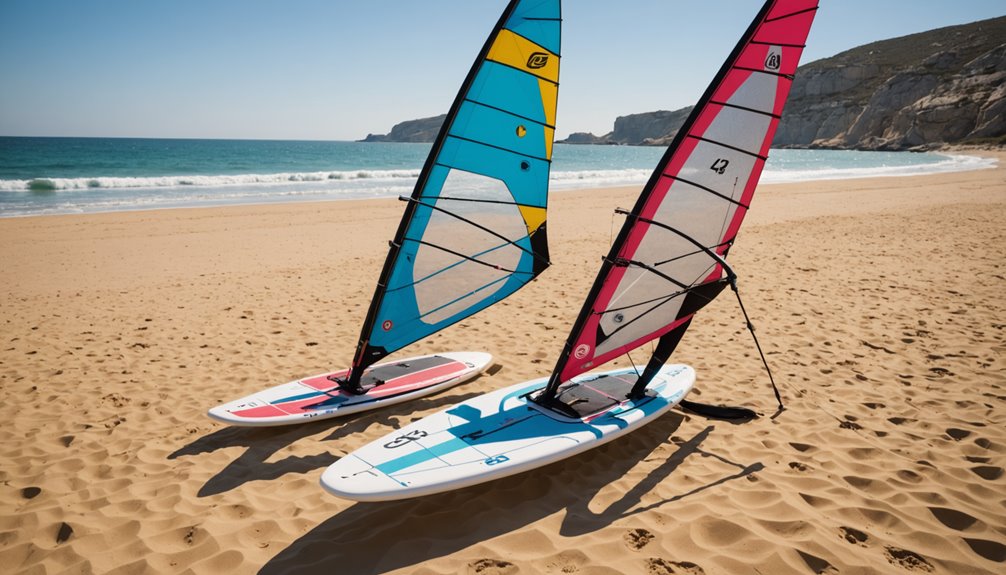
Weight and transportability set these sports apart from the start. Windsurfing gear—board, mast, and sail—weighs approximately 30 kg, demanding significant logistical effort.
Kitesurfing equipment, conversely, packs compactly into a golf-bag-sized case, granting you genuine mobility freedom.
You’ll need protective gear for both: wetsuits are standard, though kitesurfing necessitates helmets and impact vests due to kite power dynamics.
Windsurfing demands multiple boards and sails to address varying wind conditions; kitesurfing leverages a single kite accommodating diverse wind strengths—streamlining your gear portfolio substantially.
Initial investment ranges from €1000 to €2500 for new equipment. Both sports offer used alternatives at reduced prices.
Your harness and board choice directly impacts performance across wind conditions. This gear foundation determines your progression trajectory and financial commitment.
Learning Curve and Skill Development
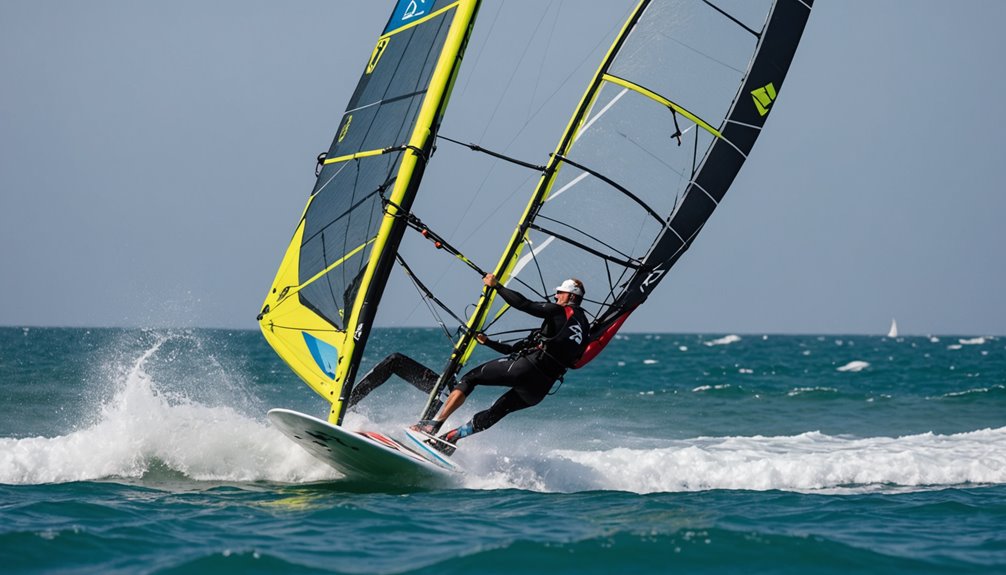
Windsurfing demands roughly two years to master advanced maneuvers, kitesurfing accelerates your progression dramatically—you’ll reach comparable foundational skills in approximately 20 hours of practice.
Kitesurfing’s learning curve favors rapid advancement because you’ll begin with harness and foot straps, immediately enhancing your stability and control. You’ll spend initial beach sessions mastering kite control before hitting the water, allowing you to experience high-speed riding relatively quickly.
Windsurfing, conversely, requires more sustained physical strength, balance, and coordination development before accessing similar equipment. You’ll start on water within 15-20 minutes of instruction, but gradual improvement characterizes your skill level progression.
Once kitesurfing beginners conquer kite control, they pivot toward tricks efficiently. Windsurfing‘s steeper learning curve demands ongoing practice for advanced proficiency, offering less immediate gratification but deeper technical mastery potential.
Physical Demands and Fitness Requirements
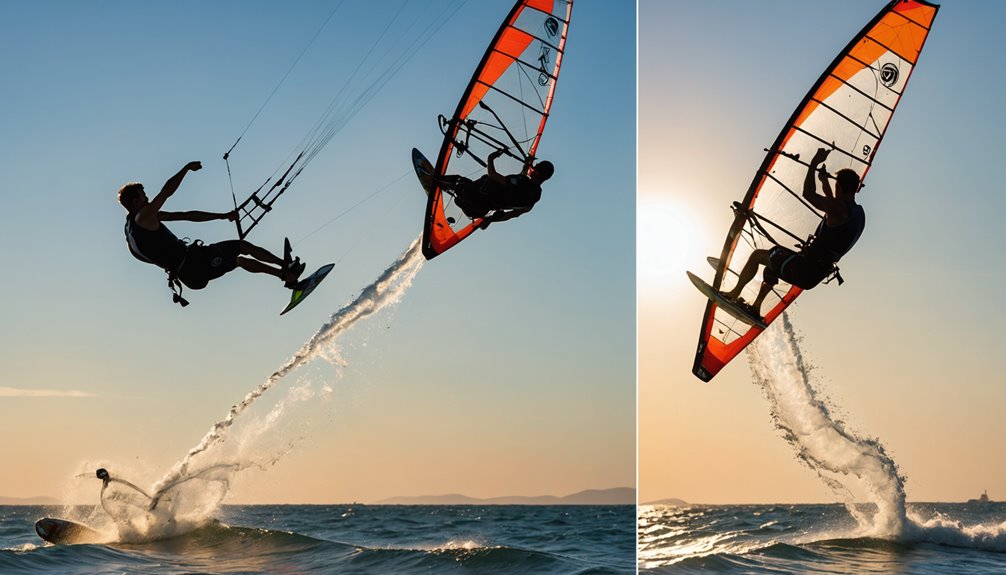
Your body’ll experience fundamentally different physical demands depending on which sport you choose.
Windsurfing demands extensive physical ability through:
- Intense upper body strength for sail manipulation and directional control
- Sustained stamina across full-body engagement and complex maneuvering
- Rigorous balance requirements challenging stabilizer muscles throughout sessions
Kitesurfing emphasizes targeted fitness requirements, primarily activating quadriceps and core stability while reducing overall muscle fatigue.
You’ll maintain longer sessions with less physical strain.
Windsurfing builds superior muscle strength and stamina through aggressive maneuvers, generating increased soreness initially.
Kitesurfing cultivates agility and body weight management, focusing on speed control and core endurance.
Your fitness baseline matters considerably.
If you’re seeking liberation from exhausting conditioning, kitesurfing’s lower-intensity demands suit intermediate learners.
However, windsurfing develops extensive strength faster for committed athletes willing to embrace muscular challenges.
Safety Considerations for Beginners
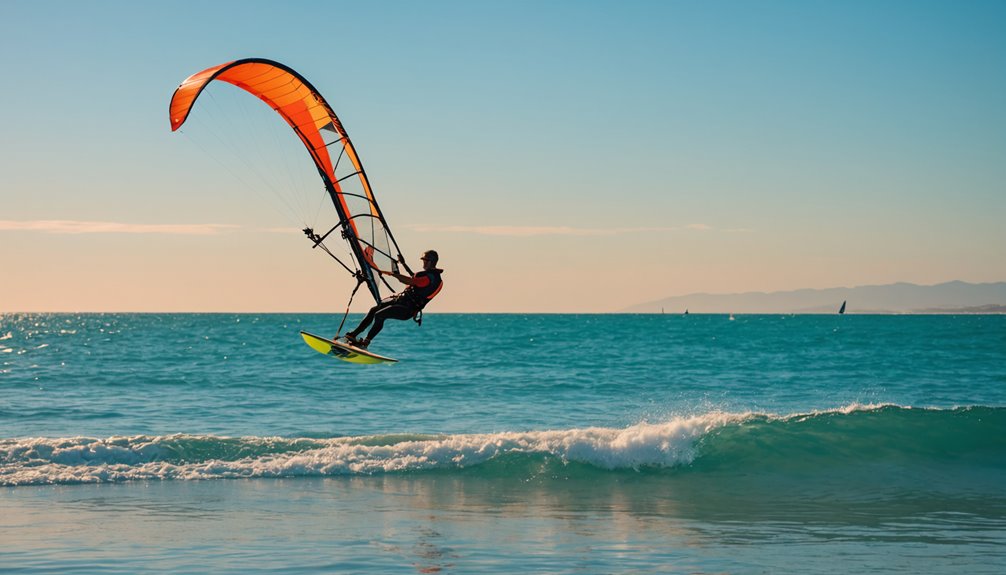
While both sports carry inherent risks, they’ll expose you to distinctly different safety considerations. Kitesurfing demands intensive training under experienced instructors because the kite’s power generates severe accidents if you lose control.
You’ll need to master kite management in safe, controlled environments before progressing.
Windsurfing presents fewer risks for beginners, with less severe incidents overall. You’ll focus on sail handling and balance techniques rather than managing extreme forces.
Both disciplines require gear familiarity and wind condition awareness. You’ll learn to read weather patterns—kitesurfers must respect strong winds that amplify risks, while windsurfers navigate unpredictable conditions through experience-building.
Prioritize professional instruction regardless of your chosen sport. Proper training minimizes risks substantially, equipping you with the control and decision-making skills liberation demands.
Transportation and Travel Practicality
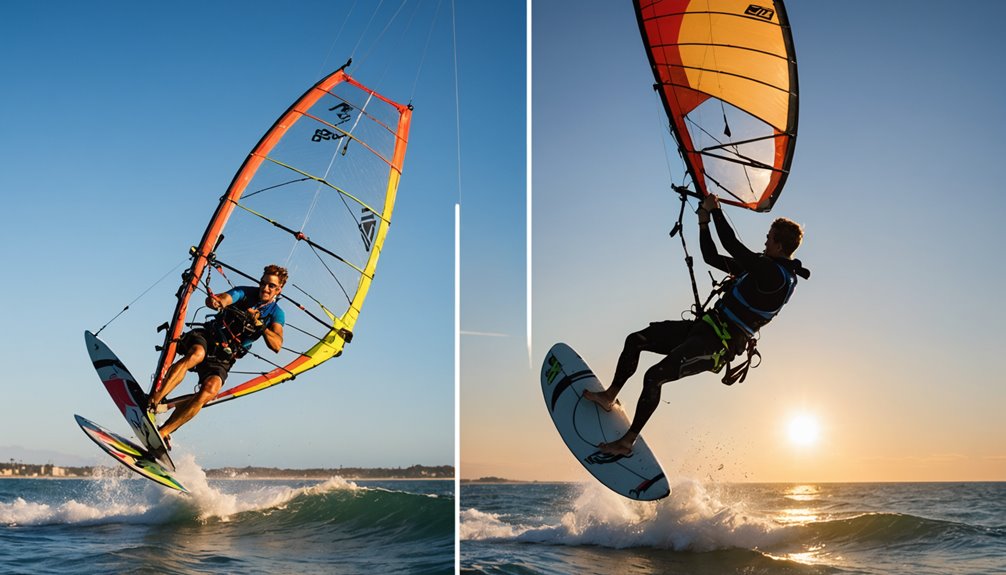
If you’re planning to travel with your gear, you’ll find kitesurfing dramatically more practical than windsurfing. Windsurfing equipment weighs approximately 30 kg and demands considerable logistics due to its bulky size, complicating public transport and air travel with potential special handling fees.
Kitesurfing gear, conversely, offers superior travel practicality through its compact design. Consider these advantages:
- Fits into a single long bag similar to golf equipment
- Carries easily underarm or over your shoulder
- Complies with standard luggage restrictions on flights
The size differential fundamentally shifts your transportation experience. Windsurfing’s cumbersome boards and sails create handling challenges, whereas kitesurfing’s portability grants you freedom to chase ideal conditions without logistical constraints.
For beginners prioritizing mobility and unrestricted travel, kitesurfing’s ease of handling makes it the liberation-focused choice.
Frequently Asked Questions
Which Is Easier to Learn, Kitesurfing or Windsurfing?
Kitesurfing’s easier for you—you’ll progress faster initially through higher speed planing, simpler equipment comparison, and quicker skill progression. Windsurfing demands steeper learning curves mastering balance. However, beginner experiences vary; wind conditions, physical demands, and lesson availability ultimately determine which liberates your potential quickest.
Why Is Windsurfing No Longer Popular?
“You can’t teach an old dog new tricks.” You’re witnessing windsurfing’s decline because you’re facing accessibility barriers, heavy equipment burdens, stagnant innovation, weak community marketing, and shifting demographics toward kitesurfing’s lighter, faster-learning alternative trends.
What Is the Easiest Wind Sport to Learn?
You’ll find windsurfing’s the easiest wind sport initially—you’re on water within 20 minutes. But kitesurfing’s your liberation choice: you’ll master high-speed riding faster through progressive training schools, flexible water conditions, and supportive communities demanding fewer years’ commitment.
Is Windsurfing Safer Than Kitesurfing?
Absolutely—you’ll discover windsurfing dramatically dominates safety metrics. Lower injury rates, superior rider control, and gentler learning curves liberate beginners. You’ll master equipment stability faster, operate independently, and navigate wind conditions without assistance-dependent rescue techniques threatening your water freedom.
Conclusion
You’re standing at a crossroads where kitesurfing beckons like a sprint—20 hours of focused training launches you onto the water rapidly. Windsurfing, conversely, stretches before you like a marathon, demanding two years to master advanced maneuvers. You’ll navigate compact, transportable kitesurfing gear against windsurfing’s bulkier equipment. Both paths require professional instruction‘s safety guardrails. You’re ultimately choosing between velocity and gradual progression, between portability and tradition.