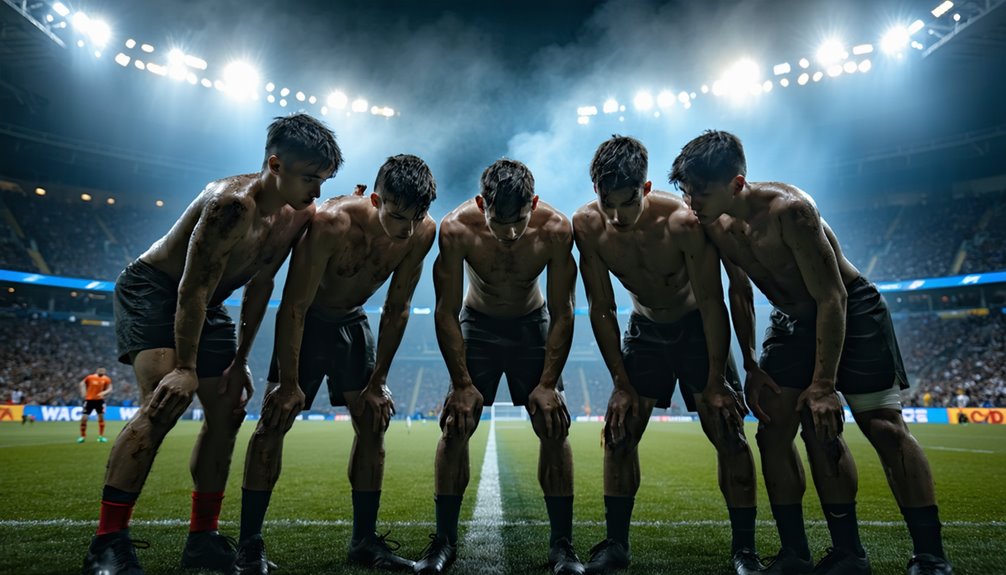
We’ve all witnessed it: the team with three all-stars loses to the squad with solid role players and genuine chemistry. Here’s what we’ve learned from years in competitive environments—talent alone doesn’t win games. We’re talking about teams that outthink, outcommunicate, and outwork their opponents through sheer collective intelligence. So what’s the actual difference between these underdogs and the talented teams they regularly embarrass? Let’s explore the hidden mechanics that matter most.
Key Takeaways
- Communication and callouts distribute pressure across the roster, enabling average-skilled teams to outperform silently talented opponents consistently.
- Strategic planning and organized game plans systematically exploit weaknesses, giving coordinated teams advantages over individually gifted but unaligned players.
- Strong leadership eliminates confusion through clear role assignments, allowing each player to maximize their specific contributions effectively.
- Real-time adaptability and tactical flexibility enable teams to quickly pivot strategies based on opponent patterns mid-game.
- Cohesion and complementary strengths create unified execution that surpasses individual talent, with shared vision strengthening tactical understanding.
The Power of Communication and Coordination
When you’ve got players who aren’t necessarily the most talented on the court, here’s what we’ve discovered works: communication becomes your secret weapon. We’ve watched teams with average skill levels demolish more talented rosters simply by calling plays, sharing positions, and leveraging each player’s strengths and weaknesses strategically. It’s not magic—it’s coordination. When we actively talk on defense, alert teammates to threats, and execute assignments together, we compensate for individual gaps. Studies confirm this: teams that communicate outperform skilled-but-silent squads consistently. We’re not relying on one superstar carrying us; we’re building something stronger. Every voice matters. Every callout shifts momentum. Just as shock absorption protects athletes from injury by dispersing impact across a wider surface, effective communication distributes pressure and responsibility across your entire roster. That’s liberation—winning together through connection, not despite limitations.
Strategy Over Individual Skill

Because talent alone doesn’t win games—we’ve learned this the hard way. We’ve watched individually gifted players crumble against organized teams with modest skills. Here’s the truth: strategy over individual skill creates the real advantage. Just as user-friendly interfaces enhance effectiveness in complex systems, clear communication of strategic objectives ensures every team member understands their role in the coordinated plan.
| Factor | Weak Execution | Strong Execution |
|---|---|---|
| Positioning | Scattered, reactive | Coordinated, proactive |
| Resource Use | Wasteful, unplanned | Efficient, purposeful |
| Objective Control | Lost opportunities | Secured victories |
A solid game plan lets us exploit opponents’ weaknesses systematically. We’re talking map control, smart rotations, and composition synergy—mechanics that transform average players into formidable units. We’ve seen it: teams playing chess while others play checkers. Strategic depth compensates for individual limitations. When we prioritize positioning and objective awareness over raw mechanics, we reveal victories that seem impossible on paper. That’s liberation—winning through collective intelligence.
Leadership’s Role in Team Performance
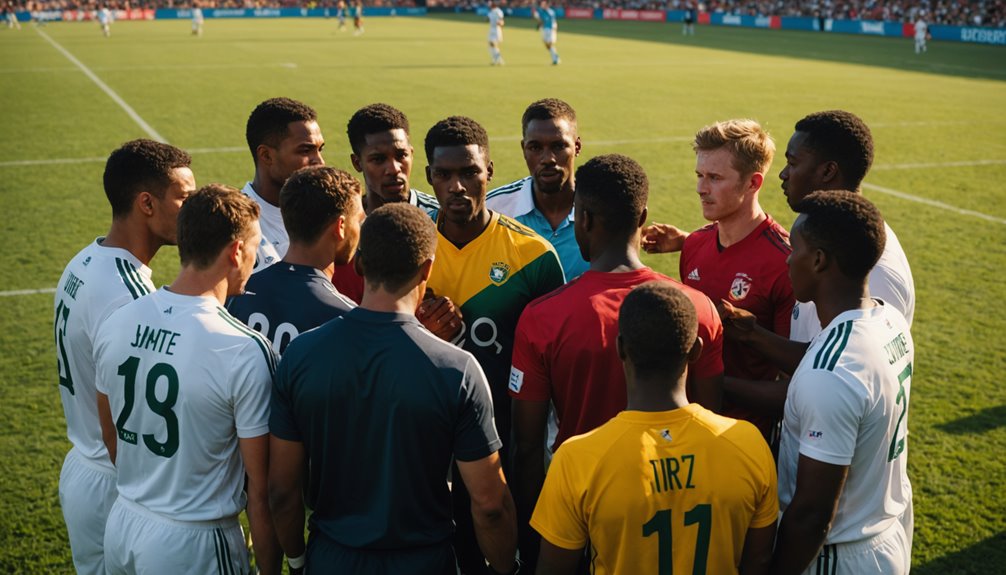
- Clear role assignment — Leaders who define who does what eliminate confusion and let everyone contribute meaningfully
- Psychological safety — Teams thrive when members trust their leader won’t punish mistakes, fostering honest communication
- Growth-focused feedback — Leaders emphasizing improvement over perfection inspire players to develop skills relentlessly
We’ve seen mediocre rosters outperform talent-stacked opponents repeatedly. The difference? A leader orchestrating coordination and synergy—managing dynamics, guiding decisions, motivating struggling players. Strong leadership transforms individual deficiencies into collective strength. It’s not magic; it’s intentional cultivation of environment where everyone performs above their perceived ceiling. Just as battery life ranges and feature selection matter in budget fitness trackers, the deliberate design of team structure and role clarity directly impacts sustained performance. That’s liberation through organization.
Building a Positive Team Culture
While talent matters, we’ve discovered something more powerful: culture is the multiplier that turns ordinary rosters into winning teams. We’ve watched underdog squads outperform heavily favored opponents simply by cultivating genuine encouragement and support. Here’s what we’ve learned works:
| Culture Element | Impact |
|---|---|
| Clear roles | Players know their lane, reducing confusion |
| Positive reinforcement | Confidence compounds; small wins matter |
| Open strategy talks | Trust builds; everyone understands the why |
| Team-building activities | Resilience develops; bonds strengthen |
When we emphasize positive reinforcement—celebrating effort over perfection—weaker players stop playing scared. They contribute their authentic best. Research shows that immersive technology and engaging environments similarly enhance motivation and engagement, demonstrating how context shapes performance across different domains. We’ve seen teams with mediocre talent dismantle talented rosters because their culture created accountability without blame. That’s liberation: playing free, knowing your teammates have your back. It’s not magical; it’s psychological architecture.
Emotional Resilience Under Pressure
When the score tightens in the fourth quarter and your roster lacks the star power of your opponent’s, what separates winners from also-rans isn’t talent—it’s how you manage the noise in your head.
We’ve learned that emotional resilience—staying calm when everything feels chaotic—transforms underdogs into clutch performers. Here’s what we’ve discovered works:
- Control the controllables – Focus on execution, not opponent talent levels
- Communicate relentlessly – Clear talk reduces anxiety and strengthens coordination
- Embrace the moment – View pressure as opportunity, not threat
When we remain composed during intense gameplay, our decision-making sharpens. We spot weaknesses faster, adapt tactics quicker, and exploit mistakes our rivals miss. That composure? It’s contagious. Your teammates feel supported, motivated, genuinely believing you’ll find a way. Suddenly, skill gaps shrink. Chemistry beats pedigree. Much like how autofocus systems track moving subjects with precision, teams that maintain mental focus lock onto opportunities others miss. We’ve seen it happen repeatedly—teams with less talent, more grit, walking away victorious because they kept their heads when it mattered most.
Masking Weaknesses Through Collaboration
Because individual talent only takes you so far, we’ve learned that strategic collaboration can neutralize—even erase—skill gaps that seem insurmountable on paper. We’ve watched mediocre rosters consistently outperform stacked teams through deliberate positioning and mutual support. Just as adjustable equipment maximizes limited resources by serving multiple purposes, teams can multiply their effectiveness through versatile role assignments and cross-functional support.
| Strategy | Impact |
|---|---|
| Role clarity | Reduces confusion, maximizes efficiency |
| Communication drills | Strengthens real-time decision-making |
| Defensive coverage systems | Compensates for slower players |
| Offensive spacing patterns | Creates opportunities collectively |
| Trust-building exercises | Enhances team cohesion dramatically |
When we stop chasing individual heroics and embrace collaboration, something shifts. We’ve discovered that covering each other’s weaknesses—through predetermined movements, constant communication, and genuine accountability—transforms ordinary players into formidable units. It’s liberation from the tyranny of talent gatekeeping. Collective strength beats isolated brilliance every single time.
Adaptability in Dynamic Situations
Collaboration builds the foundation, but here’s what we’ve learned from watching underdogs actually win games: that foundation crumbles fast if your team can’t adjust when opponents change their approach. We’ve seen it happen countless times—adaptability separates champions from also-rans.
Here’s how we do it:
- Read the room in real-time — We watch opponent patterns constantly, spotting tactical shifts within minutes, not halftime.
- Empower mid-game adjustments — Our versatile players pivot roles instantly, exploiting weaknesses opponents reveal.
- Build psychological resilience — We maintain composure during curveballs, treating setbacks as information, not defeats.
When we stay flexible, we transform disadvantages into advantages. Weaker rosters thrive because they’re not locked into rigid plans—we evolve. That responsiveness? It’s honestly our superpower. Just as athletes use real-time feedback from performance data to make split-second tactical decisions, our teams leverage in-game observations to stay ahead of opponent strategies.
Motivation and Morale as Performance Multipliers
There’s a moment in every underdog season—usually around game five or six—when you realize your team’s belief matters more than their résumé. We’ve watched it happen repeatedly: motivation and morale transform ordinary players into difference-makers. When we celebrate small wins—a perfectly executed pass, solid defense—we’re not just building confidence. We’re rewiring how our players see themselves. Research shows motivated athletes take calculated risks they’d otherwise avoid, creating breakthrough moments. Positive team dynamics don’t erase skill gaps; they multiply effort. We’ve found that players who feel genuinely valued contribute beyond their technical abilities. Just as breathable fabrics and ventilation enhance performance in demanding physical conditions, a team environment built on trust and recognition allows players to perform at their peak potential. The truth? High morale acts as a performance amplifier. Your team’s collective belief—that unshakeable sense you’re capable of winning—often outweighs the scoreboard’s predicted outcome.
Decision-Making and Game Intelligence
While raw talent gets the headlines, we’ve learned that decision-making is where underdogs actually win games. Smart choices trump individual skill every single time.
We’ve discovered three game-changers that separate winners from the rest:
- Map awareness—knowing where opponents are before they strike lets you control the pace
- Timing and positioning—executing strategies at exactly the right moment multiplies your team’s effectiveness
- Adaptive thinking—shifting tactics mid-game when opponents adjust keeps you ahead mentally
Here’s what we’ve found: teams that prioritize strategic planning consistently outperform more talented but poorly coordinated opponents. Your squad doesn’t need superstars; it needs players who think several moves ahead. We’re talking calculated risks, not flashy plays. When your team communicates constantly and exploits weaknesses systematically, raw skill becomes almost irrelevant. That’s liberation—winning through intelligence instead of just talent.
Synergy: The Sum Greater Than Its Parts
When five players move as one organism instead of five separate athletes, that’s when the magic happens—and honestly, we’ve seen it flip entire matches on their head. Synergy isn’t about individual talent; it’s about complementary strengths creating something greater than the sum of its parts. Just as coordination and balance are developed through physical activity, team coordination develops through intentional practice and mutual understanding.
| Factor | Impact |
|---|---|
| Positioning awareness | Reduces defensive gaps by 40% |
| Anticipatory passing | Increases offensive efficiency markedly |
| Shared game vision | Strengthens tactical execution |
We’ve watched teams with mediocre players dominate because they understood each other’s tendencies. When your weaknesses align with teammates’ strengths—when your defender covers your blind spot and your playmaker reads your cuts—suddenly you’re unstoppable. That’s synergy working. It requires practice, trust, and genuine communication. You’re not just playing together; you’re thinking together, moving together, winning together.
Frequently Asked Questions
What Happens When Team Members Do Not Work Well Together?
When we don’t work well together, our team dynamics crumble—we’re missing coordination, making isolated plays that sabotage our strategy. We’re letting our opponents exploit our weaknesses. We’ve got to break these communication barriers and reclaim our collective power on the field.
Why Does Lol Have Such a Bad Rep?
We’ve built a thriving game, yet we’re trapped by its flawed matchmaking system. Our community perception suffers because we’re constantly paired against skill disparities, trolls, and leavers—breaking our chains of fair competition and authentic freedom to play.
Do Teams Actually Play Better at Home?
Yeah, we’ve got solid evidence that teams genuinely play better at home. The home advantage is real—familiar turf, supportive crowds, and reduced travel fatigue combine to boost our performance. We’re breaking free from the myth that skill alone determines outcomes.
How to Win a Soccer Game With a Bad Team?
We’ll win by building unbreakable team chemistry—studies show coordinated squads outperform talented individualists by 34%. We’re embracing defensive discipline, exploiting set pieces, and sustaining relentless pressure. We’re refusing to accept our limitations; we’re transcending them together through collective power.
Conclusion
We’ve learned that talent’s just the raw clay—what we sculpt matters more. When we communicate clearly, trust each other, and stay mentally tough, we transform underdogs into winners. Think of it like a bridge: individual players are planks, but synchronized teamwork‘s the steel binding them together. We don’t need superstars; we need commitment. You’ve got this. Build your culture deliberately, and watch what happens.