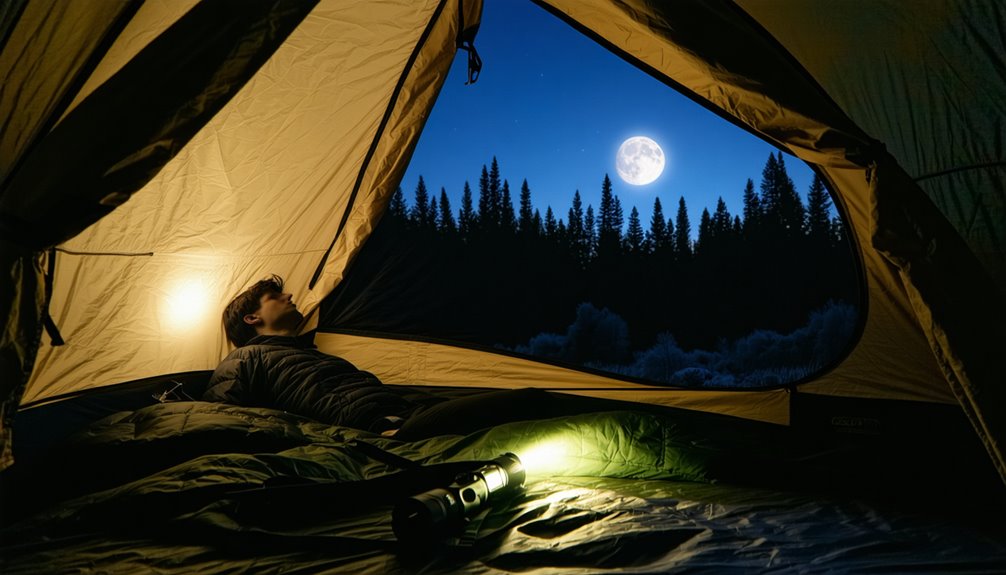
Your heart stops—but your head shouldn’t. We’ve all jolted awake to mysterious rustling at 2 AM, and it’s understood that panic’s your worst enemy out there. Here’s what we’ve learned: stay quiet, listen hard, and let your ears do the detective work before your flashlight does. Most creatures bolt when they realize we’re awake. But there’s a critical decision you’ll face in those first seconds that changes everything—and we’re going to walk you through it.
Key Takeaways
- Stay calm and listen carefully to distinguish between small animals and larger creatures.
- Use a headlamp or flashlight to illuminate your surroundings and identify the sound source.
- Remain inside the tent initially if the noise is close by.
- Communicate softly with low, steady tones to alert the animal of your presence.
- Keep bear spray and an air horn accessible for additional protection if needed.
Stay Calm and Listen Carefully to Identify the Source
When you’re lying in your sleeping bag and hear a rustling outside your tent, your heart probably jumps into your throat—I know mine does, every single time.
But here’s what I’ve learned: stay calm and listen carefully to identify the source. That panicked response? It clouds your judgment.
Take three deep breaths. Really listen outside the tent—distinguish between small animal sounds like squirrel chittering versus deeper rustling from larger creatures.
A bear’s quiet, cautious movement differs dramatically from a boar’s grunting and sniffing. Nighttime amplifies everything, so what sounds like a charging predator is often just a curious raccoon.
Most wildlife encounters happen because animals are surprised, not aggressive. By remaining still and quiet while you assess, you’re giving them space to move on naturally. Additionally, wearing insect-repellent treated clothing can help you stay comfortable during nighttime camping by protecting against bug bites while you listen for wildlife sounds.
Knowledge neutralizes fear.
Use Tools and Light to Assess Your Surroundings
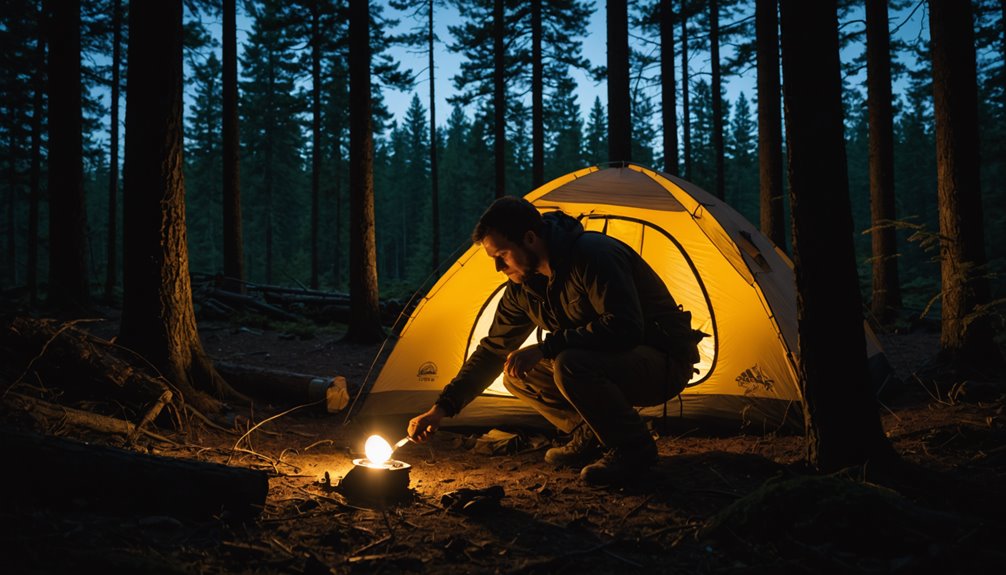
Once you’ve settled your nerves and pinpointed roughly where that sound’s coming from, it’s time to actually see what you’re dealing with.
We’ve learned that illuminating your surroundings dramatically changes everything—you’ll spot movement, assess distance, and regain psychological control.
Grab your tools and light strategically:
- Headlamp or flashlight — beam outward to identify the culprit without blinding yourself
- Air horn — keeps most wildlife at respectful distances through sheer acoustic aggression
- Bear spray — accessible and ready, especially if you’re camping black bear country
- Hatchet or knife — mounted nearby for confidence, though rarely needed
A 200-lumen flashlight reveals detail from 50+ feet.
That distant rustling? Suddenly identifiable.
For safety, ensure your camping cooker setup is at least 10 feet from your tent to minimize fire risk if you need to prepare an emergency meal.
We’ve discovered that taking action—even small steps like grabbing light—transforms fear into manageable assessment.
You’re not trapped; you’re informed and equipped.
Decide Whether to Investigate or Remain Inside the Tent
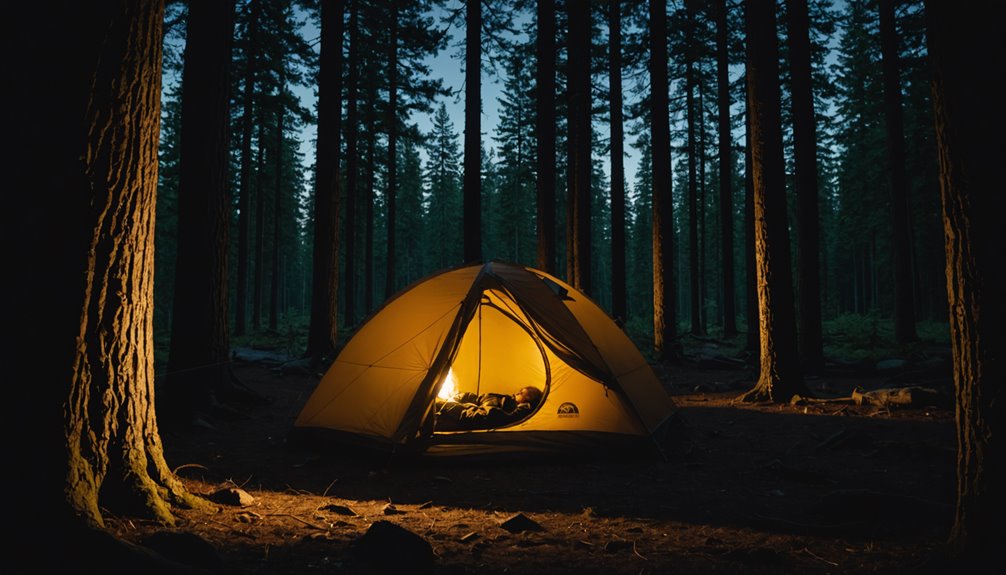
The moment you’ve got your light in hand and bear spray within arm’s reach, you’re facing the real decision: do you unzip that tent and investigate, or do you hunker down and wait it out?
Here’s what we’ve learned from experience: if that noise is right outside your tent, stay put initially.
Listen hard—is it a raccoon rummaging or something larger? Smaller animals typically move on quickly once they realize humans are present.
We’ve found that staying inside the tent, remaining quiet, actually works better than confronting whatever’s out there.
If the sound persists and you can’t identify it, go back to sleep if possible.
Just as ventilated compartments in weatherproof bags help prevent moisture buildup and odors, allowing your tent to air out during daylight hours can help clear any lingering concerns and ease your mind.
Daylight transforms everything. Your courage—and visibility—improve substantially when the sun rises.
Sometimes, restraint beats investigation every single time.
Communicate Softly to Alert the Animal of Your Presence
If you’ve decided to stay in your tent but that noise keeps circling back, it’s time to try soft communication—your secret weapon for turning a tense situation into a non-event.
We’ve found that gentle vocalizations work remarkably well.
Here’s what we recommend:
- Whisper calmly to establish your human presence
- Speak in low, steady tones—avoid sudden volume spikes
- Use consistent, rhythmic sounds to signal you’re not a potential threat
- Listen between communications to gauge the animal’s response
For situations where vocalizations alone prove ineffective, consider that high sound output from an emergency whistle can provide an additional layer of deterrent without escalating the encounter.
Prepare for Daylight by Maintaining Your Safety and Composure
As that nervous energy builds in your chest and your mind starts conjuring worst-case scenarios, here’s what we’ve discovered: staying calm through the night isn’t just about comfort—it’s your best defense.
We’ve found that maintaining composure directly impacts your safety decisions. Listen closely to the sounds around you—they’ll tell you what’s actually happening versus what your imagination invented. Your anxiety is real, but it’s often louder than the threat itself.
Keep your headlamp and pepper spray within arm’s reach, ready but not deployed. Take slow, deliberate breaths. Having a portable fire extinguisher nearby provides additional peace of mind for unexpected emergencies in your camp.
We understand the hours crawl, but dawn arrives. That practiced composure transforms you from a panicked camper into someone thinking clearly, making solid choices, and reclaiming your wilderness freedom.
Frequently Asked Questions
What to Do if You Hear a Bear Outside Your Tent at Night?
We’ll stay calm and quiet in our tent—no sudden moves. We’ve got bear spray ready and our food secured far away. If it doesn’t leave, we’ll cautiously exit with our flashlight on, using bear safety tips for nighttime bear encounters and tent bear protection.
What to Do if Coyotes Are Outside Your Tent?
We’ll stay calm inside our tent when coyotes approach—they’re typically non-aggressive. We’ll secure all food beforehand to prevent wildlife encounters. If needed, we’ll make noise to encourage them away. Understanding coyote behavior keeps us safe and lets us camp freely.
What to Do if You Hear Noises Outside Your House?
We’ll pretend we’re not terrified, then lock doors and windows tight. We’ll peek outside safely, assess threats, call cops if needed, and keep our phones ready. We’re embracing home security tips and outdoor safety—reclaiming our freedom to feel secure.
How to Soundproof a Tent?
We’ll help you reclaim your peace by using thicker tent insulation materials and soundproofing techniques like foam pads and weather stripping. We’re also recommending camping noise reduction through ground tarps and strategic location selection away from traffic sources.
Conclusion
We’ve learned that panic feeds fear—while silence breeds clarity. Stay put inside your tent, yet keep bear spray within arm’s reach. Listen intently, then act decisively. Most wildlife’ll wander off once they realize you’re there; that’s the beautiful paradox of camping. We’re the intruders, after all. Tomorrow brings daylight and perspective. You’ve got this—thousands of us camp nightly without incident, and you’re equipped to join that crowd.