We’ve all had those camping trips where our food choices didn’t exactly cooperate with us—and we’re here to help you avoid that mess. Here’s the thing: what you pack can make or break your outdoor experience, attracting unwanted wildlife or leaving you exhausted halfway through a hike. We’ve learned these lessons the hard way, and we’re ready to share which foods’ll sabotage your adventure. Curious what made our personal “never again” list?
Key Takeaways
- Avoid soft cheeses, fresh milk, and cream-based foods that spoil rapidly without refrigeration in outdoor heat.
- Never bring raw meat or fresh seafood that attract wildlife and breed dangerous pathogens within hours.
- Don’t pack delicate fruits like tomatoes, cucumbers, or watermelons that bruise easily and spoil quickly.
- Skip sugar-loaded snacks and processed junk foods that cause energy crashes during outdoor activities.
- Leave behind leafy greens and delicate vegetables that wilt quickly and lose nutrients in camping conditions.
Dairy Products That Spoil in Heat
When you’re packing for a camping trip, dairy products might seem like convenient protein sources—but they’re actually a recipe for spoilage and trouble.
We’ve learned this the hard way. Soft cheeses, fresh milk, and cream-based foods spoil quickly without refrigeration, especially in warm conditions. That strong smell? It’ll attract bears and raccoons straight to your campsite.
Raw eggs are temperature-sensitive too—they’ll break and create bacterial growth hazards. We’re talking foodborne illness that ruins your adventure fast.
Skip the dairy entirely. Instead, bring shelf-stable alternatives: powdered milk, hard cheeses that tolerate heat, or plant-based options. A minimalist camping checklist helps you identify which shelf-stable foods work best for your trip while eliminating unnecessary items that spoil easily.
Your stomach—and your campsite safety—will thank you. Trust us; it’s not worth the risk or cleanup.
Raw Proteins and Seafood
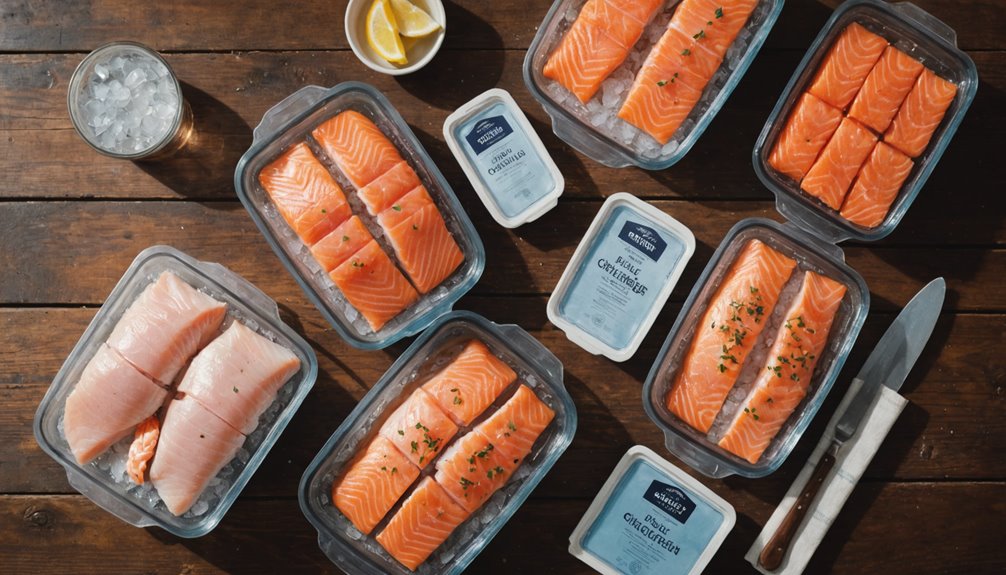
Raw meat and seafood are camping’s silent saboteurs—they’ll spoil faster than you can set up your tent, and that’s before the wildlife shows up.
We’ve learned the hard way that raw proteins demand constant refrigeration, which most camping trips simply can’t guarantee. Fresh fish? Forget it. The smell alone transforms your campsite into an all-you-can-eat buffet for bears and raccoons.
Unrefrigerated raw meat becomes a pathogen breeding ground within hours, turning food safety from precaution into survival necessity. Instead, we bring canned salmon or dehydrated chicken—they’re lightweight, shelf-stable, and won’t compromise our camping trips.
When storing fuel canisters for your camping cookers, remember that maintaining proper temperature is critical, just as it is for food storage in the backcountry. Skip the cooler space entirely. Your gut health and wildlife coexistence depend on leaving raw proteins and seafood home where they belong.
Delicate Fruits and Vegetables
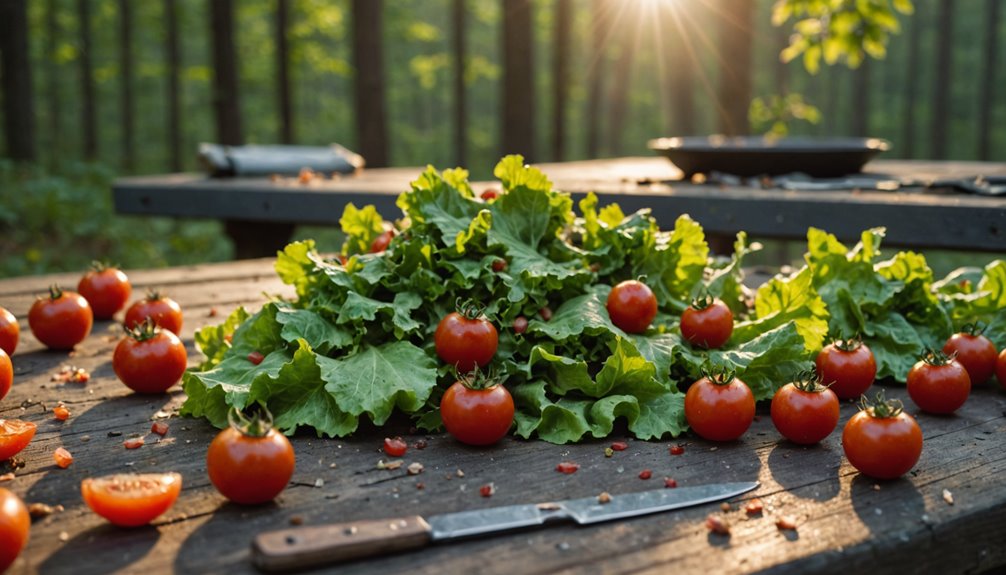
Unless you’re willing to eat bruised mush, those delicate fruits and vegetables you’re eyeing for your camping trip need to stay home.
We’ve learned this lesson the hard way—soggy bananas attracting ants, wilted spinach turning to slime in your cooler.
Here’s why fragile vegetables and delicate fruits spell disaster:
- Bananas and berries bruise easily during transport, spoiling within days.
- Leafy greens wilt quickly, losing nutrients in camping conditions.
- Tomatoes and cucumbers split open in warm weather, creating mess.
- Watermelons attract wildlife with their high water content and odor.
- Delicate produce lacks the durable materials and structural integrity needed to withstand the rigors of outdoor transport and storage.
Skip the fragile vegetables altogether.
Instead, grab sturdy options—carrots, apples, potatoes, and cabbage.
These hold up during transit and won’t leave you frustrated.
Your camping meals’ll taste better when you’re not disappointed by spoiling produce.
Trust us: pack hearty, pack smart, pack free from food waste regrets.
Creamy Desserts and Custards
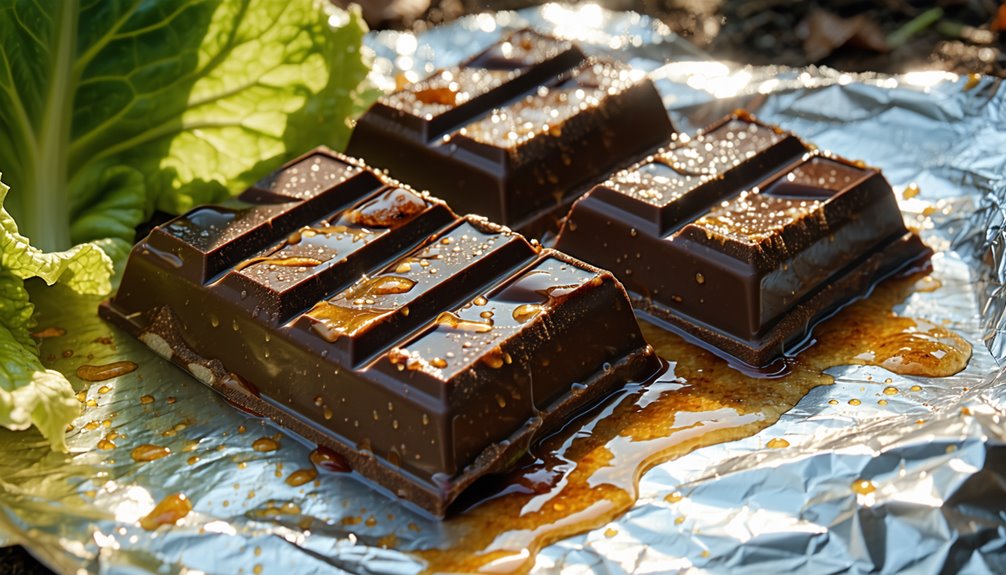
Because they’re moisture-laden and require constant refrigeration, creamy desserts and custards don’t belong in your camping cooler—we’ve watched homemade tiramisu turn into a bacterial petri dish after just six hours in seventy-degree heat.
The high moisture content practically invites dangerous bacteria to multiply, triggering foodborne illnesses that’ll ruin your trip faster than a bear raid. We’re talking spoilage that happens silently; you won’t taste the danger until it’s too late. Just as a well-equipped first aid kit can help address injuries on the trail, proper food safety prevents medical emergencies at camp.
Beyond safety concerns, those rich desserts emit powerful odors that attract wildlife straight to your campsite. They’re also transport nightmares—melting into sticky messes that compromise your entire camping experience.
Skip the custards entirely. Opt instead for shelf-stable baked goods: brownies, granola bars, or trail mix. Your cooler space stays protected, your stomach stays healthy, and you maintain the freedom to actually enjoy the outdoors.
Foods That Attract Wildlife and Insects
When you’re camping in bear country—or really anywhere with wildlife, your food choices become a security decision, not just a nutrition one.
We’ve learned this the hard way. Foods that attract wildlife and insects aren’t just annoyances; they’re invitations to disaster.
Here’s what we leave at home:
- Bacon and strong-smelling cheeses—their odor carries for miles
- Sugary drinks and cupcakes—insects swarm instantly
- Ripe bananas and fresh fruit—sweetness signals a meal
- Fresh fish and seafood—bears can’t resist them
These essential items belong in your kitchen, not your campsite.
Creamy foods spoil quickly too, creating wildlife magnets.
We’ve watched bears investigate poorly stored provisions—it’s terrifying and preventable. Great camping means respecting wildlife boundaries.
Unscented or minimally aromatic foods are easier to store safely, similar to how UV-blocking fabrics reduce unwanted exposure in outdoor spaces. Choose bland, sealed options instead. Your safety depends on these choices.
High-Sugar Items That Cause Energy Crashes
Beyond wildlife concerns, there’s another reason to leave your candy bars and sugary drinks at home—they’ll sabotage your energy when you need it most.
We’ve all experienced the crash: that rapid blood sugar spike followed by a brutal nosedive that leaves us dragging through camp by afternoon.
High-sugar items like pastries and sweetened cereals might seem convenient, but they’ll wreck your camping trip’s momentum. Your body burns through them fast, then demands more fuel—except there’s none available. You’re stuck feeling lethargic during hikes when stamina matters.
Here’s what we’ve learned: balanced snacks containing protein, healthy fats, and complex carbohydrates deliver sustained energy without the crash. They train your body to efficiently use fat reserves—essential for outdoor endurance. Just as infrared heat therapy can help your muscles recover after strenuous camping activities, proper nutrition fuels your body for peak performance during outdoor adventures.
Skip the sugar trap. Your future self will thank you.
Foods Requiring Extensive Preparation and Cooking Equipment
If you’ve ever watched someone attempt to roast a whole chicken over a campfire while their cast-iron skillet sits in the dirt—well, you’ve seen why we need to talk about this.
Foods requiring extensive preparation aren’t just inconvenient; they’re camping killers.
Here’s what we should skip:
- Whole chickens or elaborate multi-step recipes
- Fresh seafood prone to rapid food spoilage
- Dishes needing precise temperature control like soufflés
- Casseroles requiring multiple cooking vessels
Your camp kitchen’s limitations demand simplicity. Most ultralight cookware sets have capacity maxing out around 1.2 liters, which further constrains the types of meals you can realistically prepare in the backcountry.
We can’t manage delicate cooking methods without proper equipment, and honestly, that’s liberating.
Skip the complexity—embrace one-pot meals instead.
When you abandon foods demanding elaborate preparation tools, you reclaim time and energy for what camping’s actually about: connection and rest.
Trust us.
Perishable Items That Degrade Quickly
Once you’ve left the cooler behind—or worse, watched your cooler’s ice melt by noon—you’ll understand why certain foods are camping disasters waiting to happen.
Raw meats and seafood spoil quickly without proper refrigeration, creating serious foodborne illnesses that’ll ruin your trip faster than a thunderstorm.
Fresh dairy products like soft cheeses and milk? They’re magnets for wildlife and bacterial growth in warm temperatures.
We’ve learned the hard way that cream-based foods like custard aren’t worth the risk—they spoil rapidly and create messy cleanup nightmares.
Instead, pack shelf-stable proteins and hardy vegetables, which align with the simplified cooking approach recommended for family camping trips.
Perishable items demand constant temperature control we simply can’t guarantee outdoors.
Skip the delicate stuff. Your stomach—and your camping experience—will thank you.
Foods Low in Nutritional Value for Outdoor Activities
While you’re smartly avoiding spoiled meats and dodgy dairy, there’s another camping food trap we’ve all fallen into—the empty-calorie snack spiral.
We’ve learned the hard way that foods low in nutritional value wreck your outdoor performance. Here’s what we’ve discovered happens:
- Sugar-loaded snacks cause blood-sugar spikes followed by brutal energy crashes.
- Processed junk provides empty calories without essential nutrients.
- Imbalanced macros leave you fatigued during demanding activities.
- Nutritional deficiencies slow recovery and tank your mood.
Skip the candy bars and mass-produced pastries. Instead, add protein-rich nuts, whole grains, and dried fruit to your camping checklist. Pairing your snacks with mineral-based ingredients like zinc oxide found in quality sunscreen formulations can support skin health during prolonged outdoor exposure.
These alternatives sustain energy without the afternoon collapse. We’ve discovered that strategic nutrition transforms camping from exhausting to genuinely liberating—your body finally gets what it needs to thrive outdoors.
Frequently Asked Questions
What Is the Most Forgotten Item When Camping?
We’ve all forgotten the can opener—it’s the camping essentials item that tops our common oversights. That’s why we’re adding it to every packing checklist. Including essential outdoor supplies prevents frustration when we’re freed to enjoy nature without worrying about accessing our canned meals.
What Will You Not Take With You in the Camp?
We won’t pack perishable items or dairy products—they’re camping’s Achilles heel. We’ll skip heavy snacks and messy foods that weigh us down and trap us in cleanup. We’re liberating ourselves from spoilage, bacteria, and unnecessary burdens. We’ll travel light and eat clean instead.
What Is the Golden Rule When Camping?
We embrace “Leave No Trace” as camping’s golden rule—it’s our commitment to outdoor cooking etiquette and food safety. We’re packing tips that respect nature: take everything out, leave nothing behind. This liberation means we’re free to explore without harming the wild.
What’s the Best Food to Bring Camping?
We’ll pack non-perishable camping snacks like trail mix—light as freedom itself. Smart meal prep with easy recipes keeps us fueled without chains. Proper food storage using airtight containers lets us break free from spoilage worries and embrace the wilderness unburdened.
Conclusion
We’ve learned that leaving behind dairy, raw proteins, and sugary treats—those items that don’t age gracefully—protects both our camping experience and our coolers. By choosing shelf-stable, nutrient-dense foods instead, we’re setting ourselves up for success. Your future self will thank you when you’re not dealing with spoilage, unwanted wildlife visitors, or energy crashes mid-hike. Smart packing means more adventure, less regret.