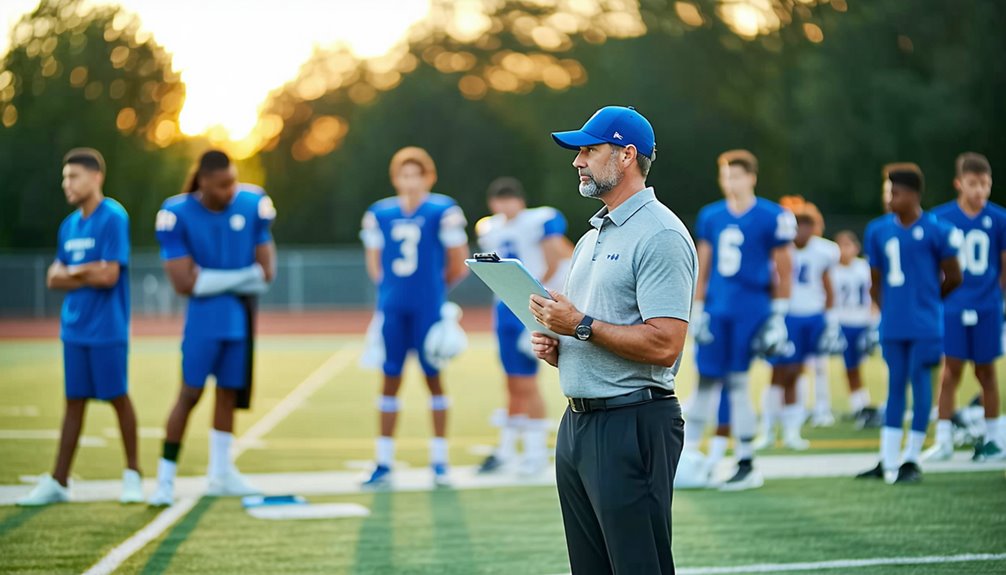
Yeah, you might think ten minutes isn’t enough time to evaluate anyone—but we’ve found it’s actually when the truth shows up. Within those first moments, we’re watching how you carry yourself, how you respond when things go sideways, and whether your eyes stay locked on what matters. Your posture, your hustle, your willingness to be present—these things tell us everything about who you’ll become on our team. The question isn’t what we’re seeing. It’s what you’re going to do about it.
Key Takeaways
- Coaches assess posture, eye contact, and purposeful movement to gauge readiness and genuine engagement with the team.
- Quick response to mistakes and composure during corrections reveal mental toughness, resilience, and coachability.
- Sprint speed during transitions and reaction time post-errors indicate recovery capability and defensive awareness.
- Natural confidence balanced with humility and active listening demonstrate emotional maturity and openness to feedback.
- Intentional presence and team-oriented behavior establish first impressions that shape locker room dynamics and season trajectory.
Body Language Speaks Louder Than Words
When we’re watching those essential first 10 minutes, here’s what we’re really doing—we’re reading the room before a single play gets called. We’ve got years of experience spotting what players won’t say out loud. That upright posture, purposeful movement? We make sure we’re noting it. Slumped shoulders after a mistake tell us everything about mental toughness. We’re watching eye contact during huddles—it signals focus and genuine engagement. Here’s the truth: crossed arms and low energy broadcast disengagement louder than any excuse ever could. Your body language either builds team culture or undermines it. Even from the bench, your enthusiasm matters. We notice. Your nonverbal communication reveals what you’re actually made of—commitment, resilience, or just going through the motions. Just as real-time feedback from technology can correct posture in athletic training, immediate coaching corrections based on body language create lasting improvements in performance and mindset.
The Power of Your Walk and Posture

Your walk tells us everything before you say a word—and I mean everything. We’ve already know what kind of player you’ll be within those first ten seconds. Shoulders back, chin up, eyes forward—that’s the language of one of the best. When you slouch or shuffle, you’re telling us you’re not ready for our system.
Here’s what happens: confident posture signals commitment. It says you’ve prepared for this moment, that you respect the game and our program. Poor body language does the opposite—it creates doubt. Just as reinforced heels and toes in quality basketball socks prevent breakdown during intense play, your physical presence must show you won’t break down under pressure.
Think of it like a perfect game. One mistake, one breakdown in mechanics, and the whole thing falls apart. Your walk and posture are your opening pitch. Make it count.
Demeanor and Mental Toughness

Resilience—that’s what we’re really measuring in those first ten minutes, and it shows up long before game time. We’re watching how you handle the hard stuff. Here’s what catches our eye:
- How you respond when you mess up a drill
- Whether you stay composed when things get competitive
- If you lift teammates up or shut down
Your mental resilience and emotional stability reveal everything. We notice players who bounce back quickly—not pretending mistakes didn’t happen, but genuinely moving forward. That’s mental toughness in action. Your attitude assessment happens instantly. Do you blame others? Sulk? Or do you lock in and improve? We’re not looking for perfection. We’re looking for players who own their game and refuse to quit. Just like athletes tracking real-time feedback during training to adjust performance, coaches observe how you respond to immediate results and adjust your effort accordingly. That’s liberation—freedom from self-doubt.
Confidence Without Arrogance
There’s a massive gap between a player who knows their worth and one who won’t shut up about it—and we spot the difference in the first thirty seconds of conversation.
| Signal | What We See | What It Means |
|---|---|---|
| Eye contact + upright posture | Self-assured body language | Readiness without cockiness |
| Assertive but listening | Emotional maturity in action | Open to feedback |
| Skills mentioned naturally | Humble expression | Genuine confidence |
We’re drawn to athletes displaying self-assurance balance—those who own their abilities while staying grounded. You demonstrate emotional maturity by discussing your performance factually, not defensively. Eye contact matters. Upright posture matters. Just as adjustable closures on quality gear ensure the right fit for performance, your ability to adapt your communication style shows coachability. What really matters? Letting your game speak while remaining coachable. That’s the sweet spot we’re hunting for.
How Coaches Assess Hustle and Effort
When we’re watching warm-ups—before the lights get bright and the crowd shows up—that’s when we see who you really are. We’re measuring effort through three specific hustle indicators:
- Sprint speed during shifts—how quickly you recover after fatigue hits
- Reaction time after mistakes—do you sprint back defensively or jog?
- Practice intensity when nobody’s watching—that’s your real dedication showing
Here’s what matters: we notice everything. Your willingness to give maximum effort in empty gyms tells us more than highlight reels ever could. Players who demonstrate consistent urgency—who push themselves harder during drills than games—they’re the ones we trust. That’s not arrogance; that’s accountability. Your practice intensity reveals your character. We’re not looking for perfection; we’re looking for relentless commitment to improvement. Just as quick setup and organization transforms a chaotic campsite into an efficient space, your consistent effort transforms raw talent into championship-ready performance. That’s liberation right there—freedom through discipline.
Trust Built Before the First Play
Before you even step on the court, we’ve already started building our trust file on you—and honestly, the first ten seconds matter more than most players realize. Your walk, your eye contact, your posture—these reveal your player authenticity before you touch a ball. We’re watching how you handle pressure, disappointment, the small moments that expose character. In baseball especially, failure’s constant; we need players with genuine emotional resilience, not false bravado. Trust dynamics shift dramatically when we see you respond to coaching with openness rather than defensiveness. Just as athletes require proper equipment like reinforced finger protection for safety and performance, coaches need to see that you prioritize foundational character work that protects your teammates and elevates team culture. You’re not just auditioning athletically—you’re proving you’ll strengthen team culture from day one. That integrity? It’s non-negotiable and irreplaceable.
Presence and Engagement During Observation
Your presence the moment you walk into our facility tells us everything we need to know about how seriously you take this opportunity—and we’re not exaggerating. We’re reading your non verbal cues before you’ve said a word. Here’s what we’re actually watching:
- Your posture and eye contact—straight spine, shoulders back, engaged gaze
- How you move through space—purposeful stride, not shuffling or slouching
- Your facial expression—alert, interested, ready to work
These initial interaction strategies matter enormously. We’re establishing rapport instantly through your demeanor. When you hustle across our gym with urgency, you’re communicating readiness. When you maintain solid posture and look us in the eye, you’re signaling confidence and commitment. Just as proper fit and materials boost confidence in young athletes preparing for competition, your physical presence communicates that you’re prepared and serious about this opportunity. That ten-second window? It shapes everything that follows. Your presence isn’t just about appearance—it’s about demonstrating you belong here and you know it.
Setting the Tone for Your Season
Because we’ve watched thousands of athletes walk through our doors, we can tell you this with absolute certainty: that first impression isn’t just memorable—it’s foundational. Your first impressions set the trajectory for your entire season. We’re talking about team dynamics that’ll either lift everyone up or create friction from day one. When you walk in with purpose, shoulders back, eyes engaged—you’re not just showing up, you’re declaring your commitment to our season goals. That confident presence signals to teammates and coaches alike that you’re reliable, focused, and genuinely invested. It’s not about perfection; it’s about intention. Research shows that positive reinforcement from coaches during these initial moments can significantly boost athlete motivation and long-term engagement with team goals. We’ve seen players transform entire locker rooms simply by showing up differently. Your demeanor broadcasts whether you’re here to build something meaningful or just coast through.
Frequently Asked Questions
What Are Some Things Coaches Say?
We tell you that coaching feedback hinges on player communication and performance assessment. We’re watching your hustle, body language, and how you lift teammates up. We’re gauging your trustworthiness through how you handle mistakes—that’s what shapes our initial impression of your potential.
What Is the 70 30 Rule in Coaching?
We’ve embraced the 70/30 rule—it’s our coaching balance that prioritizes mental resilience over physical drills. We’re transforming athlete engagement through performance feedback focused on mindset, emotional strength, and character development rather than technique alone.
What Are the 3 C’s of Coaching?
We understand you’ve heard coaching’s just about X’s and O’s—it’s not. We’re talking Character, Competence, and Commitment. These three pillars guide our coaching techniques, deepen player engagement, and make feedback importance crystal clear. We’ve got freedom to build teams that truly thrive.
How to Make Your Coach Notice You?
We’ll help you stand out by bringing relentless practice intensity, sharpening our communication skills, and maintaining unwavering attitude consistency. You’ve got the power to command attention—show coaches you’re genuinely committed to breaking through limitations and dominating your game.
Conclusion
We’re talking about moments that literally reshape your season. Those first ten minutes? They’re not just observation—they’re your audition. You’ll either walk out having proven your commitment through body language, resilience, and presence, or you’ll spend months recovering from that initial impression. We’ve seen it countless times: players who nailed those early moments became team anchors. The question isn’t what coaches notice—it’s what *you’re* willing to show them when it matters most.