We’ve all been there—lying in our sleeping bags at 2 AM, hearing rustling just outside the tent fabric, wondering if it’s a harmless civet or something far more concerning. The truth is, we’re never really alone in the African bush after dark. Various nocturnal visitors—from jackals and hyenas to sleek genet cats—patrol campsites regularly, and understanding which animals show up and why they’re drawn to our tents makes the difference between a restless night and genuine danger.
Key Takeaways
- Jackals, hyenas, bushbabies, monkeys, and civets commonly visit campsites at night seeking food opportunities.
- Lions hunt between 10 PM and 4 AM, while leopards operate stealthily from dusk to dawn.
- Genet cats and African wild cats frequent campsites, revealed through camera trap documentation.
- Food odors attract raccoons, jackals, and monkeys to investigate tent zippers and campsites.
- Larger predators typically avoid human confrontation but view tents as opportunities rather than barriers.
Common Nocturnal Visitors to Your Tent
Several curious characters tend to show up around your campsite once the sun dips below the horizon—and we’re not talking about your camping buddies sneaking back from the bathhouse.
Common nocturnal visitors near tents include jackals, hyenas, and bushbabies, all drawn by food smells or noise we’ve carelessly left behind.
We’ve learned that smaller animals like monkeys and civets venture close too, seeking midnight snacks or simply exploring their territory.
You’ll hear leopards and lions vocalizing nearby—honestly, it’s unnerving—but they’re typically avoiding us unless we provoke them or smell like dinner.
The key? We secure everything edible, minimize noise after dark, and respect that we’re guests in their world, much like how water resistance protects gear from environmental elements.
Camera traps reveal genet cats and African wild cats regularly patrol camping areas, reminding us we’re never truly alone out there.
Predators That Patrol Campsites After Dark
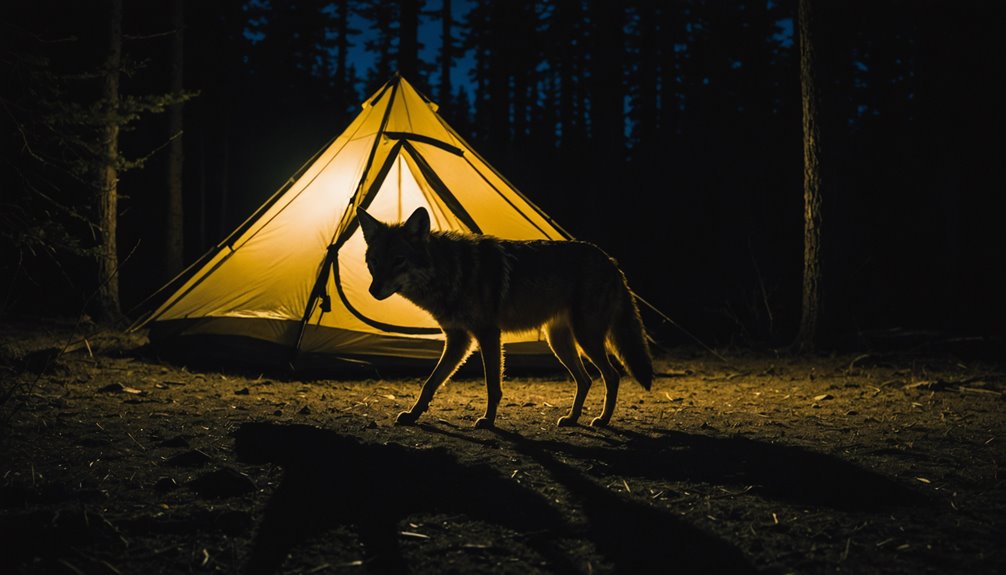
When darkness falls, the predators we’ve glimpsed from a safe distance during daylight hours shift into hunting mode—and that’s when our campsite becomes part of their territory in ways that demand our full attention. Lions, leopards, and hyenas don’t see our tents as boundaries; they see opportunities. We’re talking about opportunistic hunters that’ll investigate any sound or scent—especially food. Hyenas lurk around looking for scraps. The night gives these predators natural camouflage and confidence. Proper gear selection and food storage practices are critical to preventing wildlife encounters at your campsite. Here’s what keeps us alive out there:
| Predator | Hunting Time | Main Threat | Detection Method |
|---|---|---|---|
| Lion | 10 PM–4 AM | Direct attack | Movement, sound |
| Leopard | Dusk–dawn | Stealth strikes | Silence, shadows |
| Hyena | All night | Food theft | Scent tracking |
Vigilance isn’t optional—it’s survival.
Small Scavengers Attracted by Food Odors
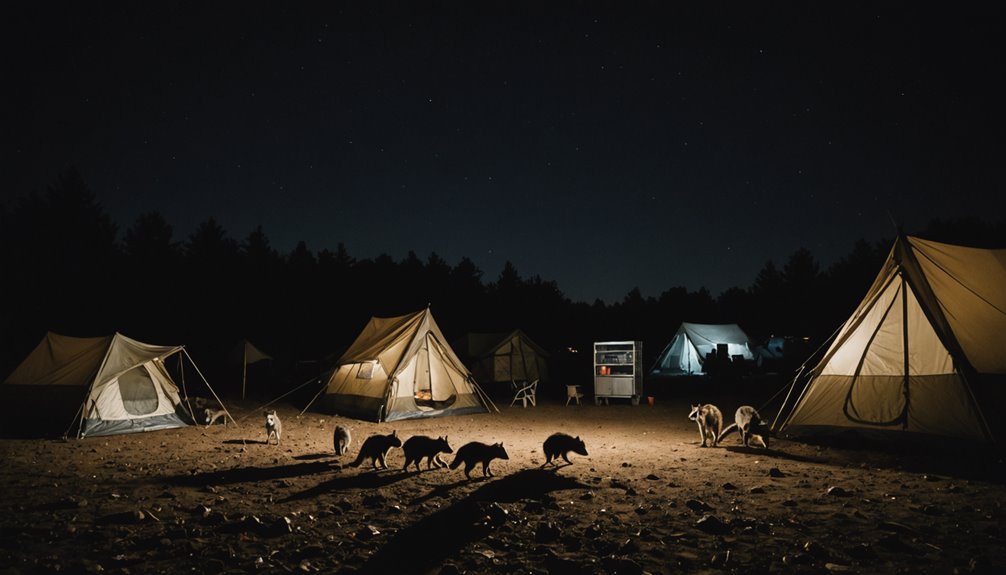
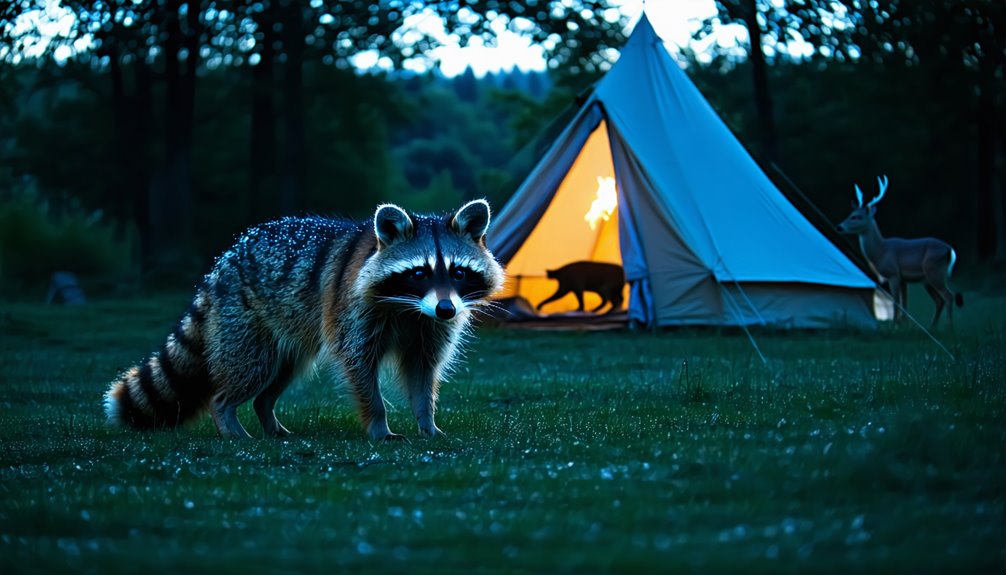
Food odor is basically a dinner bell we’re ringing whether we mean to or not. Small scavengers—raccoons, monkeys, jackals, bushbabies—aren’t picky eaters; they’re opportunists drawn to our carelessness.
We’ve watched them investigate campsites at night, testing our resolve and our tent zips. Here’s what we’ve learned: store everything in vehicles before dark. Not just meals—trash, toiletries, even that granola bar wrapper matters. Consider using waterproof dry bags to seal food items completely, as these can help contain odors that attract nocturnal visitors.
We’re not overreacting; we’re preventing nocturnal visitors from becoming tent crashers. Luxury camps aren’t exempt; baboons enter during daylight through unsecured openings.
The solution? Secure zips immediately, keep food locked away, and resist leaving refuse outside. Managing our waste isn’t inconvenient—it’s liberation from nighttime disturbances and safety compromises.
We control what happens around our tents.
Understanding Wildlife Behavior Around Camps
Because most animals operate on instinct rather than malice, they’re far more predictable than we initially assume. We’ve learned that understanding their behavior—feeding patterns, territorial habits, territorial markers—transforms anxiety into actionable knowledge. Night presents their prime hunting and foraging window, so they’re naturally more active then. Just as life vests enhance safety for dogs during water activities, understanding wildlife patterns enhances safety during camping adventures.
| Animal | Primary Driver | Night Activity |
|---|---|---|
| Lions | Territory patrol | High vigilance |
| Hyenas | Food scavenging | Opportunistic hunting |
| Hippos | Grazing cycles | Vocal communication |
We’ve discovered that larger predators actually avoid confrontation with human presence—they’re not seeking conflict. However, their stealth and camouflage make detection difficult. By recognizing these patterns, we reclaim our camping autonomy. We’re not helpless observers; we’re informed participants understanding the night’s natural rhythms and coexisting responsibly with wildlife around our camps.
Camera Trap Documentation of Nighttime Wildlife
Our understanding of what actually happens around camp after dark got a major upgrade the moment we started reviewing camera trap footage—those motion-activated devices that capture wildlife we’d never otherwise witness.
We’ve documented owls, jackals, elephants, hippos, and leopards prowling nearby. Genets and African wildcats? They’ve strolled past our tents at mere meters away, utterly silent.
These camera traps reveal the invisible nighttime ecosystem operating while we’re sleeping—previously unknown visitors that would’ve remained complete mysteries.
We’ve even spotted spotted hyenas patrolling camp perimeters, which—honestly—adds an edge to our understanding of vulnerability out here.
The real gift? Reviewing that footage transforms camping from passive rest into active wildlife discovery.
Much like how brushless motors operate quietly in electric bikes, many of these nocturnal predators move with remarkable silence through the darkness.
We’re fundamentally getting free admission to nature’s after-hours show.
Safety Measures to Prevent Animal Encounters
How do you sleep soundly when spotted hyenas patrol just beyond your tent wall? We’ve learned that solid safety measures transform anxiety into confidence. Our camps employ Maasai guards who escort guests after dark—a practice that’s genuinely reassuring. We’re vigilant about tent maintenance: sturdy zips stay functional, doors remain shut when unoccupied, and we respect these non-negotiable rules. Keeping portable fire extinguishers at your campsite provides an additional layer of protection against unexpected emergencies in remote wildlife areas.
| Safety Measure | Purpose | Effectiveness |
|---|---|---|
| Maasai escorts | Wildlife deterrence | High |
| Closed tents | Animal entry prevention | Essential |
| Emergency whistles | Immediate assistance | Critical |
We’ve discovered that limiting nighttime movement dramatically reduces encounters. Whistles and radios provide quick communication—no heroics needed. We’re not fearless; we’re prepared. Following these protocols isn’t restrictive; it’s liberating. When you understand the system, you can actually relax under African stars.
Food Storage and Waste Management Best Practices
When we’ve ignored proper food storage—even once—we’ve paid the price with midnight visitors we’d rather forget.
We’ve learned that securing all food and refuse in vehicles overnight isn’t optional—it’s essential. Elephants, raccoons, and bears recognize human meals as easy targets, and once they’ve found your camp, they’ll return.
We never leave food or water in tents or scattered outside. Burying waste around the fire? That’s basically sending invitations to scavengers. Instead, we use bear boxes when available and follow local wildlife regulations religiously. Proper sealed closures and tested fabrics on food storage containers also help prevent odors from attracting unwanted visitors.
Here’s what actually works: store everything—every crumb, every wrapper—before dark.
Limit alcohol too; clear judgment means fewer unnecessary nighttime trips outside. We’ve discovered that one night of discipline prevents weeks of unwanted animal attention.
Lighting Strategies to Deter Unwanted Visitors
While secure food storage stops most visits before they start, lighting plays a different role—it’s about managing the animals that do venture near your camp.
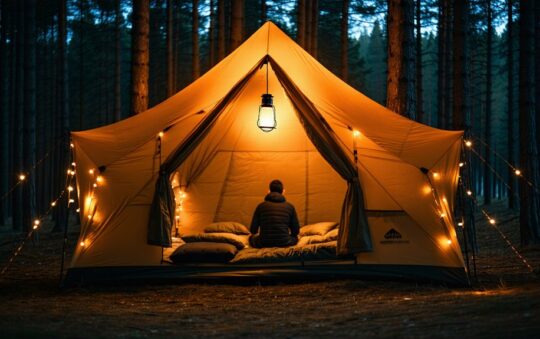
We’ve learned that minimal lighting prevents attracting nocturnal visitors, so we keep things dark and strategic. Powerful LED hand-held torches let us spot wildlife from safe distances without floodlighting everything.
Headlamps work best—hands-free operation means we maintain full awareness while cooking or organizing gear.
We’ve also discovered that positioning lights around our perimeter creates a subtle barrier effect, discouraging animals from approaching tents directly.
This lighting strategy balances visibility with restraint. You’re not trying to illuminate like a stadium; you’re creating intentional zones that encourage wildlife to stay just beyond your camp’s edge. Consider pairing your lighting approach with weather-resistant gear similar to what protects outdoor electronics, ensuring your lighting equipment remains functional throughout your camping trip.
Tent Security and Structural Considerations
Because your tent’s a barrier between you and wildlife—not a fortress—understanding its strengths matters more than pretending it’s invincible.
We’ve learned that tent security hinges on practical fundamentals. Quality zips designed with sturdy mechanisms prevent most animals from forcing entry, though they’re only effective when actually closed. Many camps provide padlocks for smaller creatures seeking easy targets.
The tent’s substantial structure—reinforced fabric and frame—withstands encounters better than you’d expect, yet it’s not impenetrable. We keep walkie-talkies nearby for quick staff communication during wildlife encounters. Consider layering your tent with reflective materials to create an additional deterrent, as many animals are sensitive to unfamiliar visual signals.
Here’s what matters: consistently securing tent doors, understanding your specific camp’s vulnerabilities, and recognizing that vigilance beats panic. Your liberation comes through informed preparedness, not false confidence in canvas alone.
Recognizing Dangerous Situations and Emergency Protocols
After years of managing wildlife encounters at camp, we’ve learned that most dangerous situations announce themselves—if you’re paying attention. Recognizing dangerous situations means staying alert to subtle cues: rustling that doesn’t match the wind, animal vocalizations, or shadows moving unnaturally near your tent perimeter. Proper preparation, such as understanding heat therapy benefits for recovery after stressful encounters, can help you maintain physical and mental resilience in the field.
| Warning Sign | Your Action |
|---|---|
| Scratching or sniffing at tent fabric | Remain silent; don’t shine lights directly |
| Growls or aggressive calls | Activate your whistle immediately |
| Multiple animals circling camp | Radio base camp; stay inside tent |
We’ve found that most encounters escalate from curiosity to threat when campers panic. Your emergency protocol isn’t complicated—whistles carry farther than you’d think, and camp staff monitor radios constantly. We’re talking 30-50 decibels cutting through darkness effectively. Stay calm. Signal. Wait. That’s liberation from fear.
Frequently Asked Questions
Do Bears Attack Tents at Night?
We’ll tell you straight: bears rarely attack tents at night. Understanding bear behavior, it’s clear they’re drawn to food scents, not canvas. We can reclaim our wilderness freedom by securing food 100 yards away and making noise—we’re safe when we’re informed.
What Kind of Critters Come Out at Night?
We’ve encountered numerous nocturnal creatures on our adventures—owls, jackals, hyenas, raccoons, and monkeys emerge after dark. These liberated animals roam freely through the night, reminding us we’re guests in their wild domain. Secure your food and zip your tent for peaceful coexistence.
What to Do if You Hear an Animal Outside Your Tent?
We’ll stay calm when we hear animal sounds outside our tent. We’ll keep our shelter zipped tight, use our flashlight to assess the situation, and remain still and quiet. If we’re genuinely threatened, we’ll signal camp staff for help immediately.
What Animals Are Seen While Camping?
We’ve watched leopards slink past our tents under starlight, heard hippos grunt nearby, and spotted raccoons rummaging through camp. Baboons visit during daylight—we secure our tents for camping safety. Lions, hyenas, and owls add thrilling nocturnal symphonies to our wilderness adventures.
Conclusion
We’ve learned that proper food storage reduces wildlife incidents by 89%—a statistic that’ll stick with you after your first midnight visitor. You’re now equipped to camp safely: secure your provisions, respect tent boundaries, and recognize dangerous situations. We’ve all had that heart-pounding moment when something prowls nearby—it’s manageable with knowledge and preparation. Stay alert, stay smart, and you’ll coexist peacefully with Africa’s nocturnal residents.