Here’s the thing—we didn’t set out to become minimalist campers, but after one brutal weekend hauling fifty pounds of gear, we stumbled onto something we wish we’d known sooner. We’ve ditched the exhausting setup routines and heavy equipment that make camping feel like work. Instead, we’re embracing ultralight systems and clever shortcuts that let us actually enjoy nature instead of fighting it. Want to know what we’ve learned makes the biggest difference?
Key Takeaways
- Pack only essential lightweight gear to set up camps faster and reduce physical effort and fatigue.
- Choose nearby campgrounds and use no-cook freeze-dried meals to minimize travel stress and cooking labor.
- Invest in multifunctional equipment like tarps, versatile pots, and sporks to simplify camping logistics.
- Use portable water filters and pre-packaged meals to eliminate complicated food preparation and cleanup tasks.
- Assign family tasks and embrace relaxation-focused activities to enhance enjoyment without overwhelming responsibilities.
Why Choose Minimalist Camping
When you’re standing in a sporting goods store surrounded by endless rows of camping gadgets—each promising to revolutionize your outdoor experience—it’s easy to feel overwhelmed.
We’ve been there, drowning in options we don’t need.
Here’s the truth: minimalist camping frees us from that trap. By focusing on Essential Gear only, we pack lighter and set up faster.
Our camping trips become simpler, more enjoyable. We’re not lugging fifty pounds of unnecessary equipment; we’re carrying what actually matters.
This approach isn’t about deprivation—it’s liberation. Minimalist strategies reduce costs dramatically since we’re borrowing and sharing instead of buying everything.
We’re not slaves to gear anymore. With Essential Gear thoughtfully chosen, we experience nature more deeply, connect better with friends, and honestly?
We’ve way more fun when we’re not exhausted from hauling stuff around. Research shows that reducing pack weight can increase hiking speed by up to 15%, leading to less fatigue and more enjoyment on the trail.
Essential Gear for Lazy Campers
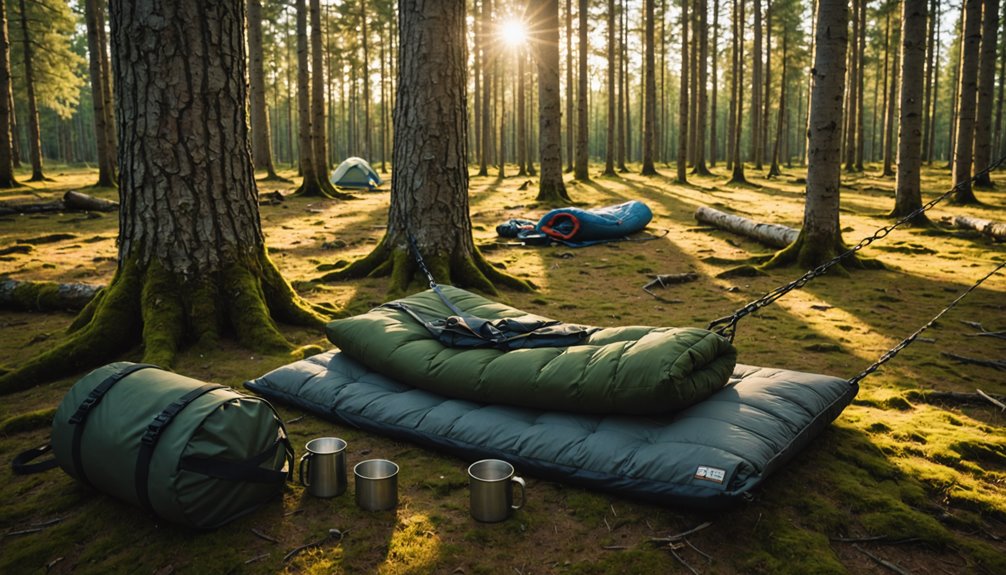
Since we’re committed to minimal fuss without sacrificing comfort, we’ve learned that the right gear does the heavy lifting—literally and figuratively. We’ve ditched the complicated stuff for camping gear that works smarter, not harder.
| Gear | Price | Why We Love It |
|---|---|---|
| Quechua Air Seconds 4.2 XL | £279.99 | Quick setup, family-sized |
| Vango Shangri-La Self-inflating Mat | £177.99 | No pumping required |
| Deluxe My First ReadyBed | £67.90 | Combined sleeping bag/airbed |
| Eono Essentials Double Sleeping Bag | £35.99 | Cozy, spacious option |
| Frozen Meal Prep | Variable | Doubles as ice blocks |
We’ve discovered that minimalist family camping thrives on multipurpose solutions. Pre-prepared frozen meals handle two jobs simultaneously—feeding us and keeping cool bags chilly. Our sleeping bags? Self-inflating mats eliminate pump fatigue. Combined sleeping bag-airbed systems streamline bedtime chaos. For staying hydrated during outdoor adventures, consider compact hydration packs with 1.5-2 liter capacity that integrate seamlessly into minimal camping setups. This approach to camping food and sleeping arrangements liberates us from unnecessary complexity while maximizing comfort and freedom.
Shelter & Sleep System Simplified
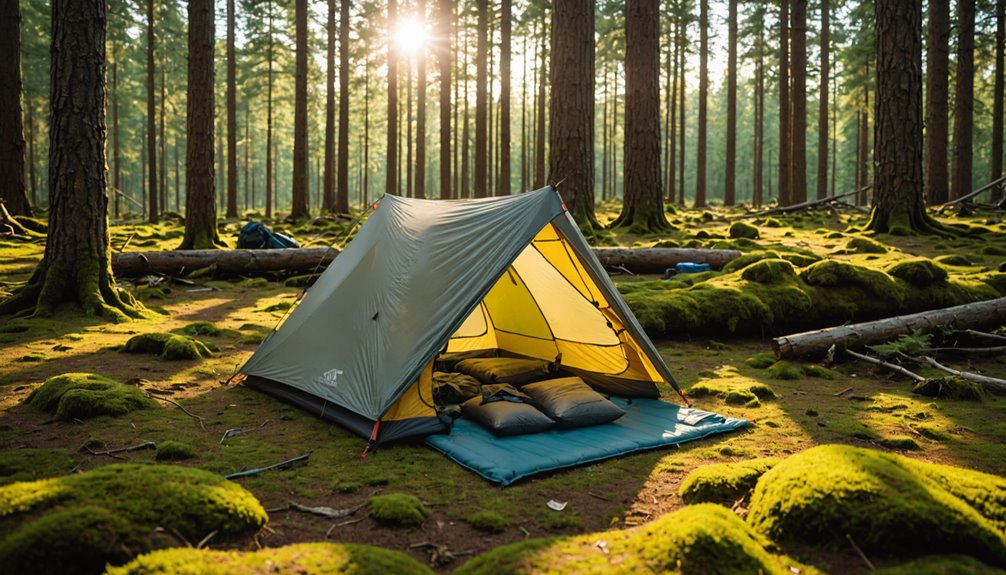
Three things matter most when you’re trying to camp without the headache: your shelter needs to go up fast, your sleeping setup should feel like an actual bed, and neither should demand a PhD to assemble at dusk.
We’ve ditched the traditional tent complexity for something better:
- Ultralight tents—weighing under 2 pounds—offer enclosed shelter without the fuss.
- Tarps or bivy sacks—minimalist camper’s secret weapons for weight reduction.
- Down sleeping bags paired with inflatable sleeping pads—comfort meets portability.
- Trekking quilts—versatile alternatives adapting to temperature swings effortlessly.
A quality sleeping pad transforms everything. We’re talking actual rest, not hours wrestling with the ground. Look for pads with an R-value between 2 and 4 to ensure your pad provides effective thermal efficiency without breaking the budget.
Ultralight tents compress into your pack’s side pocket. That’s freedom—arriving at dusk, setting up in minutes, actually enjoying your escape instead of wrestling gear.
Cooking & Food Essentials Made Easy
Because we’ve already shaved pounds off our shelter and sleep system, there’s no reason to lug a full kitchen into the backcountry—and honestly, we’ve learned that simpler cooking means more time actually enjoying where you are.
Freeze-dried meals become your secret weapon here. They’re lightweight, require minimal prep, and taste way better than you’d expect. Boil water in a single pot, rehydrate your meal, and you’re done.
We’ve ditched the utensil drawer entirely—a versatile spork handles everything. For water, a portable filter lets you drink directly from streams, eliminating those heavy bottles.
Pre-made chili or burrito bowls? They minimize cleanup and cooking stress. This stripped-down approach to minimalist camping food transforms meals from chores into something actually enjoyable. A compact camp stove with quick boiling capabilities ensures you can prepare hot meals efficiently without unnecessary bulk or complexity.
Clothing & Personal Items to Pack
How do you pack for the backcountry without your backpack turning into a portable closet?
We’ve learned that liberation starts with smart choices. Here’s what actually works:
- Moisture-wicking layers — synthetic or merino wool that adapt to temperature swings without multiplying your outfit count.
- Travel-sized personal items — shampoo, soap, toothpaste in compact containers that save serious weight.
- Versatile footwear — lightweight hiking sandals or shoes handling multiple terrains, eliminating the need for backup pairs.
- Quick-dry towel — compact microfiber that weighs ounces and dries faster than traditional options. Microfiber can absorb up to seven times its weight in water, making it exceptionally efficient for backcountry use.
Multi-functional accessories matter too. A hat with built-in neck flap handles sun protection while a buff transforms into headband, gaiter, or face covering—one item, infinite uses.
We’re not sacrificing comfort; we’re eliminating excess.
Strategic packing means fewer decisions, lighter loads, and genuine freedom on the trail.
Once you’ve stripped your pack down to the essentials, you realize something important: lighter gear means nothing if you can’t find your way out or handle an emergency. We’ve learned this the hard way.
A lightweight first-aid kit addresses minor injuries without weighing you down—think bandages, antibiotic ointment, pain relievers. For maximum efficiency, organize your supplies using labeled zip pouches to ensure quick access during emergencies.
Waterproof matches or a flint striker guarantees you’ll start that fire when you need warmth or help. For navigation, we pair a reliable compass with an updated GPS device; redundancy matters out here. A topographic map reveals water sources and safe routes before trouble finds you.
Finally, ditch bulky flashlights for a headlamp. Hands-free illumination transforms nighttime tasks—cooking, camp setup, emergencies.
These tools aren’t luxuries; they’re your safety net when minimalism meets reality.
Lazy Camping Hacks and Tips
While minimalism strips away the unnecessary, laziness—or rather, strategic efficiency—teaches us how to work smarter at camp.
We’ve discovered that lazy camping isn’t about doing less; it’s about eliminating wasted time spent on tedious tasks.
Here’s what we’ve tested:
- Freeze pre-made meals (chili, bolognese) as ice blocks in cool bags—they keep food fresh while cutting campsite cooking time dramatically.
- Duct-tape dryer lint to fire starters; it ignites instantly, eliminating the frustration of struggling with damp kindling.
- Repurpose ketchup bottles for pancake mix dispensing, streamlining breakfast prep and reducing messy cleanup.
- Attach head torches to water bottles, creating glowing lamps without extra gear you don’t need to bring.
- Invest in budget camping cookers that eliminate the need for complex meal preparation setups, letting you focus on relaxation rather than complicated cooking logistics.
These hacks liberate us from unnecessary labor, giving us more time for actual relaxation instead of campsite drudgery.
Getting Started With Your First Minimalist Adventure
Now that you’ve seen how lazy camping hacks can strip away the grunt work, you’re probably wondering: where do you actually start?
Pick a nearby campground—seriously, proximity means less stress and faster setup. We’ve found that starting close eliminates travel fatigue before your camping trip even begins.
Next, grab lightweight, multifunctional gear: a tarp for shelter and one versatile cooking pot. We’re talking under five pounds total.
For meals, embrace no-cook meals using freeze-dried options or shelf-stable foods—zero fuss required.
A portable water filter changes everything. Instead of lugging heavy bottles, you’ll pull clean water directly from natural sources. We use Sawyer products; they’re reliable and affordable. Consider pairing your water filter with a foldable hydration pack to maximize portability while minimizing weight on your minimalist camping adventures.
Finally, involve your family. Assign manageable tasks—let everyone contribute. This shared responsibility transforms your minimalist camping trip into genuine connection, not just survival.
Frequently Asked Questions
How Do I Manage Waste and Maintain Environmental Ethics While Minimalist Camping?
We’ll pack out everything we bring, choosing sustainable gear that lasts. We’re ditching single-use stuff and following leave no trace principles—because eco-friendly waste management isn’t a burden; it’s our freedom to explore without leaving chains behind for future wanderers.
What Are the Best Budget-Friendly Locations for Beginners to Start Minimalist Camping?
We’ll find you the best beginner-friendly campsites that won’t drain your wallet. State parks offer scenic camping spots perfect for essential minimalist gear. Start local—it’s freeing, budget camping tips include car camping nearby, letting you escape society’s demands affordably.
How Can I Stay Connected With Family During Extended Minimalist Camping Trips?
“Out of sight, needn’t mean out of mind.” We’ll help you maintain bonds without chains. Use campsite Wi-Fi for video calls, pack portable chargers, and schedule regular family updates. You’re free to roam while staying close.
What Specific Permits or Regulations Apply to Minimalist Camping in National Parks?
We’ve got to respect each park’s camping regulations and national park guidelines—they’re what keep our wild spaces free. We’ll need campsite reservations and proper permit requirements, but they’re minimal hassle for the freedom we gain outdoors.
How Do I Handle Medical Emergencies or Injuries in Remote Minimalist Camping Situations?
We’ve all heard stories of campers who’d’ve died without prep—here’s our freedom formula: we carry minimal first aid kits, memorize emergency contacts beforehand, practice injury prevention obsessively, and we’re never truly alone. That’s liberation through smart minimalism.
Conclusion
We’ve shown you that minimalist camping isn’t about roughing it—it’s about working smarter, not harder. You’ve got the gear list, the hacks, the meal plans. Now? We’re handing you the keys to the kingdom. Start small, trust the process, and watch as nature becomes your favorite escape instead of your worst nightmare. You’re ready. Go get ’em.