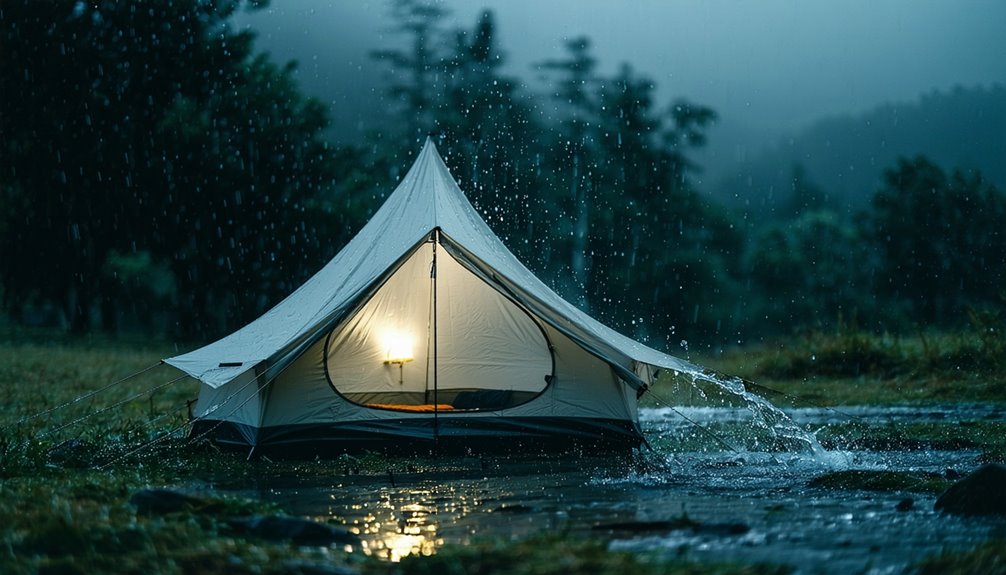
We’ve all faced that moment—rain drumming on the tent fabric at midnight—when you wonder if you’re actually safe in there. Here’s the truth: sleeping in heavy rain is absolutely doable, but it requires knowing what separates a cozy night from a soggy disaster. Your tent’s waterproof rating, where you pitch it, and how you prep matter enormously. But here’s where most campers slip up—and it could leave you shivering by dawn.
Key Takeaways
- A properly waterproofed tent with 2000mm hydrostatic head rating and sealed seams provides safe shelter during heavy rain.
- Positioning your tent on high ground with good drainage prevents water pooling and flooding around your sleeping area.
- Using a tent footprint, groundsheet, and rain fly properly tensioned significantly reduces moisture infiltration and interior dampness during storms.
- Tents offer no lightning protection; seek solid shelter if thunder follows lightning by fewer than 30 seconds.
- Monitor weather conditions before departure and establish emergency plans with escape routes for severe weather scenarios.
Essential Gear for Rain Camping
When you’re committed to camping in heavy rain—and let’s be honest, most of us end up doing this at least once—your tent becomes your entire world, so it’d better be a reliable one.
We’ve learned that a waterproof tent with at least a 2000mm hydrostatic head rating is non-negotiable for serious downpours. Before pitching your tent, use a fitted tent footprint that doesn’t extend beyond the edges—water pooling underneath ruins everything.
Pack your clothes and sleeping bags in dry bags to store them safely; we’ve seen too many ruined trips from moisture damage. Add a tarp overhead for cooking and gear protection. Consider using lightweight materials like ripstop nylon for your rain protection gear, as these durable fabrics resist tearing and water penetration while remaining packable.
Finally, regularly seal all tent seams, especially on older models. These essentials transform heavy rain from a camping catastrophe into manageable adventure.
Choosing and Setting Up the Perfect Campsite
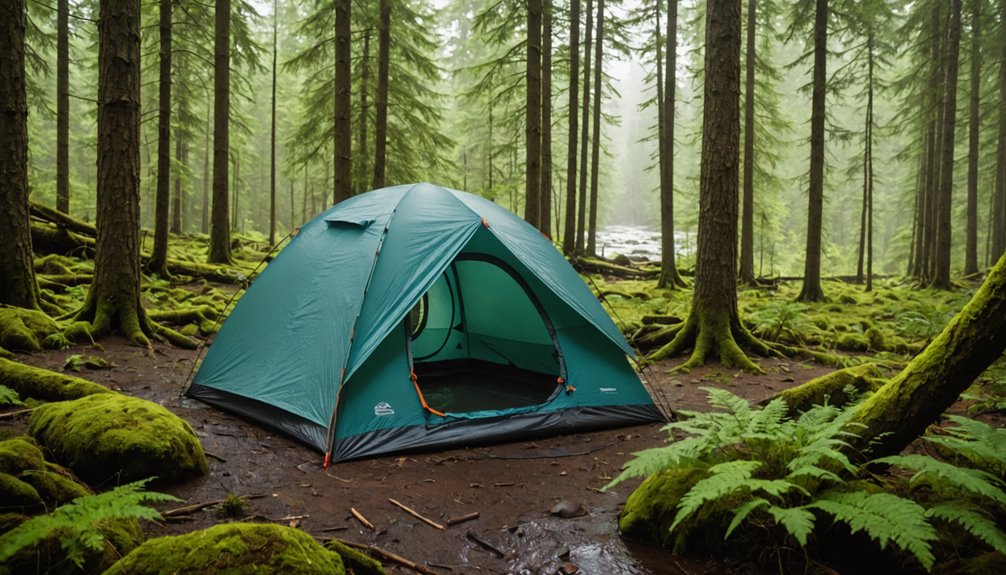
Once you’ve got your gear sorted, location becomes everything—and we’re not exaggerating.
We’ve learned this lesson the hard way during heavy rainfall events. When setting up your tent, prioritize high ground that naturally sheds water rather than pooling it. Positioning your tent away from trees prevents branch drops and constant dripping—trust us, nothing ruins sleep like that patter overhead.
Face your tent door away from prevailing winds; this simple move dramatically reduces rain infiltration during storms. Scout designated campgrounds offering proper tent pads with built-in drainage systems—they’re genuinely worth seeking out.
Clear surrounding debris and sharp objects meticulously before pitching. Consider using waterproof dry bags to protect your most essential gear from moisture seeping into your tent during heavy downpours. These fundamentals transform your waterproof stuff from merely functional to genuinely protective.
We’ve discovered that deliberate site selection matters more than gear quality when battling heavy rainfall conditions.
Proper Tent Setup and Waterproofing Techniques
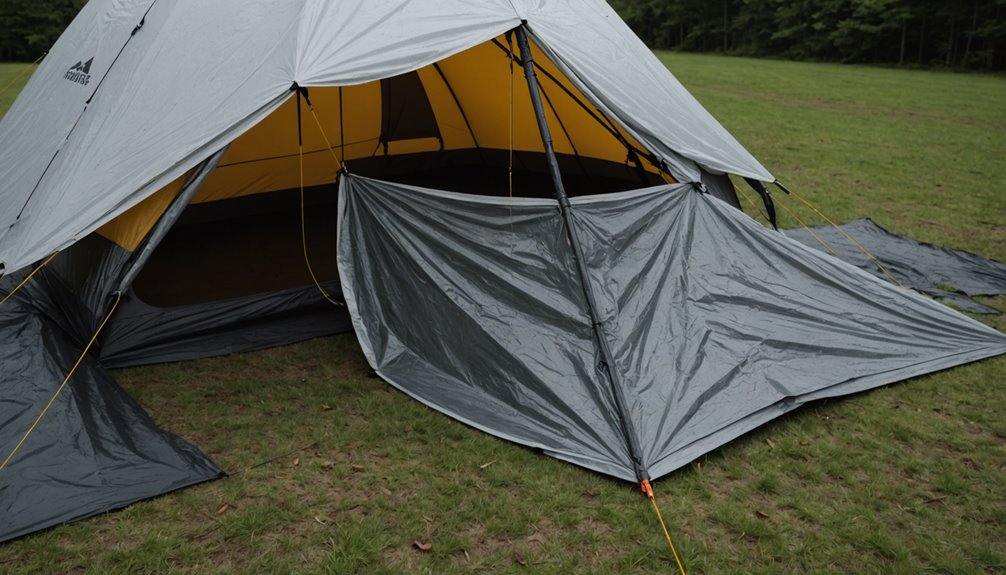
Because your tent’s fabric alone won’t cut it during downpours, we’ve learned that waterproofing is really where the magic happens—and it starts before you ever leave home.
We invest in tents with at least 2000mm hydrostatic head ratings, then spray seams and high-wear areas with waterproofing treatment.
Lay a groundsheet beneath your tent—but keep it tucked inside the edges to prevent water pooling.
Here’s the game-changer: properly tension your rain fly and use guy lines to create breathing room between the tent body and fly. This gap allows ventilation while blocking water infiltration during heavy rain.
Before departing, inspect all seams thoroughly. Additionally, choosing a water-resistant fabric with sealed seams provides a strong foundation for weatherproofing your shelter.
We’ve discovered these pre-trip preparations transform tent setup from anxiety-inducing to genuinely manageable, giving us the freedom to sleep soundly regardless of what the sky throws our way.
Staying Dry While Camping in the Rain
All the waterproofing prep in the world won’t matter if you’re stuffing wet sleeping bags and damp clothes directly into your tent—we’ve learned this the hard way.
Here’s what actually keeps you dry: store wet gear outside your sleeping area in waterproof containers. Check the weather forecast before heading out, then pack accordingly. We’ve found that separating moisture from your sleeping space makes all the difference. Consider using breathable back panels and moisture-wicking materials in your gear to further reduce humidity buildup inside your tent.
| Mistake | Consequence |
|---|---|
| Bringing wet clothes inside | Mold, mildew, compromised warmth |
| Ignoring weather forecast | Unprepared for conditions |
| Storing gear without protection | Ruined equipment, damp tent |
Use a tarp strategically beneath your tent—don’t let it extend beyond edges, or you’ll collect rainwater pools. Keep your gear organized and protected. We’re not just camping; we’re reclaiming comfort in nature’s unpredictability.
Cooking and Eating When Camping in the Rain
Rain doesn’t have to mean cold sandwiches and soggy morale—we’ve discovered that a well-positioned tarp transforms your campsite into a functional kitchen.
We’ve learned to set up waterproof ground covers beneath our cooking area, keeping our feet dry while protecting wet gear from getting wetter. Pre-measuring ingredients into waterproof containers saves us precious time outdoors when conditions aren’t ideal.
Here’s our liberation hack: embrace no-cook meals like wraps and energy bars that demand minimal fuss. When we do cook, we keep it simple—one-pot wonders minimize exposure.
We’ve found that quick preparation means less standing around in miserable conditions. For cooking in rain, electric cookers like the foldable HYTRIC model are safer options since they don’t emit harmful fumes and provide reliable heating regardless of weather. Always pack out food scraps responsibly, keeping wash water away from natural sources.
These strategies let us eat well without surrendering to rain’s dampening effects on our spirits and stomachs.
Clothing and Layering for Wet Conditions
When we’re camping in heavy rain, what we wear matters as much as where we sleep—and we’ve learned this lesson through plenty of soggy mistakes.
We start with a moisture-wicking base layer, synthetic or merino wool, that pulls sweat away from skin. Next comes an insulating mid-layer like fleece, trapping warmth while letting moisture escape.
Finally, our waterproof outer layer—Gore-Tex works brilliantly—shields us from downpours without causing overheating.
Here’s our hard-won rule: skip cotton entirely. It absorbs water like a sponge and dries impossibly slowly, creating dangerous chilling in wet conditions.
We layer snugly but not restrictively, allowing movement and airflow. For added warmth during extended rainy trips, consider pairing your clothing layers with an insulated sleeping pad underneath your tent to trap body heat from below while your garments manage moisture from above.
This clothing system keeps us dry, warm, and actually comfortable when everything outside screams otherwise.
Safety Considerations During Thunderstorms
Because thunderstorms pack genuine danger that no tent can stop, we’ve learned to take them seriously—and you should too. Tents aren’t Faraday cages, meaning they won’t shield you from lightning strikes. Here’s what we’ve discovered works: count seconds between lightning and thunder. If that interval drops below 30 seconds, the storm’s dangerously close—get to solid shelter immediately. A safety whistle with compass can help you navigate to shelter quickly if visibility becomes compromised during the storm.
| Storm Distance | Time Gap | Your Action |
|---|---|---|
| Far away | 30+ seconds | Monitor closely |
| Approaching | 15-29 seconds | Prepare to leave |
| Immediate threat | Under 15 seconds | Evacuate now |
If you’re stuck in your tent, squat in the center, avoid the frame entirely, and never touch the fabric. Watch for flooding too—heavy rain transforms low-lying areas into dangerous traps. Your freedom to camp means respecting nature’s raw power.
Weather Monitoring and Emergency Preparedness
Before you even pack your tent, your actual safety starts with knowing what’s headed your way—and we can’t stress this enough.
We’ve learned the hard way that weather monitoring isn’t optional; it’s foundational. Download a reliable weather app and check real-time updates obsessively during your trip. Severe weather warnings demand immediate attention—don’t ignore them. Consider using GPS watches with topo maps to access offline terrain data that can help you identify safe shelter locations and navigate to higher ground if conditions worsen.
Here’s what we do: we identify shelter locations beforehand, mapping nearby buildings or vehicles. We carry a fully charged mobile phone in a waterproof case—non-negotiable.
Create an emergency plan listing escape routes and communication strategies.
Why? Because we’ve seen conditions deteriorate fast. Darkening skies and rising winds mean moving now, not later.
Stay informed. Stay prepared. Your freedom to camp safely depends on it.
Frequently Asked Questions
Can You Sleep in a Tent in the Rain?
Yes, we can sleep in a tent during rain if we’re prepared. We’ll master tent waterproofing tips, pack rain gear essentials, optimize tent ventilation techniques, protect our sleeping bag, and follow solid campsite selection advice for ultimate freedom camping comfort.
Is It Okay to Sleep in a Tent During a Thunderstorm?
No, we shouldn’t sleep in tents during thunderstorms. Frankly, flimsy fabric fails us—tent materials won’t shield lightning risks. We need storm preparedness: seek solid structures for thunder safety. Our camping tips? Escape to vehicles or buildings. We’re worth the effort to stay safe.
What if I Am in a Tent and It’s Heavy Rain?
We’re here to tell you it’s totally doable—you’ve got this! We’ll prioritize tent safety tips and waterproof gear while implementing rain protection strategies. We’re ensuring proper tent drainage solutions and camping comfort essentials so you’re free to rest easy.
How to Sleep During Heavy Rain?
We’ve got this! Studies show 60% of campers abandon trips due to poor rain prep. We’ll stay comfortable by elevating our sleeping gear, ensuring tent waterproofing, monitoring weather updates, and organizing dry spaces—embracing nature’s freedom without sacrificing our rest.
Conclusion
We’ve walked you through rain camping’s “moisture management adventure”—and here’s the truth: it’s totally doable. A 2000mm hydrostatic-rated tent, proper groundsheet, and high ground positioning transform soggy situations into cozy retreats. We’ve learned that preparation beats panic. Yes, thunderstorms demand respect—lightning doesn’t care about your tent’s waterproofing. But with weather monitoring and solid gear, you’ll sleep soundly through downpours. Ready to embrace the pitter-patter?