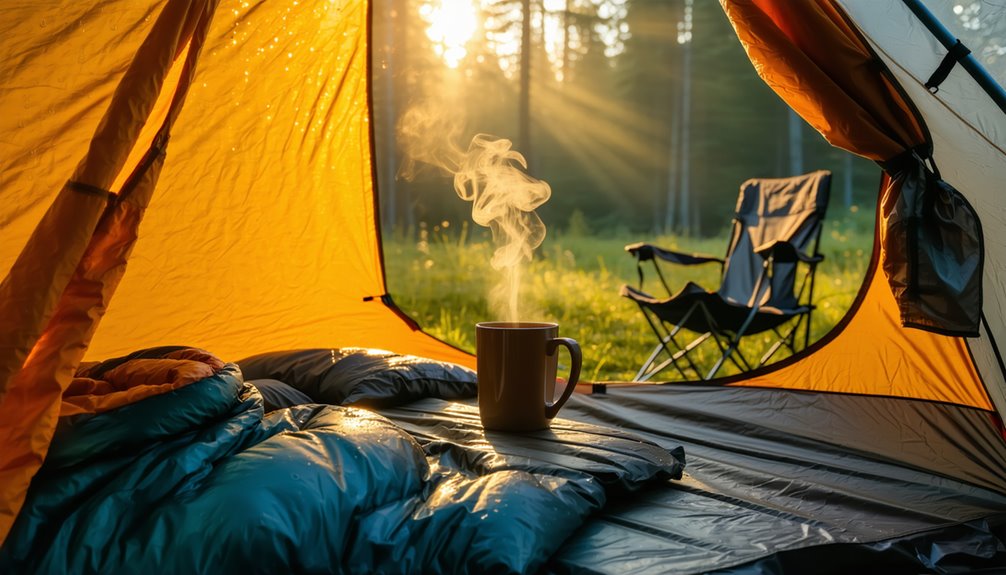
We’ve all been there—waking up at 5 a.m. in a cold tent, cursing our ambitious selves. But here’s what we’ve learned: early camping mornings don’t have to feel like torture. With a few strategic adjustments—positioning your tent for natural light, prepping the night before, and ditching your phone at bedtime—you can actually enjoy those dawn hours. The secret isn’t willpower; it’s working with your body’s natural rhythms. So what’s the first move?
Key Takeaways
- Establish a consistent sleep schedule 7-9 hours nightly to regulate your circadian rhythm and wake naturally without misery.
- Orient your tent eastward to capture gradual morning sunlight, which naturally stimulates cortisol production for gentle awakening.
- Position an alarm clock 10 feet away to encourage movement and gradual wakefulness upon hearing it.
- Prepare your campsite the night before by organizing breakfast items and laying out clothing to minimize morning chaos.
- Create a calming bedtime routine with herbal tea and meditation while avoiding screens one hour before sleep.
Establish a Consistent Sleep Schedule
Before you pack your tent and sleeping bag, here’s the truth: your body’s internal clock—what sleep experts call your circadian rhythm—is basically running on autopilot, and you’ve got to reprogram it if you want to actually wake up when the sun does.
We’re talking about ditching the weekend sleep chaos and committing to consistent bedtimes and wake times—even before you leave home. Aim for that 7-9 hour sweet spot sleep experts recommend; it’ll transform your camping experience from exhausting to energizing. Maintaining this schedule helps regulate your circadian rhythm for better sleep quality and natural wake times.
Start adjusting a few days beforehand. Your body’ll adapt faster than you’d think. Make sure you’re hitting the hay at the same time nightly, and you’ll wake naturally—no jarring alarms needed.
A great night’s rest isn’t luxury; it’s your freedom pass to actually enjoying those early mornings.
Choose a Reliable Alarm System
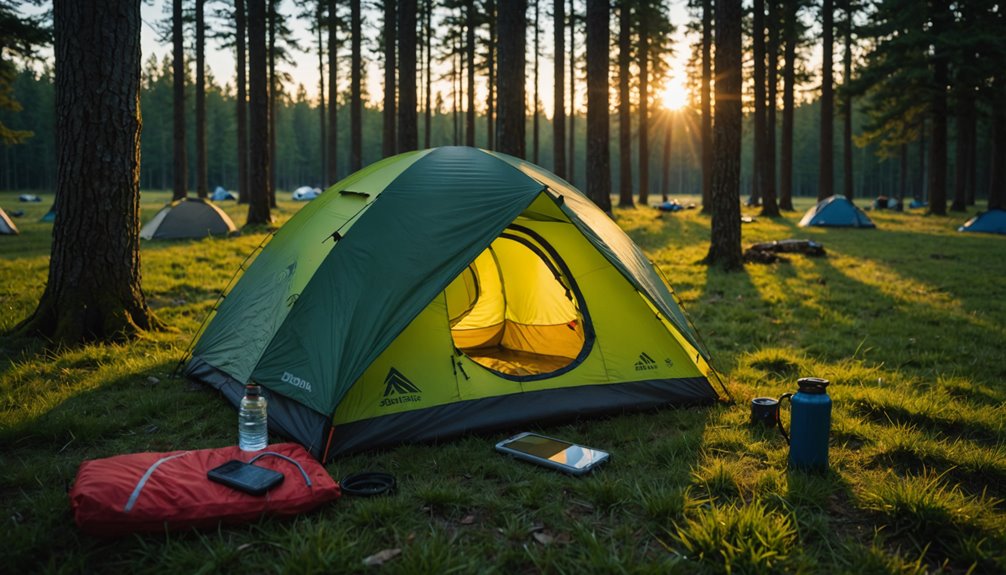
We’ve learned the hard way that your alarm choice makes or breaks your morning. Here’s what we trust:
| Option | Best For | Reliability |
|---|---|---|
| Outdoor alarm clock | Remote camping | Weather-resistant, no charging |
| Smartphone alarm | Car camping | Customizable sounds, portable |
| Wind-up clock | Backup system | Zero battery dependence |
| Natural wake-up | Minimal tech | Dawn positioning, bird calls |
| Hybrid approach | Maximum security | Combined methods |
We recommend pairing a reliable alarm clock with your smartphone alarm—redundancy beats regret. Position your tent to catch first light; nature’s own wake-up system costs nothing and never fails. Consider storing your alarm devices in a waterproof duffle bag to protect them from moisture and unexpected weather conditions during your camping trip.
Harness Natural Sunlight for Gradual Awakening
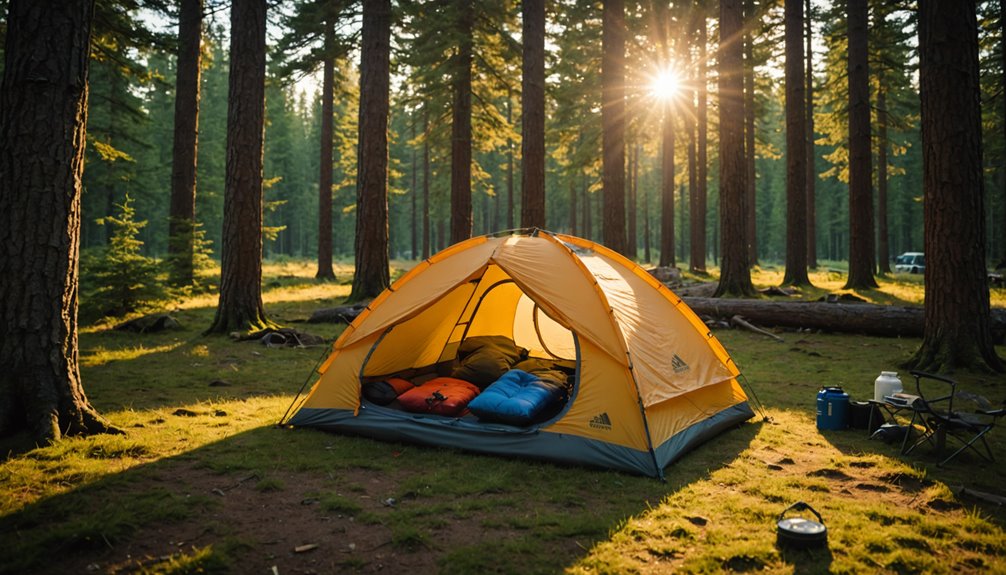
Why fight your body’s natural clock when the sun’s already doing the heavy lifting for you?
We’ve discovered that positioning your tent to catch morning sunlight—even at the end of the day when you’re planning your setup—makes waking feel less like torture. Natural light triggers cortisol production, your body’s built-in alarm system.
Here’s what works: orient your tent eastward, let soft morning rays gradually brighten your sleeping space without that middle of the night jolt. We use light-colored tents or reflective coatings to amplify sunlight’s effect, which also provides additional sun defense throughout the day.
Crack open your tent flaps slightly for a cozy-yet-bright environment. Pair this with a sleep mask at night—the contrast makes sunrise awakening feel invigorating, not jarring.
Your circadian rhythm handles the real work; sunlight’s just the gentle nudge you needed.
Prepare Your Campsite the Night Before
When you’re groggy and bleary-eyed at 5:30 AM, the last thing you’ll want to do is hunt for your coffee grounds or wonder where you left your hiking boots—so we’ve learned to do the heavy lifting the night before.
| Essential Item | Location | Status |
|---|---|---|
| Breakfast food & dried fruit | Cooler near tent entrance | Prepped |
| Coffee equipment | Camp table | Ready |
| Clothing layers | Gear bag | Organized |
We organize everything strategically. Lay out breakfast items, cooking gear, and clothes in designated spots. Create a comfortable morning zone with a camp chair or mat—equally useful for reflection or meal prep. Secure your tent against wind and rain, ensuring undisturbed sleep. Selecting moisture-wicking base layers the evening before ensures you’ll stay dry and comfortable during your early morning activities. These preparations transform chaotic mornings into smooth shifts, giving you genuine freedom to embrace dawn rather than fight it.
Organize Breakfast Items for Quick Access
Nothing kills a sunrise hike faster than standing in your campsite at dawn, squinting at mismatched containers while your coffee gets cold.
We’ve learned the hard way—organization transforms mornings from chaotic to glorious.
Pack a dedicated breakfast bag the night before. Stock it with non-perishable foods: granola bars, instant oatmeal packets, dried fruit, and nuts. Pre-measure your coffee grounds and pancake mix into separate containers—no guessing, no mess.
Position this bag at your cooler’s front, not buried beneath everything else.
Here’s the freedom move: set up your camp stove in a designated spot. For budget-conscious campers, affordable camping cookers like single-burner propane stoves deliver reliable performance without breaking the bank. This meal prep strategy eliminates the frantic search that derails early risers.
You’ll grab your bag, fire up coffee, and hit the trail before most campers yawn awake. That’s not just breakfast—that’s liberation.
Stay Hydrated Upon Waking
You’ve got your breakfast sorted and your camp stove positioned—now comes the part most early risers forget.
We’ve all woken up in the tent feeling like dried-out sponges. That grogginess? Dehydration. Before coffee, before food, grab 16-20 ounces of water. Your body lost fluids overnight, and rehydrating kickstarts your metabolism and sharpens your alertness.
Here’s what we recommend for solid hydration strategies:
| Time | Beverage | Benefit |
|---|---|---|
| Immediately upon waking | Plain water | Rehydrates quickly |
| 15 minutes after | Electrolyte drink | Restores electrolyte balance |
| With breakfast | Water | Supports digestion |
| Mid-morning | Herbal tea | Maintains hydration |
| Before activity | Water + electrolytes | Prevents fatigue |
Keep your water bottle within arm’s reach—seriously, right next to your sleeping bag. Studies show that hands-free hydration packs with accessible sipping tubes eliminate excuses and encourage consistent water intake throughout the morning. We’ve learned that accessible hydration eliminates excuses. Your morning routines become smoother when you’re not stumbling around dehydrated, and you’ll actually want those early adventures instead of resenting them.
Combat Morning Grogginess With Movement
After you’ve downed that first bottle of water, your body’s still clinging to sleep mode—and that’s where movement comes in.
We’ve found that morning stretches work wonders for shaking off that foggy feeling. Try gentle outdoor yoga for 5-10 minutes; it stimulates circulation without requiring heroic effort.
Dynamic movements—jumping jacks, a quick jog around camp—boost endorphins fast, making wakefulness actually achievable.
Here’s the thing: your brain needs oxygen, and movement delivers it. We’re not suggesting you sprint a 5K before coffee. Instead, commit to whatever gets your body moving deliberately.
Set an intention while you move—maybe “today I reclaim my freedom.” That mental anchor? It transforms grogginess into purpose, making early mornings feel less like punishment and more like opportunity.
Wearing moisture-wicking fabrics during your morning activities will help regulate body temperature and keep you comfortable as you move through your pre-dawn routine.
Optimize Your Sleeping Environment for Early Mornings
Before your alarm even goes off, your campsite’s setup is already working for or against you—and we’ve learned this lesson the hard way, after one too many nights listening to raccoons rummage through nearby brush.
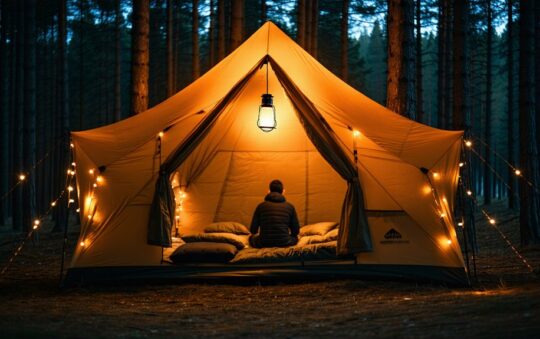
We’ve discovered that tent orientation matters tremendously. Face your tent east to catch sunrise light, which naturally signals your body to wake. Pair this with sleeping bag comfort—invest in quality insulation rated 10-15°F below your expected temps—and you’re already winning. An R-value between 2 and 4 indicates effective thermal efficiency for your sleeping pad, ensuring your body heat stays trapped while cold air is blocked.
Natural soundscapes transform everything. Position near flowing water or rustling leaves rather than near roads. This white noise actually helps you sleep deeper, making early mornings feel less brutal.
Keep your sleeping area clutter-free. Organization reduces mental noise, letting your mind settle faster.
| Element | Impact | Setup Time |
|---|---|---|
| Tent orientation | Circadian alignment | 5 min |
| Quality sleeping bag | Sleep depth | 2 min |
| Natural sounds | Acoustic comfort | Variable |
| Clutter-free space | Mental clarity | 10 min |
| Flat ground | Physical comfort | 15 min |
Create a Calming Bedtime Routine
Once your tent’s positioned and your sleeping bag’s laid out, the real work begins—what happens during those final hours before sleep determines whether you’ll actually rise with the sun or hit snooze for the third time.
We’ve found that intentional bedtime activities signal your body it’s time to shut down. Skip screens an hour before sleep; blue light sabotages your natural rhythms. Instead, journal about tomorrow’s hike or meditate for ten minutes. Brew caffeine-free herbal tea—chamomile works reliably—and sip it slowly.
We’re serious about relaxing scents too; lavender essential oil applied to your pillow costs nothing and shifts your nervous system toward rest. Maintain your bedtime religiously, even camping. Your internal clock appreciates consistency, rewarding you with genuine early-morning alertness. If you’re planning an early morning hike or outdoor activity, remember that UV exposure peaks between 10 AM and 4 PM, so an early start helps you maximize sun safety during your adventure.
Set Yourself Up for Early Morning Success
All the bedtime tea and lavender oil in the world won’t matter if you’re fumbling around your tent at 5 a.m. searching for your boots—so we’ve learned to prep the night before, treating our campsite like a well-organized cockpit. Organizing your gear the night before reduces decision fatigue and ensures you can locate essential items quickly in low light conditions.
| Setup Element | Night-Before Action |
|---|---|
| Sleeping area | Arrange gear within arm’s reach |
| Alarm placement | Position 10 feet away to force movement |
| Clothing | Lay out layers by the tent entrance |
We position our tent strategically—facing east for natural dawn light—and place our alarm clock far enough that we can’t cheat with snooze. Before bed, we limit water intake to avoid bathroom trips interrupting sleep. Come morning, we’re energized, ready to hear wildlife sounds and swap campfire stories instead of wrestling tangled gear.
Frequently Asked Questions
What Is the 2 2 2 Rule for Camping?
We follow the 2 2 2 Rule as our camping routine: two hours outdoors, two hours screen-free, and two hours winding down. These sleep strategies and morning rituals liberate us from exhaustion, helping us wake naturally refreshed and reclaim our freedom from the tyranny of groggy mornings.
How to Wake up Early and Not Feel Miserable?
We’ll break free from miserable mornings by establishing Early Morning Rituals that energize us. Our Camping Sleep Strategies—comfortable bags, no late caffeine—ensure quality rest. We’re fueling up with Energizing Breakfast Ideas that make waking early feel like liberation, not punishment.
What Is the 200 Rule for Camping?
We early risers embrace the 200 Rule as a camping essential: maintaining 200 feet between our outdoor routine and water sources. It’s our liberation from ecological guilt, protecting both pristine waters and wildlife habitats while honoring Leave No Trace principles.
What Are the 7 C’s of Camping?
We’ve got seven camping essentials you’ll love: Container, Clothing, Cooking, Comfort, Cleanup, Companionship, and Communication. They’re your outdoor gear framework for campsite etiquette and freedom. Master these, and we’re breaking free from camping stress entirely.
Conclusion
We’ve mapped the path from groggy camper to morning person—and here’s the truth: you won’t transform overnight, but you’ll transform. Start small. Pick one strategy—maybe sunlight positioning or a bedtime routine—and build from there. We’ve all dragged ourselves out of sleeping bags, bleary-eyed and regretful. But with these tools? You’re not fighting nature anymore; you’re working with it. Your early mornings await.

)