
We’ve all been there—you haven’t played soccer in five years, and suddenly you’re committed to joining a competitive league this fall. Getting back into shape feels overwhelming, especially when you’re watching teammates sprint effortlessly while you’re catching your breath. Here’s what we’ve learned works: the secret isn’t pushing hard immediately, but rather building momentum strategically. Before you lace up those cleats, there’s an essential first step that’ll determine whether you actually make it to game day.
Key Takeaways
- Consult your doctor and assess baseline fitness through timed walks, push-ups, and sit-ups to establish a personalized training foundation.
- Start with modified drills at low intensity for 15-20 minutes, focusing on bodyweight exercises and frequent recovery breaks to prevent burnout.
- Gradually increase workout frequency from two to five days weekly, mixing cardiovascular and strength training with progress reviews every two weeks.
- Fuel your body with balanced nutrition including lean proteins and complex carbs, hydrating with water every 15 minutes during activity.
- Use visualization techniques daily and stay connected with teammates through group chats and training sessions for accountability and motivation.
Talk With Your Doctor Before Starting

Before you lace up those cleats or step onto the court, here’s the truth we’ve all learned the hard way: getting a physical exam from your doctor isn’t just paperwork—it’s your foundation. We need that baseline assessment of our health and fitness level before diving into team sports training. Your doctor reviews your medical history, checks for old injuries, and identifies any pre-existing conditions that could derail our progress or cause harm. They’ll ask the tough questions we sometimes skip over ourselves. Then comes the liberating part: getting personalized recommendations tailored specifically to your body. We’re not following generic plans anymore—we’re building something designed for safety and success. If you’re starting from an out-of-shape baseline, your doctor can help you understand which affordable equipment options might support your training without overwhelming your body during the initial conditioning phase. That conversation transforms training from reckless guessing into strategic, informed action.
Assess Your Current Fitness Level

Now that you’ve got your doctor’s approval, it’s time to get honest about where you’re actually starting from—not where you wish you were. We’re talking real data: time yourself walking a mile, count your push-ups, notice if stairs leave you winded. This baseline matters because it shows us your actual starting point, letting us build a training plan that’ll help you stay safe and avoid injury. Staying properly hydrated during this assessment phase is crucial, as consistent hydration can significantly impact your performance metrics and help you accurately gauge your fitness level.
| Fitness Marker | Your Baseline |
|---|---|
| One-mile walk time | ___ minutes |
| Push-ups completed | ___ reps |
| Sit-ups completed | ___ reps |
| Stair climbing difficulty | ___ (1-10 scale) |
Record everything. These numbers aren’t judgments—they’re your liberation toolkit. They prove your progress later when you’re stronger, faster, and genuinely ready for team sports.
Set Realistic and Achievable Goals
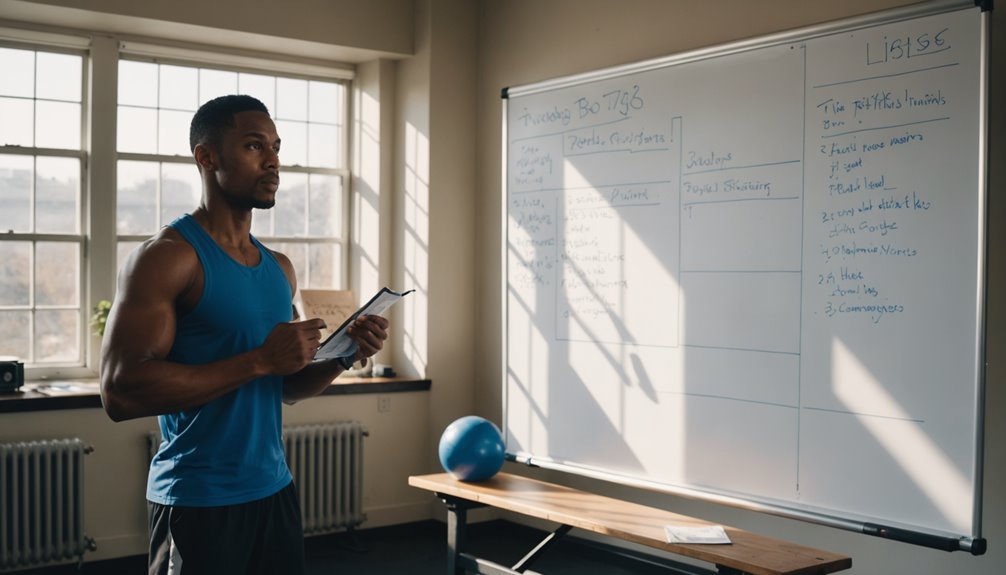
With your baseline numbers in hand, you’re ready to build goals that’ll actually stick—not the vague “get in shape” stuff that fizzles by February. We’ve all been there. Here’s how we set realistic goals that work:
- Break it down. Instead of “lose 20 pounds,” aim for losing two pounds monthly while building your fitness program consistently.
- Increase gradually. Move from two workout days weekly to five over several weeks—your body needs time to adapt without burning out.
- Mix your training. Combine cardiovascular work with strength training to build endurance and power for team sports, keeping things interesting while hitting multiple fitness components.
Review your progress every two weeks. Adjust when needed. This flexibility keeps you honest and motivated through real results. Consider using a fitness tracker to monitor heart rate and other key metrics during your workouts, which provides real-time feedback for making data-driven training adjustments.
Start With Modified Drills and Low Intensity
Once you’ve got your goals mapped out, the temptation hits hard—you want to jump into full-contact scrimmages and crush conditioning drills like you’re training for the pros. Don’t. We’ve learned the hard way that modified drills save you from burnout and injury.
Start with fundamental skills—passing, dribbling—at low-intensity levels. Think walking or light jogging to build your cardiovascular base without destroying your joints. We keep sessions short: 15-20 minutes initially. Your body’s rebuilding, not breaking down.
Body weight exercises—squats, push-ups—develop real strength without the added stress of weights. They’re accessible, adjustable, and brutally honest about your current fitness level.
Here’s the key: frequent breaks matter. Recovery isn’t laziness; it’s strategy. To maximize your recovery benefits, consider incorporating foam rolling sessions 2-3 times per week, which can significantly reduce muscle stiffness and improve flexibility between training days. Gradually increase duration as you adapt. This measured approach? It actually works.
Build Total Body Strength Gradually
As your body adapts to basic conditioning, it’s time to layer in strength training—the real foundation that’ll keep you durable when things get competitive.
We’re talking about building actual muscle and resilience here. Start with bodyweight basics—squats, push-ups—before jumping into heavier lifts. Two weekly sessions minimum gets you results without burning out.
Here’s what we recommend:
- Master compound movements like deadlifts and bench presses once you’ve nailed the fundamentals; they hit multiple muscle groups simultaneously
- Prioritize your lower body through lunges and step-ups to develop stability essential for explosive movements in team sports
- Nail your form first—consider working with a trainer initially to prevent injuries that’ll sideline you
Progressive overload matters. We gradually increase intensity and volume week by week. This approach builds genuine strength while keeping your joints safe. For convenience and variety in your home training sessions, adjustable dumbbells offer quick weight changes that support this progressive approach without requiring multiple fixed weights.
Incorporate Sport-Specific Conditioning
General strength gets you in the door, but your sport demands something more specific—conditioning that matches what you’ll actually face on game day. We’ve found that sport-specific drills transform your fitness into real performance. Soccer players crush agility ladders; basketball players nail dribbling patterns. That’s where your gains actually matter.
Interval training is your secret weapon here. We’re talking short sprints followed by recovery—mimicking actual game intensity rather than mindless jogging. Your body adapts to what you demand of it.
Don’t skip plyometric exercises like box jumps or medicine ball throws. They build explosive power for jumping and sprinting, the movements that win games. Throw in small-sided scrimmages too—game-like scenarios develop both fitness and tactical awareness simultaneously. You’re not just conditioning; you’re preparing for battle. Since muscle tissue burns more energy at rest than fat, incorporating these explosive movements into your training helps you build the lean, powerful physique needed for sustained athletic performance.
Develop a Consistent Training Schedule
If you’ve been treating your training like a Netflix subscription—sporadic, guilt-ridden, and easy to cancel—it’s time to flip the script. We’re building real momentum here, not motivation theater.
Here’s what consistent physical activity actually looks like:
- Start small: Three to five training sessions weekly, beginning with 20-30 minute blocks. Short bursts beat zero every time.
- Mix it up: Combine aerobic work—jogging, walking—with strength training to build endurance and muscle simultaneously without boredom.
- Honor recovery: Schedule rest days religiously. Your muscles adapt during downtime, not during workouts.
Track everything—journal entries or fitness apps work equally well. Seeing progress documented transforms abstract goals into tangible proof. Research shows that 60 minutes of moderate activity daily boosts brain function and enhances focus during training. We’re not chasing perfection; we’re chasing consistency. That’s where real liberation lives.
Fuel Your Body With Proper Nutrition
You can’t out-train a bad diet—trust me, I’ve watched plenty of athletes try. We’ve learned that fueling your body properly isn’t optional; it’s foundational. A balanced nutrition plan rich in fruits, vegetables, lean proteins, and whole grains powers your performance and recovery.
Here’s what works:
| Timing | Food Type | Benefit |
|---|---|---|
| 2-4 hours before | Complex carbs | Boosts energy levels |
| During activity | Water every 15 min | Maintains hydration |
| Post-game | Lean protein | Supports recovery |
We’ve ditched prepackaged and fried foods—they sabotage your progress. Instead, we’re consuming real nutrition that delivers essential vitamins and minerals. Don’t skip hydration either; staying consistently hydrated prevents performance crashes. Pairing your nutrition plan with solar-powered chargers or portable hydration solutions ensures you maintain energy levels during extended training sessions. Consider consulting a sports nutrition program for personalized guidance tailored to your specific energy demands. Your body’s your vehicle—fuel it right, and it’ll perform.
Use Mental Preparation and Visualization Techniques
The biggest performance gap we’ve seen isn’t between physically gifted athletes and less talented ones—it’s between those who train their minds and those who don’t.
We’re talking mental training that actually works. Here’s how we do it:
- Create detailed visualization scripts incorporating sensory experiences—what you see, hear, feel—from past successes to strengthen focus before games
- Practice mental imagery daily to enhance skill retention and execution, mentally preparing for both training and competitive situations
- Identify improvement areas through visualization, spotting specific techniques or decision-making gaps during play
These visualization techniques complement physical conditioning, keeping your competitive edge sharp even when you’re rebuilding fitness. We’ve noticed athletes who consistently rehearse success mentally—building confidence, reducing anxiety—outperform those relying solely on physical prep. Mental preparation also enhances your body’s ability to perform under UV exposure and challenging outdoor conditions during team sports training. Your mind’s a muscle too. Train it relentlessly.
Stay Connected With Your Team for Support
While mental training builds the individual athlete, we’ve learned that isolation kills momentum—your teammates are the fuel that keeps the fire burning. We’ve discovered that staying connected transforms training from a solo grind into a collective mission. Regular group chats and team apps let us share victories, no matter how small. Participating in team training sessions—even at lower intensity—keeps us embedded in the culture that matters. We lean on accountability partners to set realistic goals and track progress together, creating stakes beyond ourselves. Just as proper gear selection is vital for enjoyable outdoor adventures, the right support system is essential for athletic success.
| Connection Method | Frequency | Impact |
|---|---|---|
| Group messaging | Daily | Boosts motivation |
| Team sessions | 3x weekly | Builds camaraderie |
| Accountability check-ins | Weekly | Tracks progress |
Seeking feedback from experienced teammates sharpens our techniques while strengthening bonds. Social events and team meetings? They’re not distractions—they’re investments in commitment itself.
Frequently Asked Questions
What Is the 5-3-1 Rule?
We’ll break it down: the 5-3-1 rule is a strength training program that uses progressive overload through structured workout frequency—five reps, then three, then one rep weekly. We’re applying proven strength training principles to build real power and reclaim our athletic potential.
How to Exercise When You Are Very Out of Shape?
We’ll start your fitness journey like planting seeds—small, consistent efforts grow into strength. We recommend beginner exercises such as walking, then bodyweight movements. We’ll maintain fitness motivation through gradual progression, celebrating each milestone as we break free from inactivity’s chains.
What Is the 3-3-3 Rule for Working Out?
We’re talking about the 3-3-3 rule: three days of strength training, three cardiovascular workouts, and three rest days weekly. This balanced workout frequency lets us push exercise intensity hard while we’re getting proper recovery time—freeing ourselves from burnout and injury.
What Is the 4 8 12 Rule?
We’ve got the magic formula—it’s not rocket science! The 4-8-12 Rule combines four minutes of high-intensity work, eight moderate minutes, and twelve recovery minutes. We’re breaking free from boring routines using training intensity levels, fitness progression strategies, and recovery time importance to reclaim our athletic potential.
Conclusion
Getting back into team sports isn’t a sprint—it’s a marathon we’re all running together. We’ve covered the roadmap: doctor’s clearance, realistic goals, gradual progression, proper fuel, and team support. You’re building momentum, not just fitness. Stay consistent, trust the process, and remember—we’ve all stumbled before. Your comeback’s already started the moment you committed. Now go show up for yourself and your teammates.