Most people don’t realize that panic kills faster than cold does—your mindset matters more than your gear on that first night. We’ve all felt that creeping dread when darkness falls and you’re genuinely alone. The truth? That anxiety you’re experiencing isn’t your enemy; it’s actually useful energy we can redirect into survival mode. Before we talk shelter, fire, or water, let’s address what’s really holding you back—and trust me, it’s not what you think.
Key Takeaways
- Prioritize shelter construction using fallen branches and natural insulation to prevent hypothermia and retain body heat effectively.
- Build a fire 8-10 feet from shelter for warmth, mental stability, and as a rescue signal beacon.
- Manage panic by reframing anxiety as a challenge and focusing on small wins like water and shelter.
- Locate and purify water from streams or collect rainwater to prevent dehydration and waterborne illness.
- Assess injuries, count supplies, and monitor heart rate to track physical condition and manage stress levels.
Mindset and Mental Preparedness
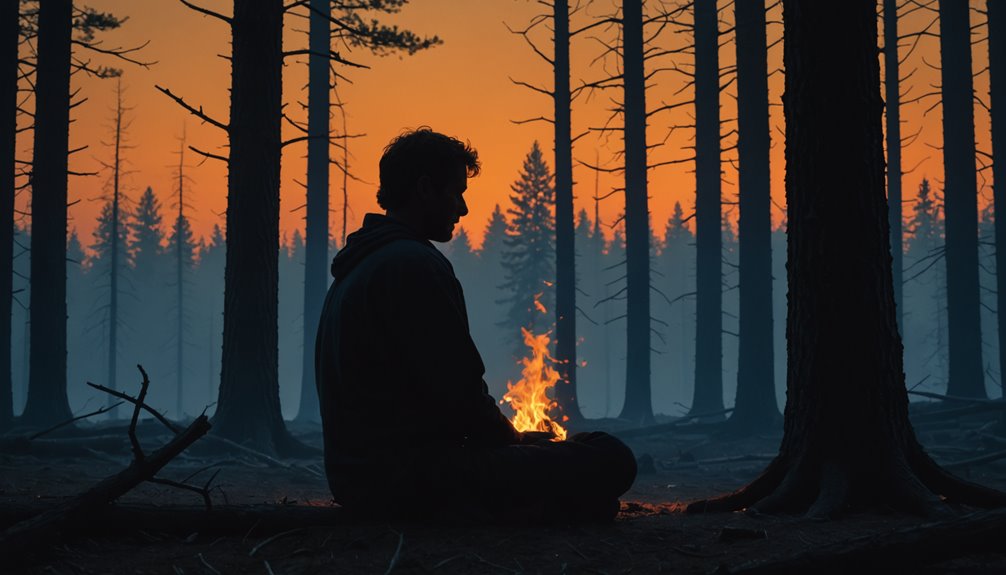
When panic hits—and let’s be honest, it probably will—that’s exactly when your mind becomes your most valuable survival tool.
We’ve learned that recognizing the problem straight on lets us assess what’s actually happening versus what we’re catastrophizing about. Your mindset determines everything out here.
Reframe anxiety as a challenge, not a crisis. We’re not doomed; we’re problem-solving. A positive mental attitude isn’t toxic optimism—it’s fuel.
Small wins matter enormously: building shelter, securing water, starting a fire. Each accomplishment rebuilds confidence when doubt creeps in.
Fear works too. Channel it productively. Transform that nervous energy into action rather than paralysis.
We’ve found that staying mentally engaged—focused on concrete tasks—prevents the spiral that kills morale. Research shows that progress trackers celebrating milestones foster a powerful sense of achievement, which applies equally to survival situations where recognizing small victories keeps your psychological state resilient.
Your survival situation won’t break you. Your thinking will either save you or sink you. Choose wisely.
Prioritizing Shelter Construction
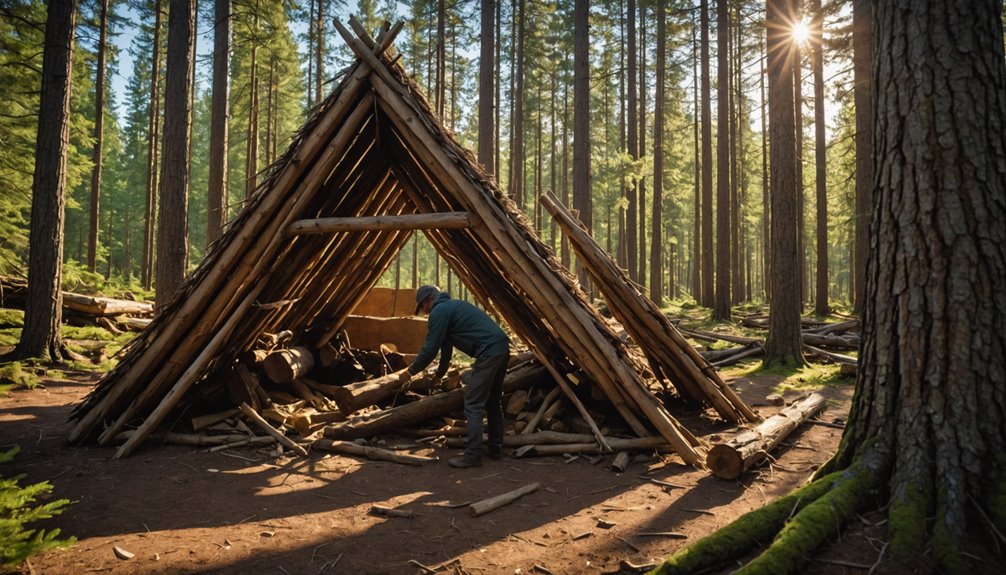
That mental resilience we just talked about? Now it’s time to act. Shelter construction isn’t optional—it’s survival. Hypothermia kills faster than hunger, so we’re prioritizing a debris shelter immediately.
Here’s what we’re building:
| Component | Material | Purpose |
|---|---|---|
| Spine | Fallen branch | Main frame support |
| Ribs | Smaller branches | Structural skeleton |
| Insulation | Redwood duff, leaves | Heat retention |
| Floor layer | Pine needles, bark | Prevent body heat loss |
| Roof | Thick debris | Weather protection |
We’ll construct something snug—just enough space to lie flat without touching sides. That tight fit? It’s deliberate. Every gap we seal means trapped warmth, and we’re staying warm tonight. We gather materials from the forest floor, layer strategically, and create our own microclimate. This isn’t luxury; it’s liberation from the cold’s grip. Like roll-top closures on waterproof dry bags that seal out moisture, our shelter’s layered design prevents heat loss by eliminating gaps where warmth can escape.
Essential Gear and Equipment
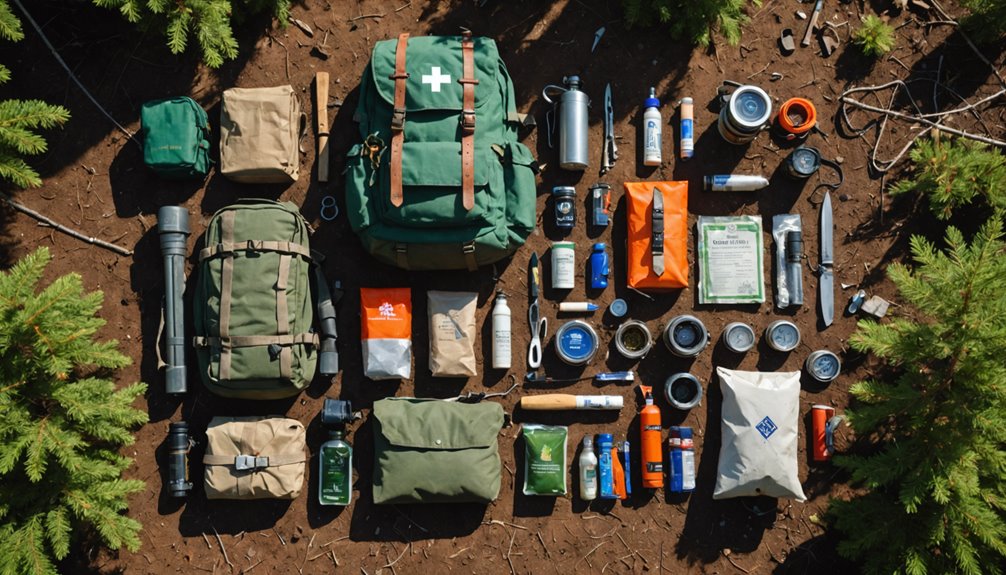
Because shelter keeps you alive but gear keeps you functional, we’re talking about the items that’ll actually fit in your hands when panic sets in. Your essential gear—a reliable knife, BIC lighter, AAA flashlight, and emergency blanket—forms your survival backbone.
We’ve learned the hard way that these non-negotiables deserve dedicated space in an emergency kit, not scattered across pockets where you’ll fumble searching for them.
Proper clothing layers matter equally. Weather dictates your choices; we’re not talking fashion here but thermodynamic survival. Base layers, insulation, windproof shells—stack strategically based on conditions.
Here’s our liberation: distribute these items across an Everyday Carry bag or your body itself. Accessibility wins over everything.
Practice grabbing each piece blindfolded. Your first night depends on muscle memory, not luck. Keep a backup emergency kit. Redundancy isn’t paranoid—it’s intelligent.
An emergency whistle should also be included in your kit, as it can produce sound levels over 100 decibels and reach distances of a quarter mile or more, providing a critical signaling tool when you need to alert rescuers in remote areas.
Securing a Heat Source
Your body loses heat three times faster in the wild than you’d expect—we’ve watched it happen, and it’s terrifying. Maintaining body heat isn’t optional; it’s survival.
Here’s what we’ve learned works:
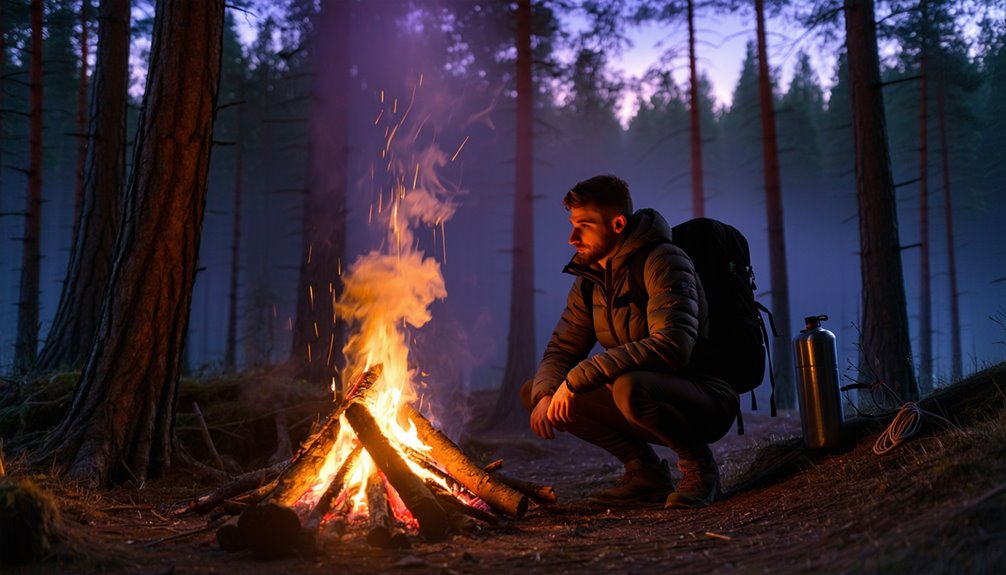
- Build a fire using dry tinder, kindling, and fuel wood arranged in a teepee structure.
- Construct proper shelter design—make it snug, just large enough to lie flat without touching sides.
- Layer natural insulation between you and cold ground using leaves, pine needles, or bark.
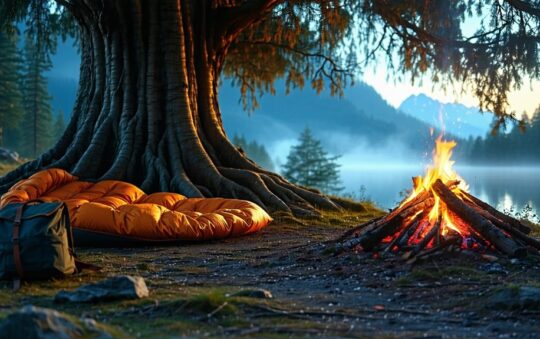
- Position your shelter near the fire, roughly 8-10 feet away for ideal warmth without danger.
A critical heat source like fire does triple duty: it warms you physically, steadies your mind, and signals rescuers. Just as water resistance protects riders in wet conditions, proper insulation protects you from moisture that accelerates heat loss.
We can’t stress this enough—don’t underestimate fire’s psychological power when you’re alone and scared. That flame becomes your lifeline.
Finding and Purifying Water
Once you’ve got your fire going and shelter sorted, dehydration becomes your next enemy—and we’ve learned this the hard way.
Finding water means scouting streams, rivers, or lakes nearby, though you’ll want to stay alert for contamination from upstream sources.
Here’s the truth: untreated water‘ll wreck your gut faster than hunger will.
Purify water using boiling (one minute minimum), purification tablets, or—our preferred method—a reliable water filter like the LifeStraw.
These compact tools transform sketchy water into safe drinking water within seconds.
For rainwater, collect it in clean containers with coverings to block debris and critters.
Skip eating snow directly; it’ll tank your body temperature instead.
Pack a survival situations essential: a dependable purification system.
After collecting and purifying your water, store it in a clean container and air-dry it completely to prevent bacterial growth and contamination.
Your freedom depends on staying hydrated and healthy.
Training and Skill Development
All the gear in your pack won’t mean squat if you haven’t trained to use it—we learned this the hard way after fumbling with a water filter in near darkness, wasting precious time we didn’t have.
Here’s what separates survivors from statistics:
- Train with reputable instructors who’ve actually survived emergencies, not just read about them.
- Build muscle memory through repeated scenario practice until responses become automatic.
- Get certified in first-aid training, especially self-aid techniques for solo situations.
- Stay familiar with your gear through regular drills under realistic stress conditions.
- Just as athletes require properly fitted protective equipment to perform effectively under pressure, wilderness survivors need specialized gear matched to their skill level and environment.
Panic kills faster than dehydration.
We’ve seen capable people freeze because they’d never practiced their skills under pressure.
Your survival depends less on equipment and more on what’s between your ears—and that requires deliberate, uncomfortable training before you need it.
The Morning After and Recovery
When that first light creeps across the horizon, your instinct might be to leap up and bolt—we’ve felt that adrenaline spike too. Don’t. Instead, pause. Take three deep breaths and assess your surroundings methodically. We’ve learned that calm clarity beats panic every single time.
| Priority | Action |
|---|---|
| Shelter | Check for damage or safety issues |
| Water | Locate fresh sources nearby |
| Food | Inventory remaining supplies consumed |
| Signals | Identify high-visibility areas |
| Health | Assess injuries or concerns |
Your structured plan depends on what you’ve got left. Count your remaining supplies—every calorie, every match matters. Reflect on last night’s mistakes; they’re your teachers now. Most emergencies resolve within 72 hours, so this morning isn’t about heroics. It’s about resourcefulness and honest assessment. Consider monitoring your heart rate and stress levels to ensure your body is recovering properly from the night’s demands. Your night in the woods taught you something valuable. Trust that knowledge.
Frequently Asked Questions
What Is the 3-3-3 Rule for Survival?
We’ve got three minutes without air, three hours without shelter in harsh conditions, and three days without water. We’ll prioritize fire starting, shelter building, water purification, and food sourcing—reclaiming our independence from nature’s demands through tactical survival skills.
How to Survive Overnight in the Woods?
We’ll build shelter, we’ll start fire, we’ll forage wisely, and we’ll respect wildlife. These aren’t restrictions—they’re our liberation tools. We construct debris shelters using forest materials, establish warmth through flames, identify edible plants, and maintain distance from animals. We’re reclaiming our freedom in nature.
What Are the 5 C’s of Wilderness Survival?
We’ve got five essentials you’ll need: cutting tools for food sourcing, cordage for shelter building, cover for protection, combustion for fire making, and containers for water purification. These five C’s’ll set you free in the wilderness.
How to Beat First Night Survival?
We’ll conquer our first evening by prioritizing shelter building for warmth, mastering fire making for survival, honing navigation skills to stay oriented, and sourcing food to fuel our freedom. We’ve got this—we’re unstoppable when we’re prepared and self-reliant.
Conclusion
We’ve journeyed through the essentials—mindset, shelter, gear, heat, water, skills. Your first night outdoors isn’t about conquering nature; it’s about having a respectful conversation with it. We’ve learned that preparation transforms fear into confidence. Tomorrow morning, you’ll greet the sunrise differently—not as a survivor, but as someone who understands themselves better. That’s the real victory.