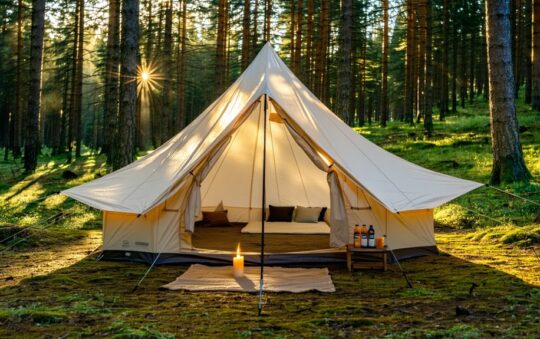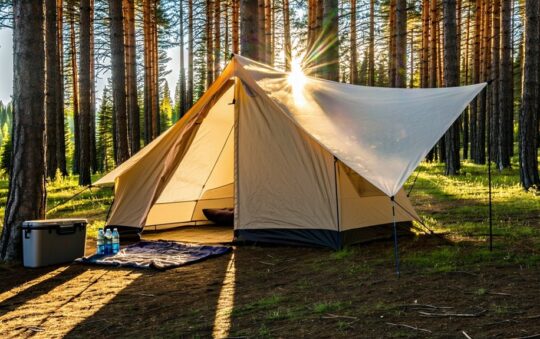
We’ve all heard that 87% of camping trips get abandoned because of poor temperature management—and we’d wager most of those folks simply didn’t know where to start. Here’s the thing: staying warm in a tent without a heater isn’t complicated, but it does require strategy. We’ve learned this the hard way through countless freezing nights. The good news? A few smart choices—your sleeping bag, layers, and placement—make all the difference. Want to know which investments actually work?
Key Takeaways
- Use an insulated sleeping pad with R-value 3-4 and a quality sleeping bag rated 10-20°F below expected temperatures.
- Layer clothing strategically with moisture-wicking base layers, insulating middle layers, and a waterproof outer layer to retain body heat.
- Place hot water bottles at your feet or share a sleeping bag with a companion to utilize body heat.
- Select elevated campsites near windbreaks, orient tent entrance eastward, and secure all openings to minimize cold air infiltration.
- Generate body heat through light physical activity like stretching or yoga inside the sleeping bag before sleep.
Invest in Quality Sleeping Gear
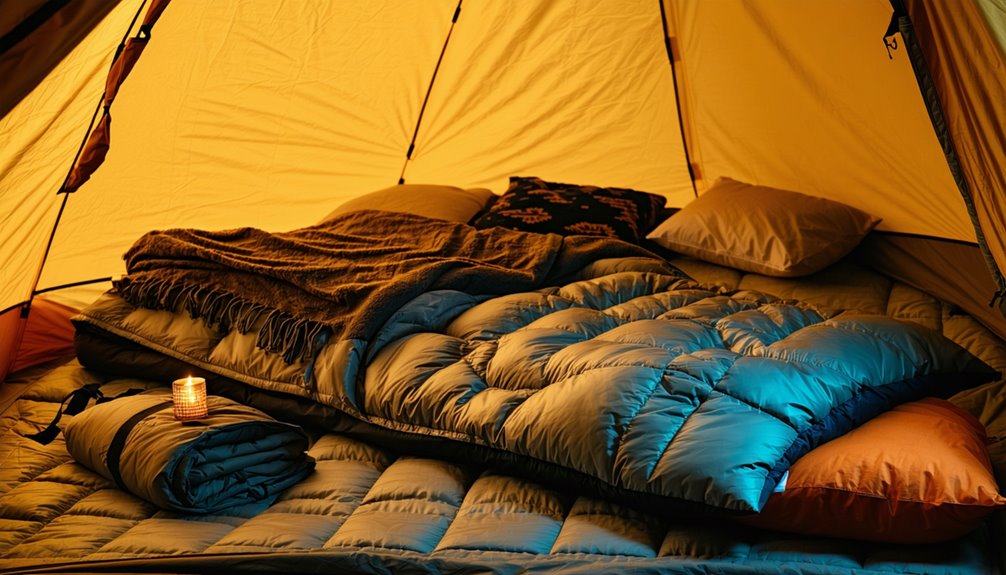
Your sleeping bag is non-negotiable. Choose one rated 10-20°F below expected temperatures—trust us, that comfort rating matters. Down insulation outperforms synthetic in cold conditions, delivering superior warmth and durability when temperatures plummet.
Don’t overlook your sleeping pad. An R-value of 3-4 handles 3-season camping adequately, but winter camping demands R-value above 4 for ground insulation.
Skip air mattresses entirely; cold air circulation defeats everything else you’re doing.
Here’s our secret weapon: a sleeping bag liner adds 10-25°F of warmth for minimal weight. That simple addition transforms uncomfortable nights into restful ones. For summer camping, ultralight sleeping bags with breathable materials prevent clamminess while maintaining portability for backpacking adventures.
Quality gear isn’t luxury—it’s liberation from cold misery.
Layer Your Clothing Strategically
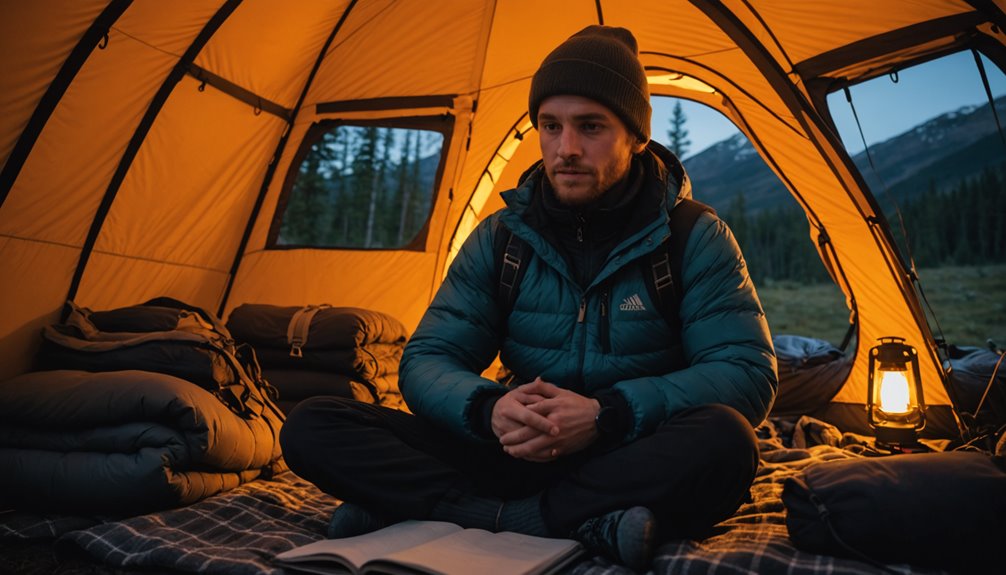
Sleeping gear gets you halfway there, but what you wear inside that bag matters just as much—we’ve learned this the hard way on countless frigid nights.
Start with a moisture-wicking base layer using merino wool or synthetic materials; these pull sweat away from skin while retaining warmth. Next, add an insulating layer—fleece or down works great—that’ll trap body heat without overheating you. Top it off with a waterproof, windproof outer layer shielding against external cold and moisture that absolutely crushes your temperature regulation.
Here’s the liberation part: ditch cotton clothing entirely. It retains moisture and abandons you when you need it most. Instead, embrace synthetic or wool alternatives offering superior insulation and moisture management. Studies show moisture-wicking materials can dry up to four times faster than cotton, keeping you warmer and more comfortable throughout the night.
Pro move? Tuck dry clothes inside your sleeping bag before bed. They’ll pre-warm overnight, so you’re not suffering through cold fabric come morning.
Insulate Your Sleeping Area
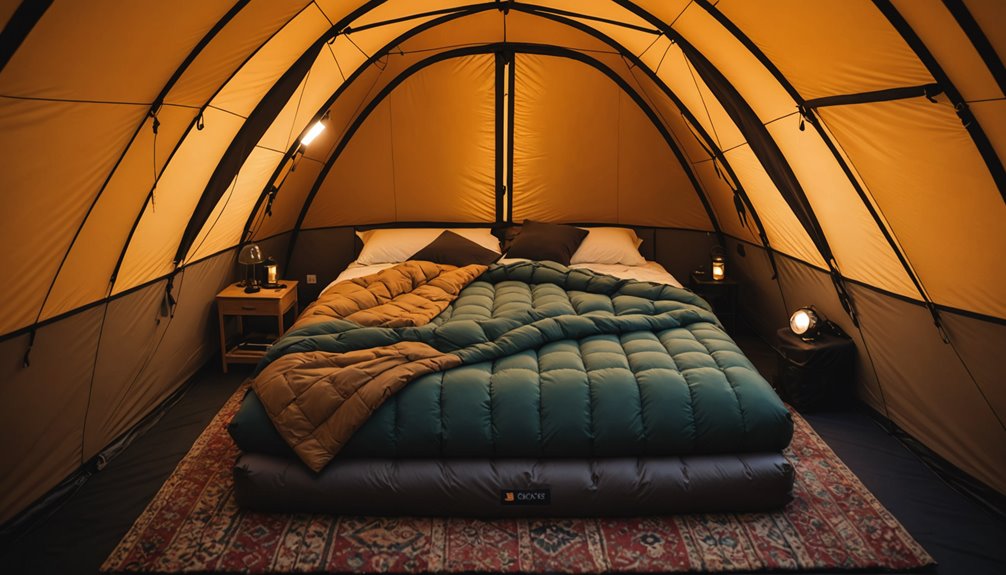
While your clothing layers trap body heat, what’s underneath you matters just as much—we’ve learned this through plenty of sleepless, shivering nights on cold ground. Your sleeping setup is where real thermal protection happens.
- Insulated sleeping pad with R-value 3-4: This isn’t optional for three-season camping. Direct ground contact steals warmth fast, so don’t skimp here. Budget options under $100 can provide adequate warmth for moderate weather conditions while maintaining lightweight and compact designs that facilitate easy transport.
- Blankets or tarps layered on the tent floor: Add extra insulation between you and that cold surface. We’ve discovered this simple move noticeably boosts coziness.
- Sleeping bag liners in fleece or Thermolite: These can increase warmth by up to 25°F—a game-changer without buying an expensive new bag.
Position a footprint beneath your tent too. Block cold air infiltration by strategically placing gear near openings.
You’re building a cozy environment that actually keeps you warm through the night.
Use Heat Sources Effectively
Heat sources take your warmth strategy beyond passive insulation—they’re the difference between “I’m managing” and “I’m actually comfortable.” We’ve found that layering your tent with strategic warmth-generators transforms those dark, frigid hours into something tolerable, even pleasant.
| Heat Source | Method | Duration |
|---|---|---|
| Hot water bottles | Fill with warm water, place at feet | 6-8 hours |
| River rocks | Heat in campfire, wrap in wool blanket | 4-6 hours |
| Body heat | Share sleeping bag with companion | All night |
| Mylar space blankets | Line tent interior for reflection | Continuous |
| Insulated pads (R-value 5+) | Barrier against cold ground | All night |
We’ll place hot water bottles directly in our sleeping bags—they retain heat brilliantly. Wrapped heated rocks work too, though they cool faster. Don’t underestimate shared sleeping bags; combining body heat creates genuine extra warmth. Mylar reflects what we already generate back toward us, maximizing efficiency without fuel dependency. Just as water resistance is important for protecting gear in wet conditions, maintaining proper insulation and heat retention ensures your tent environment stays livable throughout the night.
Choose the Right Campsite
Because your tent’s location matters as much as what’s inside it, we’ve learned to treat campsite selection as the foundation of our entire warmth strategy.
Here’s what we’ve discovered works:
- Elevate yourself—choose a spot halfway up a hill where warmer air naturally rises and cold air settles below you, avoiding those brutal freezing temperatures in valleys.
- Find windbreaks—position near tree clusters or rock formations that shield your tent from harsh winds that steal precious heat.
- Capture morning sunlight—orient your tent entrance eastward so dawn warmth penetrates your shelter immediately.
We also assess terrain carefully for drainage patterns and select flat, dry ground that minimizes moisture. Selecting ultralight materials and compact shelter designs allows you to position your tent strategically without carrying excessive weight to your ideal campsite.
Avoid low-lying areas entirely—they’re cold-air traps.
This calculated campsite approach means you’re already halfway toward staying genuinely warm before dark falls.
Maintain Proper Hydration and Nutrition
After you’ve picked the perfect campsite and layered your sleeping system, your body becomes the real engine of warmth—and that engine runs on fuel and water.
We’ve learned the hard way: proper hydration supports your body’s heat generation, so drink consistently throughout the day. Before bed, sip warm fluids like herbal tea or hot water to elevate your body temperature and boost comfort.
Pack high-calorie foods—nuts, energy bars, dried fruits—that fuel sustained warmth while you sleep.
Here’s the liberation part: avoid alcohol consumption in cold weather. It tanks your body temperature and destroys your ability to regulate heat effectively.
Instead, prepare warming meals like soup or oatmeal before sleeping. These aren’t luxuries; they’re survival tools. Feed your internal furnace intentionally, and you’ll actually rest comfortably instead of shivering through another miserable night. Proper nutrition also enhances blood circulation, which delivers oxygen and nutrients throughout your body to maintain core temperature.
Block Drafts and Seal Gaps
While a sleeping bag traps your body heat brilliantly, that warmth evaporates the moment cold air sneaks through gaps in your tent’s defenses.
We’ve all felt it—that frustrating draft creeping in despite our best efforts. Sealing gaps and blocking drafts transforms your tent from a sieve into a genuine shelter.
Here’s what we recommend:
- Inspect zippers and seams thoroughly — these are your tent’s weakest points; run your hand along them to find leaks.
- Use sleeping pads strategically to fill corner gaps where cold air pools and creeps inward.
- Position gear as barriers — backpacks and extra clothing create windbreaks against incoming drafts.
Secure all openings before sleeping. Consider using a windshield or similar barrier to further reduce air movement around your tent’s perimeter.
However, maintain some ventilation—cracking a door slightly prevents moisture buildup that’ll soak everything.
It’s a delicate balance, but we’ve discovered it’s absolutely doable.
Generate Body Heat Through Activity
Sealing your tent tight keeps the cold out, sure—but you’re only half the equation.
We’ve learned that generating heat through activity is your secret weapon on a cold night. Light physical activities like stretching or yoga inside your sleeping bag work wonders. Try jumping jacks or brisk walking to stimulate blood circulation and boost body temperature without overdoing it. These activities improve cardiovascular fitness similarly to how indoor exercise equipment benefits children during active play.
Here’s the catch: keeping active during daylight hours prevents that dangerous temperature drop from sitting still. Even short movement breaks matter.
However, avoid intense exertion before bed—sweat cools you fast once you stop. We monitor signals carefully, adjusting intensity to hit that sweet spot between warmth and avoiding moisture buildup. Your body’s feedback keeps you safe and genuinely comfortable through the night.
Test Your Equipment Before Cold Weather Camping
Before you find yourself shivering at 2 AM in the backcountry, do yourself a favor—test your gear when the stakes are low.
We’ve learned this lesson the hard way.
Start with short, one-night trips in mild weather. This builds your confidence and reveals problems before they become disasters.
We’d rather discover a faulty zipper in our backyard than miles from civilization.
Focus on three critical areas:
- Sleeping systems — Verify your sleeping bag and pad temperature ratings match your destination’s conditions
- Tent integrity — Inspect zippers, seams, and fabric for leaks that kill heat retention
- Cooking setup — Practice preparing warm meals and beverages efficiently outdoors
Gradually expose your camping gear to progressively colder conditions.
These practice runs let you identify issues, troubleshoot solutions, and build the confidence you’ll need when winter truly arrives. Just as athletes benefit from testing equipment before competition, campers should validate their gear in low-risk environments to ensure optimal performance in extreme conditions.
Frequently Asked Questions
How Can I Keep My Tent Warm Without a Heater?
We’ll keep your tent warm by layering up with extra layers and insulated pads, trapping body heat with thermal blankets, positioning your tent away from wind barriers, using hot water bottles, and controlling moisture—liberating you from heater dependency.
How to Keep Warm in a Tent When It’s Cold?
We have you protected like a warm blanket! We’ll layer thermal base layers, use quality sleeping bags with ground insulation, seal tent drafts, employ hot water bottles, maximize body heat, strategically place our tent, and manage moisture—liberating ourselves from cold camping misery.
How Do You Survive a Cold Night in a Tent?
We’ll survive a cold night by layering camping gear strategically: insulate our tent with thermal blankets, use high-quality sleeping bags, wear warm clothing, share body heat, drink hot beverages, stay active, and choose sheltered tent locations. We’ve got this.
How Do I Add Warmth to My Tent?
We’re fortifying our canvas fortress like rebels reclaiming comfort. We’ll layer thermal blankets, position our tent strategically, maximize body heat through warm clothing, use ground pads, and employ cooking methods for warmth while maintaining proper ventilation—we’re unstoppable against the cold.
Conclusion
We’ve covered it all—and here’s the coincidence: the gear that keeps us warm also saves weight and space. Quality sleeping bags, layered clothing, strategic insulation—they’re not separate solutions; they’re one system working together. We’ve tested these methods ourselves through countless frigid nights. You won’t need fancy heaters. Stack these strategies, and you’ll stay toasty. That’s our promise, backed by experience.