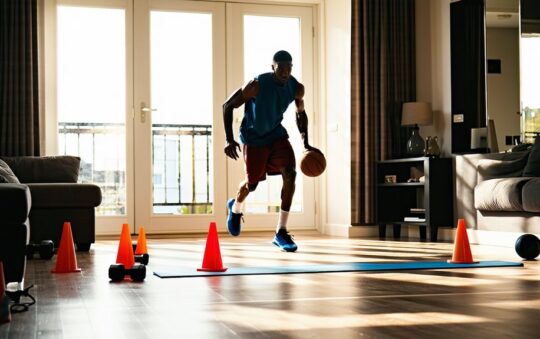
We’ve all felt that pre-competition flutter—the kind that makes your hands shake and your mind race. Here’s what we’ve learned: staying calm isn’t about eliminating nerves entirely. It’s about managing them strategically. Whether you’re competing in sports, music, or academics, the techniques that work are surprisingly similar. We’ll walk you through proven methods—from breathing exercises to mental rehearsals—that actually stick. But first, there’s one essential mindset shift you need to make.
Key Takeaways
- Establish consistent pre-competition routines with diaphragmatic breathing to signal readiness and lower anxiety levels.
- Redirect mental focus through cue statements and mindfulness to stay present and counter negative self-talk.
- Practice daily visualization with sensory details to train your nervous system and build genuine confidence.
- Reframe nervous energy as excitement and fuel that sharpens reflexes rather than a sign of failure.
- Anticipate potential challenges and mentally rehearse worst-case scenarios to build flexibility and trust in your preparation.
Establish a Pre-Competition Routine
When the pressure’s on, we often freeze—our minds go blank, our hands shake, and suddenly we forget everything we’ve practiced. That’s where a solid pre-competition routine saves us.
We’ve found that establishing a consistent ritual signals your body it’s showtime. Before stepping into the arena, we engage in familiar warm-ups and mental prep—maybe five minutes of deep breathing or visualization. This isn’t about superstition; it’s about reclaiming control when chaos threatens.
Research backs this up: athletes with structured routines report considerably lower anxiety and stronger performance. By rehearsing the same sequence repeatedly, we decode our personal stress responses. We learn what settles our nerves—positive self-talk, specific stretches, whatever works. Incorporating deep breathing into your routine can enhance relaxation and prepare your body for peak performance, much like how athletes use proven recovery techniques to optimize their physical state.
When we stay calm through routine, we don’t just perform better; we liberate ourselves from last-minute panic. That’s the real victory.
Redirect Your Mental Focus
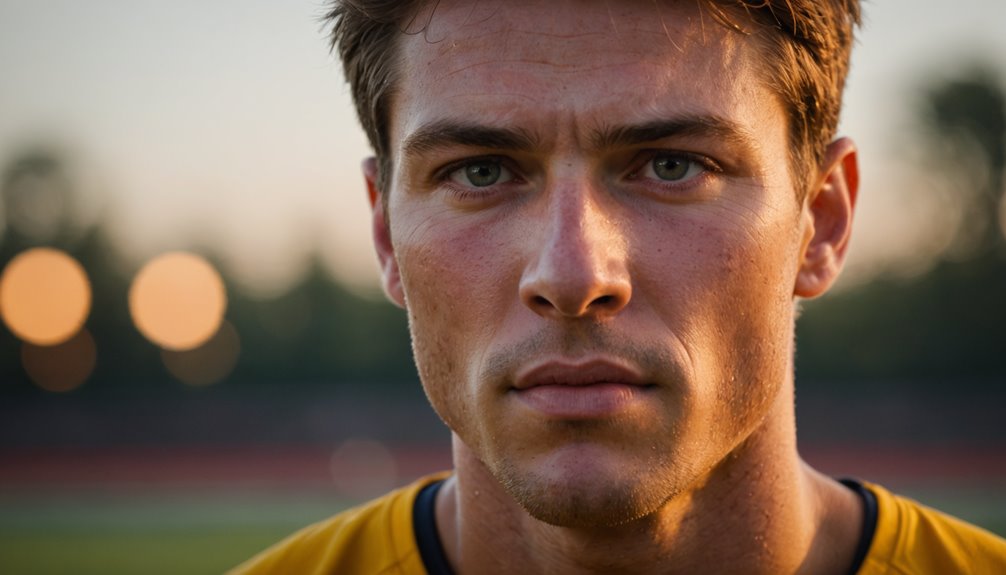
Your pre-competition routine gets your body ready, but your mind? That’s where we need to focus our real energy. Here’s how we stay mentally sharp when it counts:
- Use breathing techniques—deep, deliberate breaths engage your parasympathetic nervous system, pulling you back from anxiety spirals and into the present moment
- Deploy cue statements—short, powerful phrases like “smooth and strong” that counteract negative self-talk instantly
- Leverage visual reminders—tape, wristbands, or equipment markings serve as anchor points that redirect wandering attention
- Practice mindfulness awareness—notice when your focus drifts, then gently redirect without judgment
We make sure anxiety doesn’t hijack our performance by staying grounded in what we’re doing *right now*. Past mistakes and future outcomes fade when we’re locked into our immediate actions. That’s liberation—freedom from mental noise when we need it most. Just as deep tissue massage releases physical tension through focused pressure, intentional breathing releases mental tension by activating your body’s calming response.
Practice Visualization Techniques

Because our brains can’t fully distinguish between vivid mental rehearsal and actual performance, we’ve got a legitimate superpower at our fingertips—one that costs nothing and takes just five minutes a day.
We’re talking about visualization techniques: the practice of mentally rehearsing success before it happens. When we imagine ourselves performing well—feeling calm, controlled, and executing flawlessly—we’re literally training our nervous system. Include sensory details: the environment’s sounds, your breathing, muscle sensations. This specificity matters. Similar to how inside-out tracking systems detect real-time movement with precision, visualization harnesses your mind’s ability to create vivid sensory experiences that enhance performance.
| Element | What to Visualize |
|---|---|
| Environment | Exact competition setting |
| Emotions | Calm confidence, focus |
| Sensations | Breathing, muscle tension |
| Performance | Perfect execution |
| Outcome | Successful completion |
Pairing visualization with meditation amplifies results dramatically. We’ve found five minutes daily rewires our stress response, transforming competition anxiety into readiness. You’re not imagining escape—you’re claiming mastery.
Embrace Your Nervous Energy
We’ve all felt that familiar flutter in our chest before stepping onto the field, the stage, or the mat—that electric hum of adrenaline coursing through our veins. Rather than fighting this feeling, we can harness it.
Your nervous system’s firing up—that’s actually your body preparing you to perform. Here’s how we reframe that tension:
- Recognize nerves as fuel, not failure. That heightened alertness sharpens your reflexes.
- Accept the physical response without judgment. Your heart racing doesn’t mean you’ll make a mistake.
- Label it excitement instead of anxiety. Our brains respond to this reframing powerfully.
- Trust your preparation. You’ve trained for this moment. Monitoring your heart rate variability during training can help you understand how your body responds to stress and builds confidence in your nervous system’s resilience.
When we stop resisting nervous energy, we unlock genuine calm. It’s not about eliminating butterflies—it’s about directing them toward peak performance.
Prepare for Unexpected Challenges
When competition unfolds, it rarely follows the script we’ve memorized—and that’s precisely why we need to plan for the curveballs. We prepare backup strategies for equipment failures, weather shifts, or unexpected rule changes. Mental rehearsals work best when we imagine worst-case scenarios: broken strings, sudden rain, judges’ delays. I’ve found that practicing these “what-ifs” builds genuine confidence, not false security. Just as outdoor enthusiasts rely on offline map downloads to navigate without cell service, competitors benefit from preparing contingency plans that function independently when primary strategies fail.
The freedom we’re chasing? It’s found in flexibility. We stay open to adjusting our approach as competition dynamics shift. Trust your training—that’s your anchor. When challenges arise, you’ll recognize them as variations you’ve already explored mentally. Rigid plans crumble under pressure; adaptable ones thrive. This preparation isn’t weakness or paranoia. It’s tactical wisdom that transforms unexpected obstacles into manageable moments.
Develop Positive Self-Talk Strategies
Your inner voice is either your greatest ally or your harshest critic—and you get to choose which one it’ll be. We’ve all felt our heart rate spike before competition, but positive self-talk can genuinely shift that nervous energy into focus.
Here’s what we’ve found works:
- Create personalized cue statements like “I am in control” or “I trust my training” to anchor yourself when pressure hits
- Challenge negative thoughts with constructive affirmations that replace self-doubt with confidence
- Practice regularly so your brain rewires these responses—making empowering thoughts automatic during competition
- Foster resilience by using self-dialogue to bounce back from mistakes without spiraling
Research shows athletes who engage in positive self-talk experience lower anxiety and sharper mental clarity. Monitoring your heart rate during competition can provide real-time data to validate how effectively your positive self-talk is regulating your nervous system response. You’re not just thinking positive—you’re literally training your nervous system to stay calm.
Master Breathing and Relaxation Methods
While positive self-talk plants the mental seeds for calm, your body’s also screaming for attention—and that’s where breathing comes in. We’ve found that the 4-7-8 technique—inhale for four counts, hold for seven, exhale for eight—genuinely regulates your heart rate before you play well. It sounds simple, but diaphragmatic breathing (drawing air deep into your belly, not your chest) transforms everything. We make this a pre-competition ritual, not an afterthought. Practice the technique daily so it becomes automatic. During actual play, take one intentional breath before each moment—a reset button. Progressive muscle relaxation combined with deep breathing? Even better. Your nervous system recognizes these patterns and cooperates. You’re not fighting biology anymore; you’re working with it. That’s real freedom. Many athletes sync their breathing practices with wearable fitness trackers to monitor heart rate changes and optimize their relaxation techniques in real time.
Frequently Asked Questions
How to Relax During Competition?
We’ll help you relax during competition by mastering breathing techniques that center your mind and practicing visualization exercises to reclaim control. We’re breaking free from anxiety’s grip, empowering you to perform authentically and trust your preparation completely.
Why Does Competition Give Me Anxiety?
We experience competition stress and performance anxiety because we’re battling self-doubt and negative self-talk that amplify our nervousness. We’re breaking free from the pressure of opponents’ skill levels and crowd expectations, reclaiming our mental power to perform authentically.
How Do Pro Athletes Stay Calm Under Pressure?
We’ve found that pro athletes master calm through powerful mental techniques—visualization strategies, deep breathing, and positive self-talk liberate us from anxiety’s grip. We establish routines, practice mindfulness, and embrace our nerves as fuel, redirecting that energy toward unstoppable performance.
How to Stay Calm in Competitive Games?
We stay calm in competitive games by mastering mental techniques and breathing exercises that free us from anxiety’s grip. We’ll visualize success, practice deep breathing, and use positive self-talk to reclaim our focus and performance power when it matters most.
Conclusion
We’ve mapped out your calm—a steady foundation built through routine, breathing, and mental preparation. When competition day arrives, you’ll feel that familiar flutter transform into sharp focus. Your toolkit’s ready: grounded breathing, trusted self-talk, visualization playing like a movie in your mind. You’ve got this. That nervousness? It’s just fuel. Trust what you’ve practiced, stay present, and let your preparation carry you through.