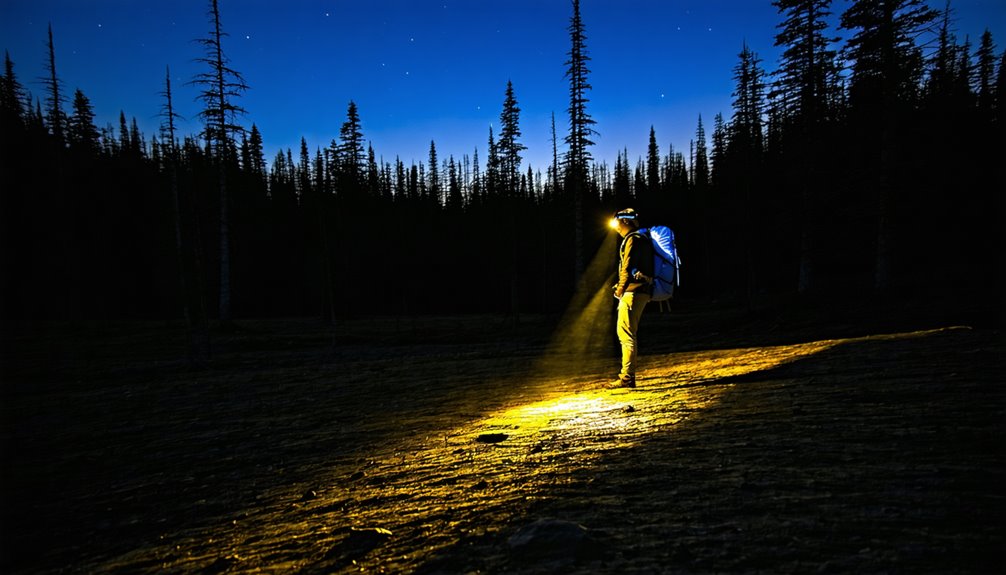
We’ve all been there—pulling into camp as darkness creeps in, flashlight in hand, wondering where we’ve actually parked. Arriving late throws everything off balance, but here’s what we’ve learned: the difference between a restful night and a frustrating one hinges on a few smart choices made in those first moments. Before you pitch that tent anywhere, there’s an essential step that’ll save you from rookie mistakes.
Key Takeaways
- Call the campground ahead to confirm late check-in policies and secure your spot with advance notice.
- Use headlamps and flashlights to safely scout and evaluate terrain, drainage, and level ground for setup.
- Select flat, stable ground away from water sources, obstacles, and neighbors to ensure comfort and safety.
- Minimize nighttime setup by prioritizing sleeping space and essential utilities while skipping non-urgent tasks.
- Have backup overnight parking options like truck stops or Cracker Barrel ready if campgrounds are full.
Call Ahead to Confirm Late Check-In Availability
Before you hit the road for a late arrival, we’ve got to be honest: showing up to a campground after dark without a heads-up is a recipe for frustration.
Here’s what we’ve learned the hard way—call ahead and confirm their late check-in policy before you leave home.
Many campgrounds have strict arrival windows, often closing their gates by 9 or 10 PM. When you call, ask specific questions: Do they permit late check-ins? What’s their cutoff time?
We’ve discovered that communicating your expected arrival time directly with staff transforms everything. They’ll appreciate the respect, and you’ll avoid driving around searching for your campground reservation in darkness.
Some facilities offer gate codes or alternative parking solutions for late arrivals. Don’t assume—ask. This simple conversation prevents headaches and keeps your camping trip on track. Arriving prepared with the right lighting and safety features also helps you navigate the campground safely once you do arrive.
Understand Check-In Times and Campground Policies
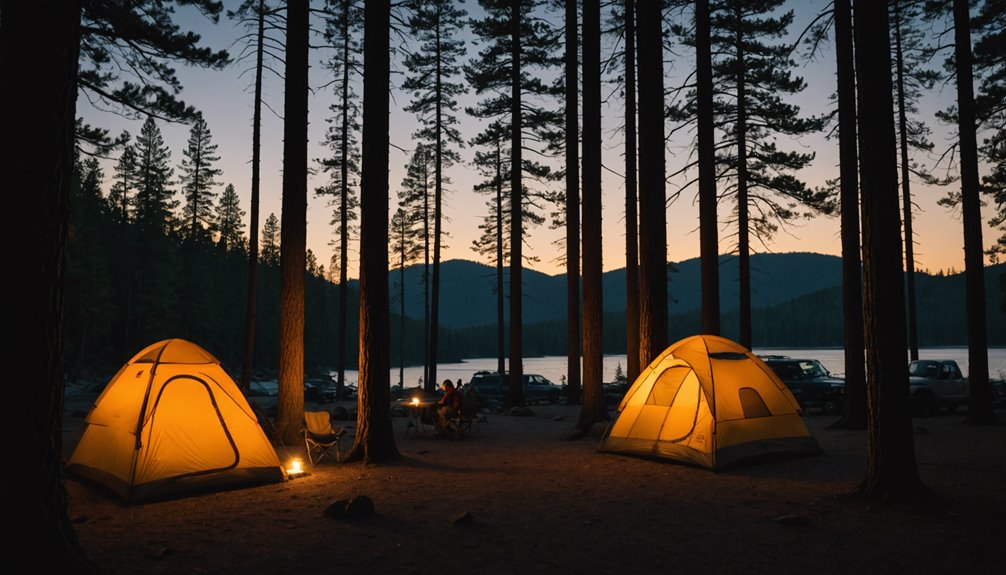
Since every campground operates differently, we’ve learned that understanding their specific check-in rules is non-negotiable—it’s the difference between a smooth arrival and showing up to a locked gate at 10 PM with nowhere to go. Just as UPF-rated tents require advance planning to ensure adequate sun protection for outdoor activities, late campground arrivals demand proactive communication with facility managers.
| Policy Type | Standard Rule | Late Arrival Impact |
|---|---|---|
| Check-in Times | 2-4 PM typical | Missed deadlines = denial |
| After-Hours Check-in | Available at some parks | Requires advance notice |
| Late Arrivals | Often restricted | Disrupts operations |
| Unauthorized Entry | Prohibited | Risk of removal |
| Communication Window | Call 24 hours prior | Secures your spot |
We’ve discovered that campground policies aren’t arbitrary—they protect everyone’s experience. Most facilities enforce strict check-in windows before dark for safety and organizational reasons. However, many do offer after-hours procedures if you’ve contacted them beforehand. That single phone call transforms your late arrival from potential disaster into manageable logistics. Don’t assume flexibility exists; confirm everything upfront, and you’ll claim your freedom to camp on your own schedule.
Keep Essential Tools and Flashlights Easily Accessible
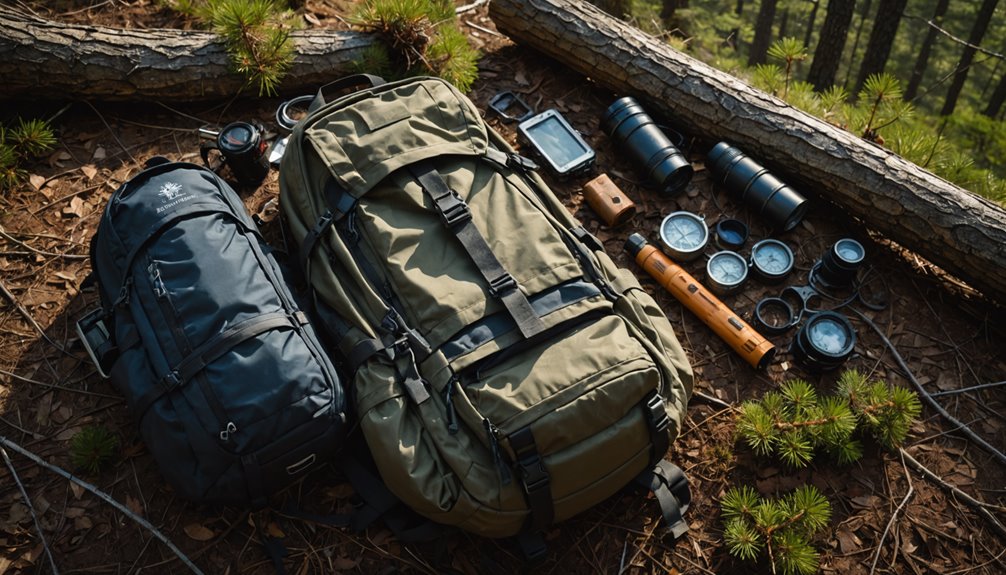
When you’re rolling into a dark campsite at 9 PM, fumbling around in the shadows for your tent stakes and power cords isn’t just annoying—it’s a recipe for tripped toes, lost gear, and mounting frustration.
We’ve learned the hard way that accessibility wins at arrival time. Pack your flashlight—preferably a headlamp—where you can grab it instantly. Your essential setup tools deserve their own easily accessible bag: stakes, mallets, extension cords, and connectors organized together.
We keep ours in a labeled five-gallon bucket right inside our vehicle’s side door. Before you arrive late, practice your setup during daylight. We’ve discovered this dramatically speeds everything up when darkness falls.
Grab a physical park map too—it’ll help you navigate the grounds when GPS fails you. A portable fire extinguisher stored in an accessible location is equally important for emergency preparedness at your campsite. Prioritize securing shelter and power first. Everything else waits until morning.
Scout the Campsite Layout During Daylight Hours
Getting your gear organized is just the start—you’ll also want to actually know where you’re going once darkness hits. We’ve learned this the hard way after fumbling around a parking lot at 11 p.m., so trust us on this one.
Scout your campsite layout during daylight hours, and you’ll navigate confidently when night falls. Walk the established paths, note water sources, identify drainage patterns, and locate restrooms. This reconnaissance prevents costly mistakes—like pitching your tent in a flood zone or parking your RV perpendicular to the exit. Consider storing your essentials in waterproof dry bags to protect gear from unexpected water exposure at your campsite.
| Key Area | Daylight Task |
|---|---|
| Parking lot | Map vehicle access points |
| Terrain | Check drainage and stability |
| Paths | Identify obstacles and hazards |
| Facilities | Locate water and restrooms |
Freedom comes from preparation, not improvisation.
Bring a Physical Map of the Campground
Your phone’s GPS won’t save you at 11 p.m. when the battery dies or signal vanishes—and we’ve learned this lesson in the worst possible way.
That’s why we always grab a physical map at check-in, even when we’re confident we’ll navigate fine.
Here’s the truth: a campground map transforms a frustrating late arrival into a manageable one.
We use it to spot our assigned campsite quickly, avoiding that disorienting wandering through dark roads. The map shows us potential obstacles, road conditions, and the layout before we step foot on the property.
Request one in advance if possible. Study the routes beforehand, identify nearby amenities, and locate water stations. Just like travelers benefit from RFID-blocking compartments to protect valuables during journeys, having a physical map protects you from getting lost in unfamiliar terrain.
This preparation means we’re setting up quietly, efficiently, and without disturbing sleeping neighbors. Freedom comes from preparation.
Look for Flat, Level, and Durable Ground
Once you’ve spotted your site on that trusty map, the real work begins—and here’s where a headlamp becomes your best friend.
We’re scanning for flat, level ground because uneven terrain means a restless night and potential gear damage. Seek durable surfaces like rock, sand, or compacted dirt; they’ll support your setup without destroying delicate vegetation.
Here’s the thing—many of us overlook drainage, assuming flat automatically means safe. Wrong. Check for subtle slopes directing water away from your spot. Even slight grade changes matter during unexpected rain. A quality compact camping pillow with proper neck support will help you sleep soundly once your site is secured, ensuring you wake refreshed despite the challenging terrain.
We’ve learned this the hard way, watching water pool beneath our tents. Trust your instincts. If it feels off-balance or suspiciously boggy, move on. Your spine—and the ecosystem—will thank you.
Maintain Safe Distance From Water Sources and Hazards
Even though that babbling creek looks inviting after a long day of hiking, we need to resist pitching our tent right beside it.
We’ve learned the hard way—that 200-foot buffer isn’t arbitrary. It protects water sources from our waste and gives wildlife safe drinking access.
When we arrive late on camping trips, fatigue tempts us to settle anywhere, but poor placement invites flooding during storms and erosion that damages ecosystems. Unstable ground near banks poses real safety risks.
Check local regulations too; some areas enforce stricter distances. Additionally, camping cookers and fuel storage should be positioned at least 10 feet away from your tent to minimize fire hazards and protect your water source from contamination.
We set our compass by these guidelines because respecting water sources means respecting the land itself.
Your future camping trips depend on today’s responsible choices—trust us on this one.
Be Mindful of Noise and Respect Neighboring Campers
Protecting water sources from our carelessness is only half the battle—we’ve also got to protect our neighbors’ peace of mind. Most campgrounds enforce quiet hours starting at 10 PM, so arriving late means we’re already working against the clock.
We minimize noise during setup by prioritizing essentials and deferring non-urgent tasks until morning. Hand signals beat shouted directions when backing up our RV at night. Choosing a campsite away from neighboring campers gives us freedom to work without disturbing anyone’s sleep.
We’ve all been there—exhausted after hours of driving, tempted to unload everything tonight. But the considerate move? Set up minimally, crash hard, and finish strong at dawn. Our neighbors’ rest matters as much as our own. A good night’s sleep aids muscle recovery and prepares both us and our neighbors for the next day ahead.
Prioritize Essential Setup Tasks for the Night
When you’re rolling into camp as darkness settles in, your tired brain wants to organize everything—awnings, storage compartments, outdoor furniture, the works. Resist that urge.
We’ve learned the hard way that nighttime setup demands ruthless prioritization.
Focus first on your sleeping space. Get your bed sorted—it’s the difference between restful sleep and misery.
Next, tackle essential utilities: water and electricity connections, if your campground offers them. These resources matter when darkness falls.
Skip the non-urgent tasks. Those leveling blocks and stabilizers? Essential. That decorative lighting setup? Save it for morning.
Keep your flashlight and setup tools within arm’s reach—fumbling around in the dark wastes precious energy. Consider packing these items in a waterproof duffle bag to protect them from unexpected moisture and ensure quick access during nighttime setup.
We’re after efficiency here, not perfection. Your future self will thank you when you’re actually sleeping.
Consider Alternative Overnight Parking Options if Needed
Sometimes the campground’s full, the gates are secured, or you’ve simply run out of daylight—and that’s where knowing your backup options becomes a lifesaver. We’ve all been there, frantically searching for any RV park willing to take us in at dusk.
| Option | Availability | Amenities | Best For |
|---|---|---|---|
| Cracker Barrel/Walmart | High | Basic | Quick overnight stops |
| Truck Stops | Very High | Fuel, food | Full hookups needed |
| Harvest Hosts | Moderate | Unique experiences | Wine country exploration |
| Costco/Sam’s Club | Variable | Limited | Budget-conscious travelers |
We recommend establishing a backup plan before you hit the road. Truck stops offer reliable overnight parking when campgrounds close. Harvest Hosts membership grants access to wineries and farms—combining rest with adventure. Consider bringing a lightweight power station to keep devices charged during your overnight stays, ensuring you can navigate to your next destination with fully powered GPS and communication tools. Always verify local overnight parking regulations beforehand; they vary wildly by location. Having options means freedom.
Frequently Asked Questions
What Is the 3-3-3 Rule for Camping?
We follow the 3-3-3 Rule to maximize our freedom on the road: drive no more than 300 miles, spend under three hours driving, and arrive by 3 PM. This prevents late arrival stress, guarantees safe campsite selection, and gives us daylight for navigation tips and setup without compromising our adventure.
What Is the 444 Rule Camping?
We’ve got to talk about the 444 rule—it’s our ticket to freedom on the road. We drive max 4 hours, stay within 4 hours from home, and arrive by 4 PM. This empowers our campsite selection, minimizes late arrival chaos, strengthens safety precautions, and sharpens our navigation tips.
What Is the 2 2 2 Rule for Camping?
We follow the 2 2 2 Rule—drive 200 miles max, arrive by 2 PM, stay 2+ nights—freeing ourselves from rushed campsite selection tips and late arrival strategies. We’re liberated from safety considerations stress through proper gear organization and daylight setup time.
What Is the 200 Rule for Camping?
We’ve got to keep our campsites 200 feet from water sources—it’s essential camping safety precautions and campsite etiquette rules that protect ecosystems. We’ll avoid contamination, flooding risks, and respect wildlife habitats. These campsite selection tips give us the freedom to camp responsibly without compromising nature’s integrity.
Conclusion
We’ve covered the essentials for arriving late—and honestly, we’ve learned these lessons the hard way. Call ahead, scout early, respect your neighbors’ sleep. When you’re setting up in near-total darkness (and it’ll feel like you’re doing it blindfolded), those prep steps become lifesavers. We promise: a bit of planning transforms late arrival chaos into manageable setup. You’ve got this—your future self will thank you.