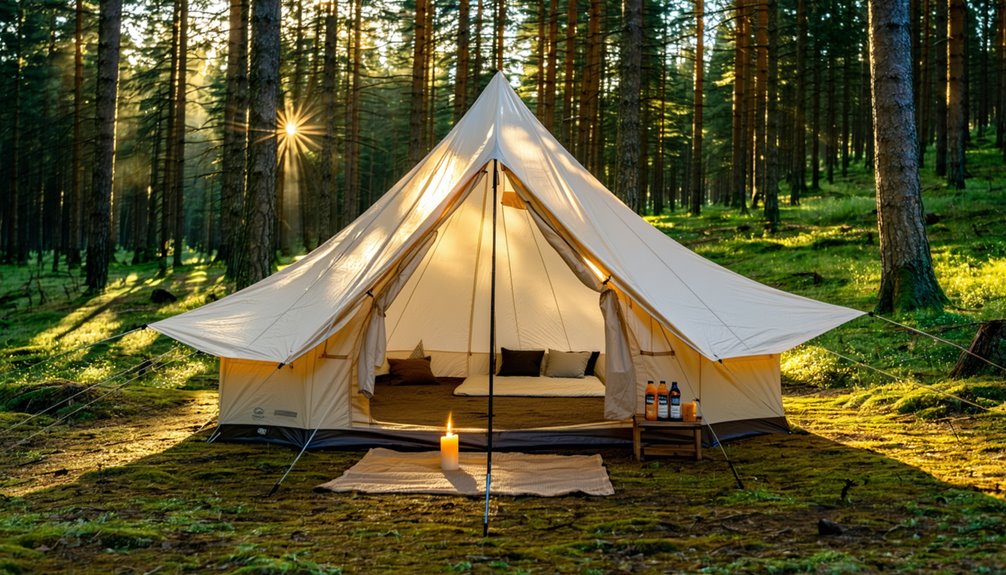
We’ve all been there—setting up camp at dusk, only to get swarmed by mosquitoes within minutes. Here’s what we’ve learned: bugs don’t have to ruin your camping trips. We’ve discovered specific strategies that actually work, from choosing smarter campsites to using gear that keeps insects at bay. The secret? It’s less about fighting nature and more about working with it—and we’ll show you how.
Key Takeaways
- Choose campsites on higher ground in open areas with natural breezes to minimize mosquito and insect presence.
- Wear light-colored, loose-fitting long sleeves and pants tucked into socks for physical protection against bugs.
- Apply natural bug repellents like essential oil sprays and use permethrin-treated clothing for lasting insect defense.
- Inspect tent mesh thoroughly and keep zippers sealed to create a secure bug-free sleeping environment.
- Set up campfires or burn sage bundles; smoke disrupts insects’ ability to locate and reach you.
Choose the Right Campsite (But Don’t Stress If You Can’t)
When you’re scouting your campsite, location matters more than you’d think—but it’s not everything.
We’ve learned that avoiding standing water is vital; mosquitoes breed in these pools, turning your peaceful retreat into an itchy nightmare. Skip marshy areas and low spots where water collects after rain.
Instead, choose the right campsite on higher ground in open clearings. Natural breezes sweep through these spots, deterring flying insects effectively. Consider using waterproof dry bags to store food and scented items that attract insects.
We’ve noticed timing matters too—dusk and dawn bring peak bug activity, so plan accordingly.
Here’s the honest truth: sometimes you can’t secure your ideal location. Don’t panic.
When compromise happens, shift your energy toward other prevention strategies. We’ve always bounced back by implementing stronger defenses elsewhere.
You’re not stuck; you’re just adapting your approach to win this battle.
Wear Clothing That Protects Without Overheating
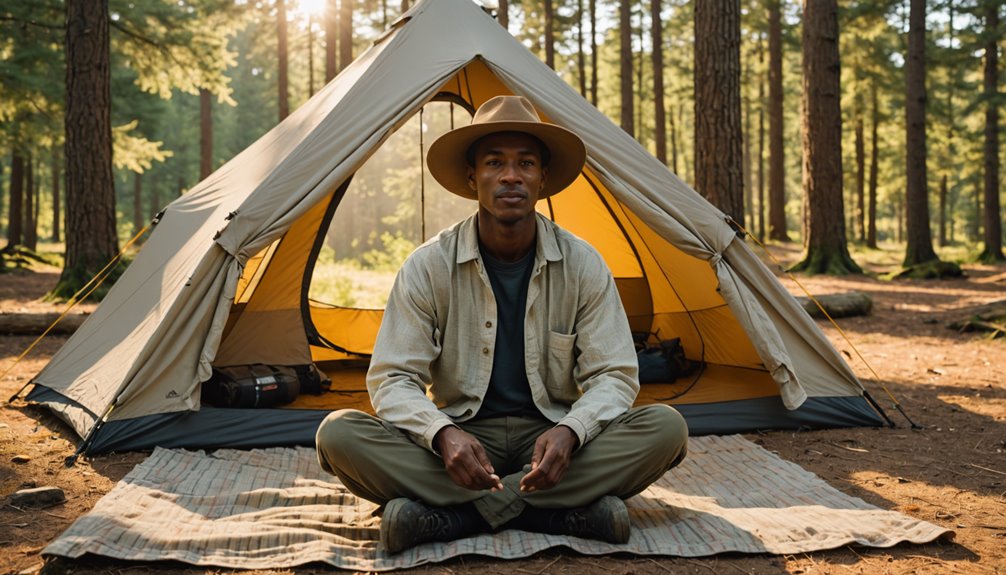
Since bugs land on dark surfaces more readily than light ones, we’ve learned that your outfit’s color and fit matter just as much as its coverage.
We swear by lightweight, moisture-wicking long sleeves and pants in khaki or cream—they’re breathable yet shield you from insects while letting air circulate.
Loose-fitting garments prevent that suffocating feeling while still protecting exposed skin. Tuck your pants into socks and shirts into waistbands; this simple move blocks ticks and other crawling pests from sneaking underneath.
Don’t forget a hat to guard your head and neck—prime real estate for bugs.
Moisture-wicking fabrics dry up to four times faster than cotton, so your clothing stays comfortable even when you’re perspiring in the heat while staying protected from insects.
This layered strategy keeps you cool, comfortable, and protected, so you’re not choosing between comfort and insect defense anymore.
Choose Human- and Earth-Friendly Bug Repellents
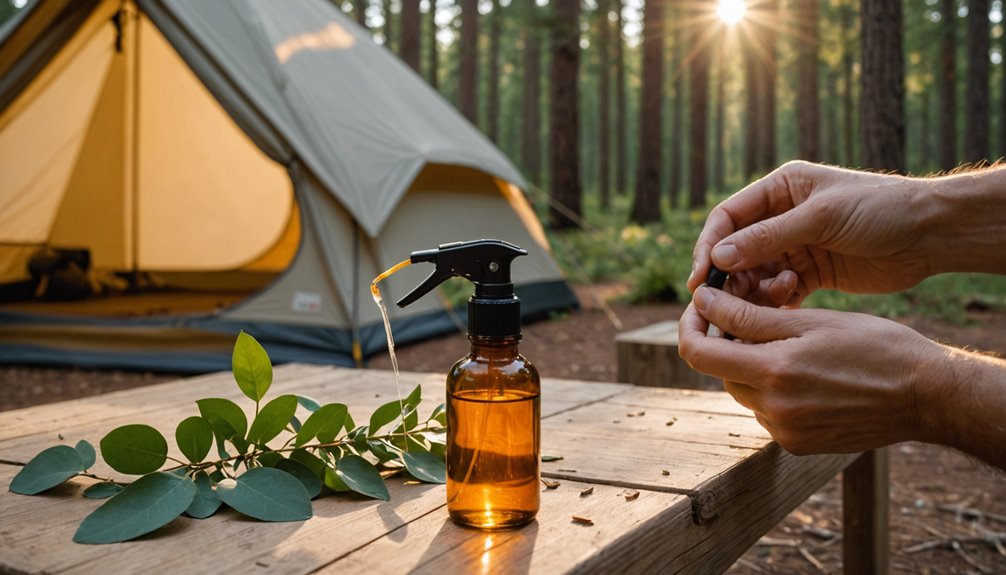
After we ditched the harsh chemical sprays that left us feeling like walking pesticide factories, we discovered that nature’s own bug fighters work just as well—and won’t harm the ecosystem we’re camping in.
We’ve found our go-to eco-friendly options:
- Essential oils like citronella, lavender, eucalyptus, and cedarwood effectively repel insects without toxins
- DIY bug spray mixed from distilled water, witch hazel, and 10–20 drops of essential oil gives us complete control
- Permethrin-treated clothing provides lasting tick protection through multiple washes
- Reusable containers reduce plastic waste while storing homemade solutions
Creating our own bug spray takes minutes and costs pennies. We mix, shake, and spray—no mystery chemicals involved. Similar to how mineral-based active ingredients protect skin during outdoor activities, natural bug repellents offer effective protection without synthetic compounds.
This approach lets us camp confidently, knowing we’re protecting both ourselves and the wilderness we love. Nature’s arsenal beats synthetic toxins every time.
Secure Your Sleeping Space
Your tent is your fortress—and we’ve learned the hard way that even the tiniest breach invites unwanted roommates. We keep our sleeping spaces bug-free by treating tent maintenance like a pre-flight checklist. Before pitching, we inspect mesh thoroughly for tears, checking seams and corners where bugs hide. Zippers stay fully closed when we’re not actively entering or leaving—no exceptions. We’ve discovered that small gaps near the door or ventilation ports can become highways for insects, so we seal them immediately. Pairing your tent setup with water-resistant cases or protective gear storage ensures your emergency supplies stay accessible and protected throughout your camping trip.
| Protection Method | Effectiveness | Ease |
|---|---|---|
| Mesh inspection | High | Easy |
| Zipper discipline | High | Simple |
| Gap sealing | Medium | Moderate |
Consider layering defenses: additional bug netting over your sleeping area creates redundancy. We also light citronella or lemongrass candles around camp to establish a protective perimeter. These proven strategies help us avoid sleepless nights.
Stay Clean and Scent-Free
We’ve learned to eliminate food odors and fragrant personal care products entirely:
- Switch to unscented soap and fragrance-free deodorant before trips
- Avoid sweet-smelling lotions and shampoos that broadcast dinner invitations
- Store all toiletries outside your tent—yes, even toothpaste
- Change into clean clothes away from your sleeping area
The difference is genuinely dramatic.
When we stopped using scented products, our bug encounters dropped considerably. We’re not talking minor improvements—we’re talking actual nights without constant buzzing and itching. Additionally, storing fuel canisters away from your tent area prevents attracting insects drawn to fuel odors.
Your freedom from insects starts with what you don’t bring into that tent.
Leverage Natural Deterrents Like Campfires and Sage
Since you’ve already tackled scent control, it’s time to weaponize smoke—nature’s most effective bug repellent.
We’ve found that campfires create an invisible barrier insects absolutely hate. The smoke disrupts their ability to locate us, which means fewer mosquitoes interrupting conversations.
Burning sage bundles amplifies this effect dramatically. We bundle dried sage tightly, light it near the fire’s edge, and watch bugs scatter. The aromatic compounds work synergistically with campfire smoke—it’s like deploying a two-pronged defense system.
Here’s our bug prevention strategy: start your campfire early, add sage once flames establish, and consider citronella candles for extra coverage. To keep your gear protected during camping trips where you’re using smoke-based deterrents, consider investing in weatherproof bags for sports equipment to shield your belongings from moisture and ash.
This eco-friendly approach beats synthetic repellents every time. No chemicals, no residue, just pure botanical power keeping your camping trips blissfully bug-free while adding warmth and ambiance.
Use Strategic Equipment and Gear for Bug Protection
While smoke and sage create a solid perimeter defense, the real battle happens at ground level—where your gear either becomes a fortress or a bug magnet.
We’ve learned this the hard way. Here’s what actually works:
- High-quality tents with mesh screens keep bugs out while letting fresh air flow through tent doors
- Insect-repellent-treated camping gear—sleeping bags, clothing, hats with mosquito nets—provides personal armor against bites
- Portable bug zappers stationed around your site actively reduce the population
- Thorough equipment cleaning eliminates food residue that attracts insects
- Tents with UPF 30 to 50+ ratings provide dual protection by blocking harmful UV rays while the dense weave also deters insects from penetrating the fabric
We spray our gear before trips and keep everything sealed tight.
A mesh-equipped tent isn’t luxury—it’s liberation from bug bites ruining your adventure.
Treat your camping gear as your defense system, and you’ll actually enjoy those nights under the stars instead of swatting constantly.
Frequently Asked Questions
How to Avoid Bugs While Camping?
We’ll help you dodge bugs by choosing higher ground, wearing light-colored long sleeves, and using natural repellents. We’ve got bug-proof tents and proper camping gear ready. Understanding insect habits lets us camp freely without chemical-laden products controlling our outdoor adventures.
What State Is the Most Bug Free?
We’ll tell you: Alaska’s northern regions see 90% fewer insects than southern states. We’re drawn to bug-resistant locations like Alaska, Montana, and Nevada where climate considerations—harsh winters, low humidity—liberate us from bugs. We’ll time seasonal camping tips strategically, exploring state park choices wisely.
How to Enjoy the Outdoors Without Bugs?
We’ll help you reclaim your freedom outdoors! We’re creating bug-free zones using natural bug repellents and insect-proof gear. We’re mastering camping hygiene tips that liberate us from insects, so we can fully embrace nature without compromise or chemical interference.
What Did Native Americans Use for Bug Repellent?
We’ve reclaimed our freedom from chemical dependence by embracing Native remedies like herbal repellents and natural oils. Indigenous peoples used sage smoke, cedar, and peppermint as traditional practices—powerful plant-based solutions that’ll keep you bug-free while honoring ancestral wisdom.
Conclusion
We’ve armed you with the tools to turn bug season from a nightmare into a minor inconvenience. You’ve got this—we promise. With the right campsite, protective gear, and natural deterrents, you’re building an invisible shield around your outdoor adventure. Bugs won’t ruin what we love most: crisp air, crackling fires, and genuine escape. Get out there. Your perfect camping trip’s waiting.