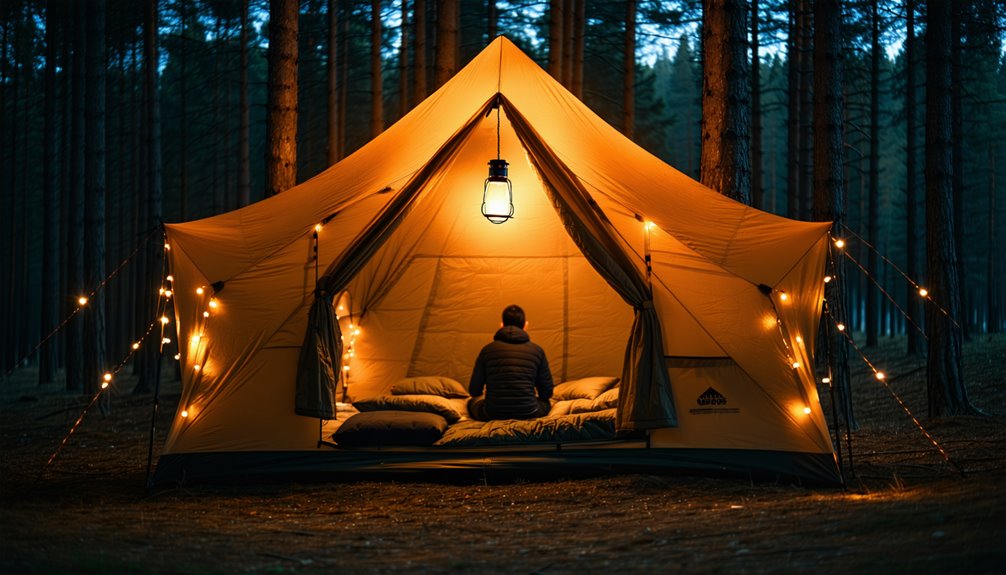
We’ve been there—palms sweating, flashlight trembling, convinced every sound in the darkness means danger. Here’s the truth we’ve learned: fear of the dark doesn’t disqualify you from camping. It just means you’ll need a smarter strategy. We’re going to walk you through proven tactics we’ve tested ourselves, starting with the easiest step and building from there. The question isn’t whether you can camp afraid—it’s how you’ll do it well.
Key Takeaways
- Start with overnight trips at established campgrounds within thirty minutes of home to build confidence gradually.
- Bring trusted friends or a dog to reduce fear and provide emotional and physical security.
- Research local wildlife and common nighttime sounds to replace fear with rational knowledge and recognition.
- Use three layers of lighting including string lights, solar lanterns, and headlamps around your campsite.
- Take multiple camping trips spaced two to three weeks apart to rewire your brain’s threat response.
Start Somewhere Comfortable
Many of us who dread the dark make a critical mistake: we jump straight into backcountry camping in pitch-black forests. Don’t.
We’ve learned that starting somewhere comfortable—like established state campgrounds—transforms everything. These sites offer bathrooms, showers, and ranger presence, which honestly feels less scary when you’re already scared of the dark.
We recommend shorter trips close to home first. You’ll build confidence gradually, becoming less scared with each outing.
Explore your campsite thoroughly during daylight hours—walk the perimeter, locate facilities, note landmarks. This daytime familiarity creates security when night time arrives.
Consider private Hipcamp sites too. They provide seclusion without isolation, offering peace during those vulnerable evening hours.
Investing in LED lanterns with adjustable brightness will significantly reduce anxiety during evening hours and improve your overall sense of safety at the campsite.
Community events through Basecamp Brooklyn connect you with fellow beginners who understand your fears. You’re not alone in this journey toward camping freedom.
Prepare Like a Pro
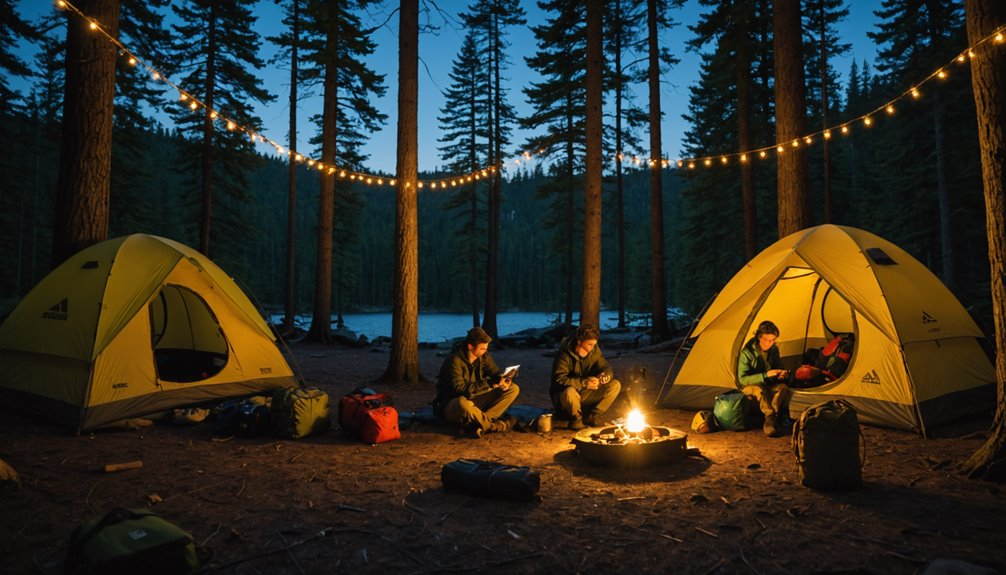
Once you’ve picked your campsite and walked its perimeter in daylight, it’s time to get your head in the game—because knowledge genuinely kills fear.
We’ve learned that research transforms anxiety into confidence. Study tent setup basics, campfire safety protocols, and outdoor etiquette before departure.
Create a detailed packing checklist; NEVER set foot in the woods unprepared. Quality gear matters—rent insulated sleeping bags rated for your climate’s temperature. Just as UV-resistant materials protect paddle boards from sun damage, investing in quality gear with protective features ensures your camping equipment withstands the elements.
Bring familiar, easy-to-prepare foods like instant oatmeal or pre-made sandwiches; comfort food steadies nerves.
Research your specific campground’s wildlife and terrain. We’ve discovered that understanding what you’ll actually face—rather than imagining worst-case scenarios—genuinely reduces nighttime anxiety.
Knowledge isn’t just power; it’s liberation from fear’s grip.
Start Small
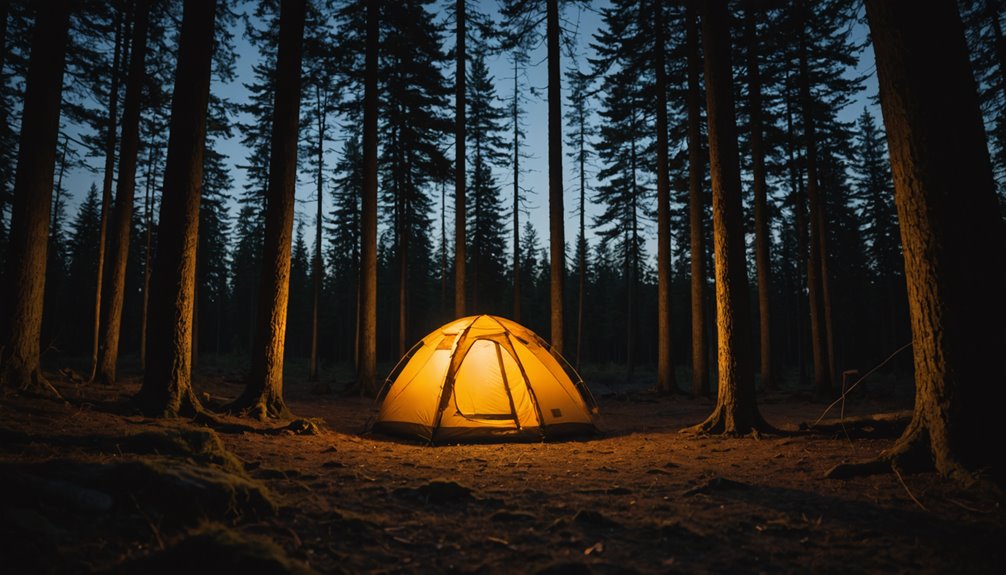
Your first camping trip shouldn’t be a three-day wilderness expedition two hours from civilization—we learned this the hard way. Instead, start with an overnight stay at a local campsite within thirty minutes of home.
This beginner camping tips approach lets you practice tent setup and campfire safety without the anxiety spiral that comes from being truly isolated.
Local campsite exploration builds familiarity, which dramatically reduces nighttime anxiety. When you know your surroundings—where the bathrooms are, what those rustling sounds actually are—darkness feels less threatening.
Gradual outdoor exposure works. Each short trip strengthens your confidence incrementally. A compact first-aid kit ensures you’re prepared for minor injuries without the burden of excessive medical supplies on your nearby trips.
We’ve found that conquering one night nearby teaches you more than researching gear for weeks. You’ll discover what actually works for you, identify genuine concerns versus imagined ones, and genuinely enjoy the experience.
That’s freedom right there.
Go With Friends (Or Us!)
Because darkness feels less menacing when you’re not facing it alone, bringing trusted friends on your first camping trips transforms the whole experience.
Our camping buddies become your safety net—literally and emotionally. Group dynamics shift everything; shared experiences normalize those midnight jitters we all get. You’re swapping fear strategies around the fire, not spiraling solo in your tent.
We’ve seen firsthand how experienced friends provide reassurance without judgment. They’ve handled the dark before. They know the sounds. They’ve managed their own anxieties. That knowledge transfers to you.
Consider joining Basecamp Brooklyn’s newcomer events too. You’ll connect with others traversing similar fears, building confidence within a community that gets it. Just as adjustable straps and padded backs enhance comfort for young adventurers, the right support system enhances your camping experience.
You’re not broken—you’re just finding your people.
Reframe Your Fears
fear thrives in the unknown, but knowledge is its kryptonite. We’ve discovered that overcoming anxiety happens when we shift from imagining worst-case scenarios to understanding what’s actually out there. Just as foam rolling breaks up knots in muscles to improve circulation and reduce tension, confronting our fears directly helps dissolve the mental blockages that keep us stuck.
| Strategy | Action | Result |
|---|---|---|
| Learn Wildlife | Research local animals | Rational perspective replaces fear |
| Identify Sounds | Familiarize yourself with rustling, calls | Comfort in recognition |
| Embrace Beauty | Notice stars, peaceful silence | Appreciation blooms |
| Use Light | String lights, lanterns | Anxiety decreases naturally |
Understanding wildlife transforms darkness from threatening to manageable. We’ve found that familiarizing ourselves with common nighttime sounds—rustling leaves, distant owl calls—shifts our brains from panic mode to curious observer mode. When we’re embracing nature intentionally rather than resisting it, that’s when real liberation happens. Knowledge genuinely rewires our nervous system.
Set Up Your Tent Early
Now that we’ve armed ourselves with knowledge, let’s put it to work before the sun dips below the horizon.
We’ll set up our tent early—ideally by mid-afternoon—giving us real control over our campsite layout. Position your tent where you can see the entrance from your cooking area; this tent orientation tips reduces blind spots that fuel anxiety.
Place essential gear placement strategically: keep a headlamp within arm’s reach, store food in bear canisters away from your sleeping area, and arrange your backpack where you can locate it instantly. Consider organizing small items in external pockets or compartments to make retrieving gear in the dark more efficient.
We’ve found that knowing exactly where everything lives eliminates that panicked fumbling when darkness falls.
Create pathways between key zones. This intentional campsite layout transforms an intimidating wilderness into familiar territory.
You’re not just surviving—you’re building confidence through preparation.
Drown Out the Noise
Silence amplifies anxiety—every snapping twig becomes a potential threat, every rustle transforms into something sinister.
We’ve found that strategic noise canceling options genuinely work. Camping near flowing water naturally masks unsettling sounds, creating an acoustic buffer that lets your nervous system relax.
A portable Bluetooth speaker loaded with soothing playlists becomes your secret weapon against nighttime distractions. We recommend lo-fi beats or ambient nature sounds—think rainfall or forest ambience.
Keep the volume low; you’re masking, not replacing, the environment.
String lights combined with soft background music transform your tent’s atmosphere from eerie to cozy. This combination neutralizes that amplified-sound anxiety we all dread.
We’ve learned that white noise apps work equally well if you prefer them. Consider pairing your audio setup with hands-free hydration so you can stay refreshed throughout the night without fumbling for water bottles in the dark. The goal? Reclaim your camping experience by controlling what you hear.
Brighten Up Your Campsite
Three lighting layers—that’s our golden rule for transforming a dark campsite into something genuinely comfortable.
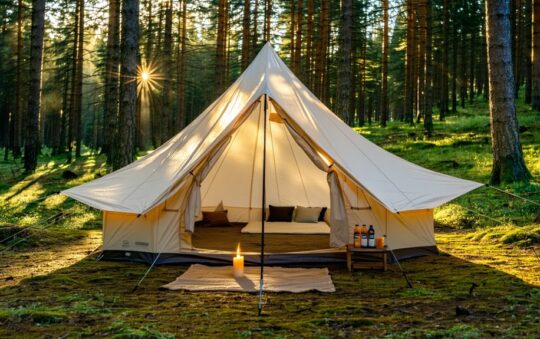
Start with string lights draped around your tent’s perimeter; they’re game-changers for creating that cozy lantern ambiance that makes darkness feel manageable rather than menacing. We’ve found this transforms anxiety into actual relaxation.
Next, position solar-powered lanterns at strategic points—your cooking area, tent entrance, pathways. They work without cords or battery depletion worries, giving you freedom and peace of mind simultaneously.
Finally, keep extra illumination handy. Headlamps and flashlights serve double duty: practical navigation tools and confidence boosters. We always pack two per person—redundancy defeats darkness-induced panic. Consider storing these light sources in a waterproof sports duffle bag to protect them from moisture during unexpected weather.
This layered approach isn’t just about visibility; it’s about reclaiming your campsite as yours.
Bring a Four-Legged Friend
When you’re lying in your tent listening to every crack and rustle, having a dog beside you transforms the whole experience—suddenly you’re not alone in the dark, you’ve got a furry sentinel.
We’ve found that a dog’s heightened senses detect dangers we’d miss, offering genuine security that calms our racing minds.
Before heading out, pack essential camping gear: a sturdy leash, water bowl, and comfortable bedding.
Practice dog safety tips like keeping vaccinations current and ensuring your pup’s familiar with outdoor terrain.
Canine activities—exploring trails together, playing fetch at dusk—distract us from anxiety while strengthening our bond.
Your dog’s presence transforms fear into companionship.
We’re not just braver with them; we’re genuinely comforted.
Consider bringing an emergency whistle as additional safety gear, which can be heard over long distances if you need to signal for help during your outdoor adventure.
That furry warmth beside you? It’s liberation from darkness’s grip.
Keep at It
Like learning to swim, conquering your fear of the dark takes more than one trip—it takes repetition, patience, and honestly, a willingness to feel uncomfortable a few times before things click.
We’ve found that consistency matters tremendously; each camping adventure rewires your brain’s threat response. Through gradual exposure across multiple outings, darkness transforms from enemy to companion.
You won’t suddenly love nighttime camping after one attempt. Instead, you’ll notice small victories—sleeping thirty minutes longer, needing your flashlight less frequently, actually enjoying the star-filled sky.
Celebrate progress honestly, even tiny wins. We recommend spacing trips two to three weeks apart, allowing mental consolidation between experiences. Studies indicate that regular physical activity boosts brain function, and similarly, consistent exposure to challenging situations strengthens your mental resilience over time.
The magic happens around trip four or five when fear shifts to genuine curiosity. Your nervous system recalibrates.
Persistence isn’t punishment; it’s liberation.
Frequently Asked Questions
How to Sleep if You Are Scared of the Dark?
We’ll help you reclaim your nights by establishing calming nighttime routines that free you from fear. Bring cozy lighting like lanterns, pack comfort items like your favorite blanket, and use white noise to transform darkness into your sanctuary of peace.
How to Not Get Scared While Camping?
We’ll conquer fear by establishing nighttime routines and safety measures that liberate us from anxiety. Let’s build campfires, share stories, and familiarize ourselves with nature’s sounds—we’re reclaiming our freedom to camp confidently, unapologetically embracing the wilderness.
How to Cope With Being Scared of the Dark?
We help you reclaim nighttime freedom by embracing fear management through relaxation techniques like music and lighting. Our nighttime strategies—string lights, lanterns, and daytime sound familiarity—empower you to transform darkness into comfort, liberating you from anxiety’s grip.
How to Sleep When You’re Scared at Night?
We can help you reclaim your nights by establishing calming nighttime routines that incorporate comfort items like extra lighting and soothing sounds. We’ll empower you with sleeping techniques—deep breathing, music, or nature sounds—that transform darkness into your sanctuary of peace and freedom.
Conclusion
We’ve given you a million camping tips—but here’s the real deal: conquering your fear of the dark isn’t about becoming fearless overnight. It’s about showing up, bringing your friends, and gradually discovering that the darkness isn’t your enemy. We’ve all been there, palms sweating under our sleeping bags. Start small, be patient with yourself, and watch how nature transforms from terrifying to genuinely magical. You’ve got this.