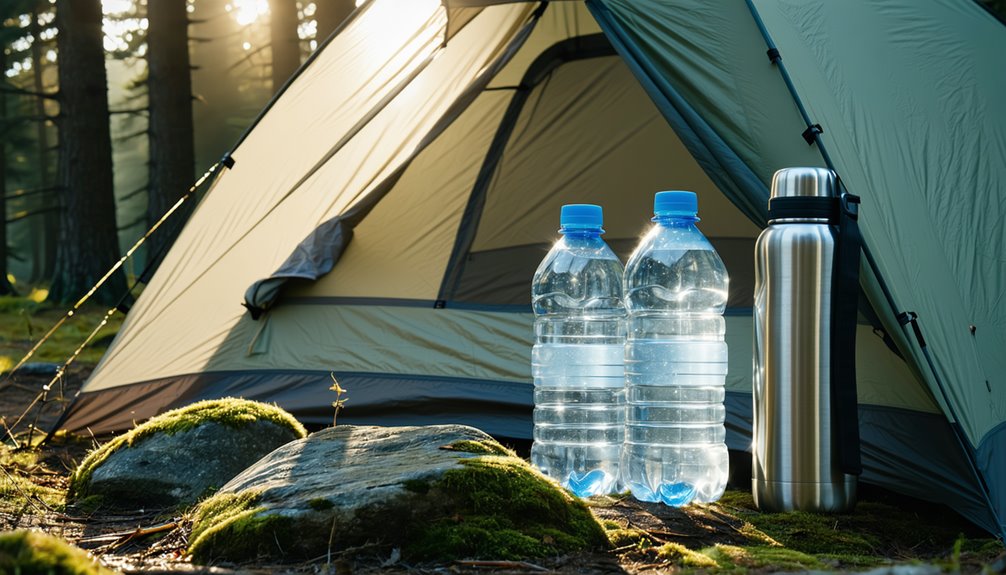
We’ve all faced the “hydration equation” during camping trips—figuring out how long our water supply‘ll actually last. Here’s the thing: whether you’re hauling gallon jugs or collapsible bladders, storage duration varies wildly depending on your container choice and where you stash it. We’ll explore what actually works in the field, because discovering your water’s gone funky three days into a backcountry trek? That’s a lesson nobody wants to learn firsthand.
Key Takeaways
- Food-grade plastic containers safely store water for 6 months to one year in cool, dark conditions.
- Collapsible containers provide reliable emergency water storage lasting 1-12 months depending on conditions.
- Regular water jugs maintain quality for 1-2 weeks when sealed properly and stored appropriately.
- Water can be stored indefinitely if kept in proper conditions with regular quality checks.
- Replace all stored water every 6-12 months to ensure safety and prevent contamination during camping trips.
Water Storage Duration for Camping
When you’re planning a camping trip, figuring out how long your water’ll actually stay drinkable is one of those details that separates a smooth adventure from a frustrating one.
We’ve learned that water storage duration depends heavily on your container choice and conditions. Food-grade plastic containers keep your drinking water safe for 6 months to a year in cool, dark spots—away from sunlight that degrades quality.
Collapsible containers? They’re flexible friends offering 1-12 months of reliable emergency water supply, though sanitation practices matter tremendously. Regular water jugs hold quality for about 1-2 weeks when sealed properly, requiring consistent monitoring.
For additional gear protection during water transport, consider using waterproof dry bags to keep your water containers and other essentials safe from external moisture and damage during your camping adventures.
Here’s what we recommend: replace your stored water every 6-12 months. Yes, it’s tedious. But fresh water means genuine peace of mind on every expedition, guaranteeing you won’t compromise your camping experience with questionable drinking water.
Choosing the Right Containers for Your Trip
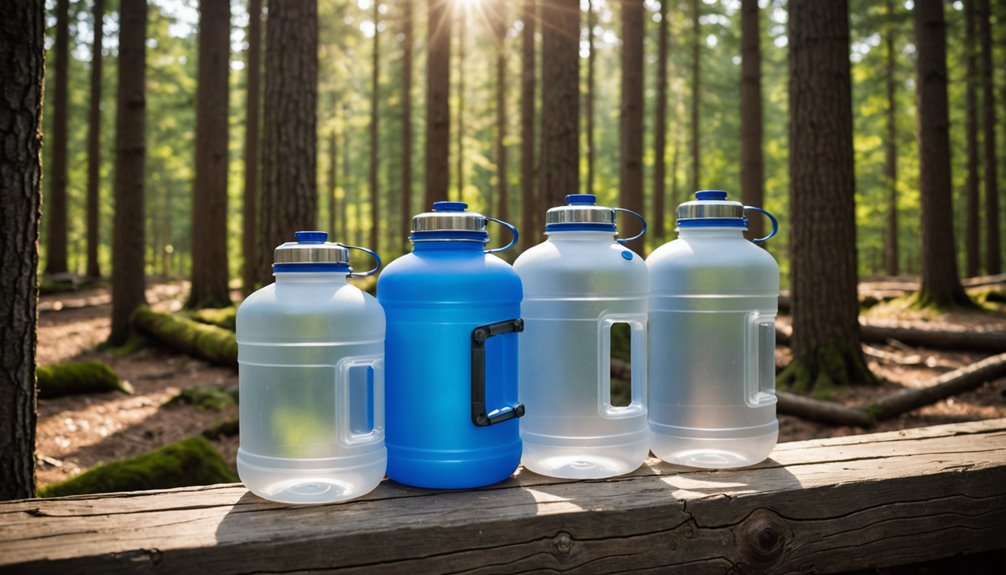
Now that you’ve got a game plan for how long your water’ll last, let’s talk about what’ll actually hold it.
We’ve learned the hard way that containers matter—a lot. Here’s what we recommend for serious emergency preparedness:
- Food-grade plastic or stainless steel containers prevent chemical leaching and keep your water safe
- Collapsible water containers save precious space and weight on the trail
- Standard plastic jugs outlast single-use bottles if designed specifically for water storage
- Heavy-duty 20-liter or 55-gallon options work for base camps—just fill them where they’ll stay
- Never repurpose milk or juice containers; bacteria loves those residues
Skip anything that previously held non-food items.
We’ve seen contamination ruin trips. Your stored water’s only as good as its vessel. Stainless steel surfaces offer the same rust and corrosion resistance that make them ideal for durable camping gear.
Pair quality containers with basic water filtration, and you’re genuinely prepared for whatever camping throws at you.
Preparing and Treating Water Before Storage
Because untreated water can harbor bacteria, parasites, and other nasty stuff that’ll ruin your trip (or worse), we always disinfect before storing—it’s non-negotiable.
Here’s what we’ve learned works: grab unscented bleach and add 8 drops per gallon for clear water, 16 for cloudy stuff. Boiling for one minute eliminates pathogens effectively—our go-to when we’re being extra cautious.
Purification tablets offer compact backup insurance against bacteria and viruses, though they won’t catch particulates. We fill sanitized plastic containers with treated water from reliable sources only—municipal supplies or tested wells beat sketchy roadside springs every time.
Just as hikers use insect repellents to protect themselves from outdoor hazards, proper water treatment serves as your defense against waterborne pathogens during camping trips.
Then comes the vital part: label and date everything. Replace your water every 6-12 months. Boring? Yes. Non-negotiable? Absolutely.
Environmental Factors That Affect Water Quality
Three things’ll sabotage your stored water faster than you’d expect: temperature swings, light exposure, and humidity—all of which we’ve learned the hard way.
We store water in a plastic container, not a glass one, because it’s practical for camping. But here’s what we discovered: environmental factors directly threaten that water’s safety.
Key threats to your stored water:
- Temperature fluctuations compromise plastic integrity, causing chemical leaching
- Direct sunlight accelerates container degradation and promotes algae growth
- High humidity creates condensation, breeding bacteria inside sealed containers
- Chemical vapors permeate plastic, contaminating everything inside
- Cool, dark storage locations dramatically extend water viability
Keep your water container in shaded, temperature-stable spots—away from fuel, solvents, and direct sunlight. Similar to how UV-blocking fabric protects outdoor gear from sun damage, proper water storage requires protection from light exposure to maintain safety and quality.
We’ve seen stored water turn cloudy within weeks when ignored. Your camping success depends on these unglamorous details.
Portable Filtration Methods for Campers
While storing clean water handles part of the challenge, we’ve found that most camping trips demand a way to treat water you’ll find in the field—streams, lakes, and questionable spigots included.
Portable water filters are our go-to solution. Models certified to NSF 53 and NSF 58 standards effectively kill bacteria and parasites, making sketchy sources safe to drink. We rotate between pump filters for reliability, gravity filters for hands-free operation, and straw-style filters for ultralight trips.
Water purification tablets offer compact backup—they kill bacteria and viruses, though they won’t remove sediment. Boiling works too, though it’s fuel-intensive. Like infrared heat therapy used in portable saunas, heat penetration effectively eliminates pathogens when applied correctly during water treatment.
Here’s our philosophy: combining methods beats relying on single solutions. A filter followed by purification tablets creates redundancy that keeps water stored in your bottles genuinely safe.
Maintaining Water Freshness Throughout Your Journey
Once you’ve treated your water with filters or purification tablets, the real work begins—keeping it fresh enough to drink for days or even weeks in the field.
We’ve learned that maintaining portable water quality demands attention to storage conditions and regular maintenance.
Key strategies we recommend:
- Store water containers away from direct sunlight to prevent algae growth
- Keep fresh water in cool, dark places throughout your journey
- Inspect containers regularly for leaks or wear that invite contamination
- Rotate your tap water supply every 6 months—even treated water degrades
- Use collapsible containers to maximize space while protecting water integrity
- Choose containers made from BPA-free plastic or silicone materials to prevent chemical leaching that compromises water safety
We treat our water, then forget about it—mistake.
Temperature fluctuations and light exposure compromise even purified supplies.
Replace degraded containers immediately.
Collapsible portable water containers save precious camping space without sacrificing freshness.
Your hydration depends on these unglamorous but essential practices.
Signs of Contaminated Water and When to Replace It
Several warning signs’ll tell you it’s time to dump your water and start fresh—and we’ve learned the hard way that ignoring them isn’t worth the risk.
| Sign of Contaminated Water | What It Means | Action Required |
|---|---|---|
| Unpleasant odor | Bacterial growth or chemical leaching | Replace immediately |
| Color changes or cloudiness | Potential water quality issues | Discard and refill |
| Floating particles or sediment | Contamination present | Dump entire supply |
We check our stored water regularly because these signs of contaminated water don’t announce themselves politely. An odd taste? That’s your cue to replace everything. Visible particles settling at the bottom? Gone. We won’t risk our health for convenience—dump it and refill. Storing your bladder with the cap off helps prevent mold growth when not in use, so ensure your hydration system itself isn’t introducing contamination to your water supply. Your body’ll thank you for staying vigilant during your camping adventure.
Frequently Asked Questions
Can I Drink 20 Year Old Bottled Water?
We don’t recommend drinking 20-year-old bottled water. Bottled water safety depends on proper long term storage, yet plastic degradation and water contamination risks increase considerably over time. We’d suggest following hydration guidelines and replacing water shelf life supplies every 1-2 years instead.
How to Store Water While Camping?
We’d love to tell you storing water’s complicated, but it’s not. We’ll use food-grade portable water containers, employ water purification options like tablets, practice sustainable water practices, and implement condensation collection methods. We’re breaking free from dehydration dependence through smart water storage techniques.
How Long Will 500 Gallons of Water Last for One Person?
We’d say 500 gallons’ll sustain you roughly 500 days under normal water consumption rates. Your hydration needs vary with activity and climate, though—so we’d treat it as emergency supplies. Proper filtration’s essential for camping essentials, freeing you from dependency on external resources.
How Long Can You Leave Fresh Water in a Camper?
We’re not suggesting you’ll grow gills, but fresh water lasts six months in your camper when we prioritize water storage and camper hygiene. We’ll treat our water sources seriously, maintaining containers dark and clean—that’s freedom from waterborne worries and true camper independence.
Conclusion
We’ve learned that proper water storage isn’t just about filling containers—it’s about protecting your camping experience. An ounce of prevention beats a pound of cure, so we recommend replacing your stored water every 6-12 months and monitoring for signs of contamination. By choosing food-grade containers, storing them in cool, dark spots, and staying vigilant, we’re ensuring that we’re never caught without safe drinking water. Your future camping self will thank you.