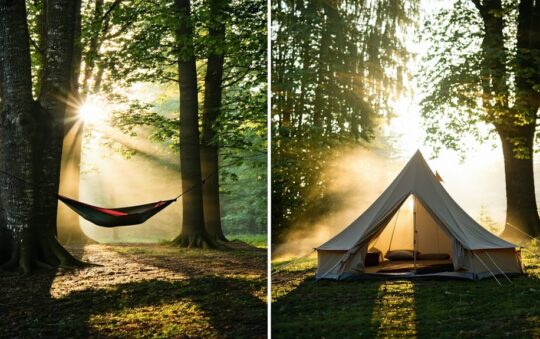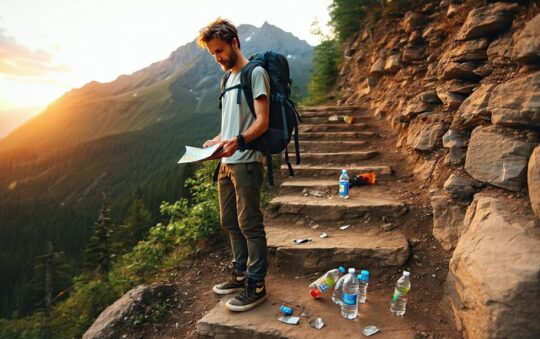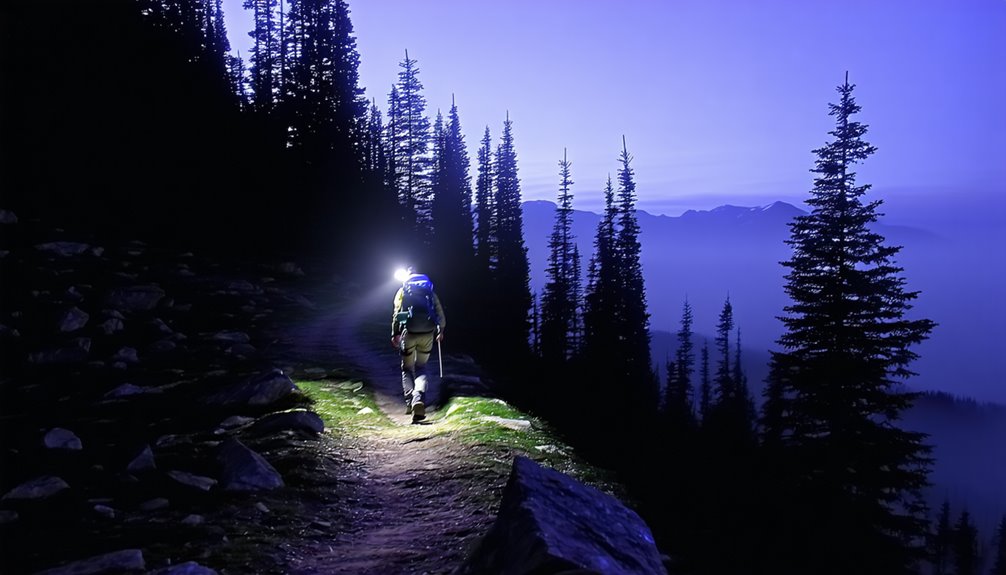
We’ve all heard the cautionary tale—flashlight dies, hiker gets lost, rescue team mobilizes at midnight. But here’s what that story doesn’t tell you: we’ve hiked in complete darkness dozens of times without incident, and we’re not adrenaline junkies. The real question isn’t whether night hiking‘s possible; it’s whether you’re prepared to do it right. So, what separates the adventurous from the reckless?
Key Takeaways
- Night hiking is safe when you prepare properly with reliable headlamps, know the trail beforehand, and understand local wildlife behavior.
- Darkness significantly increases risks including reduced visibility, wildlife encounters, and anxiety-induced mistakes, requiring heightened awareness and caution.
- Essential gear like quality headlamps, backup lights, reflective clothing, and GPS navigation substantially mitigate nighttime hiking dangers.
- Hiking with a companion provides accountability, navigation assistance, and emergency support that solo night hiking cannot offer.
- Gradual familiarization with darkness on well-trafficked trails, combined with informing others of your route, transforms night hiking from risky to responsible.
Understanding the Risks of Nighttime Hiking
When darkness falls on the trail, everything changes—and not always for the better. We’ve learned that hiking in the dark amplifies genuine hazards. Reduced visibility transforms familiar paths into obstacle courses; we’re stumbling over roots we’d easily spot at noon.
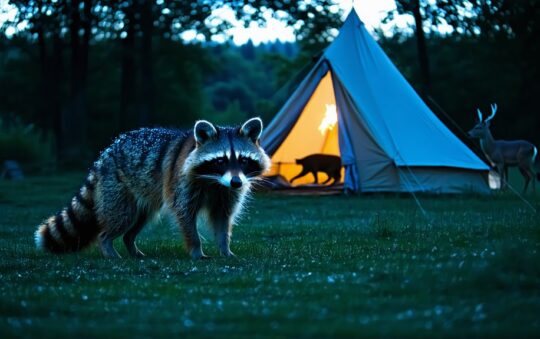
Wildlife becomes more active after sunset. Bears, wolves, and coyotes roam when we’re hiking, increasing dangerous encounters considerably.
Here’s what we’ve discovered: anxiety in darkness clouds our judgment. Fear makes us careless, and carelessness causes accidents. Falls happen. Injuries happen.
We’re not fear-mongering—we’re being honest. Isolated nighttime hikes raise personal safety concerns beyond nature itself. Other people pose threats we’d rather avoid.
Yet we don’t suggest avoiding nighttime trails entirely. Instead, we recommend strategic preparation: reliable headlamps with appropriate brightness and durability, group hiking, well-traveled routes.
Understanding these risks lets us hike responsibly after dark.
Essential Gear and Light Sources for Safe Night Hikes
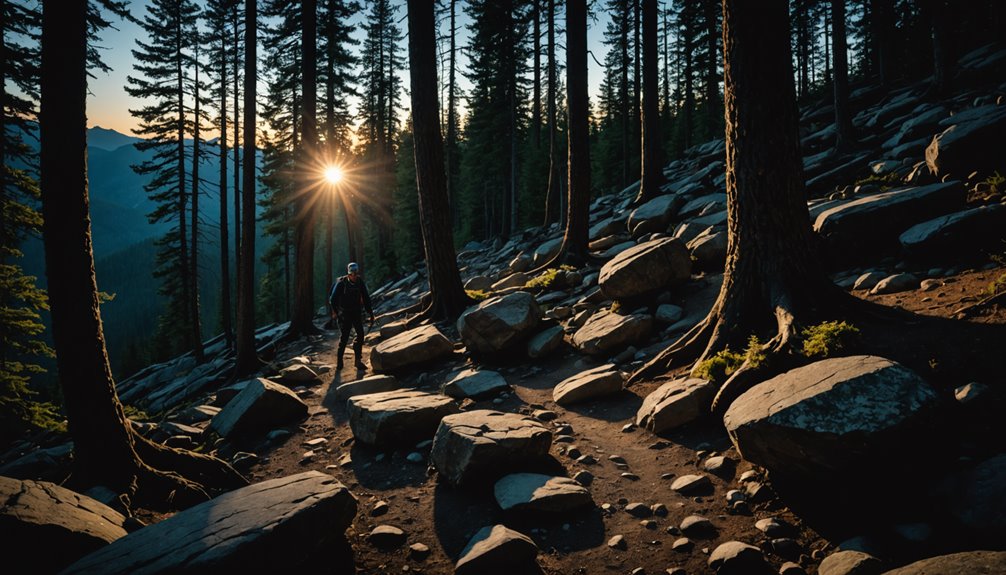
Knowing the dangers is half the battle—but knowledge alone won’t keep you safe on a dark trail. We’ve learned this the hard way. You need gear that’ll actually work when you need it most.
- Reliable headlamp with extra batteries — hands-free illumination lets you navigate uneven terrain safely
- Backup light source — your phone’s flashlight won’t cut it alone; carry a secondary option
- Lightweight, durable equipment — night hiking demands more energy, so gear shouldn’t weigh you down
Make sure your clothing stands out too. We wear reflective or brightly colored jackets—especially important when hiking with others. Consider investing in gear that meets recognized safety certifications to ensure your equipment has been tested for reliability in challenging conditions.
Consider a bear bell; that gentle noise deters wildlife by announcing your presence.
The right gear isn’t overkill. It’s liberation from panic.
We’ve discovered that being properly equipped transforms night hiking from terrifying to genuinely manageable. You’re not reckless; you’re prepared.
Wildlife Encounters: Preparation and Prevention
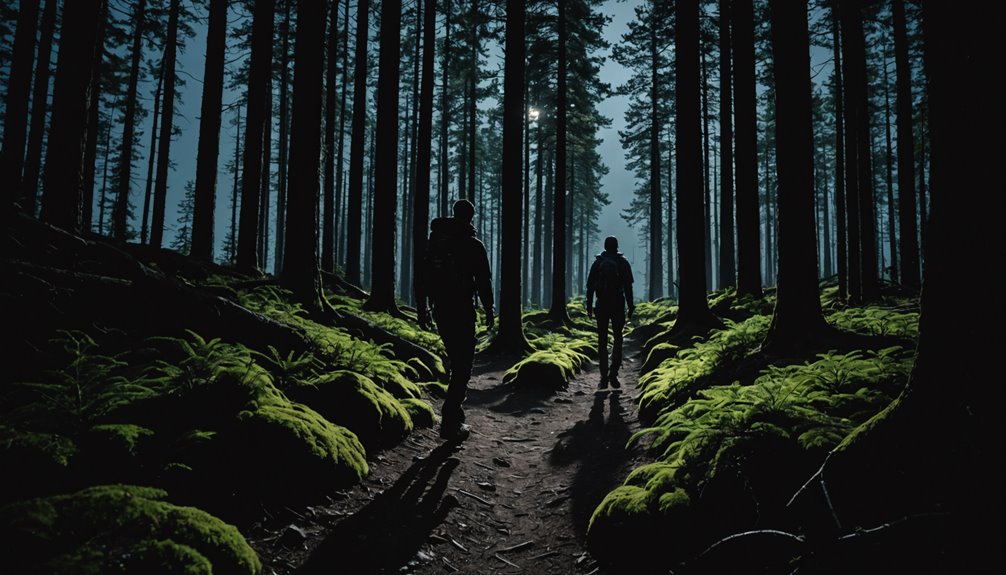
As much as we’d like to think we’re invading their space on night hikes—because, well, we are—most wild animals want nothing to do with us. They’ll retreat when they detect our presence, honestly.
Here’s what actually works: make noise constantly. Talk, laugh, use a bear bell. Hike in groups—animals avoid larger clusters of humans. Carry a reliable headlamp; the light alone deters curious wildlife approaching the side of the road. Reflective gear and bright lighting solutions work similarly to urban safety strategies, catching animals’ attention and improving visibility in low-light conditions.
| Strategy | Why It Works | Your Benefit |
|---|---|---|
| Noise-making | Alerts animals early | Prevents surprise encounters |
| Group hiking | Larger presence intimidates | Safety in numbers |
| Quality lighting | Scares off approach | Visual confidence |
Learning local wildlife behavior transforms fear into preparation. Most animals aren’t aggressive—they’re just trying to eat dinner undisturbed. Understanding this shifts your mindset from victim to respectful visitor in their territory.
Social Safety Strategies for Group Night Hiking
Night hiking with a solid group transforms the whole experience—you’ve got eyes and ears multiplied, shared problem-solving, and honestly, someone to laugh with when you trip over a root.
We’ve learned that strategic companionship isn’t just comforting; it’s transformative.
Here’s what we recommend:
- Assign roles—designate a navigator, a rear scout, and a timekeeper to keep everyone accountable and aware.
- Establish a buddy system where partners stay within arm’s reach, checking in every fifteen minutes.
- Let me know your route beforehand—tell someone off-trail exactly where you’re heading and when you’ll return.
Well-trafficked trails multiply your safety exponentially.
When we hike together carrying quality headlamps—think Black Diamond or Petzl—we’re not just safer; we’re genuinely liberated from isolation’s grip.
Consider downloading offline topo maps on your GPS watch before heading out, ensuring your group has detailed terrain information accessible without cell service.
Group dynamics amplify everything: confidence, awareness, responsiveness.
Choosing the Right Trails and Timing
If you’re tempted to pioneer some obscure backcountry route in the dark, we’d gently suggest reconsidering—well-maintained, frequently traveled trails are where your night hike actually becomes manageable instead of a wayfinding nightmare. The first thing we check? Trail popularity and condition reports. We’ve learned that established paths mean fewer surprises—no hidden ravines or washouts catching us off-guard.
| Trail Type | Visibility | Safety Level |
|---|---|---|
| Well-maintained popular | High | Excellent |
| Remote backcountry | Low | Poor |
| Local favorites | Medium-High | Good |
Timing matters equally. We aim for 6:30 AM or PM summits—twilight hours keep us guiding during semi-darkness rather than pitch-black conditions. Check weather forecasts beforehand; we’ve abandoned plans when rain threatened slippery terrain. Studies demonstrate that rear lights and visibility gear can significantly reduce nighttime accident risks on any outdoor activity. Smart route selection isn’t boring—it’s liberation from preventable disasters.
Physical and Mental Benefits of Night Hiking
Beyond picking the right path and timing, we’ve discovered that night hiking itself rewards us in ways daytime treks simply don’t. Our bodies and minds thrive under darkness in surprising ways.
Here’s what we’ve found transforms middle of the night adventures into genuine wellness experiences:
- Cooler temps boost endurance—we can hike longer without overheating, especially during summer months when daytime trails feel unbearable.
- Heightened senses sharpen awareness—darkness forces us to listen, smell, and feel our surroundings more acutely.
- Mental clarity emerges naturally—the quiet environment quiets our anxiety and encourages genuine introspection.
- Reflective safety features enhance visibility—wearing gear with reflective strips ensures other night hikers and wildlife can spot you on dark trails.
We’re not just moving through space; we’re reclaiming our freedom to explore on our own terms. Night hiking strips away the crowds and pretense.
Your heart rate stabilizes. Your mind settles. You’re finally alone with what matters—pure, unfiltered nature and yourself.
Planning Your First Safe Night Hiking Adventure
As we’ve learned from countless missteps and a few genuinely nerve-wracking moments, preparing properly transforms night hiking from terrifying to genuinely enjoyable.
Start by mastering your trail during daylight—seriously, scout it first. Pack a quality headlamp with fresh batteries plus a backup flashlight; we’ve been caught with dead lights, and it’s not fun.
Time your departure roughly an hour before sunset, giving you twilight navigation while darkness approaches gradually. Never venture solo; a companion provides both safety and sanity checks.
Night navigation demands accountability—tell someone your exact route and expected return. These steps aren’t paranoid precautions; they’re freedom enablers. They let you experience that profound, liberating solitude night hiking offers while keeping yourself genuinely protected. Bring a hydration pack with a headlamp-compatible design so you can stay hydrated hands-free while navigating with your light source.
Frequently Asked Questions
What Is the Golden Rule of Hiking?
We believe the golden rule of hiking is prioritizing safety through thorough hiking preparedness. We’ve got to plan meticulously, stay aware of our surroundings, and respect trail conditions. That’s how we’ll maximize our freedom to explore while minimizing unnecessary risks on every adventure.
What Is the #1 Danger on the Trail?
We face it directly: reduced visibility’s our primary trail hazard. Darkness masks obstacles and uneven terrain, yet we’re free to embrace calculated risks. When we hike mindfully, we conquer what we can’t see—transforming night trails from dangerous to doable through preparation and confidence.
Is It Safe to Be in the Woods at Night?
We’ll be straight with you: night navigation in the woods demands serious preparation, but it’s doable. We’ve got to hike with companions, bring reliable headlamps, know our terrain, and stay alert. Smart precautions let us reclaim nighttime trails without unnecessary risks.
Is It Safe to Walk in the Dark?
We’ll be straight with you: walking in the dark isn’t inherently unsafe. With proper night navigation tools, we’re empowered to reclaim our freedom and explore confidently. Headlamps, group companionship, and trail familiarity liberate us from unnecessary fear.
Conclusion
We’ve learned that night hiking isn’t inherently dangerous—it’s a million times more rewarding when you’re prepared. You’ll need reliable gear, trail knowledge, and trusted companions. We’ve hiked countless dark trails, and we’re still here to tell you: respect the darkness, plan meticulously, and embrace the adventure. The night won’t bite if you’re smart about it. Now get out there—responsibly.