We’ve all been there—rushing into shots, missing easy returns, wondering why we keep giving points away. It’s not just about power or fancy moves. We learned the hard way that winning comes down to smart, repeatable habits—like staying low, watching the ball like a hawk, and placing shots where it hurts. And trust us, targeting our partner’s feet during practice didn’t win us any friendship points—but it worked.
Key Takeaways
- Maintain a ready position with bent knees, paddle at waist height, and weight forward for quick, balanced movement.
- Focus on the ball 6–12 inches before contact to improve accuracy, consistency, and hand-eye coordination.
- Use compact swings and keep the paddle up to effectively block powerful shots and react faster.
- Target shots at opponents’ feet to disrupt timing and force weak returns, maintaining control.
- Apply topspin or slice with proper grip and paddle angle to enhance shot variation and court control.
Master the Ready Position for Faster Reactions
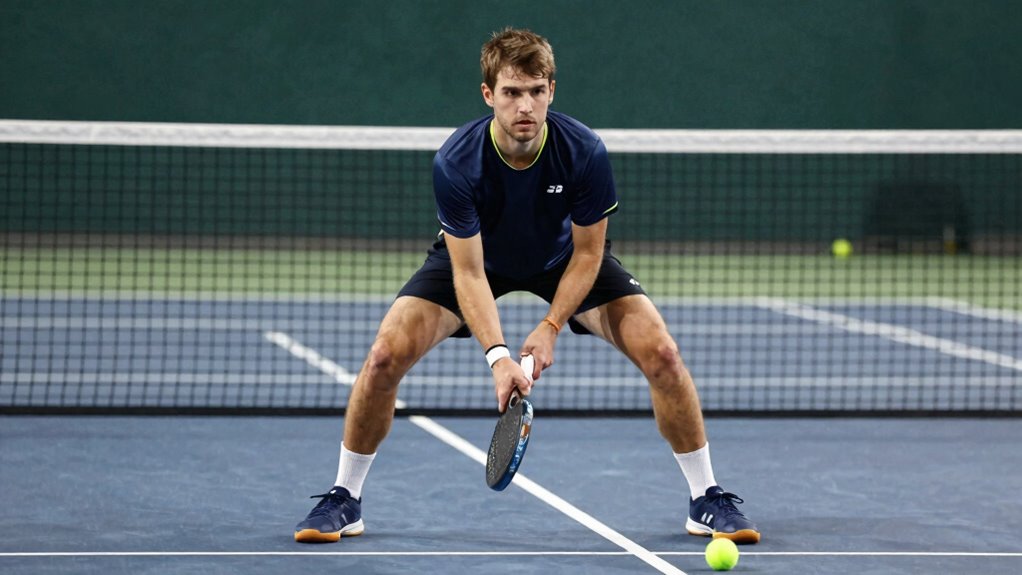
We’ve all been there—lunging wildly after a shot, off-balance, paddle swinging like a baseball bat, only to miss the ball completely because we never reset. It’s frustrating—especially when your opponent drops a soft dink you can’t reach because you’re stuck leaning forward like a confused flamingo.
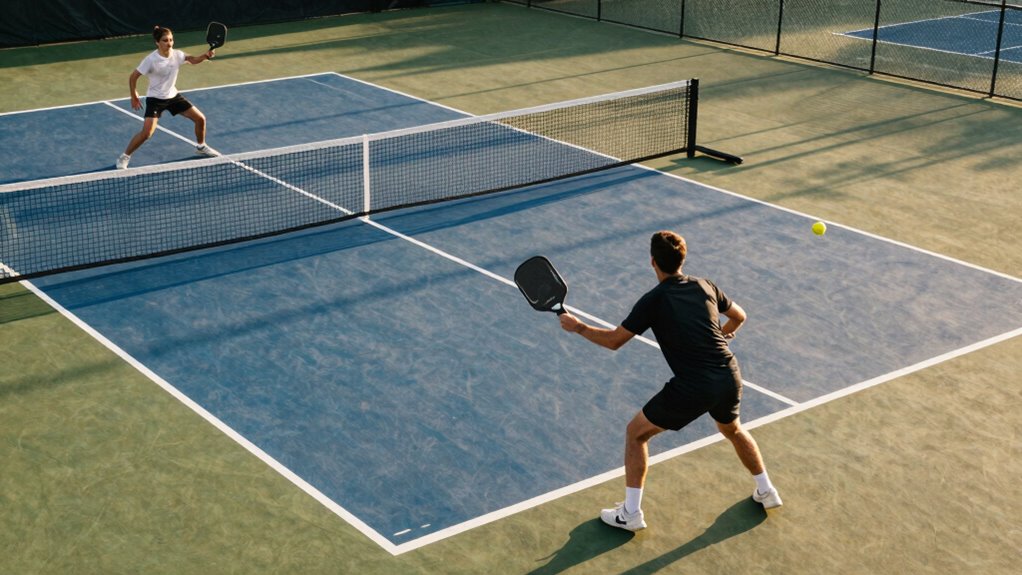
But here’s the game-changer: the ready position. Every time we hit the ball, we bring our paddle back to center—waist height, slightly in front, body square to the court. We keep our knees bent, weight forward, and stance open so we can explode left or right without hesitation.
No more crossover steps that twist our shoulders and slow us down. Whether you’re at the kitchen line or mid-court, adjusting your stance based on your opponent keeps you light on your feet and ready for anything.
We practice this constantly—returning to the ready position without rotating our shoulders—because it shaves split-seconds off our reaction time. That small move? It’s the foundation of control, speed, and freedom on the court. The ergonomic design of your ready position, similar to how proper equipment fit enhances athletic performance, ensures your body can move naturally without restriction.
Own the ready position, and you’ll own the point.
Maintain Consistent Contact for Reliable Shot Execution
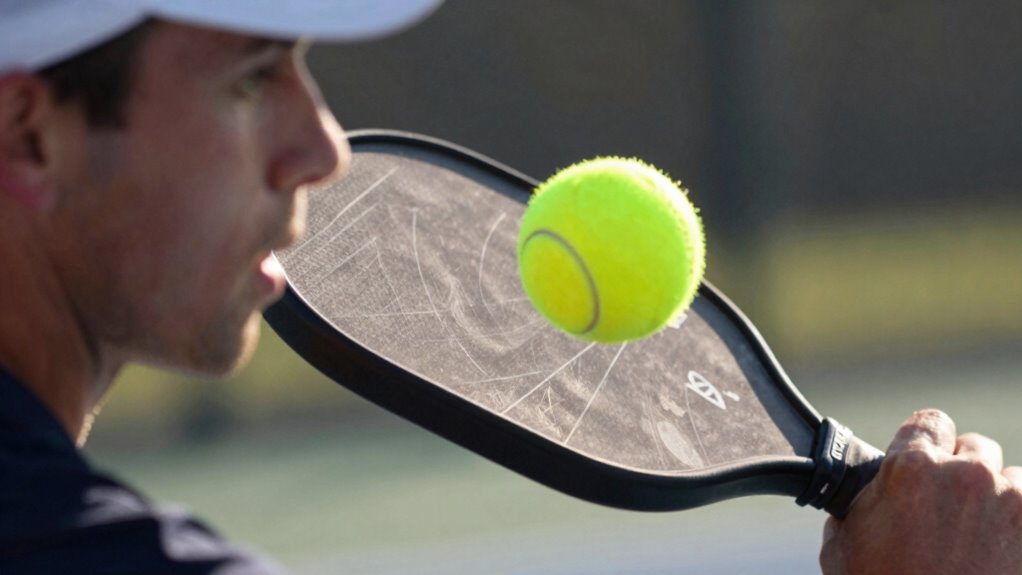
We stay light on our feet in that ready stance you’ve been nailing—knees bent, paddle up, chin over the net—and now it’s time to talk about what happens the moment we pull the trigger.
Consistent contact is our secret weapon. When we hit the ball between shoulder and hip height on drives, we’re in control—no wild swings, no fluky bounces. It’s not magic; it’s mechanics.
To lock in that consistent contact, we do three things:
- Adjust our feet fast—we don’t reach or lunge. Small, quick steps keep us balanced and the contact point locked.
- Drop low for short balls, but keep the paddle out front—under the ball for clean drops, not scooped. Think *precision*, not power.
- Take the ball early when we can, especially on opponent drops—but if it’s too high, let it bounce. No heroics.
We’ve dumped enough shots into the net learning this the hard way. Maintaining a textured surface grip on your paddle ensures better control during these critical contact moments, much like how portable paddle boards use textured surfaces to enhance footing in wet conditions.
Stick to consistent contact, and we’ll dominate rallies—one clean strike at a time.
Use Compact Defense to Handle Powerful Shots
Panic’s the give-away—the split-second flinch when a blistering drive rockets toward your backhand. We’ve both been there, muscles tightening, reaching back for a wild swing that never lands where we want.
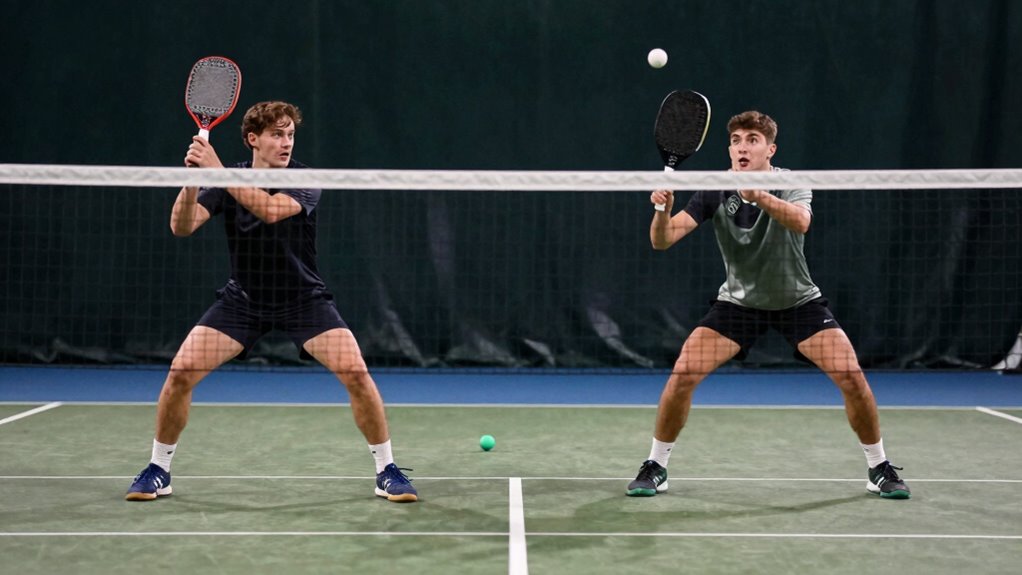
But here’s the truth: power doesn’t beat power. *Compact swings* do. We keep our paddle up, face forward, ready to block—no big backswing, no wasted motion. It’s not about strength; it’s about timing and control.
We stay square to the court, knees bent, weight centered, so we don’t get spun around or caught off-balance. Every time we defend, we minimize the backswing—just a small hinge back, if any—so we return to ready fast. No dramatic turns, no shoulder twists.
We drop the ego and trust the block. It feels awkward at first—we miss, we mis-hit—but soon our consistency jumps. We start neutralizing winners, turning defense into opportunity. Much like how snug fit and adjustable closures keep equipment in place during intense movement, a compact stance keeps your body aligned and ready.
And that’s freedom. No more reacting. Now we’re in control, calm, ready—because *compact swings* aren’t just safer; they’re our quiet rebellion against chaos.
Target Your Opponent’s Feet to Control the Rally
Hitting deep to the baseline used to be our go-to move—until we kept getting crushed by opponents who stepped in and hammered our shots right back at our shins. That’s when we realized: to own the rally, we need to target your opponent’s feet.
It’s not flashy, but it works—especially when they’re crowding the net. Forcing them to lift low balls disrupts timing and exposes weaknesses. We’ve seen even seasoned players flinch when the pace drops and the ball skims their shoelaces. Just as protective clothing serves as a first line of defense in outdoor activities, positioning your opponent’s feet at the net creates a defensive vulnerability you can exploit.
Here’s how we do it:
- Aim low and consistent—a shot landing just over the net and at their toes gives them almost no room to attack.
- Adjust on the fly—when they creep forward, that’s our cue to drop the trajectory and target your opponent’s feet.
- Play smart, not hard—we trade risky winners for safe, pressuring shots that stack up points over time.
We’re not just returning serves—we’re dictating terms. This isn’t about power; it’s about control, patience, and the quiet rebellion of staying steady when others swing big.
Apply Spin With Proper Paddle Angle and Grip
When the ball’s coming fast and low—and it always does at some point—we stop thinking about power and start thinking about spin, because that’s when a well-placed topspin or slice can turn defense into control. We’ve learned that paddle angle and grip aren’t just details—they’re game-changers. Want topspin that bites and bounces? Tilt the paddle slightly down, use an eastern grip (our favorite for its natural wrist snap), and brush up over the ball. Need a skidding slice to keep ’em back? Angle the paddle up, switch to continental (like holding a hammer), and carve underneath. Just as grip and comfort are essential for maintaining control during extended use, your paddle handling directly impacts your ability to execute these spin variations effectively.
| Spin Type | Paddle Angle & Grip |
|---|---|
| Topspin | Slight down angle, eastern grip |
| Slice | Slight up angle, continental |
A 5-degree tilt off target can send the ball long—or into the net. We’ve been there. Watch the ball strike the paddle, stay low, and keep your head down. Small tweaks, big freedom.
Stay Square and Balanced at the Kitchen Line
We’ve all wobbled at the kitchen line—leaning too far, lunging awkwardly, then scrambling to recover—but staying square isn’t just about posture, it’s about control.
When we stay square and balanced, we move faster, react sharper, and stop giving away cheap points. Our shoulders face the court, not the sideline, so we’re always ready to explode left or right without resetting.
No more crossover steps that leave us stuck—side stepping keeps us free, agile, and in command.
To truly stay square and balanced, we do three things:
- Reset instantly after every dink or block—feet under hips, knees bent, weight forward.
- Side step, don’t cross step—it keeps our hips and shoulders open for rapid changes.
- Recover square after reaching wide—no matter how far we stretch, we snap back to center.
It’s not perfection—it’s rhythm.
We used to overreach and fall over (still do sometimes). But now, we’re balanced, patient, and in the fight.
Staying square doesn’t just steady us—it sets us free. Just like athletes who maintain proper fit and stability in their footwear, pickleball players who stay square gain better control and reduce injury risk on the court.
Focus on the Ball for Enhanced Accuracy and Timing
Though we sometimes forget to watch closely—especially when we’re amping up the pace—we’ve found that locking eyes on the ball just 6–12 inches before paddle contact sharpens our accuracy like nothing else.
We *focus on the ball*—really focus—and suddenly, our dinks land softer, our volleys stay in bounds, and our timing clicks. It’s not magic; it’s discipline. We keep our heads down after contact, resisting the urge to pop up and peek—just like Coach Maria yelled at us during drills.
Watching the ball’s spin and speed from their paddle to ours lets us react faster, not guess. And guess what? Our hand-eye coordination improves every time we stick to this rhythm.
Even advanced players skip this basic—but when we double down on *focusing on the ball*, our consistency skyrockets. We’ve burned through too many points chasing drop shots we didn’t read early.
Now, we lock on. We stay present. We crush it—not with flash, but with focus. Try it. You’ll feel freer than you have in months.
Maintaining low latency responsiveness between your eyes, brain, and paddle ensures you can adjust your positioning and stroke in real time to match your opponent’s moves.
Frequently Asked Questions
What Is the Best Grip for Beginners in Pickleball?
We’re using the continental grip because it’s the best grip for beginners in pickleball. We master control fast, embrace Grip Fundamentals, and free ourselves from switching—unleashing versatility, confidence, and fluid play at the net and baseline.
How Can I Improve My Serve Accuracy Consistently?
We nail serve accuracy by mastering consistent toss and contact—did you know78% of pros credit precision to this? We embrace Serve Techniques that free us from error, using smooth motion and targeted practice so we’re never guessing where the ball lands again.
What Type of Shoes Are Ideal for Pickleball Courts?
We’ve found ideal shoes grip the Court Surface without sticking, giving us swift, free movement. We choose lightweight, non-marking soles that flex with our feet—because we refuse to let stiff gear slow us down. We play better when we move like we’re unbound.
How Do I Choose the Right Paddle Weight for Me?
We grab lighter paddles when we want quick wrist snaps, like Sarah dodging smash shots at her local rec center. We balance paddle weight with control—carbon faces boost precision, letting us move freely. Lighter weight? We feel agile. Heavier? More power. We pick what sets us free.
When Should I Use a Lob in a Rally?
We use a lob when we need space to reset, exploiting Lob Timing to challenge aggressive net players—this act disrupts control, reclaims power, and liberates us from pressure, turning defense into freedom with one soaring shot.
Conclusion
We’ve all gotten burned diving for a shot we never should’ve chased—pickleball humbles us fast. But stick with these seven moves, and we’ll play smarter, not harder. Think of your court coverage like a well-timed microwave burrito—timing, position, and a little spin keep it from exploding. We’ve tested this on cracked community courts with old Franklin balls and 98° heat—still works. Let’s own the kitchen, stay light on our feet, and finally stop missing easy dinks. Game on.