You’ll want to maximize your toddler’s beach experience while minimizing risks. Shallow-water play and supervised wading offer enjoyable ways to introduce water safety fundamentals. But here’s what many parents overlook: the difference between basic precautions and genuinely effective protection strategies. Understanding which safety gear actually works, how to establish proper boundaries, and what games reinforce water confidence requires more than common sense. Let’s explore the essential practices that’ll keep your little one safe.
Key Takeaways
- Designate a responsible adult to supervise toddlers constantly, avoiding distractions like phones during water play.
- Use Coast Guard-approved floaties and life jackets that fit snugly for reliable buoyancy and safety.
- Start with shallow-water activities like wading and splash play in calm, debris-free areas away from currents.
- Apply SPF 50+ sunscreen every two hours, use wide-brimmed hats, and provide plenty of drinking water.
- Teach basic water safety rules beforehand, including staying close to the supervising adult and avoiding running near water.
Shallow Water Play and Splashing
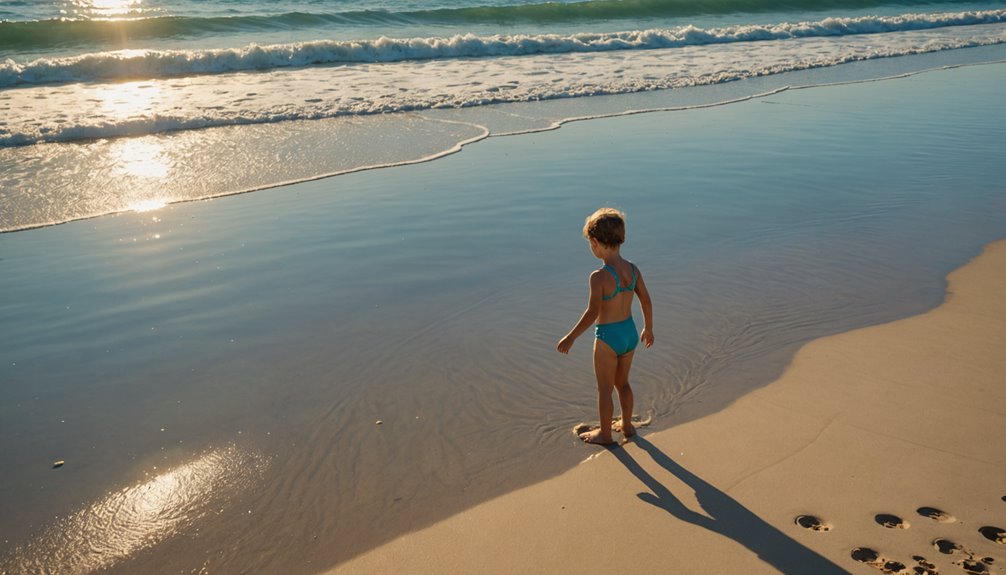
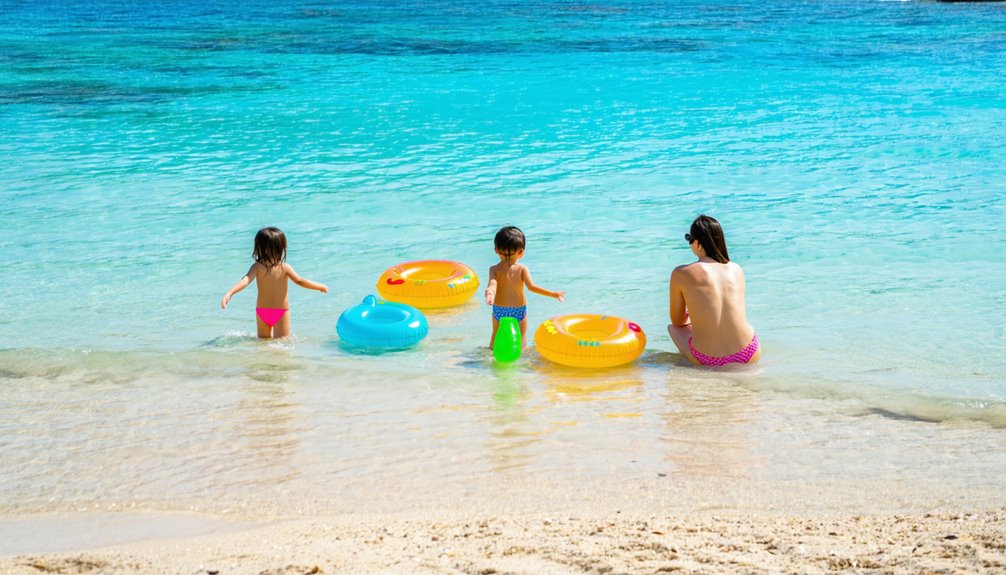
Shallow water play offers toddlers a safe way to explore aquatic environments while you maintain close supervision.
You’ll encourage independence and water comfort by allowing your child to splash and jump in shallow areas, all while staying within arm’s reach.
Activities like wave chasing and splashing develop your toddler’s physical coordination and confidence in maneuvering water.
These playful interactions also create meaningful bonding moments with your family.
You can enhance safety using baby pool floats, which provide security without overwhelming your child.
This approach lets your toddler engage freely while you control the experience.
Remember that constant supervision remains non-negotiable, even in shallow water.
You’re responsible for maintaining awareness of your toddler’s location and wellbeing at all times.
This vigilance allows your child to explore safely while building essential water skills and confidence.
Beach Toys for Imaginative Play
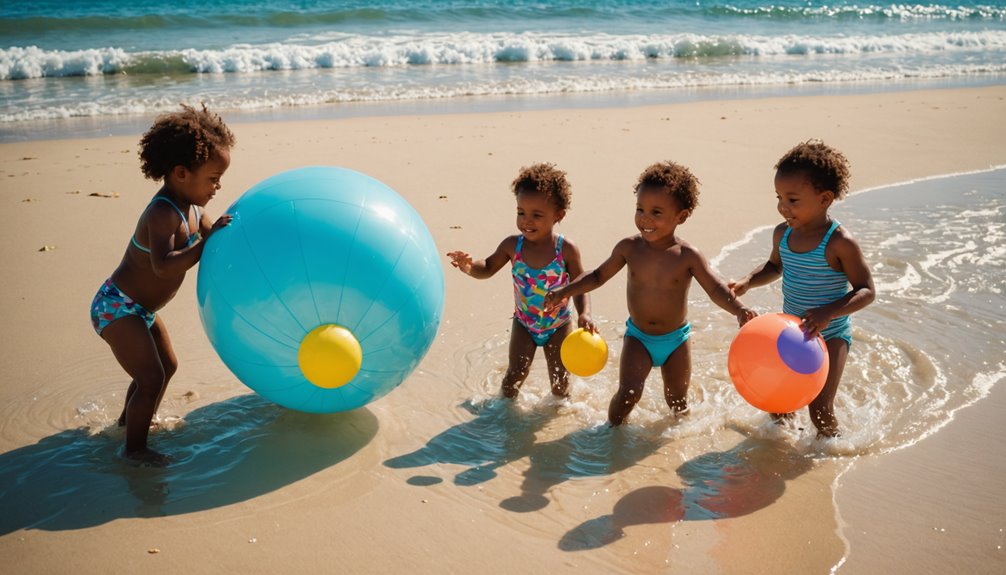
Beach toys transform sand and water into interactive spaces where your toddler’s imagination flourishes.
You’ll find that thoughtful toy selection enhances both cognitive development and physical growth.
Consider these evidence-based options:
- Buckets and shovels – Build structures that develop fine motor skills and spatial reasoning
- Figurines for treasure hunts – Bury plastic animals to encourage problem-solving and cooperative play
- Floating boats and balls – Promote hand-eye coordination during supervised water play
- Natural materials – Collect shells and driftwood for creative art projects
You’re empowering your child’s independence by offering open-ended play opportunities.
These toys encourage self-directed exploration rather than passive entertainment.
Rotate items regularly to maintain engagement without overwhelming your toddler.
Always supervise water play closely, and choose age-appropriate toys that withstand sand and saltwater exposure.
This approach liberates your child’s creative potential while supporting safe, developmental beach experiences.
Floaties and Water Safety Gear
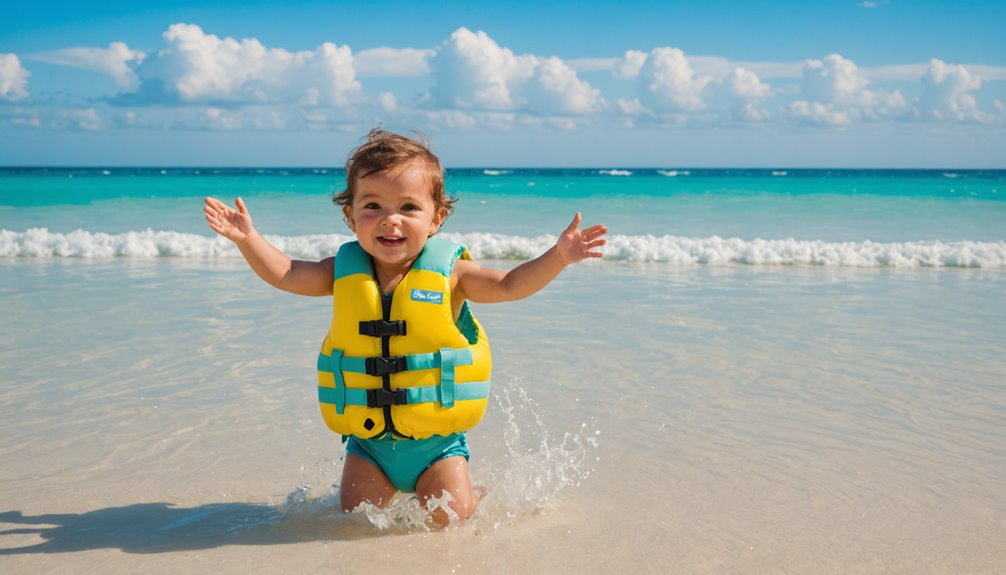
While beach toys encourage creative exploration, your toddler’s safety in the water depends on proper flotation devices and protective gear.
You’ll want to choose Coast Guard-approved floaties like puddle jumpers that provide reliable buoyancy. Make sure all safety gear fits snugly so nothing slips off during water activities.
Before entering the water, familiarize your toddler with their floaties and teach proper usage—this builds confidence and competence.
You must never leave toddlers unattended near water, regardless of what gear they’re wearing. Supervision remains non-negotiable.
Regularly inspect your floaties and safety gear for damage or wear, replacing items promptly to maintain ideal protection.
You’re creating a foundation where your toddler can explore water freely while you maintain control over their safety. This balanced approach empowers both you and your child.
Sun Protection and Hydration Essentials
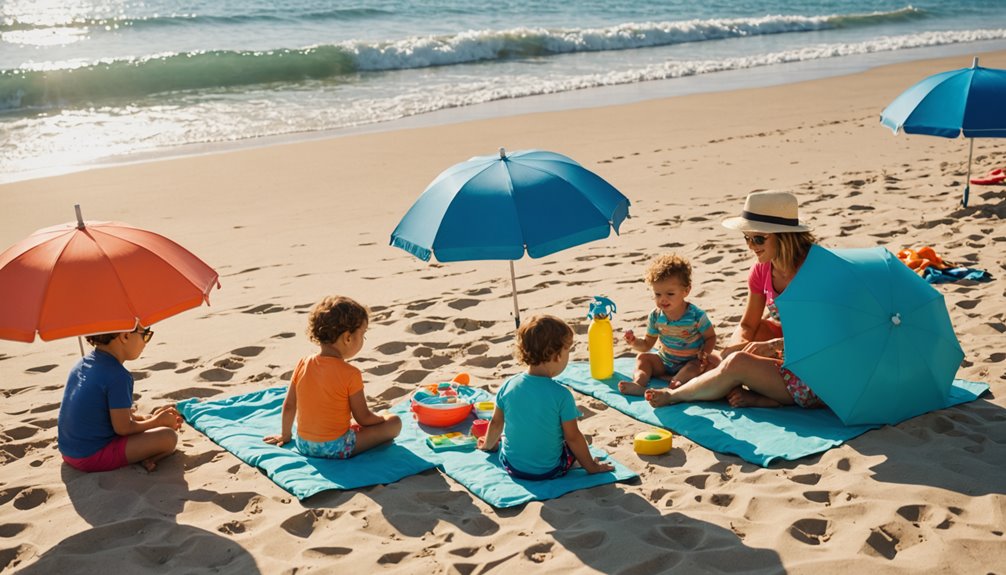
As you prepare your toddler for water activities, protecting their delicate skin from the sun’s harmful rays is just as critical as supervising their time in the water.
You’ll want to establish a robust sun protection and hydration routine:
- Apply SPF 50+ sunscreen every two hours, reapplying after swimming or sweating.
- Equip your toddler with wide-brimmed hats and UV-protective sunglasses.
- Pack abundant drinking water to prevent dehydration in heat.
- Create shaded zones using umbrellas or tents during peak hours (10 AM–4 PM).
Consistently monitor your toddler for overheating signs and sunburn.
Swift action—moving them to cooler areas and offering water—prevents serious complications.
Beach activities demand vigilance, but these straightforward measures empower you to keep your child safe while they enjoy water play freely.
Supervised Water Exploration Activities
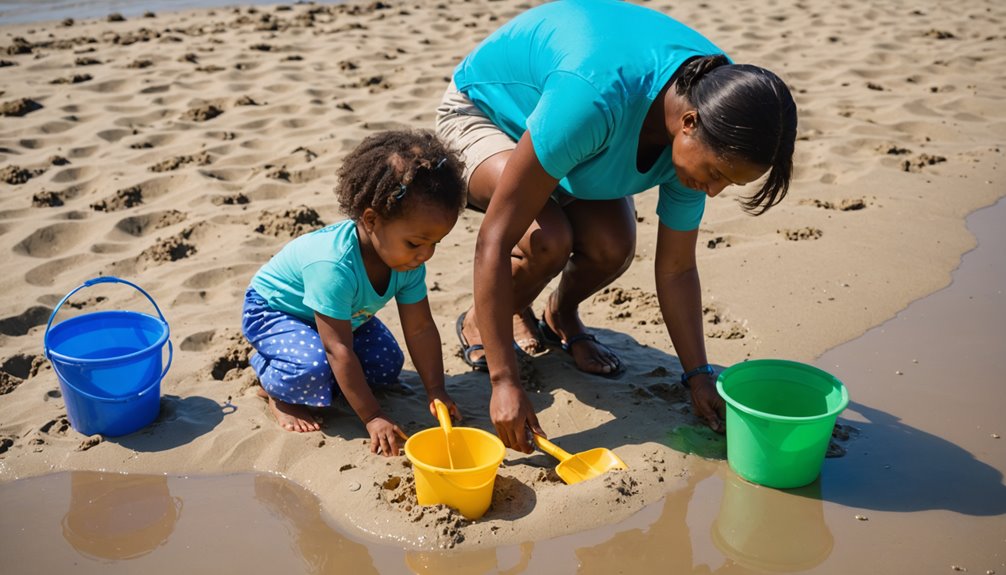
Once you’ve established sun protection measures, you’re ready to introduce your toddler to guided water exploration that builds confidence while prioritizing safety.
Start with shallow-water splash play and wading, allowing your child to engage gently with waves under your watchful eye. Use baby pool floats to foster independence while maintaining easy supervision.
Establish clear water rules: no running near shorelines and designated safe zones only. Your constant presence—within arm’s reach at all times—remains non-negotiable, as shallow water still poses risks.
Enhance toddler supervision through interactive games like “chase the waves,” combining physical activity with bonding. This beach activities approach transforms water exploration into enjoyable, confidence-building experiences while keeping safety paramount.
Building Confidence in the Water
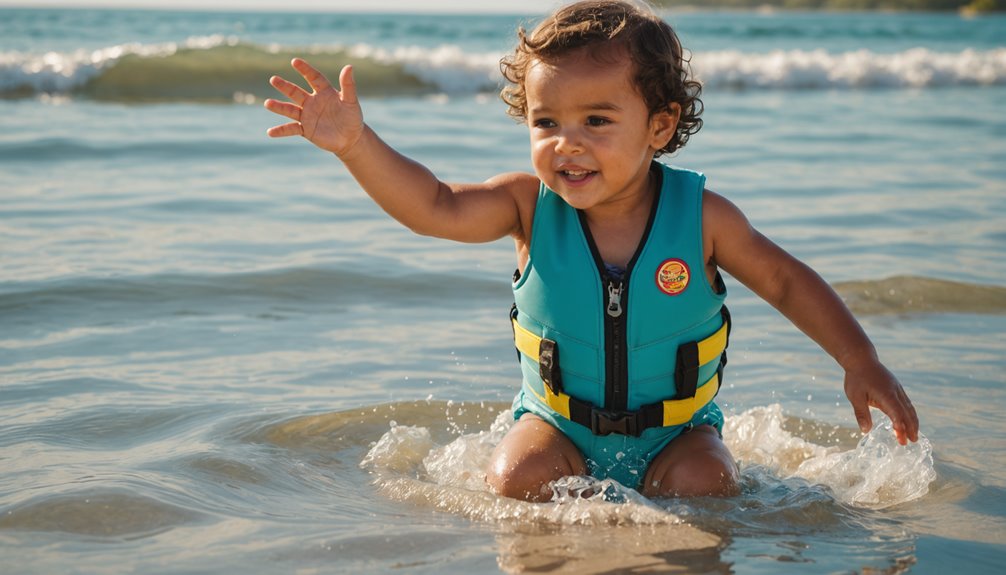
Your toddler’s comfort in the water grows through gradual, positive experiences rather than rushed progression. You’ll build their confidence by creating a safe environment where they can explore freely.
- Use Coast Guard-approved flotation devices to give your children security while learning.
- Offer consistent supervision and encouragement without hovering anxiously.
- Praise specific brave actions—entering shallow water, floating with support, trying new water activities for kids.
- Keep your children engaged with simple games using floating toys.
Building confidence requires patience. You aren’t forcing achievement; you’re facilitating natural skill development.
When your toddler attempts something new, acknowledge their effort immediately. This positive reinforcement demonstrates that risk-taking in controlled settings yields rewards.
Your calm demeanor directly influences their willingness to experiment. As they repeat successful water activities for kids, their self-assurance expands naturally, preparing them for future aquatic adventures.
Age-Appropriate Water Games
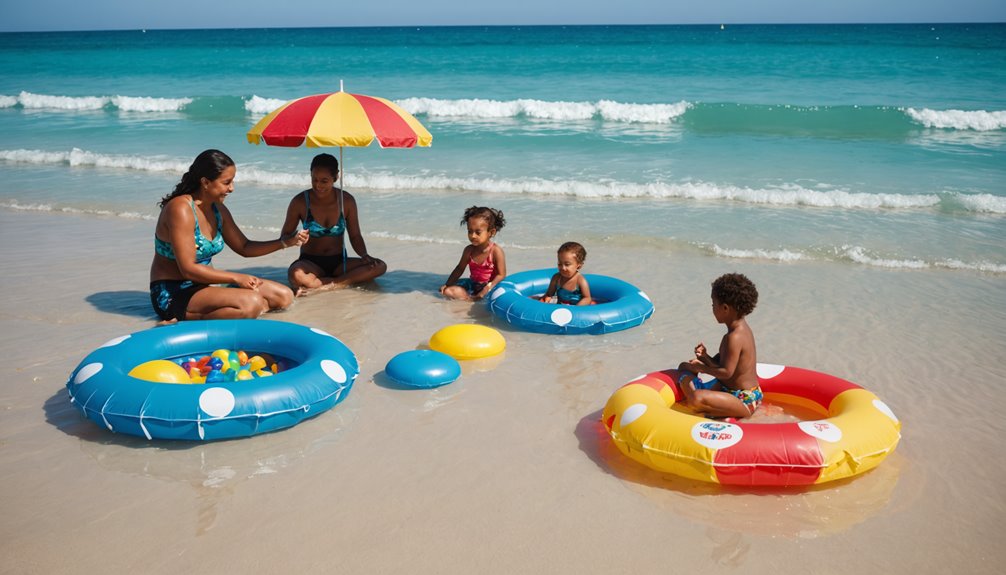
With confidence building steadily, you’re ready to introduce structured games that make water play enjoyable while reinforcing safe practices.
Age-appropriate water games engage toddlers through simple, supervised activities that build independence without compromising safety.
“Chase Waves” encourages physical activity as your child runs toward and away from incoming waves under your watchful eye.
Water-based sensory activities using small buckets develop fine motor skills while your toddler pours and transfers ocean water independently.
Incorporate safe water toys like large beach balls and floating objects to enhance hand-eye coordination through interactive play.
These toys encourage exploration while you maintain control over the play environment.
Supervised splash play with baby pool floats provides a contained space where your toddler enjoys water freedom while you guarantee their security.
These games balance adventure with protection, empowering your child’s water competence.
Creating a Safe Beach Environment
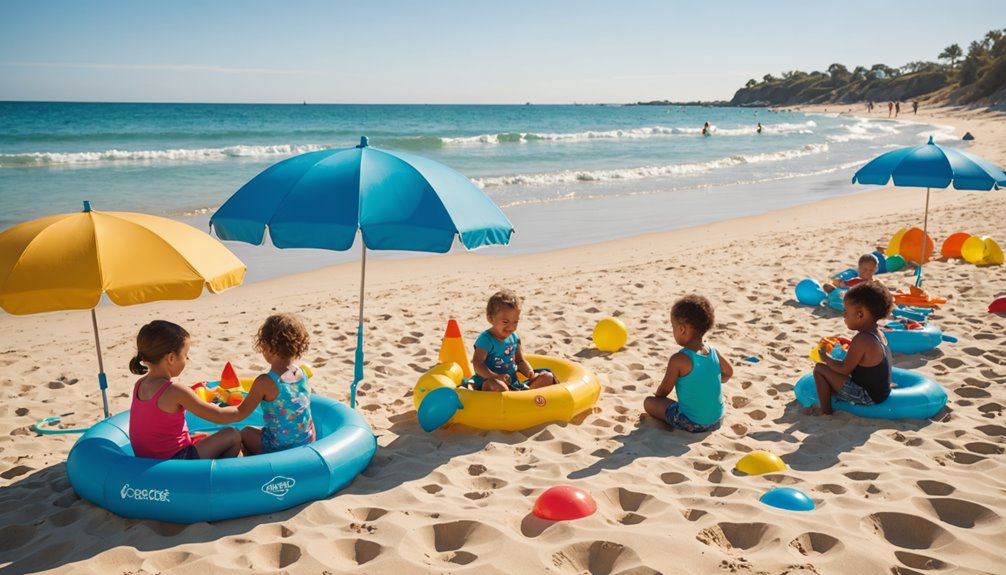
As you shift from structured games to open beach play, establishing clear boundaries becomes essential for protecting your toddler.
You’ll create safety awareness by setting firm rules: no running near water and staying within arm’s reach of an adult.
Your supervision strategy should include:
- Constant visual contact during all water activities
- Coast Guard-approved flotation devices like puddle-jumpers for added protection
- Broad-spectrum SPF 50+ sunscreen applied every two hours
- A fully stocked first aid kit for immediate injury response
You’re not restricting your child’s freedom—you’re enabling confident exploration.
These preventative measures let your toddler enjoy water play without unnecessary risks.
Frequently Asked Questions
How to Keep a Toddler Entertained at the Beach?
You’ll keep your toddler engaged by rotating beach toys, building sandcastles together, offering toddler-friendly snacks, exploring shadow play, and supervising splash zones closely. These evidence-based activities empower independent play while maintaining safety and developmental benefits throughout your beach visit.
How to Keep a 2 Year Old Safe at the Beach?
You’ll keep your 2-year-old safe by maintaining constant water supervision, applying SPF 50 sunscreen regularly, using Coast Guard-approved floatation gear, enforcing beach safety tips, and establishing clear water rules. You’ve got this—prioritize their freedom to explore safely.
What Are Some Safe Water Games for Kids?
You’ll find safe water games include supervised splash zones with inflatable toys, sand digging paired with shallow water play, and beach treasure hunts. Keep your toddler close, use flotation devices, and rotate activities to maintain engagement while you prioritize their autonomy and safety.
What to Do at the Beach Other Than Swimming?
You’ll find that 78% of families prefer non-water beach activities. Try beach scavenger hunts, sandcastle building, beach ball games, tide pool exploration, and seashell collecting. These evidence-based activities safely encourage your toddler’s independence, creativity, and sensory development without water exposure risks.
Conclusion
Just as a ship’s captain navigates treacherous waters with vigilance and proper equipment, you’ll guide your toddler safely through beach activities. You’ve charted the course: shallow play, proper gear, sun protection, and constant supervision. You’re not just building swimmers; you’re constructing confidence on a foundation of caution. You’ll anchor your child’s safety through consistent practices, evidence-based precautions, and mindful awareness. You’re the lighthouse ensuring your little one stays secure.