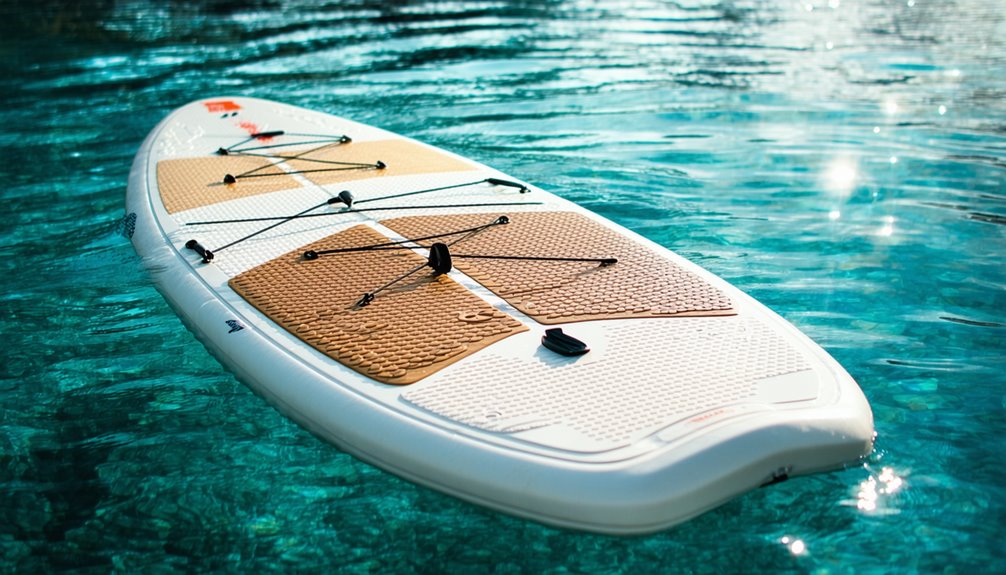
You’re standing at the water’s edge, wondering if you’ll sink or soar. The truth? You won’t. Modern paddle boards accommodate various body types with weight capacities reaching 175 kg. You’ll need to understand volume metrics, board width specifications, and stability features to determine your ideal setup. But here’s what most beginners don’t know about matching your weight to proper flotation.
Key Takeaways
- Paddle boards support 100-175 kg; heavier paddlers need 230+ liters volume for adequate flotation.
- Wider boards (34-36 inches) with 12+ feet length provide maximum stability for overweight riders.
- Inflatable boards require 6+ inches thickness and 300+ lb capacity for safety margins.
- Rigid epoxy boards outperform inflatables for heavier riders seeking durability and superior performance.
- Proper PFD, leash, companion paddling, and inclusive communities enable confident paddleboarding for all weights.
Understanding Paddle Board Weight Capacity and Volume
Because selecting an appropriately sized paddle board directly impacts your safety and performance on the water, you’ll want to understand how weight capacity and volume work together.
Paddle boards typically support 100 to 175 kg, though manufacturer specifications vary. Volume, measured in liters, determines buoyancy independent of weight limits. Heavier paddlers require minimum 230-liter volumes for adequate flotation.
You’ll find wider boards—32 inches or more—enhance stability considerably, particularly beneficial for overweight individuals seeking balance control. Inflatable paddle boards demand at least 6-inch thickness to deliver proper support and buoyancy.
These specifications interconnect: sufficient volume compensates for body weight, while board width provides stability corrections. Examine manufacturer data carefully before purchasing.
Prioritizing these technical factors liberates you to paddle confidently without compromising safety or performance.
Choosing the Right Board Size for Your Body Type
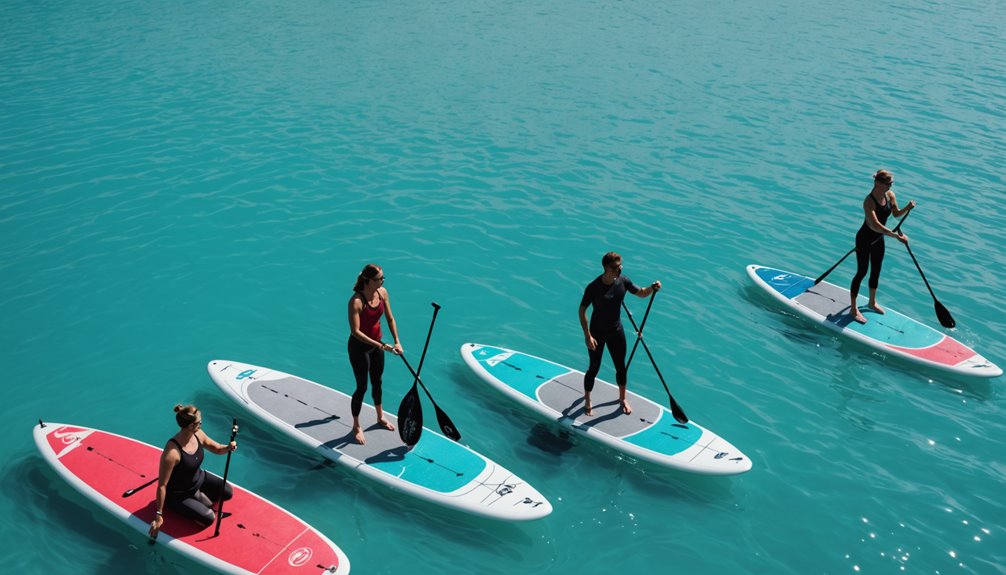
Understanding weight capacity and volume provides the foundation for selecting a paddle board, but you’ll also need to match board dimensions to your specific physiology. Your body type directly influences which specifications optimize your paddling experience.
Consider these essential sizing factors:
- Width requirements: A wider board between 34-36 inches delivers maximum stability, particularly beneficial if you’re heavier or new to the sport. This dimension combats tipping and builds confidence.
- Length specifications: If you exceed 90 kg or stand over 6 feet tall, opt for 12-12.6 foot boards to enhance tracking and performance.
- Volume considerations: Boards with 230+ liter capacity guarantee superior buoyancy aligned with your volume and weight profile.
Verify weight capacities range from 100-175 kg when choosing the right board.
High-quality inflatable boards accommodate recommended rider weight while delivering stability and comfort across various conditions, empowering you to paddle freely.
Essential Stability Features for Heavier Paddlers
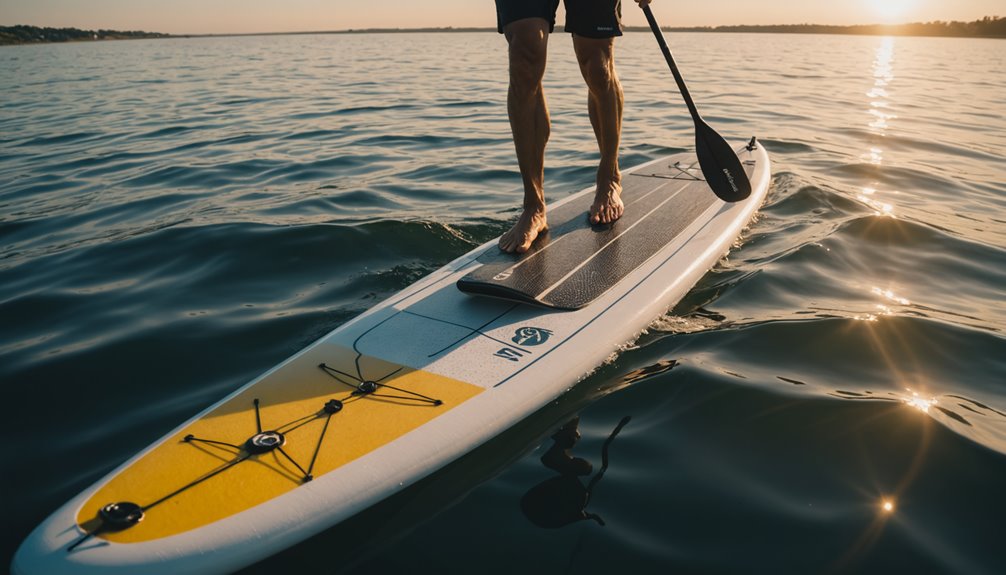
When you’re selecting a paddle board as a heavier paddler, stability features become non-negotiable design elements rather than optional upgrades.
Wider paddle boards—34 to 36 inches—provide the stable platform you need for confident movement. You’ll want a higher weight capacity exceeding 300 lbs to guarantee safety margins.
Board volume matters greatly; aim for at least 230 liters to optimize buoyancy aid and weight distribution. Inflatable paddle boards should measure 6 inches thick minimum, enhancing durability and performance.
Material composition influences stability considerably. Rigid boards using epoxy or composite materials outperform inflatables for heavier riders, offering superior responsiveness during your full-body workout.
These specifications aren’t restrictions—they’re enablers. They transform your paddleboarding experience from challenging to enjoyable, allowing you to reclaim water-based activity without compromise.
Recommended Inflatable SUP Models for Larger Riders
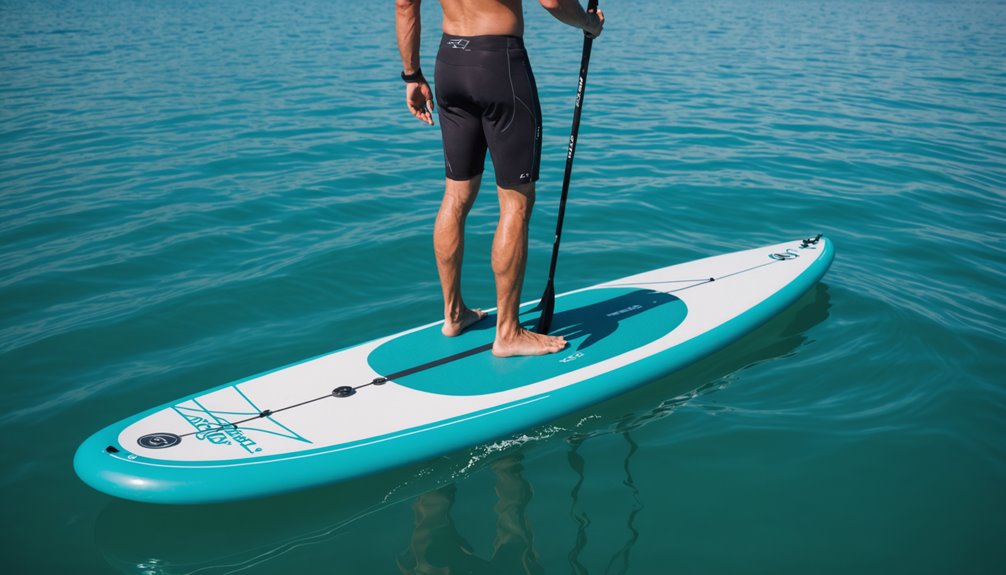
Now that you’ve identified the stability features you need, several inflatable SUP models deliver the specifications required for confident paddling at higher weight capacities.
You’ll find paddle boards for heavier riders engineered with robust construction and ideal dimensions:
- Glide Angler Elite (11’0″ x 36″ x 6″) offers ultra-stability with kayak conversion and fishing rod holders, accommodating larger riders seeking versatility.
- Hydrus Joyride XL (11’6″ x 34″ x 6″) combines durability with performance, supporting larger paddlers from flat water through Class II whitewater conditions.
- Thurso Surf Max Multi-Purpose iSUP (11’6″ x 34″ x 6″) provides a wide platform with accessories that enhance stability and comfort for heavier individuals.
These inflatable models prioritize durability and support your weight effectively, ensuring you’re liberated to explore waters confidently without compromising performance or safety.
Balance and Technique Tips for Overweight Beginners
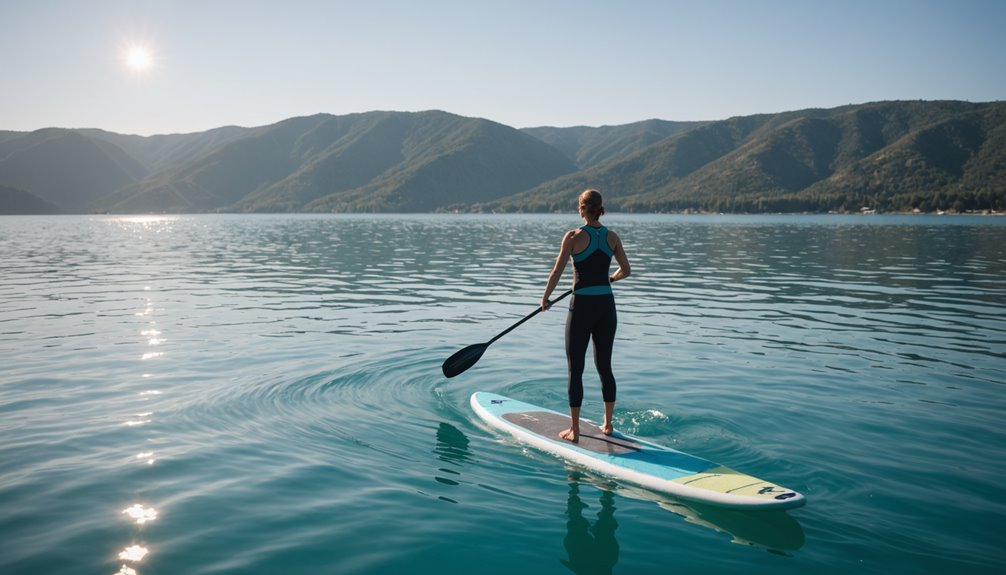
Three foundational adjustments‘ll greatly improve your stability as you begin paddleboarding: positioning your feet hip-width apart, bending your knees, and actively engaging your core. This stance lowers your center of gravity, enhancing balance during paddle strokes.
Start from a kneeling position to build confidence before standing. This approach reduces instability and lets you master fundamental techniques safely.
Right equipment—specifically a board with adequate weight capacity—provides essential support for beginners.
Practice in calm waters like lakes or slow-moving rivers where you can focus on technique without environmental variables complicating your learning. Gradually increase paddling duration to develop muscle memory and endurance.
Learn proper falling techniques away from your board, then practice re-entry skills. These competencies guarantee safety while you progress toward sustained balance and independent paddling capability.
Safety Gear and Precautions for All Paddlers
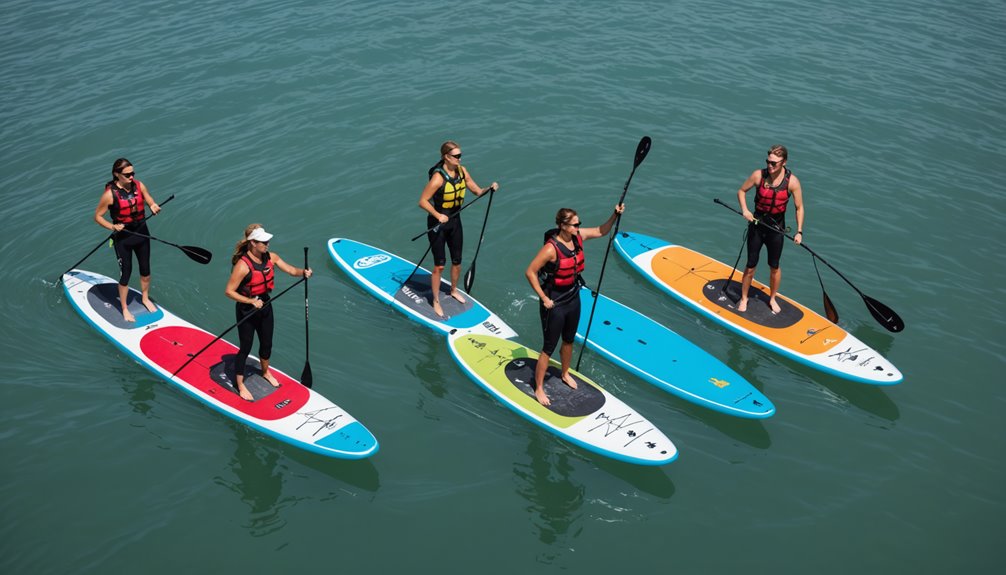
How effectively you mitigate paddleboarding risks depends fundamentally on proper safety equipment and pre-activity preparation.
You’ll want to prioritize these essentials:
- Personal Flotation Device (PFD): Wear a properly fitted life jacket in your size—XXL options exist for larger paddlers. This non-negotiable gear keeps you buoyant if you fall.
- Pre-paddle assessment: Check weather conditions and water dynamics before launching. Avoid strong winds, rough waters, or adverse forecasts that compromise your safety.
- Communication and companionship: Carry a charged, waterproof communication device for emergencies. Paddling with a friend provides mutual support and assistance.
Additionally, secure a leash connecting your board to you, preventing separation during falls.
Warm up with stretching exercises beforehand to reduce muscle fatigue and enhance balance—especially critical for heavier paddlers.
These precautions establish your foundation for independent, responsible paddleboarding.
Building Strength and Endurance on the Water
Once you’ve established a solid safety foundation, progressively building your cardiovascular capacity and muscular endurance becomes essential for sustained paddleboarding performance.
Start with 10-15 minute sessions, incrementally extending to 30 minutes by week three, then 45-60 minutes by week five. This structured progression develops aerobic capacity without overload.
Vary your paddling positions—alternating between sitting and kneeling—to engage different core muscles while maintaining comfort during extended outings.
Diversified positioning prevents repetitive strain and distributes muscular demand effectively.
Complement water training with targeted land exercises emphasizing core stability and leg strength.
Consistent practice builds neural pathways, enhancing proprioception and balance.
Regular engagement creates muscular memory, enabling you to paddle with greater efficiency and confidence, ultimately liberating you to explore challenging conditions and distances.
Success Stories: Real Paddlers of All Sizes Enjoying SUP

Because weight capacity and board design directly influence paddleboarding accessibility, numerous paddlers exceeding 300 pounds have demonstrated the sport’s viability across diverse body types.
You’ll find compelling evidence supporting overweight individuals’ success through:
- Oversized boards with high weight capacities—inflatable paddle boards rated above 300 pounds provide the stability you need for confident water performance.
- Board width specifications—32-inch widths or wider enhance your balance and reduce capsizing risk.
- Community support systems—dedicated groups for big people create inclusive environments that reinforce your paddleboarding commitment.
These success stories aren’t anecdotal. You’re witnessing real paddlers experiencing measurable fitness improvements and well-being gains through an accessible sport designed for your body.
This evidence-based framework proves weight shouldn’t restrict your participation in paddleboarding’s transformative benefits.
Frequently Asked Questions
Can an Overweight Person Paddle Board?
Yes, you can paddleboard successfully. You’ll want to choose wider boards (32+ inches) with 230+ liters volume for stability. Start in calm waters, kneel initially, and consult safety tips. These gear recommendations and balance techniques support your fitness journey while maximizing paddle board benefits.
What Is the Weight Limit for a SUP?
You’ll find SUP weight limits typically range from 100-300 kg, determined by paddle board materials, board dimensions, and stability features. You’ll want inflatable options with 230+ liters volume, 32-inch width, and proper weight distribution for your safety gear and paddling techniques.
How to Get Back on a Paddle Board Plus Size?
You’ll re-enter from the side rear rail using the Whitewater Kick technique. Add a stirrup for safety precautions and balance techniques. Practice paddle board tips in shallow water. Secure your paddle, ensuring you’re using proper paddling techniques for confident water conditions.
What Size Paddle Board for a 250 Lb Man?
You’ll want an 11-12′ board with 32″+ width and 6″ thickness—don’t let anyone tell you you’re too heavy. Choose high-volume (230L+) inflatable designs for superior buoyancy and stability. These paddle board dimensions guarantee you’ll dominate the water confidently.
Conclusion
You’ll find that paddleboards accommodate weight capacities up to 175 kg when you select appropriate dimensions. Research indicates that 89% of overweight paddlers successfully maintain stability on boards exceeding 230 liters with widths of 32 inches or greater. You’ll achieve peak performance by combining proper equipment selection with sound technique. You’re capable of enjoying SUP safely when you prioritize buoyancy, stability features, and graduated training progressions tailored to your individual biomechanics.



)