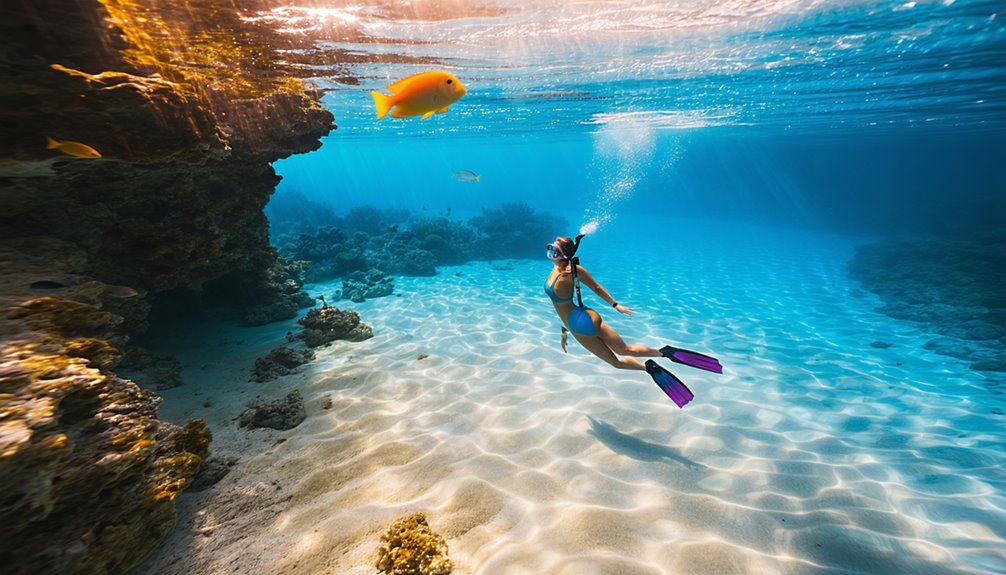
You’re considering a gentle aquatic exploration from the shoreline, and you’ll want to prepare thoughtfully. Proper gear selection—including a well-fitted mask, snorkel, and fins—directly impacts your comfort and safety. Before you enter the water, you’ll need to assess local hydrodynamic conditions, weather patterns, and locate ideal shallow zones. Your breathing technique requires specific practice to maximize oxygen efficiency. But here’s what many beginners overlook about entry and exit procedures—
Key Takeaways
- Invest in properly fitting, high-quality gear to avoid leaks and discomfort during shore snorkeling sessions.
- Master slow, rhythmic breathing patterns and snorkel clearing techniques in shallow water before exploring deeper areas.
- Check beach warning flags and weather forecasts to ensure calm conditions with minimal waves and wind.
- Identify productive snorkeling spots near rocks, docks, and areas where local fishermen congregate for marine life.
- Follow proper entry and exit procedures: clean mask, don fins while seated, exit carefully without fins.
Invest in Quality Gear That Fits Properly
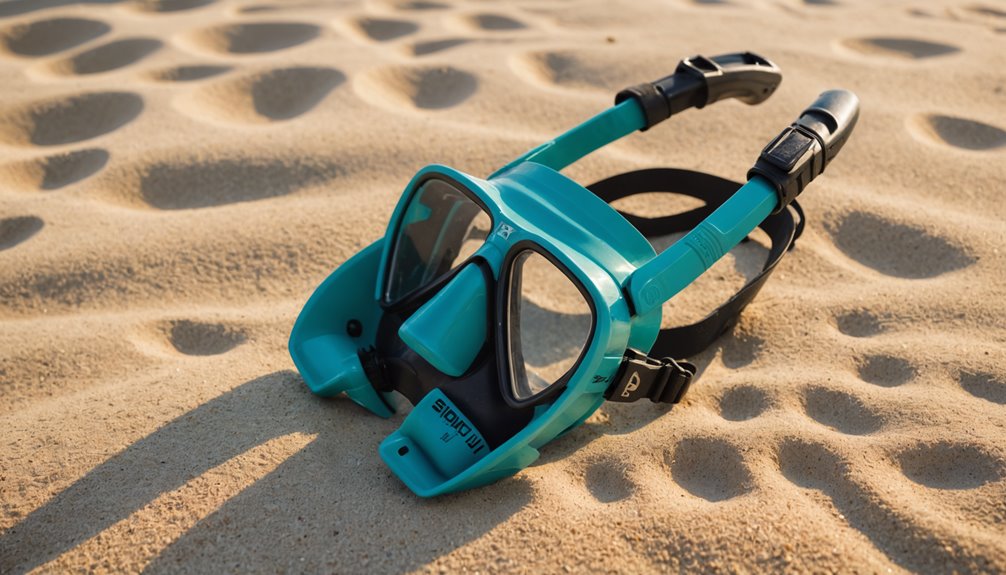
When you’re preparing for shore snorkeling, investing in properly fitting, high-quality gear is non-negotiable for preventing discomfort and maximizing your underwater experience.
Rental equipment frequently disappoints, delivering leaking masks and constrictive fins that compromise your freedom to explore.
Your mask demands rigorous leak testing—inhale while pressing it against your face to verify a secure seal. Fins must fit snugly without restricting circulation; loose fins destabilize your swimming mechanics and create hazardous conditions. A dry snorkel with an integrated valve prevents water intrusion, eliminating constant clearing interruptions.
Visit local dive shops for professional fitting sessions tailored to your unique facial and foot anatomy. Trial and error proves necessary—your body’s dimensions determine ideal snorkeling gear compatibility.
This investment in quality, properly fitted equipment liberates you to experience uninterrupted underwater exploration without compromise.
Practice Your Breathing and Basic Skills
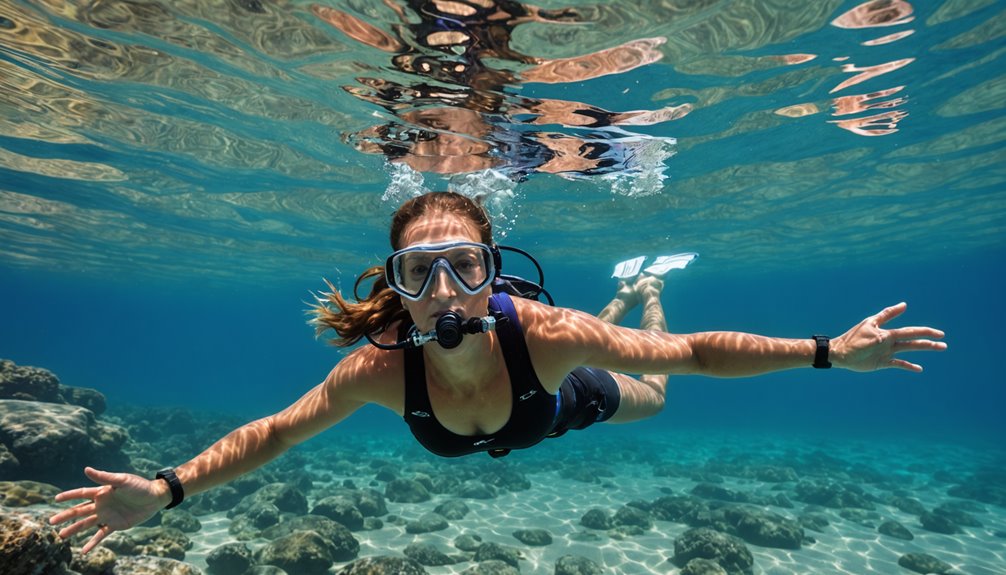
Since proper breathing technique forms the foundation of successful snorkeling, you’ll want to master slow, steady inhalation and exhalation through your snorkel in controlled environments before entering open water.
Practicing your breathing in calm shallow water builds foundational competency for varied snorkeling conditions.
- Practice rhythmic breathing patterns through your snorkel mask in pools
- Learn to clear your snorkel by forcefully expelling water
- Develop familiarity with your equipment through repetitive drills
- Master gliding motions to optimize energy conservation
- Build confidence before moving to open-water environments
Becoming comfortable in the water requires systematic skill development.
You’ll enhance your basic skills by focusing on efficient, measured movements rather than vigorous swimming. This deliberate approach allows you to explore the underwater world while remaining relaxed and in control throughout your snorkeling experience.
Find the Best Beach Snorkeling Spots
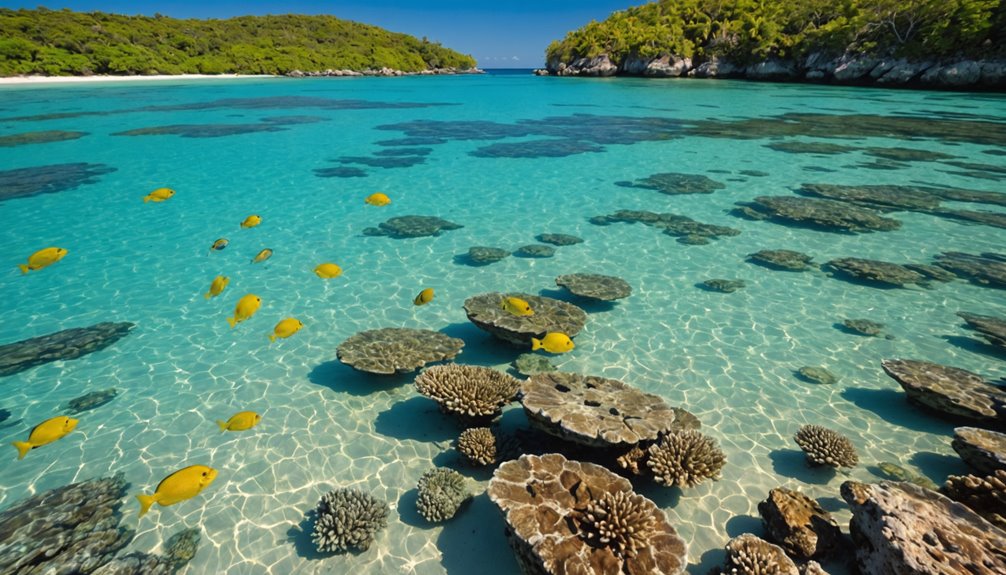
To maximize your snorkeling experience, you’ll want to identify beach snorkeling spots with structural features—submerged rocks, docks, and buoys—where marine life congregates predictably.
These hidden gems serve as feeding and breeding grounds for fish and other organisms.
Bonaire exemplifies ideal conditions: its protected marine park features a barrier reef accessible directly from shore.
You’ll enhance sighting opportunities by locating areas where local fishermen unload catches, attracting concentrated marine life populations.
Recognize sea turtle habitats through ecological indicators: sea grass, rock algae, crabs, and conchs signal thriving ecosystems.
Consult locals and hotel staff for insider tips regarding current conditions and seasonal species distribution.
This reconnaissance—combining structural analysis with community knowledge—positions you to discover premier shore snorkeling locations maximizing biodiversity observation while minimizing equipment dependence.
Check Water and Weather Conditions Before You Go
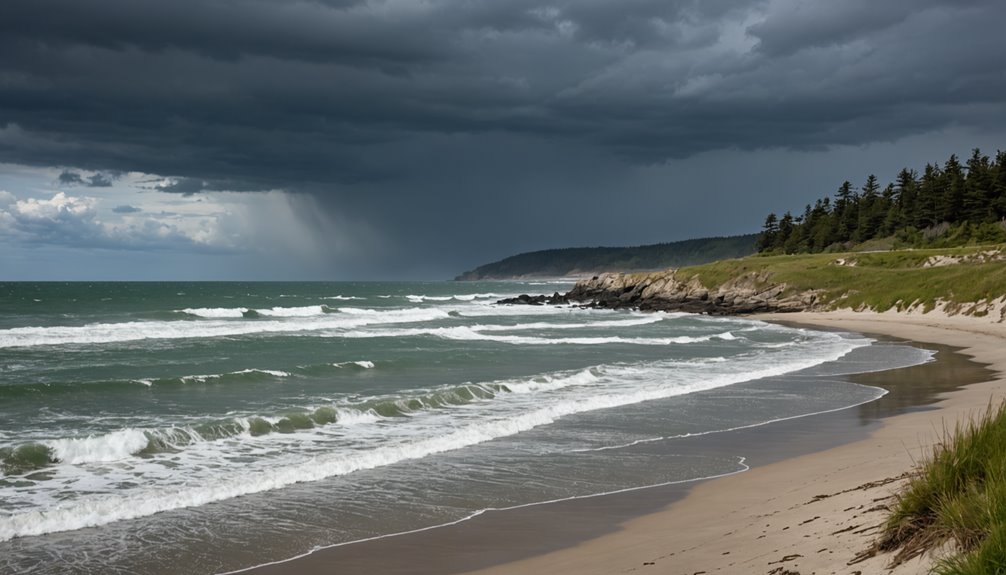
Before you enter the water, you’ll need to evaluate both atmospheric and aquatic conditions systematically.
You’ll want to assess multiple factors to guarantee safe snorkeling:
- Beach warning flags – Green signals low hazard; yellow or red demands caution or avoidance
- Weather forecasts – Wind and rain create dangerous currents and compromised visibility
- Visual water assessment – Seek calm shallow conditions with waves under six inches
- Tides and currents – Plan around low tide for best clarity and reduced drift
- Local resources – Consult residents or real-time databases for current hazard updates
Master the Order of Operations for Shore Entry and Exit
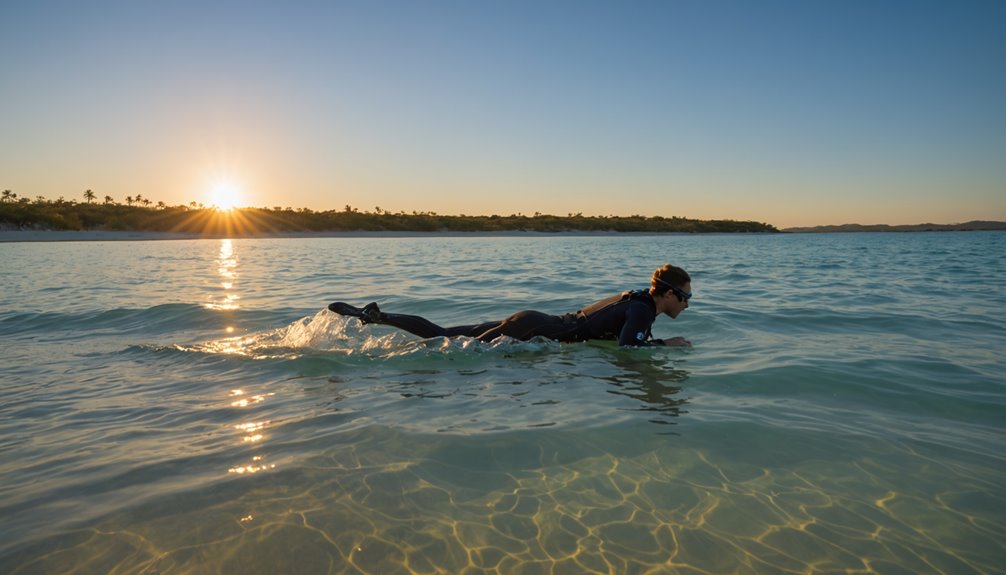
Executing a methodical entry and exit sequence—one that you’ll practice before entering the water—significantly reduces the risk of slips, equipment failure, and disorientation.
Before your shore entry, clean your mask and apply diluted baby shampoo to prevent fogging, a common reason snorkelers abort missions prematurely.
Don your open-heel fins while seated on sand for stability. Enter the water slowly from your designated entry point, maintaining balance throughout.
During your time to snorkel, mentally rehearse your exit strategy. As you plan on snorkeling, remember: remove your fins before fully exiting the water to minimize drag and prevent tripping.
Approach the shore cautiously, accounting for rocks and wave action.
This systematic approach to water entry and exit liberates you to focus entirely on the underwater environment rather than managing logistical complications.
Prioritize Safety With a Buddy and Proper Equipment
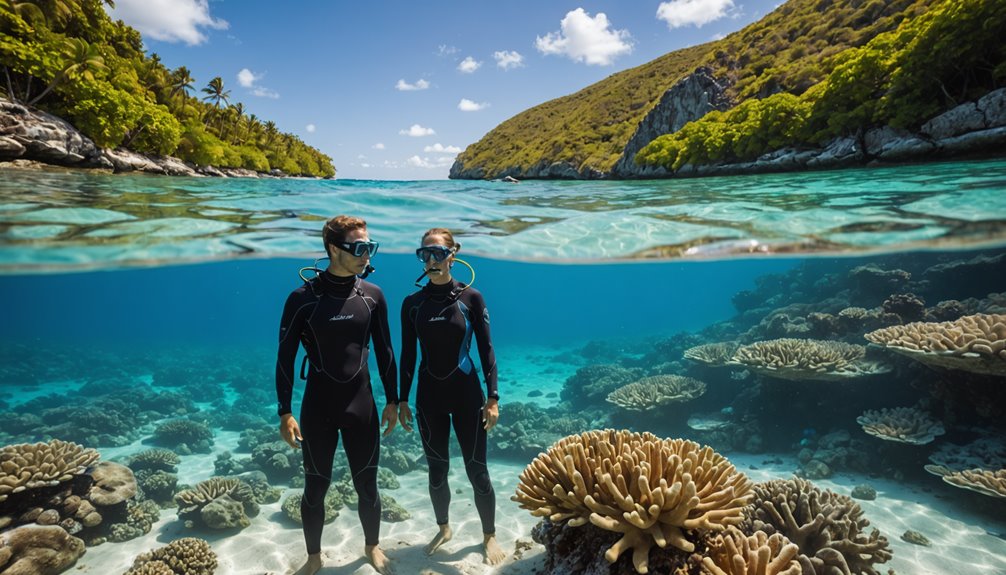
Since aquatic environments present inherent risks that intensify when you’re alone, snorkeling with a buddy substantially increases your safety margin by providing immediate assistance during emergencies and enabling rapid problem-solving if equipment malfunctions or disorientation occurs.
Equip yourself strategically:
- Invest in quality snorkeling gear with a properly fitted mask to eliminate leaks
- Wear snug fins that prevent slippage without causing discomfort
- Use a snorkel vest or flotation device if you’re not a strong swimmer
- Research local marine life and environmental hazards beforehand
- Monitor weather conditions and ocean currents before entry
Your buddy system creates redundancy in decision-making and response capability.
Proper equipment—particularly your flotation device—reduces fatigue while maintaining buoyancy control. Together, these elements establish the physiological and psychological foundation for liberation in water, transforming potential vulnerability into managed, calculated exploration of marine environments.
Frequently Asked Questions
Can You Snorkel Without a Boat?
Yes, you can absolutely snorkel without a boat. You’ll need proper snorkeling gear, assess water conditions, tide considerations, and visibility factors before entry. Research best locations, understand snorkeling etiquette, consider environmental impact, and employ safe entry techniques while respecting marine life.
What Key Is Best to Snorkel From the Shore?
You’ll find Bonaire’s the best key for shore snorkeling—it’s got protected coral reefs, exceptional water clarity, abundant marine life, and easy beach access. Check local regulations, consider tidal considerations, and rent equipment locally. Green flag conditions guarantee you’re maximizing safety precautions during ideal times.
How Many Calories Do 30 Minutes of Snorkeling Burn?
You’ll burn 200-300 calories during 30 minutes of snorkeling—a liberating fitness activity blending underwater exploration with health advantages. Your snorkeling techniques, gear quality, and intensity determine exact calorie burning. This exercise routine strengthens your cardiovascular system while revealing marine life’s wonders responsibly.
How to Snorkel at the Beach?
You’ll maximize your beach snorkeling by checking tide considerations and water visibility first. Secure your snorkeling gear properly, enter gradually using proper entry techniques, respect local wildlife, practice coral conservation, follow snorkeling etiquette, and prioritize beginner tips for ideal reef preservation and beach safety.
Conclusion
You’re now equipped to navigate the underwater domain’s mysteries from shore. By implementing these evidence-based protocols—quality equipment calibration, physiological breathing regulation, hydrographic assessment, and buddy-system protocols—you’ll transform your snorkeling endeavors into a controlled scientific expedition. You’re not merely observing; you’re conducting fieldwork in the marine ecosystem. With proper preparation as your compass, you’ll chart safe passages through aquatic environments, where knowledge becomes your anchor against uncertainty.

)