You’ve probably heard paddleboarding’s either impossibly hard or ridiculously easy—the truth? It’s neither. You’ll find that mastering the fundamentals takes just one day, yet reaching advanced skill levels demands consistent practice. The key’s understanding what separates quick learners from those who struggle. You’re likely wondering what actually determines your success on the water. Let’s explore the essential factors that’ll shape your paddleboarding journey.
Key Takeaways
- Paddle boarding is highly accessible; most beginners master fundamentals in just one calm water day.
- Starting in a kneeling position builds confidence before attempting to stand on the board.
- Proper board selection (10’–11’6″ long, 32″–36″ wide) is crucial for stability and beginner success.
- Common mistakes like standing too far back or poor posture cause most balance issues.
- Core engagement, shoulder-width foot placement, and horizon focus are essential balance and technique foundations.
The Truth About Paddle Boarding Difficulty
Although paddle boarding might seem intimidating at first glance, it’s actually one of the most accessible water sports you can learn.
You’ll grasp the fundamentals in just one day on calm waters. Start by adopting the kneeling position to build confidence before standing—this paddle boarding tip accelerates your progress considerably.
Stability matters most for beginners, so select a board measuring 10′ to 11’6″ long and 32″ to 36″ wide. These dimensions provide the foundation you need.
Water conditions dramatically impact your learning curve. Seek small lakes with minimal wind and flat surfaces—these environments liberate you from fighting unnecessary obstacles.
You’ll fall off, and that’s perfectly normal. Wear a leash so your paddle remains accessible.
As a beginner, you’re not mastering an impossible skill; you’re systematically building competence through deliberate practice.
Essential Gear and Equipment for Beginners
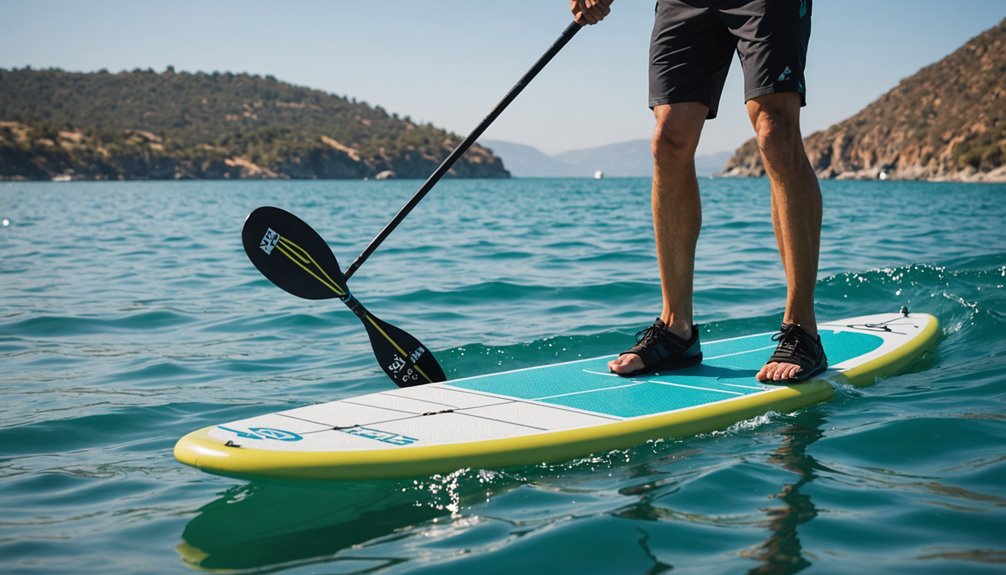
Now that you’re ready to build your paddleboarding competence, you’ll need the right equipment to stay safe and comfortable on the water. Your foundation starts with a 10′ to 11’6″ paddle board, 32″ to 36″ wide, delivering ideal stability for beginners. Essential safety equipment includes a Personal Flotation Device (PFD), ankle leash, and whistle—often legally required.
| Equipment | Purpose | Beginner Priority |
|---|---|---|
| PFD | Life safety protection | Critical |
| Ankle leash | Prevents board drift | Critical |
| Adjustable paddle | Shoulder-height efficiency | High |
| Bungee system | Gear storage | Medium |
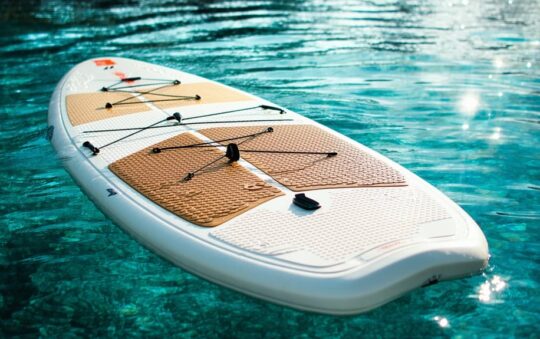
Your adjustable paddle guarantees proper paddling technique at shoulder height. The ankle leash keeps your board close during falls, granting you freedom without worrying about separation. Familiarizing yourself with your board’s features—nose, tail, bungee system—accelerates your progression and enhances confidence on water.
Mastering Balance and Basic Techniques
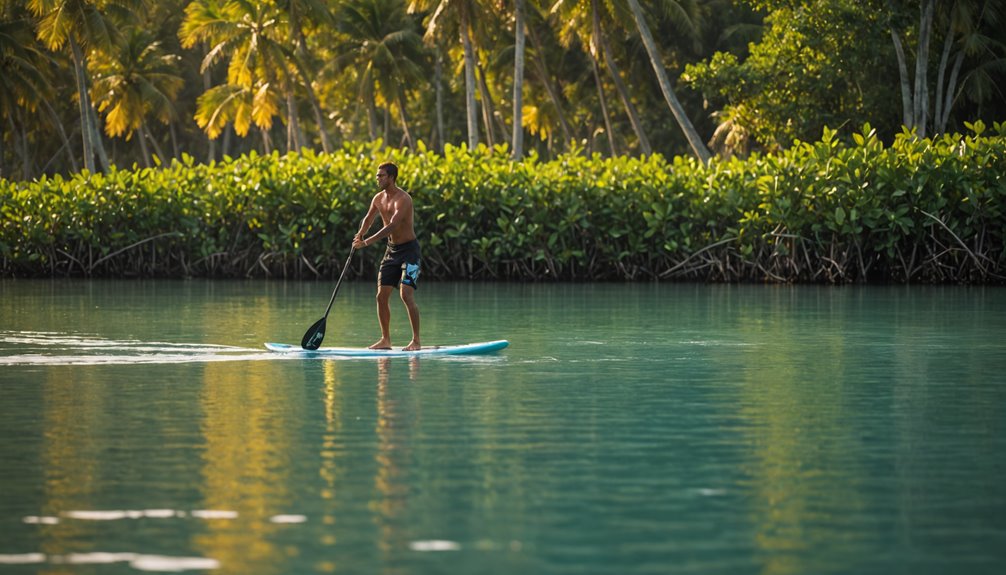
Balance forms the cornerstone of paddleboarding, and you’ll find that starting on your knees gives you the stability foundation you need before progressing to a standing position.
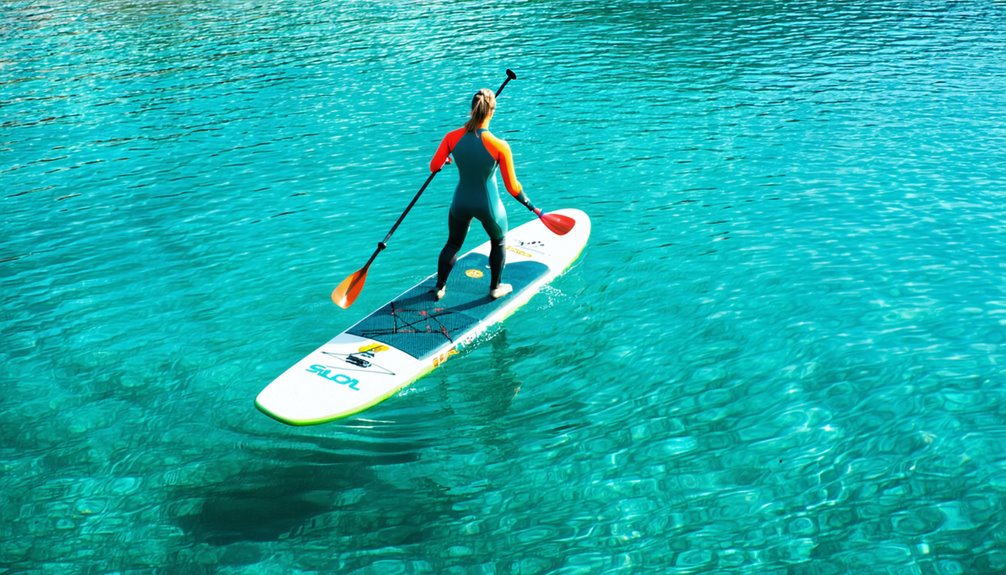
Once confident, position your feet shoulder-width apart while keeping your knees slightly bent. Your weight centered over the board is essential for stability. Engage your core muscles throughout paddling—this engagement powers your strokes and anchors your balance.
Focus your eyes on the horizon, not downward at the board, which prevents tipping and maintains equilibrium. Wider boards offer beginners superior stability, making practice less frustrating.
As you master these fundamentals, you’ll develop proprioceptive awareness that transforms paddling from challenging to liberating. The kneeling progression builds confidence systematically, allowing you to advance at your own pace without compromising technique.
Common Mistakes That Slow Your Progress
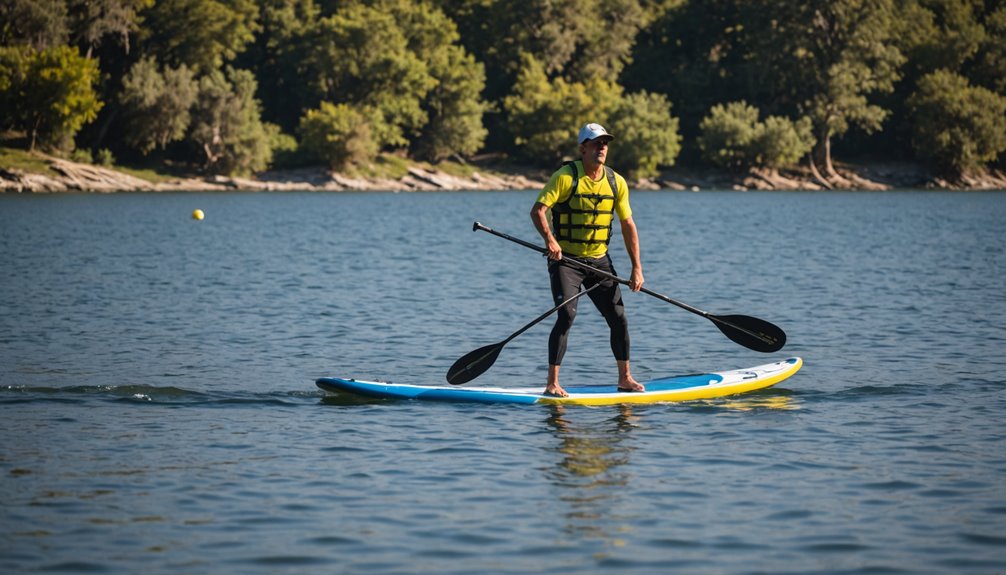
Even as you’ve built confidence through proper positioning and core engagement, subtle errors can undermine your advancement on the water.
Standing on the board too far back compromises your balance and control. Your paddle strokes suffer when you bend your arms instead of maintaining proper grip mechanics. Choosing the right board matters immensely—too narrow or unstable designs sabotage beginners especially.
Your eyes must focus on the horizon, not your paddle, to maintain stability. Don’t neglect the initial step of learning to stand confidently.
Practice getting back on the board in shallow water transforms how you respond when you fall off your board. This preparation builds resilience and accelerates your progress dramatically.
Proven Tips to Fast-Track Your Learning
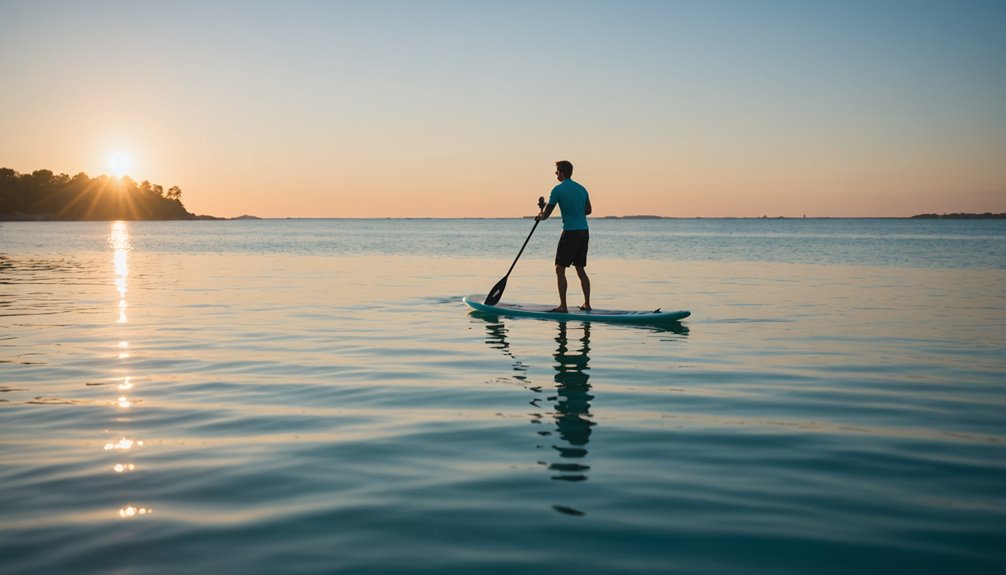
Since you’ve identified the mistakes that hold most beginners back, you’re ready to implement strategies that’ll accelerate your progress considerably.
Start with a stable board—10’6″ to 11’6″ long and 31″ to 35″ wide—to maximize confidence on calm flatwater.
Begin kneeling to establish balance before standing, creating a gradual progression that builds your foundation.
Master your proper paddle grip with arms shoulder-width apart, keeping your paddle blade fully submerged during strokes.
Engage your core consistently while learning to paddle board; this transforms paddleboarding easy by conserving energy and improving stability.
Core engagement creates a full-body workout while maintaining control.
These proven techniques—combining board selection, location choice, and technique—eliminate confusion and propel you toward independence on the water faster than conventional approaches.
Physical Benefits and Fitness Gains
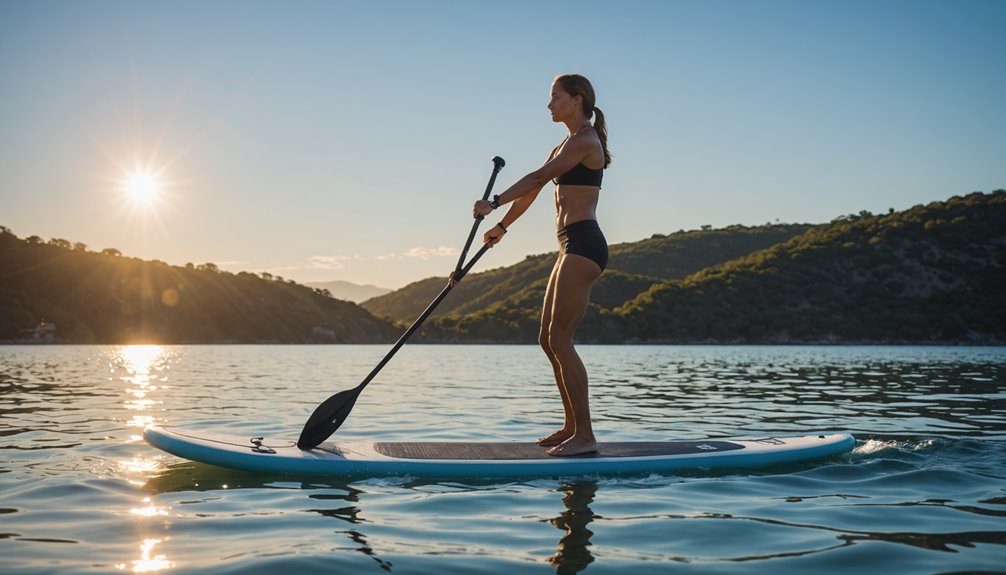
Once you’ve mastered the fundamental techniques and built your foundational skills, you’ll discover that paddle boarding delivers remarkable physical rewards that extend far beyond staying upright on the water.
Your paddle boarding experience engages every major muscle group through a genuine full-body workout:
- Muscle engagement: Arms, core, back, and legs work together for thorough strength development
- Calorie burning: You’ll burn approximately 700 calories per hour, accelerating weight management goals
- Joint protection: The low-impact nature accommodates all skill levels without unnecessary strain
- Balance mastery: Regular sessions improve coordination, enhancing both performance and daily functionality
- Heart health: Cardiovascular benefits strengthen your system through sustained paddling intensity
These fitness gains represent true liberation from restrictive workout routines.
You’re building overall physical well-being while embracing an accessible activity that grows with your advancing abilities.
The benefits of paddle boarding extend beyond physical transformation—you’re reclaiming control over your fitness journey.
Taking Your Skills to the Next Level
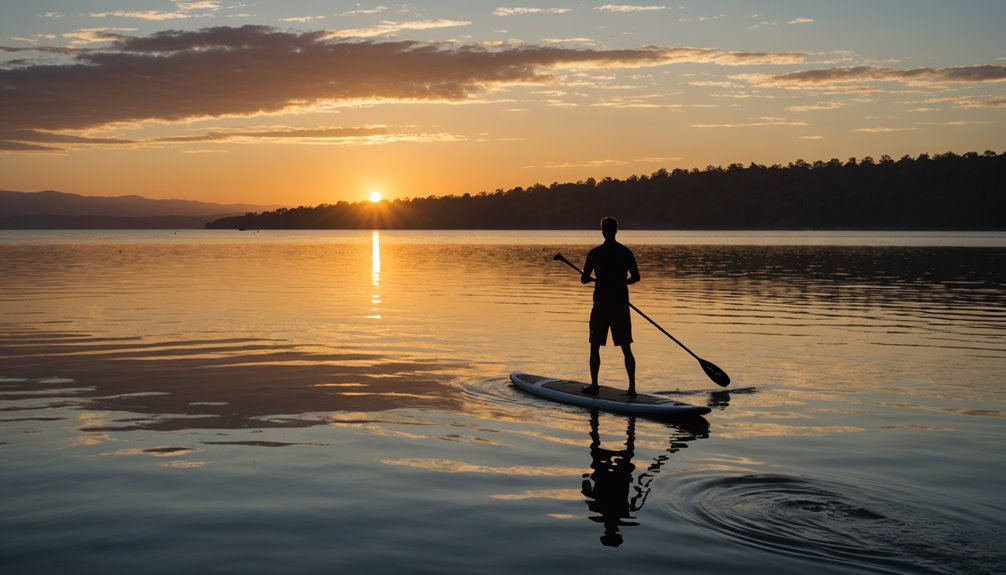
As you grow comfortable with basic paddling mechanics, you’re ready to refine your technique and expand your versatility on the water. Master the shift from kneeling to standing while maintaining a low center of gravity for enhanced balance. Develop advanced techniques like alternate strokes to maintain direction efficiently while maneuvering.
| Skill Development | Implementation |
|---|---|
| Varied Water Conditions | Practice in light chop to build adaptability |
| Alternate Paddling Strokes | Switch sides seamlessly for directional control |
| SUP Yoga & Racing | Strengthen balance and overall proficiency |
Commit to regular practice sessions that challenge you progressively. Seek qualified instructors who provide personalized feedback tailored to your goals. This targeted approach accelerates your confidence and proficiency, transforming you from novice to skilled paddleboarder. Your liberation on the water depends on continuous refinement and strategic skill-building.
Frequently Asked Questions
Is It Hard to Fall off a Paddleboard?
You’ll find falling’s manageable when you’re prepared. Master proper paddling posture, practice falling techniques regularly, wear safety equipment, and choose calm water conditions. Focus on mental preparation and balance tips to build confidence—you’ve got this.
How Strenuous Is Paddle Boarding?
You’ll find paddleboarding’s strenuousness depends on your paddling techniques and water conditions. Start building core strength and balance skills gradually—you’ll develop endurance training through consistent practice. Proper equipment selection and safety measures make the journey less taxing and more liberating.
How Long Does It Take to Learn to SUP?
Want to master SUP quickly? You’ll learn basics in one day, but your learning curve accelerates with consistent practice. Focus on balance techniques, weather conditions, and lesson recommendations. Proper gear essentials and safety tips guarantee you’re paddleboarding confidently within weeks.
Why Is Paddleboarding so Hard?
You’ll find paddleboarding challenging because you’re mastering balance techniques, paddle control, and core strength simultaneously. Water conditions, board stability, and equipment choice demand your mental focus. Commit to consistent practice routines and safety tips—you’ll break through these barriers and claim your freedom on the water.
Conclusion
You’ve got this. Paddleboarding isn’t rocket science—you’re basically standing on a board and moving a paddle through water. Sure, you’ll fall in (repeatedly), you’ll question your core strength, and you’ll wonder why you’re not instantly surfing like a pro. But here’s the thing: you’ll improve faster than you think. Start kneeling, master your fundamentals, and you’ll be paddling confidently within days. Your body’s thanking you already.