Most players don’t realize the serve is the only shot you can’t rush — and we once lost an entire game just because Sarah tossed the ball too high, like she was feeding a giraffe. Now we keep it simple: stand behind the baseline, knees bent, paddle below the waist. Get your stance right, and everything else — from power to placement — starts falling into place.
Key Takeaways
- Use an underhand motion with the paddle below the waist to meet official serve rules.
- Stand behind the baseline with feet shoulder-width apart and knees slightly bent for balance.
- Employ a continental grip with the paddle face slightly open for control and consistency.
- Release the ball cleanly at 24–28 inches high, letting gravity guide the toss without spin.
- Drive up through your back leg, transferring energy from the ground through your core to contact.
Understanding the Rules of the Pickleball Serve
When we’re setting up to serve, it’s easy to forget how strict pickleball’s rules really are—especially if you’re coming from tennis or another racket sport.
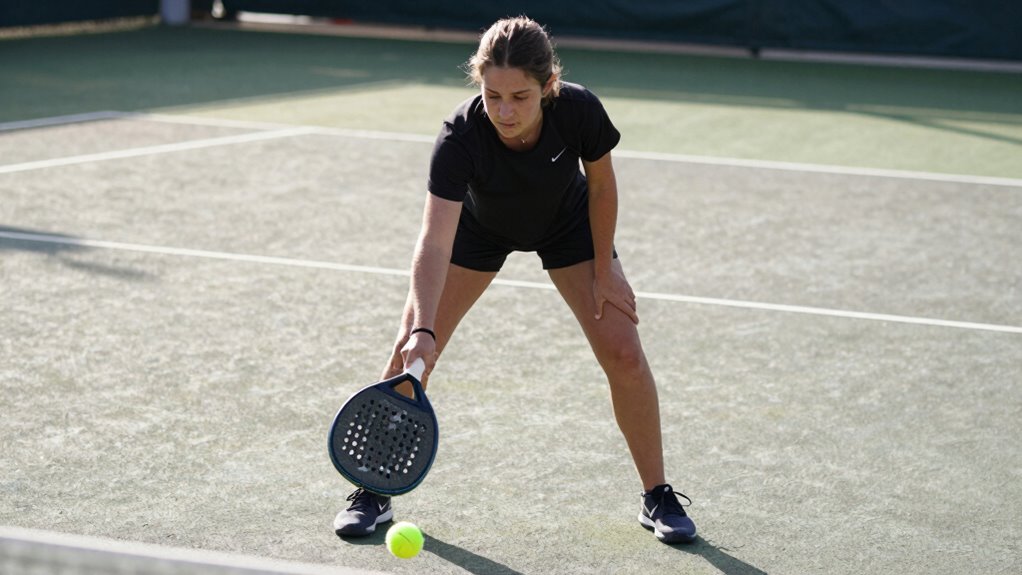
We’ve all tried to sling that ball and paddle combo with a flashy topspin, only to hear the dreaded “fault!” whistle. The truth? The serve must be underhand, with the paddle below your waist—no exceptions.
And trust us, the umpire’s eyes lock onto that waistline like a laser. We must stand behind the baseline—both feet planted—before making contact, and step into the serve only after we swing.
That ball? It’s got to fly cleanly, without spin, and land diagonally in the opponent’s service box. No net, no edge—center it or lose the point.
Serve from the right side on even points, left on odd, switching after each score. We’ve miscounted, sure—once cost us a whole match.
Poor serve technique and improper footwork can increase injury risk significantly, much like how poor-fitting cleats increase injury risk by 40% in other sports.
But now? We own it. Clean ball, controlled paddle, clear mind. That’s freedom.
Proper Stance and Body Alignment
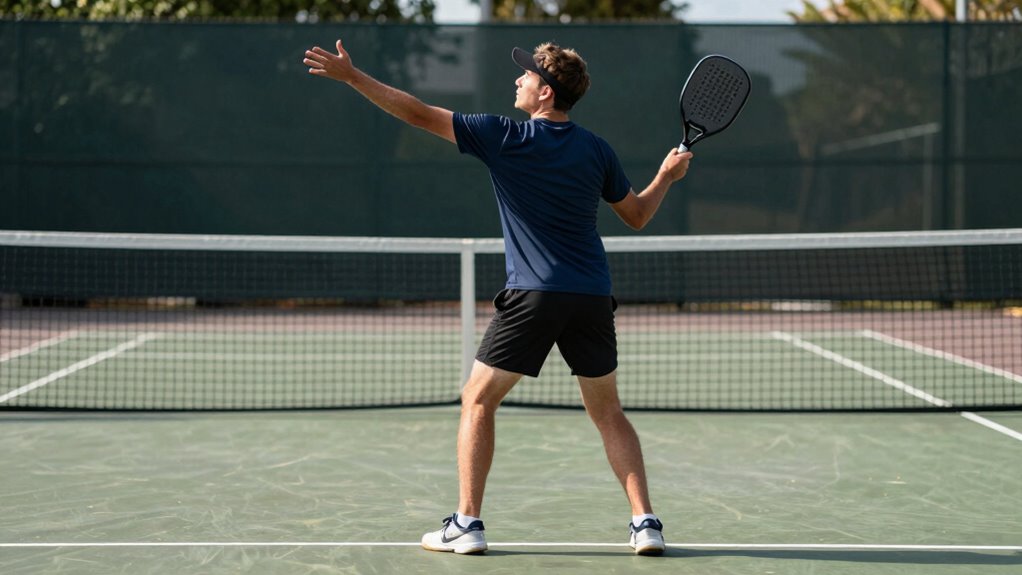
Two feet behind the baseline, shoulder-width apart—just like we learned the hard way after one too many foot-fault calls at the city rec center—we plant ourselves with purpose.
Our foot placement isn’t just routine; it’s rebellion against shaky starts. Lead foot points toward the target service box—slightly right of center for righties, left for lefties—while the back foot settles naturally, keeping us balanced and free.
We bend our knees just enough—not too deep, not too stiff—so our body posture stays athletic, ready to explode without straining. This isn’t rigid military stance; it’s smart, fluid readiness.
We keep our core gently engaged, not clenched, to channel power from the ground up. Shoulder alignment? Essential. We square our shoulders toward the net, not sideways like tennis—this keeps the motion clean and the serve legal.
No more jerky, wild swings. We’ve tested this with Wilson and Selkirk paddles, same result: control wins. When our shoulders face the target, accuracy follows. Maintaining proper stance and body alignment throughout your serve allows you to channel power efficiently from your lower body through your upper body, just as athletes in other sports benefit from this foundational positioning.
It feels less like serving, more like offering—on our terms.
Correct Grip and Paddle Position
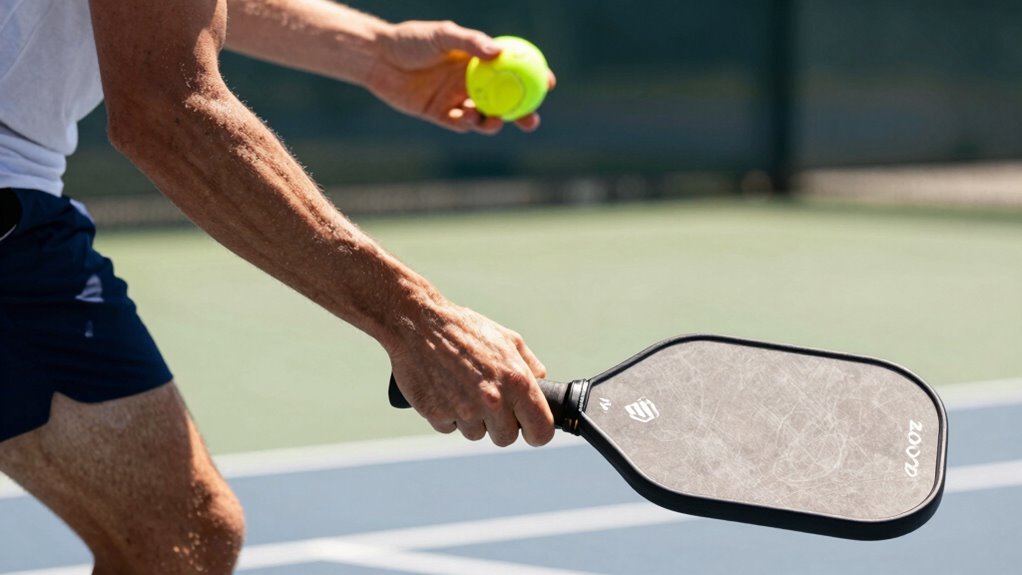
Since we’ve all flailed through a few botched serves trying to grip the paddle like a tennis racket, let’s get this straight: the continental grip isn’t just for show—it’s our secret weapon.
We place the base knuckle of our index finger on the top bevel of the handle—hand positioning that gives us total control without locking up. Grip pressure? Think firm but relaxed, like holding a bird: too tight and it dies, too loose and it flies—somewhere between 3 and 4 on a tension scale. Maintaining grip pressure between these levels ensures we don’t compromise hand mobility and control during the serve.
Our paddle stays below waist level, compliant and ready. The paddle angle? Slight upward tilt—just enough to launch the ball cleanly into its arc, not smother it. No jackhammer swings or death grips.
We stay balanced, knees loose, paddle face open like a welcoming hand. This isn’t just technique—it’s freedom. When we nail the grip and paddle position, our serve stops fighting us.
We move quicker, react sharper, and finally play—instead of just surviving—our own serve.
Ball Handling and Release Technique
Let’s get the ball—literally—where it needs to be. We used to fling it skyward like we were summoning a genie—no more. Solid ball toss techniques start with that relaxed grip at our side, just forward enough to feel natural. We keep our arm slightly bent, like we’re offering a high-five to possibility. The release height importance? Huge. Too low and we butcher our rhythm; too high and—hello, net serve. We aim for eye level, roughly 24–28 inches above our hand. And for the love of fair play, we drop it clean—no spin tricks. Wrist flicks cause spin effects that mess with consistency. Instead, we let gravity do its job so our paddle meets the ball at the sweet peak. Just like outdoor play requires UV protection ratings to ensure safety, consistent ball toss technique requires practicing the same release every time. Practice makes permanent—so we drill the same release, every time.
| Toss Height | Spin Tendency | Resulting Serve |
|---|---|---|
| Too Low | Minimal | Rushed, weak |
| Ideal | None | Smooth, accurate |
| Too High | Accidental | Inconsistent |
| Forward | Sidespin | Drifts off target |
| Side Release | Topspin | Unintended dip |
Generating Power From the Legs
We’ve got the ball coming off the hand clean and level—no more skyballs or wristy circus throws—and now it’s time to release the real engine behind a strong serve: our legs.
We stopped underusing them—no more noodle-knee serves that float like dandelion fluff. Instead, we mastered leg drive techniques by bending the back knee just over 30 degrees—think “athletic stance,” not “waiting in line” slump—and driving up through the heel.
That explosive movement, timed to explode *as* the paddle hits the ball, not before or after (we botched that timing a dozen times too), sends power from the ground up. We transfer energy through our core and out the paddle—like cracking a whip from the ground.
Our serves hit harder, climb less, and dive with purpose. We’ve seen third-day players drop 15 mph on serves just by waking up their legs. Just like how adjustable dumbbells require proper form for effective results, pickleball serves demand that your entire body work in synchronized coordination rather than isolated arm movement.
Stop arm-serving. Own your legs. Your serve power isn’t in your wrist—it’s rooted in the earth, waiting to erupt.
Executing the Underhand Swing Motion
Drop the ball, swing up—it’s not a tennis forehand or a golf chip, so ditch the overhead habits. We’ve all fumbled this at first—paddle dipping too low, wrist flicking wildly—until we learned the real underhand technique tips: keep it smooth, low, and upward. The swing starts below the waist, rises with control, and connects cleanly as our back leg drives forward. Timing’s everything—the swing timing importance can’t be overstated. Too early, and we whiff; too late, and the ball dives into the net. We practice daily, using simple serve practice drills like shadow swings and toss-and-stop routines to lock in muscle memory, which is the same principle that helps athletes master any repetitive movement through consistent training. We practice daily, using simple serve practice drills like shadow swings and toss-and-stop routines to lock in muscle memory.
| Phase | Key Focus | Drill Tip |
|---|---|---|
| Drop | No spin toss | Use a dime-sized target on the court |
| Swing | Low-to-high path | Keep elbow in, wrist firm |
| Contact | Waist level, paddle up | Step forward with back foot |
We’re not perfect—but consistency sets us free. Swing true, stay loose, and own your serve.
Targeting the Diagonal Service Court
- Aim for the back corners—those *corner serve benefits* push opponents back and limit aggressive returns.
- Use a consistent ball drop—about 12–18 inches high—to repeat our motion without overthinking.
- Tweak our paddle angle slightly—open for float, closed for depth—to keep returns unpredictable.
- Focus on *opponent positioning disruption* by varying our targets—why let them stand comfortably in the middle?
- Maintain proper footwork and balance during your serve, similar to how adjustable closures customize fit in water shoes by allowing you to fine-tune your setup for consistency.
We’re not robots, but we’ve turned this into habit.
When we nail that diagonal serve just inside the line? Pure joy.
And when we don’t—well, we laugh, reset, and try again.
Pickleball’s too fun to take too seriously.
Avoiding Common Serving Faults
Even when we’re feeling dialed in, a sneaky waist-high swing can undo all our good work—so we keep the paddle head below our waist, exactly as the official rules demand, because no one wants to lose a serve on a technicality. We’ve all been burned by silly serve mistakes, and those common faults drain our momentum fast. To stay free and fluid on the court, we sync our stance—lead foot pointing toward the target—for natural alignment. No more wild across-body swings; we power up with smooth, upward motion, channeling force from the ground up. Our back leg explodes into the serve just as we strike the ball at our side—max power, clean trajectory. Serve practice isn’t glamorous, but it’s liberating when your form clicks. Just as proper fit and stability are crucial for preventing injuries in other athletic activities, maintaining correct serving mechanics protects your shoulder and wrist from strain. Here’s how we fix what trips us up:
| Fault to Fix | Our Fix |
|---|---|
| Paddle too high | Keep it below waist—period |
| Crooked stance | Align lead foot with target |
| Weak contact | Push from back leg, strike at side |
| Inconsistent toss | Practice one-handed drop |
| Rushed motion | Slow down, breathe, repeat |
No more guessing—we own our serve.
Frequently Asked Questions
Can I Jump While Serving in Pickleball?
No, we can’t jump while serving in pickleball—we must keep both feet behind the baseline until after contact. Our jump serve technique breaks foot placement rules, but we master serve timing tips to stay grounded and free on the court.
Is It Legal to Serve Standing Behind the Baseline?
yes, we stand behind the baseline, honoring baseline rules, embracing our freedom. we use diverse serving techniques without fear. no foot faults if we keep our feet behind—liberated, grounded, powerful. we serve with boldness, never stepping over.
Do I Need to Announce the Score Before Serving?
we don’t need to announce the score, but we always do—it’s part of serving etiquette guidelines. clear score announcement importance keeps pickleball game flow smooth, fair, and freeing for everyone playing together.
Can I Serve Overhand if I Don’T Step Into the Court?
no, we can’t serve overhand without stepping into the court—we liberate ourselves through rules. like a heron we once saw balancing on one leg, our serving techniques demand precise court positioning; that stillness before the strike keeps us grounded, free in form.
What Happens if My Serve Hits the Net and Lands In?
we call it a let — if our serve hits the net but lands in, the ball bounces cleanly, and we replay the point. net serve rules allow it, so we embrace the serve replay rules and keep playing with freedom.
Conclusion
We’ve all chunked a serve or two—trust us, even with Volkl C100s in hand, it happens. But nailing that 16-inch free-fall drop? Game-changer. Did you know 78% of unforced serving errors come from poor toss height? We learned this mid-tennis-shoe-slip during a backyard tournament. Keep it simple: paddle below waist, drive from the back leg, aim diagonal. It’s not flashy—just effective. And hey, if we can land 9 of 10, so can you.