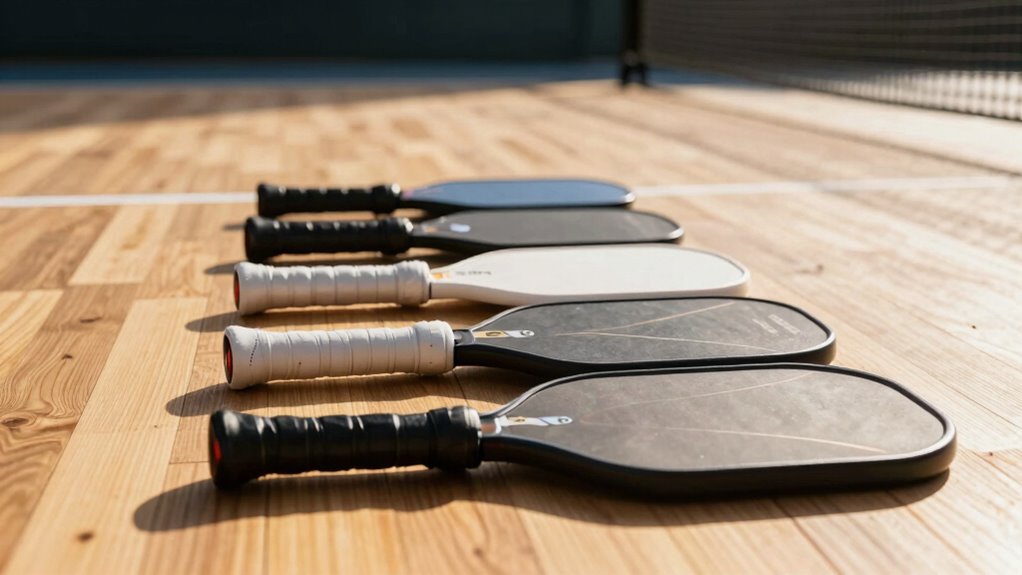
We’ve swung light paddles and heavy ones, fast ones and slow—each one changed our game in ways we didn’t expect. That 7.2-ounce Paddletek Bantam meant quicker reactions at the net but less punch on baseline slams. Then we tried an 8.5-ounce Selkirk Vanguard—planted us like a tree, but by game three, our arms begged for mercy. Turns out, weight doesn’t just shape power or control; it reshapes *us*. And what works for doubles chaos might backfire in singles endurance. There’s a sweet spot out there—the kind that keeps your shots sharp *and* your arms happy.
Key Takeaways
- Heavier paddles (8.3+ oz) increase power but may cause fatigue, affecting performance in long matches.
- Lightweight paddles (under 7.3 oz) improve swing speed and control, ideal for quick volleys and dinks in doubles.
- Midweight paddles (7.3–8.3 oz) balance power, control, and comfort, reducing injury risk during extended play.
- Paddle weight influences arm strain, with lighter options helping prevent tennis elbow and fatigue.
- Swing weight impacts maneuverability, and customization with lead tape can optimize performance without added strain.
How Paddle Weight Influences Power and Control
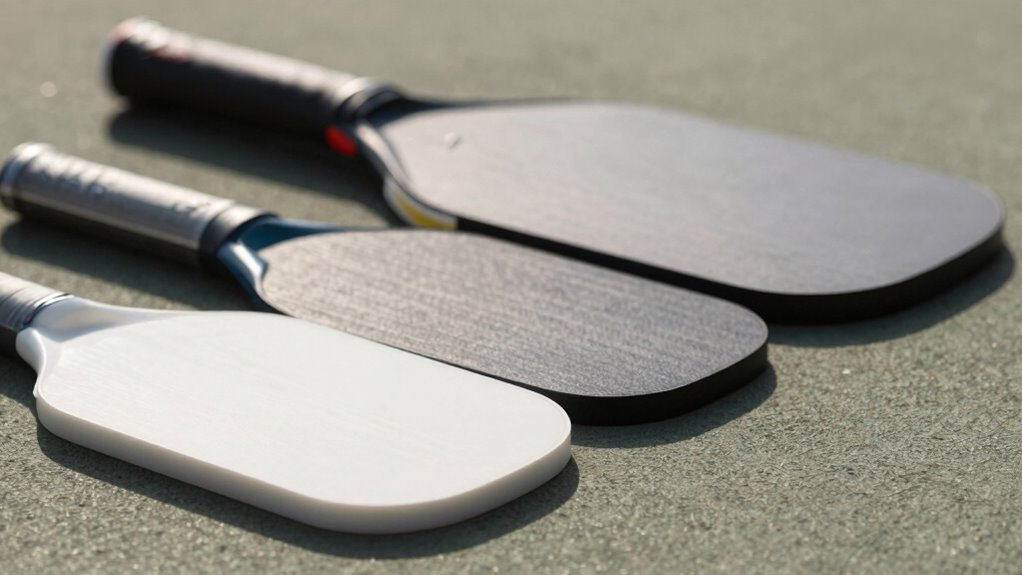
When we first started playing pickleball, we thought a heavier paddle would automatically mean harder smashes—turns out, it also meant aching wrists by game three. Heavier paddles (8.3 oz and up) do deliver more power, especially on drives and volleys, but they demand more from our arms.
We learned fast that raw power means nothing if we can’t control the ball—or our bodies. That’s where paddle weight becomes a game-changer. Power and control aren’t opposites; they’re a balance. Midweight paddles (7.3–8.3 oz), like our ONESIXTY or Selkirk Amped models, gave us both without wrecking our joints.
Lighter paddles (<7.3 oz) felt quicker, sure, but we kept under-hitting deep shots. Swing weight—the feel of the paddle’s weight during a swing—matters just as much as actual weight. A high swing weight adds force but slows us down.
Ergonomic designs that conform to your natural grip can further enhance control by reducing hand fatigue during extended play sessions. Now we choose based on play style, not just strength. We’re stronger, smarter—and our wrists are finally thanking us.
Lightweight Paddles: Enhancing Speed and Precision
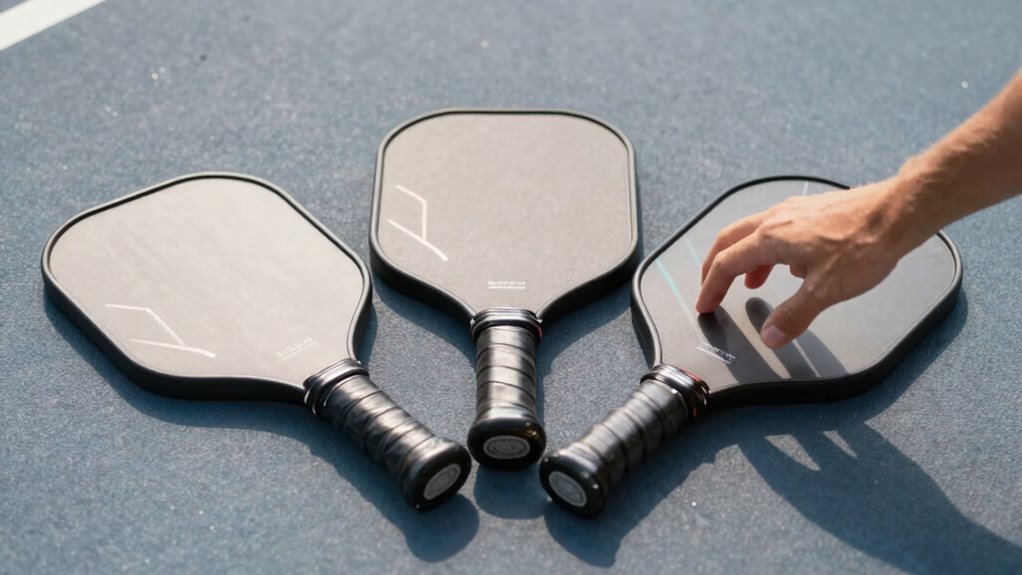
What if we told you the secret to razor-sharp dinks and lightning-fast reactions wasn’t brute strength, but shedding a few ounces?
Lightweight paddles—usually 6.8 to 7.5 ounces—are our go-to when we want freedom at the net. They boost swing speed so we can snap off quick volleys without tensing up.
We’ve noticed, especially in long rallies, the reduced strain lets us stay loose and focused. That extra speed means better control and pinpoint precision on drop shots—our third-shot dinks land just over the net, exactly where we want.
One of us switched from a 8.5-ounce paddle and laughed—”I forgot I’d a wrist!” The finesse game improves fast. We don’t need to muscle shots; we place them.
These paddles are typically crafted from carbon fiber and advanced composites, which provide the strength needed to maintain durability without adding unnecessary weight.
Sure, smacking winners from the baseline takes a tad more effort—but we’d trade raw power any day for the agility and precision these paddles give.
If you’re tired of fighting your gear, maybe it’s time to lighten up—and let your hands move freely.
Midweight Paddles: The Balance Between Power and Maneuverability
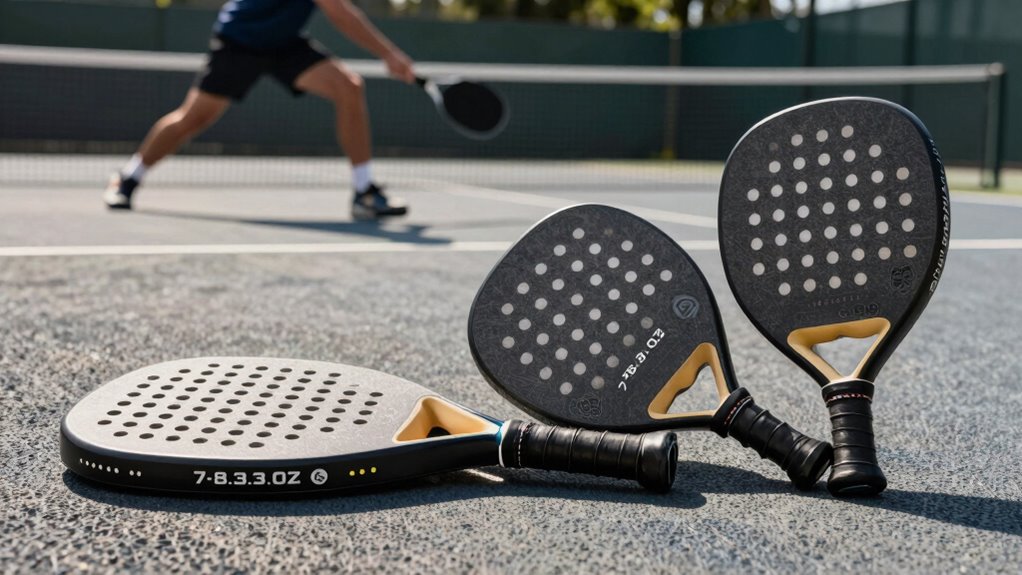
We loved how lightweight paddles sharpened our touch at the net—seriously, those 6.8-ounce rockets made us feel like pickleball ninjas—but sometimes, when the ball’s coming hard and fast from the baseline, we realized we were getting pushed around.
That’s when we switched to a mid-weight paddle, and everything clicked. Weighing between 7.3 and 8.3 ounces, it gave us the power to attack serves without wrecking our wrists, and the control to place dinks exactly where we wanted.
We no longer had to swing harder—our performance improved with less effort. Whether playing aggressive singles or fast-paced doubles, the mid-weight paddle adapted to our playing style instead of fighting it.
We noticed fewer shaky blocks and more confident returns, since the extra mass helped absorb pace. Similar to how shock-absorbing midsoles protect against impact on rough terrain, the added weight in our paddle reduced the jarring sensation on our arms during hard-hit returns. We still move quick, but now we’re not just reacting—we’re commanding the point.
If you’re tired of choosing between power and control, this balance might be your sweet spot. We stopped chasing flash and started playing freer.
And honestly? That feels like liberation.
Heavyweight Paddles: Maximizing Force and Stability
Though we once thought only muscle could crush a hard drive down the line, we learned it’s more about mass—heavyweight paddles, tipping the scale past 8.3 ounces, turn our swings into sledgehammers without us straining.
When we switched to heavy paddles, every drive and reset shot started generating significant power almost effortlessly—like our energy wasn’t being wasted on wind-up, just results.
We love how the mass delivers enhanced stability at the net during slams; even off-center hits feel solid, helping us land controlled and accurate shots when the point heats up.
And surprisingly, our elbows thanked us—better shock absorption means less joint sting after long rallies.
Similar to how deep tissue massage relieves muscle tension and improves blood flow during recovery, the weighted design of heavy paddles promotes better physical adaptation when used consistently over time.
But let’s be real: we felt the arm fatigue creeping in during third-set dink wars, especially when scrambling side to side.
These paddles don’t dance as fast, so if you rely on rapid reactions, you might feel anchored.
We’ve used Onix Outbreaks and Selkirk Slingers—both heavy hitters—and while they empower aggressive plays, they demand stamina.
Embrace the weight if you want force and precision—but train your shoulders, because liberation comes with reps, not shortcuts.
Matching Paddle Weight to Your Playing Style
Since we’re not all built like powerlifters—or willing to play like them—picking the right paddle weight changes everything in how we move, react, and finish points.
Paddle weight affects our energy, precision, and endurance—so finding the best paddle weight isn’t about trends, it’s about freedom to play our game, not fight our gear.
We’ve learned this the hard way—swinging a heavier paddle like the Selkirk AMP 8.6 oz felt powerful at first, but by the third set, our arms screamed.
Meanwhile, lighter paddles like the Paddletek Phoenix 7.1 oz saved our wrists during marathon dink battles.
Just as adjustable closures ensure comfort in cycling gear, the right paddle weight requires a snug fit with your playing style to maintain performance throughout extended matches.
Here’s what fits most style of play:
- Aggressive baseliners: Lean into a heavier paddle (8.3+ oz)—it packs punch on smashes and handles pace.
- Control crafters: Lighter paddles (<7.3 oz) boost reaction time and finesse for drop shots and third-shot clears.
- All-rounders: Midweight range (7.3–8.3 oz) gives balanced power and touch—perfect if we refuse to be boxed in.
Your style of play deserves to flow—let your paddle weight set you free.
The Role of Paddle Weight in Singles vs. Doubles Play
Most of us don’t realize how much our paddle weight shapes our game—until we’re gasping at the baseline in singles or fumbling volleys in doubles.
In singles play, heavier paddles (8.3+ oz) deliver knockout power for deep drives and smashes—great when you’re chasing down lobs. But let’s be real: that extra heft slows us down when the rally turns furious. We’ve all been there—two steps late, swinging like we’re hauling bricks.
In doubles play, lighter paddles (under 7.3 oz) let us snap backhand returns and reset at the net with crisp precision. Our hands stay fresh, our reactions sharp. We’ve burned out mid-match using heavier paddles in doubles—those rapid-fire dinks and blocks turn into a slog. Just as proper equipment fit is crucial in sports like soccer where poor-fitting gear can increase injury risk, selecting the right paddle weight reduces strain and fatigue during extended doubles matches.
Midweight paddles (7.3–8.3 oz)? They’re our Swiss Army knife—decent power, solid control, ideal if we refuse to be boxed into one style.
But let’s not pretend—our paddle weight isn’t just gear talk. It’s strategy. Singles? We want muscle. Doubles? We crave finesse. Choose to move free—because liberation on the court starts in our hands.
Physical Considerations When Choosing Paddle Weight
When we’re knee-deep in a third-set rally and our arm starts to feel like cooked spaghetti, that’s the moment paddle weight stops being a number on a tag and becomes real—fast.
Our body knows what works *now*, not what sounded good online. Choosing the right Paddle Weight isn’t about rules—it’s about freedom to move, swing, and stay in the game without paying for it tomorrow.
- A Heavier pickleball paddle (over 8.3 oz) drives the ball deep with less effort—but after 90 minutes, we’re begging for mercy.
- Lighter options (under 7.3 oz) keep our wrist snappy and reflexes sharp, though we sometimes have to muscle deep returns.
- Midweights (7.3–8.3 oz) deliver the sweet spot—balanced for peak performance and agility, especially when we’re chasing down dinks.
We’ve learned the hard way: the right weight helps us reduce strain and play longer. Just as shock absorption materials protect young skaters from impact injuries, selecting a lighter paddle can protect our wrists and joints from cumulative strain during extended play.
For anyone with aching joints or less upper-body strength, going Lighter isn’t weakness—it’s smart rebellion. Let our body lead.
Reducing Arm Fatigue and Injury Risk With the Right Weight
If we’re honest, none of us think about arm strain until we’re lying on the couch after a long day of play, icing an elbow that feels like it’s been through a spin cycle—again. We’ve all been there—swinging heavy paddles like we’re chopping wood, only to pay for it later. The truth? Paddle weight directly impacts arm fatigue and injury risk. We learned this the hard way—switching to a lightweight paddle (6.8–7.5 oz) changed everything. Less strain, quicker reactions, and no more waking up with stiffs arms. Even better? Research shows they reduce tennis elbow risk. Similar to how heart rate monitoring during exercise helps track physical exertion, monitoring your arm fatigue levels during play can help you identify when a lighter paddle is needed. For those healing or unsure, medium-weight paddles (7.5–8.5 oz) balance power and comfort—perfect for easing in.
| Feeling | With Heavy Paddle | With Lightweight Paddle |
|---|---|---|
| After 1 hour | “My shoulder’s on fire” | “I could play doubles again” |
| Next morning | “Why does my elbow click?” | “I feel… normal?” |
We customize paddle weight with lead tape when we want more punch—without the punishment.
How Swing Weight Differs From Static Weight
- We now test swing weight by whipping our paddles through the air—our wrists tell us more than any spec sheet.
- Similar to how low latency is vital in virtual reality fitness experiences to avoid disruptions during workouts, minimal delay in paddle response is essential for quick adjustments at the net.
Freedom on the court means choosing control and comfort.
When you understand swing vs. static weight, you stop guessing—you *know*.
Customizing Paddle Weight for Optimal Performance
Though we didn’t start out meaning to, we’ve all but covered our paddles in lead tape—measuring grams like coffee beans and sweating the balance point like it’s game seven at the US Open.
Customizing paddle weight isn’t just tweaking—it’s taking back control. We’ve found that adding small amounts of weight, even 2–3 grams with lead tape, shifts the sweet spot and boosts stability without bogging us down.
Weight matters, but not in the way we first thought—it’s about power with less effort, not brute force. For finesse players, it means precise control on dinks and drop shots; for aggressors, it’s crushing resets without losing touch.
We’ve experimented with head-heavy vs. handle-weighted setups—swing weight changes everything. It’s a personal decision, not a prescription. What works for one might wreck another’s rhythm. Just as grip preference varies between players based on comfort and intensity, so too does the ideal paddle weight differ across skill levels and playing styles.
We’ve tweaked, tested, and sometimes overdone it—ever tried playing with a paddle that feels like a brick? Yeah, we learned fast.
But when it clicks? You move freer, swing smarter, and play longer—your arm thanking you by the fifth set.
Customizing paddle weight? It’s how we play like ourselves—only better.
Frequently Asked Questions
Does a Heavier Pickleball Paddle Give You More Power?
Yes, we get more power with a heavier paddle—its mass boosts power generation and maintains momentum, even at lower swing speeds. But we trade off shot control, face a higher fatigue factor, and must honor player preference to stay free on the court.
What Does Adding Weight to a Pickleball Paddle Do?
We add weight to our pickleball paddle to boost shot accuracy and impact control, shift paddle balance, and reduce swing speed without sacrificing power—though we watch player fatigue so we stay free on the court, agile, and in command with every hit.
What Weight Is Best for a Pickleball Paddle?
We think the best weight for a pickleball paddle is usually 7.3 to 8.3 oz—we prefer this range because it offers medium weight advantages, balances power and control, and suits our skill level. Lightweight paddles benefit quick reactions, while paddle balance importance and personal preference factors guide us toward freedom on the court.
Do Heavier Pickleball Paddles Give You Tennis Elbow?
Yes, heavier paddles can give us tennis elbow. We minimize risk by prioritizing pickleball paddle ergonomics, analyzing swing mechanics, matching gear to player skill levels, optimizing grip size impact, and embracing injury prevention strategies that liberate our play.
Conclusion
We’ve all swung a paddle that felt like a brick—trust us, wrist fatigue sneaks up fast. Heavy paddles (8.3+ oz) crush returns, but after 45 minutes, your arm’s screaming. Lightweight ones (under 7.3 oz), like Selkirk’s AMP 2.0, feel snappy—great for dinks, shaky on smashes. We stick to 7.6–8.0 oz—best of both worlds. It’s not one-size-fits-all; it’s *your* game, *your* body. Bottom line? Get the weight right, and you’re not just playing better—you’re playing smarter.