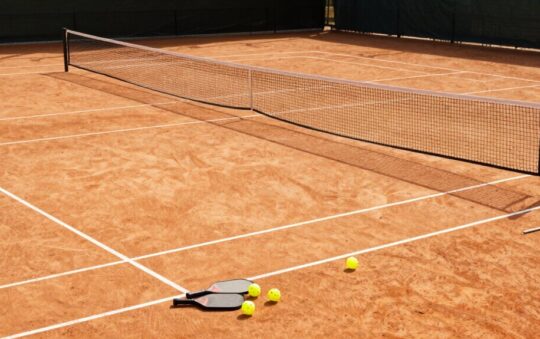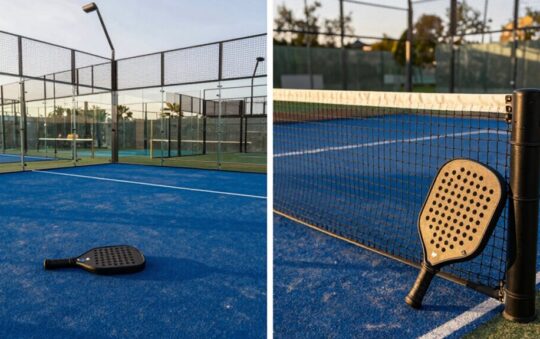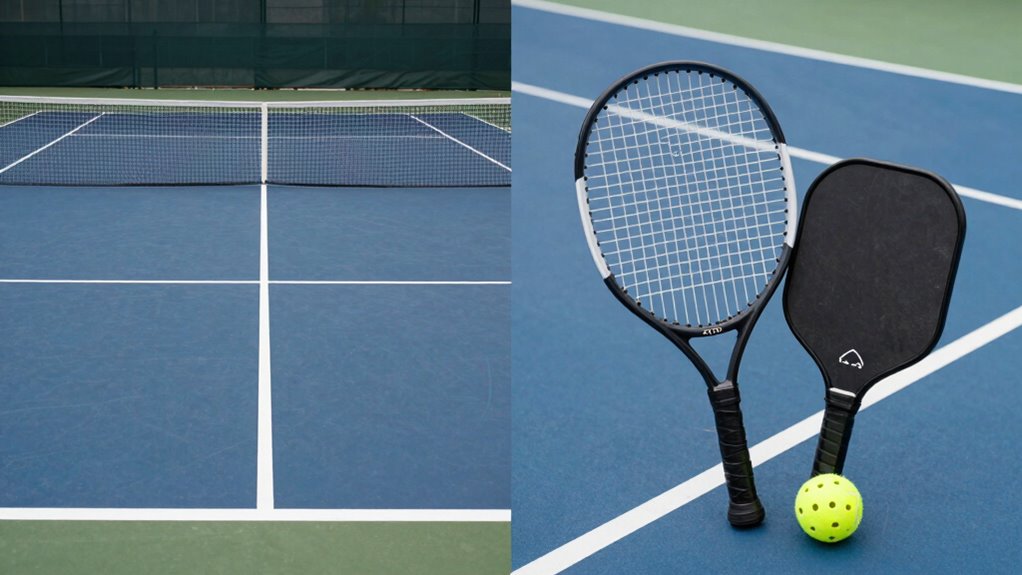
We’ve both stood at the baseline, racket in hand, wondering why our tennis stroke isn’t working on this smaller court. At 20 by 44 feet—just half the size of a tennis court—pickleball forces us to slow down, aim more, and admit we can’t always rely on power. The plastic ball with its dull thud, not a bounce, changes everything. Let’s break down exactly how these games differ—starting with the court itself.
Key Takeaways
- Pickleball courts are 20 by 44 feet, much smaller than tennis courts, reducing running and increasing action.
- Pickleball uses lighter paddles and perforated plastic balls, favoring control over power compared to tennis gear.
- The pickleball serve is underhand with a non-volley zone, promoting precision instead of aggressive power serves.
- Matches use an 11-point scoring system, win by two, and only the serving team scores points.
- Shorter play duration and lower physical demands make pickleball more accessible for all ages and fitness levels.
Court Size and Layout
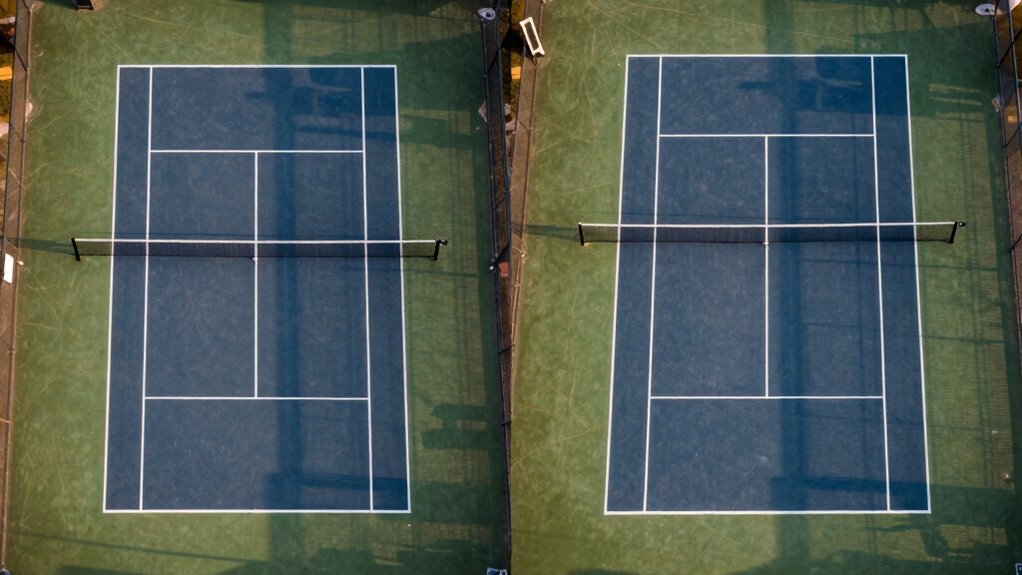
When we first switched from tennis to pickleball, the court size shocked us—coming from a 78-foot-long tennis court, stepping onto a 44-foot pickleball court felt like playing in a closet.
But that smaller layout isn’t a limitation—it’s liberation. The pickleball court’s compact dimensions—20 by 44 feet—compared to a tennis court’s sprawling space, mean less running and more action.
We quickly learned to embrace the non-volley zone, that 7-foot kitchen where dinks reign, because it forces smarter play. Three pickleball courts can fit in one tennis court, boosting player capacity and turning empty courts into community hubs.
The net height drops slightly—34 inches in the center versus tennis’s 36—adding another layer of control. We no longer dread long rallies; instead, we enjoy quicker reactions and faster points.
Yes, we miss the reach of a tennis court sometimes—especially on overheads—but the streamlined layout keeps us sharper, involved, and honestly, less winded. The compact design also means better breathable mesh ventilation for outdoor play areas, allowing multiple courts to be set up without sacrificing air circulation.
This isn’t downsizing—it’s rethinking freedom on the court.
Equipment: Paddles and Balls
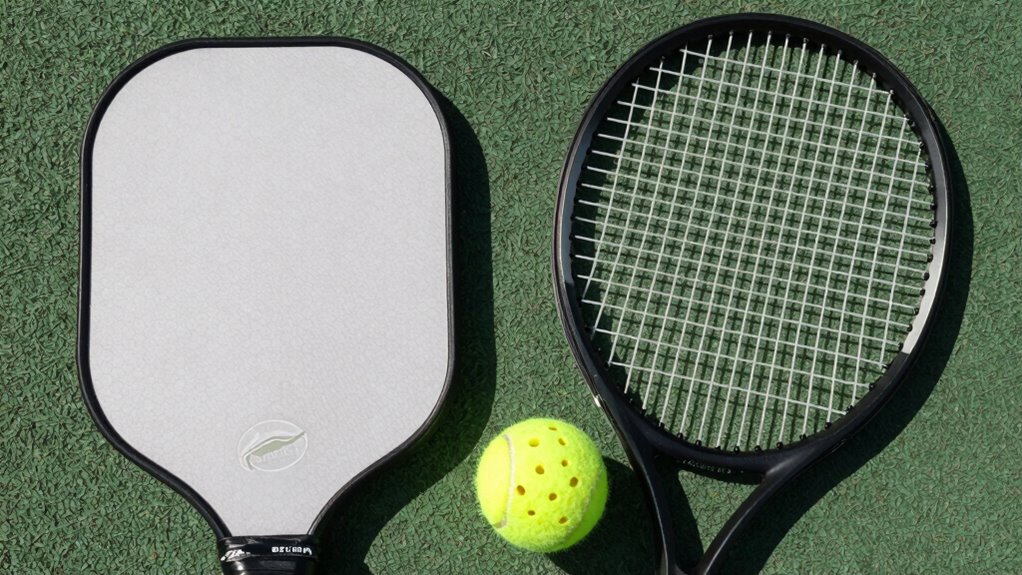
Our paddles barely tip the scales—most weigh between 7 and 9 ounces, light enough to play with one hand even after a long day—while our old tennis racquets, clocking in at 11 to 11.5 ounces, always felt like we were swinging mini-logs.
That extra heft in tennis gear demands more muscle, more sweat, more effort. But in pickleball, we’ve chosen freedom—lighter gear, less strain, and faster movement.
Our paddles are solid, flat, and designed for precision, not brute force. The balls? Well, we’ve traded fuzzy felt for durable plastic—26 to 40 holes that cut air resistance and keep the bounce low, controlled, fair.
Tennis balls fly higher, faster, heavier, built for power we no longer crave. The lightweight design of pickleball equipment, combined with breathable materials, reduces fatigue during extended play sessions.
- Pickleball uses lighter paddles; tennis relies on heavier racquets
- Pickleballs are plastic with holes, tennis balls are pressurized with felt
- Lower bounce in pickleball slows the game, empowering strategy over strength
- Pickleball gear is more affordable, opening doors for more players
We’ve shed the weight—on every level.
Net Height and Design
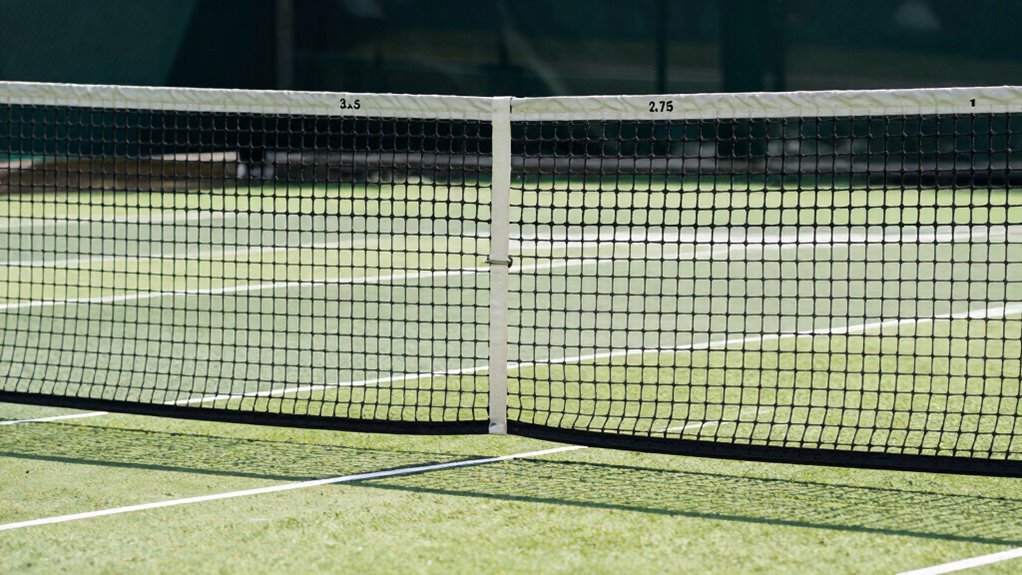
Most of us barely notice the net until we’re smacking a serve into it—then, suddenly, it matters. The pickleball net sags to 34 inches in the center, two inches lower than the tennis net’s steady 36-inch height. This subtle drop changes everything.
We’ve found the lower net height opens up wilder shot trajectories and longer rallies—perfect for beginners still finding their groove. The design isn’t an accident: that slight dip encourages strategic shots and forces us to refine our dinks and drop shots, especially near the non-volley zone (a.k.a. “the kitchen”). The lower net height also makes pickleball more accessible to players across different ages and physical abilities, much like how scaled-down sports equipment allows toddlers to develop confidence without feeling overwhelmed.
Unlike tennis, we can’t just camp at the net—this 7-foot area keeps things fair and finesse-based. The pickleball net’s unique specs boost accessibility, letting players of all ages jump into games without brute strength.
We remember our first matches—how the softer pace and forgiving net made us feel capable, not crushed. Tennis demands power; pickleball rewards precision. And honestly? We love that our fumbles look more like art here.
Serve Techniques and Rules
The net’s low profile sets the tone, but the serve? That’s where we truly break free. Pickleball’s underhand serve isn’t just a rule—it’s a rebellion against the aggressive spin and power of tennis serves. We’ve ditched the high-octane technical execution; instead, we focus on control and placement. Here’s how it changes the game:
- We only score points as the serving team—no shared points like in tennis. Lose the serve, lose your chance.
- The two-bounce rule gives every rally breathing room—our serve lands soft, bounces once, then the return must bounce too.
- In doubles pickleball, both of us serve—one game, two serves—before surrendering the serve. It keeps us both engaged.
- Our scoring system? Simpler scoring: first to 11, win by two—no confusing 30-love or deuces to memorize.
- Unlike tennis serves that demand aggressive power, pickleball emphasizes roll-top closure precision through controlled placement and finesse.
We laugh when our first underhand serve floats long (again)—but we keep refining, because this isn’t about power. It’s precision, unity, and a game that lets us play—on our terms.
Non-Volley Zone and Movement Restrictions
While we’re all tempted to charge the net like we’re playing tennis, pickleball’s 7-foot kitchen keeps us in check—literally. This non-volley zone stops us from releasing wild power volleys up close, forcing smarter choices.
Unlike tennis, where aggressive net play reigns, the kitchen demands patience—we can’t even step inside to volley, or we’ll gift our opponents a point. These movement restrictions might feel frustrating at first—especially when we’re dying to smash a winner—but they level the playing field.
The smaller court size means less running, boosting accessibility for all ages and skill levels. We’ve learned that strategic play beats brute force here. Great placement and sharp player positioning trump raw power every time. Much like minimalist camping gear that prioritizes smart packing choices, pickleball rewards tactical thinking over physical dominance.
At first, we hated backing up—but now we see it: the kitchen isn’t a cage, it’s a challenge. It pushes us to outthink, not just overpower. And honestly? We’re better players for it.
Scoring Systems
Though we’re used to racking up points no matter who serves in tennis, pickleball plays by different rules—and trust us, it takes some getting used to. The scoring systems in pickleball and tennis shape the entire gameplay experience, favoring speed and precision over endurance.
- Only the serving team can score points in pickleball, while in tennis games, either side can win points—this flips rally strategy on its head.
- Pickleball games are played to 11 points and demand a two-point margin to win, unlike tennis games that climb 0, 15, 30, 40 with deuce rules.
- The score is always announced as serving team first, then receiving, plus server number—clarity built into the rhythm.
- That two-bounce rule? It slows the start of each rally, altering how points unfold compared to the immediate aggression in tennis.
- Like setting up a home gym on a budget, understanding pickleball’s scoring system requires learning a few simple adjustments that ultimately enhance the overall experience.
We’ve lost count of how many times we called the wrong score early on.
But once you internalize these differences, the liberation in pickleball’s faster scoring becomes addictive—shorter matches, quicker wins, and no five-hour marathons.
Accessibility and Physical Demands
We’ve all tried keeping up with tennis rallies only to gas out by the third game—pickleball won’t wreck your legs like that. The physical demands are way lower, thanks to the smaller court—just 20 by 44 feet—so we’re not sprinting across acres just to return a dink.
We love that beginners, including our 70-year-old neighbor Betty, can rally successfully within an hour. That’s liberation: no months of frustration. The lighter equipment makes a huge difference—pickleball paddles weigh 7 to 9 ounces, much less than tennis racquets at 11.5 ounces.
Less paddle weight means less strain, making it suitable for seniors and folks recovering from shoulder issues (like John, who swore off tennis after his rotator cuff). We rely on quick reflexes and strategy, not brute strength. Just as adjustable equipment can enhance comfort for growing athletes, lighter pickleball gear reduces physical burden for players of all ages.
Plus, with better accessibility—more courts popping up and lower costs for gear and play—it’s no surprise a diverse audience is flocking to the sport. We’ve never felt this welcomed—or this competitive—so fast.
Frequently Asked Questions
What Are the Differences Between Pickleball and Tennis?
We see pickleball and tennis differ in court dimensions, scoring systems, paddle materials, ball types, player movements, game strategies, net heights, serve techniques, popularity trends, and age demographics—offering us freer, faster play that breaks conventions and invites all to redefine how we move, compete, and connect on the court.
What’s Harder, Tennis or Pickleball?
we think tennis is harder—it demands higher skill level, faster game pace, and bigger court size, plus heavier equipment weight, longer scoring, and tougher player strategy, while pickleball’s lighter ball types, lower injury rates, and inclusive social dynamics welcome all ages to play freely and fearlessly.
What Makes Pickleball Different From Other Racket Sports?
We see pickleball as a refreshing change—its compact court dimensions and lightweight paddle materials free us to move with speed, while the perforated ball construction, low net height, and underhand serving techniques reshape game strategy, scoring system, and player movement, inviting broader demographic differences and rising popularity trends.
Is Pickleball Just Tennis but Smaller?
No, we’re not just tennis on a smaller court—we’ve got our own soul. Our game’s faster, more accessible, born from fun backyard roots, and built for all ages. We embrace pickleball origins, not tennis history. Our court dimensions fit tighter spaces, our equipment differences keep it light, and our scoring systems reward quick thinking. We thrive in the kitchen, not just at the baseline. Our game pace is brisk but fair, welcoming beginners and pros alike. We see booming popularity trends, diverse age demographics, and explosive community growth. We’re not a spinoff—we’re a movement.
Conclusion
We’ve played both—and here’s what sticks: pickleball courts are *one-third* the size of tennis courts, which means less running but way more reflex panic. We used to miss the baseline rallies—until we realized we could actually catch our breath between points. Lighter paddles help, especially when our serves resemble slow floaters more than rockets. Honestly, we laugh more now—partly because we’re not dragging sore knees off the court. If you’re tired of chasing balls, try this: shorter game, same fun.