We’ve all heard it: nearly 60% of athletes say they struggle with solo training consistency. Here’s the thing—practicing your sport alone at home isn’t just possible, it’s transformative if you’re willing to get strategic about it. We’re talking structured drills, mental preparation, and honest self-assessment. But there’s a catch that most players miss entirely, and it’s what separates real improvement from spinning your wheels…
Key Takeaways
- Set specific, measurable goals like consecutive free throws to maintain focus during solo practice sessions.
- Use visualization and mental rehearsal to simulate game situations and build decision-making skills independently.
- Design varied drills with unpredictability and 30-40% miss rates to develop resilience and adaptability.
- Incorporate body control challenges like cone weaving and deceleration drills to improve athleticism and footwork.
- Film your practice to analyze technique, experiment with unconventional movements, and track progress systematically.
Setting Specific Goals and Tracking Progress
When you’re drilling alone in an empty gym or on a quiet court, it’s easy to slip into mindless repetition—shooting baskets without purpose, running drills that feel more like exercise than skill development. We’ve all been there, bouncing a ball aimlessly while wondering if we’re actually improving.
Setting specific goals transforms solo practice into purposeful training. Instead of shooting randomly, we commit to hitting 15 consecutive free throws or completing 50 dribble moves with perfect form. Tracking progress through metrics—documenting makes, misses, and times—reveals patterns we’d otherwise miss. Just as adjustable dumbbells allow for quick weight changes in home gym workouts, specific performance targets enable rapid adjustments to your training focus.
We recommend keeping a simple training log. Write down what you accomplished, what struggled, your metrics. Review weekly. This accountability isn’t punishment; it’s freedom. You’ll spot weaknesses early, adjust your focus, and watch yourself genuinely progress. That’s the real game-changer.
Utilizing Visualization and Mental Preparation
Your training log tells you what you’ve done—but your mind can show you what you’re capable of becoming. We’ve discovered that visualization transforms solo practice into genuine mental rehearsal. When you’re alone, close your eyes and mentally walk through game situations—imagine defensive pressure, missed passes, the crowd’s energy. We recommend including imperfections; envision yourself recovering from mistakes, not executing flawlessly. This honest mental practice builds resilience you’ll actually need.
Complement visualization by reviewing game tape. Watch plays, then recreate them mentally—you’re fundamentally coaching yourself through decisions. We’ve found that athletes who combine these techniques anticipate better during actual competition. Consider tracking your recovery metrics to ensure your mind and body are both prepared for the mental demands of competition. Start with five minutes daily. Your mind’s becoming a training partner, freeing you from needing teammates present to improve fundamentally.
Designing Varied Drills for Physical Development
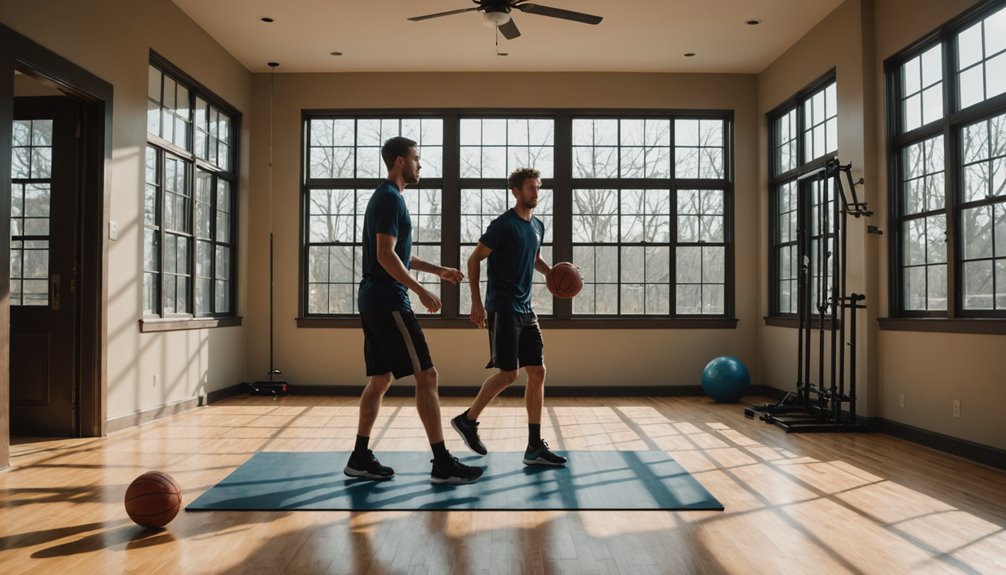
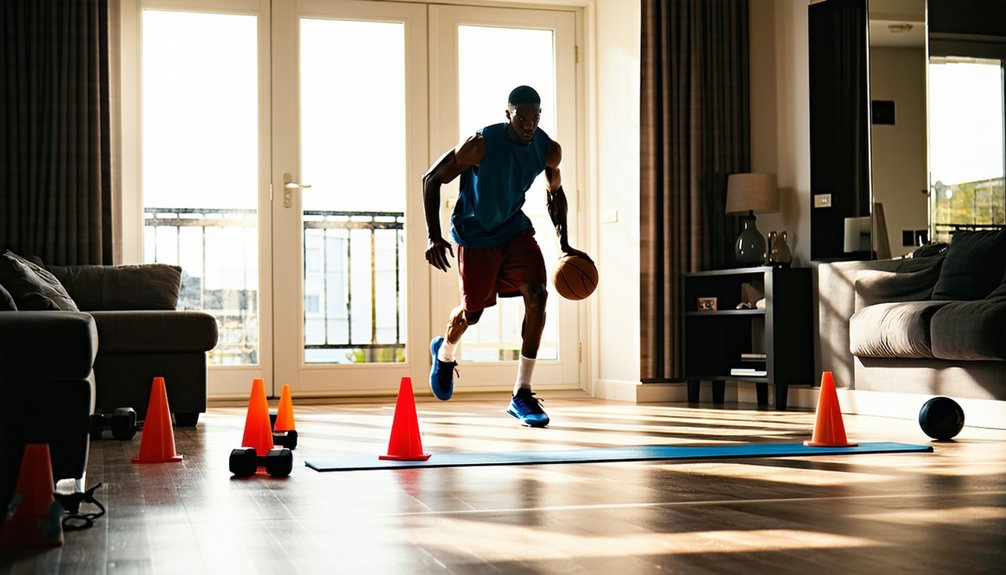
Transform your solo sessions by building drills around the unpredictability you’ll actually face in games—not the comfortable repetition that feels productive but leaves you unprepared. We’ve found that varying distances, angles, and shot types forces genuine adaptation. Set a 30-40% miss rate target; it’s uncomfortable, but it builds resilience.
Layer in deceleration and change drills using high hurdles. These obstacles demand explosive footwork while you’re finishing—mimicking actual game pressure when defenders collapse. Experiment with different dribbling patterns, too. Mix tight handles with explosive drives from various court positions. Just as outdoor training requires proper gear like UV-protected clothing to maintain comfort during extended practice sessions, your mental preparation needs similar protection against the discomfort of high-intensity drills.
We’re not chasing perfect reps. We’re engineering controlled chaos that develops athleticism and decision-making simultaneously. Your comfort zone is your enemy here. Push through the awkwardness, and you’ll recognize game situations instantly when they arrive.
Challenging Body Control and Athleticism
Since body control determines whether you can finish through contact or create space in a crowd, we’ve built our solo training around deliberate instability—not comfort. We make sure to incorporate high hurdles into finishing sessions, pushing our limits and forcing new techniques. Free-flowing dribbling drills—experimenting with crossovers, behind-the-back moves, and sudden direction changes—sharpen footwork and fluidity. Even missed attempts teach us something valuable about coordination and touch in varied situations.
We’ve found that challenging body control exercises prevent stagnation. Add cone weaving at game speed, then blindfolded. Practice ball handling on uneven surfaces. These aren’t gimmicks—they’re adaptability builders. Just as hands-free convenience matters when runners need to focus on terrain, maintaining body awareness during complex drills keeps your mind sharp and responsive. Beginners especially benefit; awkward moments highlight exactly where we need improvement. The goal? Building athleticism that translates when defenders get physical.
Experimenting With New Techniques and Movements
When we step into an empty gym, we’re not just repeating what we already know—we’re building our personal playbook. This is where creativity flourishes.
We’re free to experiment without judgment or consequence. Here’s how we take our game to the next level:
- Try unconventional footwork patterns—shifting your weight differently than coaches teach, discovering what feels natural for your body
- Shoot from unexpected angles—off-balance, while moving, from corners you’d never attempt in games
- Combine moves unpredictably—mixing a crossover with a step-back, testing combinations that might reveal something special
- Film yourself experimenting—watch the footage, steal what works, discard what doesn’t
- Stay hydrated during solo training sessions—maintaining consistent water intake with hands-free hydration packs allows you to focus on technique without stopping for breaks
Think of the gym as your laboratory. We’re not chasing perfection; we’re hunting for breakthroughs. Those weird drills? They’re often where our best stuff lives. Embrace the awkwardness. That’s where growth happens.
Learning From Skilled Players Through Video Analysis
Our gym experiments only take us so far—that’s where the pros come in. We’ve found that watching elite athletes on film breaks open possibilities we’d never discover alone. Pull up your favorite player’s highlight reels, then pause constantly. Study their footwork, court positioning, and decision-making timing. We’re not just passively watching; we’re trying things they’ve mastered, mentally rehearsing their moves before attempting them ourselves.
This isn’t about blind imitation. Instead, we’re identifying patterns—how they create space, when they accelerate, why certain plays work. Video analysis reveals weaknesses in our own game we’d otherwise miss. Set specific goals based on what you observe: “I’ll work on that crossover,” or “I need that defensive stance.” Just as regular checks on equipment ensure safety during solo workouts at home, consistent review of your performance against professional standards keeps your training on track.
The freedom here? You control the pace, rewind endlessly, and adapt what works to your unique style.
Frequently Asked Questions
How to Practice Football at Home Alone?
We can master football independently by running solo drills—dribbling through cones, shooting at targets, and juggling for touch. We’ll record ourselves, visualize game scenarios, and crush agility work. There’s no limit to what we can achieve alone at home.
What Is the Easiest Team Sport to Learn?
We understand you’re skeptical about team sports’ complexity, but basketball’s actually the easiest to master. We can all develop fundamental skills through solo drills—dribbling, shooting, and passing—giving you the freedom to progress independently without needing teammates.
How Do I Practice Football by Myself?
We can master football through solo drills—setting up cones for dribbling practice, using walls for passing accuracy, and running agility exercises. We’ll record our sessions, analyze performance gaps, and visualize plays to build unstoppable skills independently.
How to Practice Soccer by Yourself Without Equipment?
We can master soccer solo drills like warriors sharpening their blades. We’ll use wall passes for accuracy, create cone courses from household items, visualize game situations, and blend bodyweight exercises—all without equipment. We’re building our freedom through disciplined, independent training.
Conclusion
We’ve literally transformed our living rooms into elite training facilities—no teammates required. You’re now equipped with visualization tricks, drill blueprints, and video analysis skills that’d make coaches jealous. Here’s the truth: solo practice demands more discipline than group sessions, but it’s also where champions get forged. We’re not exaggerating when we say your consistency alone will outpace players coasting on team dynamics. Keep logging those workouts. Your future self’s thanking you already.