Studies show that 68% of athletes experience significant bench time during their careers—yet we rarely talk about what happens next. Here’s the thing: we’ve found that players who transform their sideline hours into learning opportunities often break through faster than those who just wait. We’re going to show you how to turn frustration into your competitive advantage, and honestly, it starts with a mindset shift that most players completely miss.
Key Takeaways
- Accept the coach’s decision and recognize that bench time doesn’t define your value to the team.
- Observe starting players’ footwork, positioning, and decision-making to build a personal playbook for future opportunities.
- Cheer enthusiastically for teammates during critical moments to boost team confidence and demonstrate strong character.
- Ask coaches targeted questions during timeouts to gain tactical insights and signal your engagement and readiness.
- Visualize executing techniques you observe and study opponent tendencies to prepare counter-strategies for when you play.
You Are Important
sitting on the bench stings, but it doesn’t define your value—and we’ve got that straight from the start. When you sit the bench, you’re not benched from mattering. Every single player fuels team dynamics, whether you’re logging minutes or cheering from the sideline. We’ve learned that your role supporting teammates builds resilience—a skill that’ll outlast any season. Work hard during warm-ups. Show readiness. Stay locked in mentally. Coaches notice. Your commitment transforms how your team functions together. You’re developing character, learning the game’s nuances, building relationships that strengthen your squad’s foundation. Consider using progress tracking and analytics to document your personal development during this time so you can visualize improvements in your fitness and skills. That’s not secondary work—that’s essential development that’ll shape your entire athletic journey and personal growth.
Learn by Observation
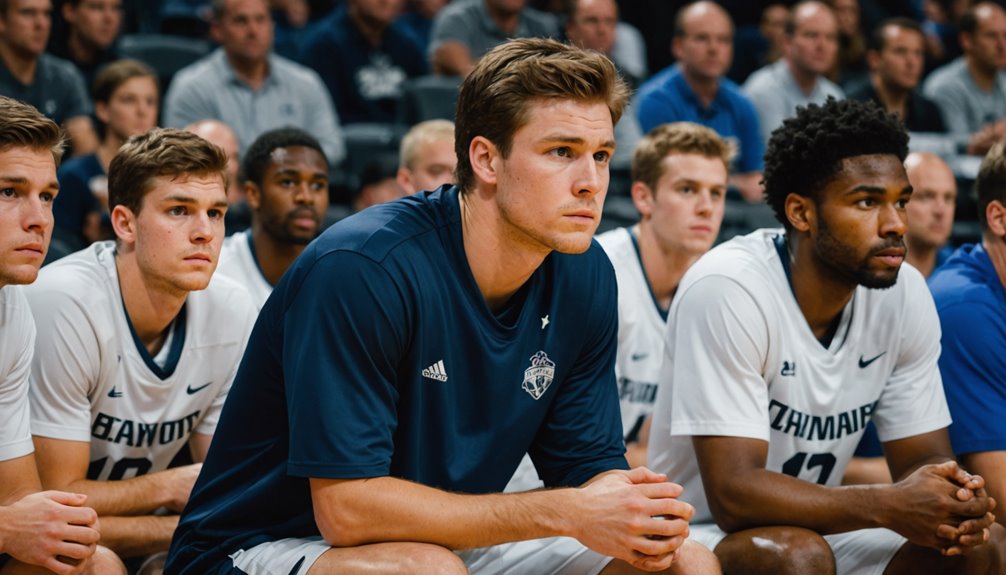
While you’re on the sideline, you’ve got a front-row seat to a masterclass that most players never actually watch. We’re not just killing time—we’re gathering intelligence that’ll transform our game when opportunities arrive.
| What to Observe | Why It Matters | Your Action |
|---|---|---|
| Starting players’ footwork patterns | Reveals positioning strategy | Mimic their movement mechanics |
| Decision-making under pressure | Shows smart play execution | Study their court/field awareness |
| Physical conditioning demands | Identifies fitness gaps | Work harder in training |
| Opponent tendencies | Exposes defensive weaknesses | Prepare counter-strategies |
Learn by observation, not passivity. Notice how skilled teammates read defenses, anticipate passes, manage fatigue. Jot down specifics—their angles, timing, communication calls. We’re building our playbook through active watching. Just as UV-blocking fabric shields players from harmful elements during outdoor activities, mental preparation shields us from missed opportunities on the court. When your moment comes, you’ll work harder because you’ve already logged mental reps. That’s how benchwarmers become difference-makers.
Accept Reality

The hardest part isn’t watching from the sideline—it’s admitting that you might not play today, and that’s okay. We’ve all been there, gripping the bench while our teammates take the court. Here’s the truth: the coach’s decision isn’t personal. Their job is fielding the strongest lineup possible, and sometimes that means we sit on the bench.
Accepting reality doesn’t mean giving up—it means freeing ourselves from the mental torture of “what if.” We can’t control the coach’s decision, but we can control our response. That shift in perspective? It’s liberating. When we stop fighting against what is, energy opens up. We can cheer authentically. We can notice game patterns. We can prepare for our moment, whenever it arrives. Just as athletes use moisture-wicking fabrics to stay comfortable during competition, mental resilience requires the right preparation to perform when your opportunity comes.
That’s resilience.
Stay Mentally Engaged
Your bench time is a masterclass in disguise—if you’re willing to pay attention. We’ve all sat there, watching the game unfold while our legs fidget and frustration builds. But here’s the truth: staying mentally engaged transforms wasted minutes into valuable preparation. Study your opponents’ patterns. Notice when your teammates struggle. Identify defensive gaps that’ll matter when you’re finally in. This isn’t passive observation—it’s active scouting that sharpens your instincts. When coaches evaluate playing time decisions, they’re watching who stays locked in mentally, not just physically present. We’ve seen players earn opportunities simply because they demonstrated genuine awareness from the sideline. Your engagement signals readiness. It proves you’re genuinely invested, not just collecting a paycheck. That mindset shift? It changes everything about your opportunities. Just as athletes studying grip and traction patterns on different surfaces can improve their performance, observing how opponents adjust their strategies throughout the game enhances your tactical awareness.
Demonstrate Readiness to Play
When you’re sitting on the sideline, every rep matters—even the ones nobody’s officially asking you to take. We’ve all felt the sting of watching from the bench, but here’s what separates players who get called up from those who don’t: relentless readiness.
Sprint to the fence and back during breaks. Warm up pitchers or outfielders. Do the work that keeps your body primed and your mind sharp. Coaches notice who’s genuinely prepared versus who’s just going through motions. Wearing quality sports gloves during these warm-up sessions ensures your hands stay protected and ready for immediate action when called upon.
| Action | Purpose | Impact |
|---|---|---|
| Sprint drills | Stay game-ready | Shows urgency |
| Warm up teammates | Build chemistry | Demonstrates leadership |
| Active stretching | Prevent injuries | Signals professionalism |
| Mental visualization | Focus preparation | Builds confidence |
| Positive body language | Influence team energy | Attracts coach attention |
Your readiness isn’t passive—it’s an active choice that coaches can’t ignore.
Support Your Teammates
Sitting on the bench doesn’t mean sitting out—it means shifting from individual performance to team investment. We’ve all felt the sting of limited playing time, yet here’s the truth: supporting your teammates from the sidelines directly impacts winning.
Our job involves:
- Cheering loudly during vital moments—your voice carries weight and boosts confidence when players need it most
- Offering sharp observations during timeouts about defensive gaps or offensive patterns you’ve noticed from your vantage point
- Maintaining electric energy through high-fives and fist bumps, proving you’re invested regardless of minutes played
We participate in huddles, contributing strategically to team discussions. This isn’t passive watching—it’s active engagement. When we show genuine enthusiasm for teammates’ successes, we’re building the psychological foundation that transforms rosters into cohesive units. Just as reliable ignition systems prevent frustration in critical moments, your consistent support prevents team morale from faltering. Playing time matters less than demonstrating commitment to collective victory.
Develop Life Skills Through Patience
Beyond the sideline cheers and strategic observations, we’re learning something that’ll stick with us long after the final whistle—patience isn’t just about waiting your turn, it’s about who we become while we’re waiting.
Sitting on the bench teaches us resilience that transcends sports. We’re developing the mental toughness to handle disappointment without spiraling—a skill that’ll serve us in careers, relationships, and personal challenges. Here’s what we’ve discovered: patience on the bench cultivates emotional maturity. We learn to support teammates genuinely, celebrate their wins, and channel frustration into self-improvement rather than resentment.
This isn’t passive sitting. We’re actively building discipline, managing expectations, and staying motivated despite setbacks. Much like how consistent practice with adjustable resistance strengthens muscles over time, our patience strengthens our character through daily commitment. That’s not just athletic development—that’s character building. The bench becomes our classroom for real-world grit.
Use Sideline Time for Self-Improvement
While your teammates are getting the minutes you’re chasing, the sideline becomes your laboratory—a place where you can study the game with the kind of focus that only comes when you’re not worried about executing.
We’ve learned that self-improvement doesn’t pause when play time does. Instead, it accelerates. Here’s how we transform bench time into competitive advantage:
- Analyze positioning and decision-making by tracking how starting players read the field and respond to pressure
- Ask coaches targeted questions during timeouts—specific, actionable inquiries that reveal tactical nuances you’d miss otherwise
- Visualize yourself executing the techniques you’re observing, mentally rehearsing situations so your body remembers when opportunity arrives
- Monitor your recovery metrics during rest periods to understand how your body responds to game intensity and prepare for peak performance when called upon
This isn’t passive watching. We’re deconstructing the game, identifying gaps in our performance, and building the mental framework that separates ready players from unprepared ones. When your number’s called, you’ll already know what winning looks like.
Maintain a Positive Attitude
The sideline work we’ve been doing—analyzing, visualizing, asking smart questions—means nothing if we’re broadcasting frustration instead of readiness. Here’s the truth: our attitude isn’t just personal; it’s contagious. When we show up with genuine enthusiasm, we’re telling our teammates—and ourselves—that we’re good enough to belong here.
Time on the bench isn’t wasted time. It’s an audition. Coaches notice who encourages others, who stays locked in, who refuses to spiral into negativity. Just as adjustable dumbbells and resistance bands require smart choices to maximize limited resources, we must strategically choose which thoughts and behaviors deserve our mental energy. That positive energy we project? It directly impacts whether we get our shot.
We’re not denying the sting of sitting. But we’re choosing liberation over resentment. We’re proving that our value extends beyond playing minutes. We’re building something bigger than individual stats: a culture where everyone matters, everyone contributes, everyone’s essential to winning.
Frequently Asked Questions
How to Deal With Being on the Bench?
We’ll help you reclaim your power by shifting your mindset—stop seeing the bench as punishment. Instead, we’re using motivational strategies like studying opponents, supporting teammates actively, and building skills relentlessly. Your comeback’s coming; stay mentally fierce and ready.
What to Do When Your Kid Gets Benched?
We’ll plant seeds of resilience when our kids face bench time. Let’s use open communication strategies to validate their feelings, offer genuine emotional support, and remind them that setbacks aren’t failures—they’re freedom to learn, grow, and reclaim their power on the court.
How to Deal With Being a Bench Player?
We build mental resilience by staying engaged on the bench, observing game dynamics, and supporting teammates. We’re developing skill improvement through active participation in warm-ups and studying starting players’ strategies—freeing ourselves from limitation by mastering patience and readiness.
What to Do When You Are Benched?
We’ll build mental resilience by shifting our mindset—stay engaged, support teammates actively, and use this time strategically. We’re not sidelined; we’re developing. A positive mindset transforms bench time into preparation for our breakthrough moment. We’ve got this.
Conclusion
We’ve all sat there—watching the clock, wondering if we’d ever get in. Here’s the truth: benching isn’t punishment; it’s preparation. We’ve seen countless players transform frustration into fuel, turning sideline time into championship moments. Your current role doesn’t define your future. It is understood that patience, combined with relentless self-improvement, creates opportunities. Stay ready. When that moment comes—and it will—we’ll be exactly where we’re supposed to be.