
We’ve all felt it—that knot in our stomach thirty minutes before kickoff. Team sports hit different than solo competitions because we’re not just worried about ourselves; we’re carrying the weight of ten, fifteen, maybe twenty other people. Your mistake becomes everyone’s problem. The pressure multiplies when you realize your teammates are counting on you, which is exactly why understanding this stress matters before we explore what’s actually happening in your brain and body.
Key Takeaways
- Collective responsibility amplifies pregame anxiety when athletes fear disappointing teammates who depend on them.
- Self-worth becomes intertwined with team outcomes, making individual losses feel personally crushing and significant.
- Physical symptoms like racing heartbeat, nausea, and hyperventilation intensify anxiety in the hours before competition.
- Anticipatory anxiety causes athletes to imagine worst-case scenarios, triggering self-doubt and overthinking about performance.
- Strong emotional bonds among teammates intensify the perceived burden of responsibility for group success.
Understanding Team Performance Pressure
When you’re standing on the sideline waiting to take the field, there’s a particular kind of nervousness that hits differently in team sports—it’s not just about your own performance, but about the weight of expectations your teammates are carrying alongside you. We’re not dealing with solo anxiety here; we’re battling collective stress and anxiety that amplifies everything. Research shows adolescents feel this intensely—our developing brains tie personal performance directly to group success. That fear of disappointing teammates? It’s real, crushing sometimes. Coaches’ expectations, parental pressure, comparisons with peers—they all stack up. We internalize these messages, measuring ourselves against everyone else. Understanding this pressure isn’t weakness; it’s recognizing that performance anxiety in team settings operates differently. Proper protective equipment like mouthguards for contact sports can help reduce physical injury risks and concussions, which in turn may lower anxiety about getting hurt during competition. Once we acknowledge that dynamic, we can actually address it.
The Collective Responsibility Factor

The weight gets heavier when you realize you’re not just playing for yourself—you’re carrying your teammates’ hopes too. That’s collective responsibility, and it’s brutal.
We’ve all felt it: the pregame knot in your stomach intensifies when you know six people depend on your performance. Research shows athletes experience amplified anxiety when they perceive their output directly impacts group success or failure. You’re not just worried about disappointing yourself—you’re terrified of letting down people who trust you completely. Similar to how heart rate monitoring reveals physical stress responses during high-intensity moments, anxiety triggers in team sports create measurable physiological changes that compound under collective pressure.
| Anxiety Trigger | Impact Level | Management Strategy |
|---|---|---|
| Fear of letting teammates down | High | Open communication |
| Judgment from coaches | Medium-High | Supportive environment |
| Group failure perception | High | Shared responsibility framing |
| Personal performance pressure | Medium | Individual accountability |
We manage this by fostering environments where honest conversations happen. When we acknowledge collective responsibility without shame, we actually reduce its grip on us.
Fear of Letting Down Teammates
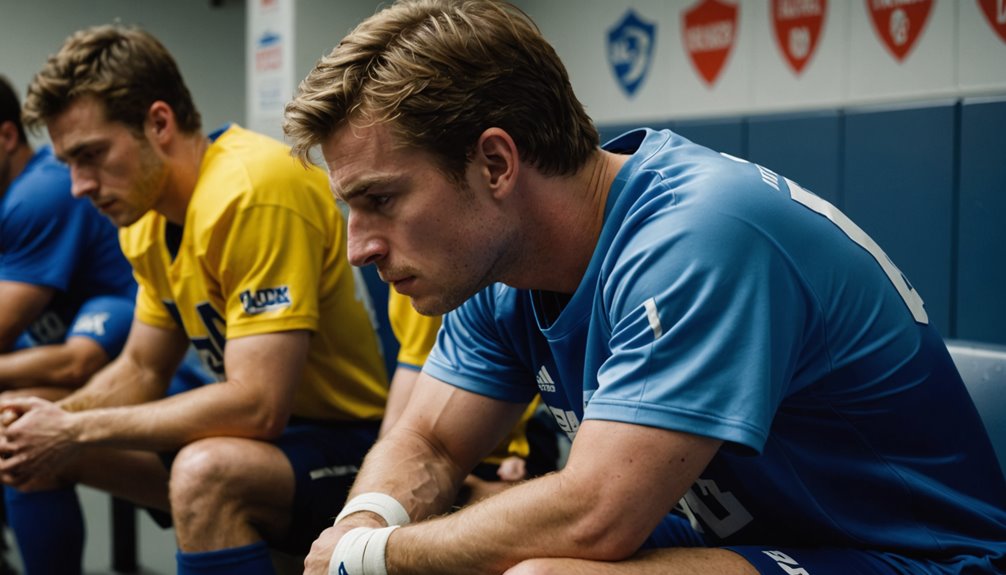
Responsibility—that invisible weight we carry into the locker room—hits different when it’s attached to people we genuinely care about. We’re not just playing for ourselves anymore; we’re carrying our teammates’ hopes, dreams, and expectations into every game. That’s where anxiety affects us most acutely.
Here’s what happens at a high level:
- Our self-worth becomes tangled with team outcomes, making losses feel personal
- Fear of disappointing others amplifies our own performance pressure exponentially
- The stronger our emotional bonds, the heavier the responsibility weighs
- Athletes who see themselves as essential feel this burden most intensely
We’ve all felt that pit in our stomach before kickoff. Research shows effective communication genuinely lightens this load—when teammates reassure each other that we’re all imperfect, we finally breathe easier and perform better. Monitoring recovery scores before games can help athletes determine if they’re mentally and physically prepared to handle the emotional demands of team competition.
Mental Symptoms of Team Sports Anxiety
As our bodies tense up in the tunnel before kickoff, our minds often wage their own battle—one that’s harder to see but just as real. We spiral into anticipatory anxiety, imagining worst-case scenarios where we fumble in front of everyone. That’s where sports psychology comes in, helping us recognize these patterns. Our brains flood with self-doubt: *What if I miss? What if I let them down?* Research shows 30 to 60% of athletes experience these high-intensity mental symptoms. We overthink plays, second-guess decisions, and feel judged by teammates and coaches alike. The pressure builds into this nasty feedback loop—anxiety breeds poor focus, which breeds more anxiety. Understanding these mental symptoms isn’t weakness; it’s the first step toward breaking free from them. While some athletes benefit from real-time feedback techniques to manage pre-game anxiety, others find additional support through sports psychology or mental performance coaching.
Physical Manifestations of Pregame Stress
While our minds spiral with self-doubt, our bodies betray us in ways we can’t hide—and that’s where things get tricky. We’re not imagining those tremors, racing hearts, and tight muscles. These physical manifestations of pregame stress are your nervous system’s honest response to perceived threat.
Here’s what we’re actually dealing with:
- Racing heartbeat that pounds like a drum solo nobody asked for
- Nausea and stomach issues that make us question everything we ate
- Hyperventilation causing dizziness and lightheadedness before kickoff
- Frequent bathroom trips that wreck our focus and confidence
The challenge? These symptoms can spiral into self-fulfilling prophecies. We notice our trembling hands, assume we’ll play poorly, then actually do. Recognizing these physical responses helps us maintain an ideal level of readiness—understanding our body’s signals rather than fighting them. Monitoring your heart rate variability during these moments can provide objective data about your nervous system’s actual state versus your perceived stress level.
Communication and Coordination Demands
Once we step onto the field, our individual nerves collide with something far more complex—the pressure to sync up with ten other people who are equally stressed and trying to execute a game plan in real time. We’re not just managing our own performance; we’re anticipating teammates’ movements, reading subtle signals, and hoping our communication lands perfectly when it matters most. That’s exhausting. Miscommunication during critical moments—a missed call, a broken route, a timing issue—can spiral into collective failure. We’re all vulnerable to each other’s mistakes. But here’s what we’ve learned: strong team cohesion actually buffers this stress. When we genuinely know our teammates and trust their abilities, coordination flows more naturally. Building those relationships before game day transforms coordination from anxiety-inducing chaos into manageable synchronization. Recovery methods like infrared heat therapy can help reduce the physical tension that accumulates before and after high-pressure team competitions, supporting both mental and muscular readiness.
Strategies for Managing Team-Based Anxiety
When the weight of ten other people’s expectations settles on your shoulders, you need tools that actually work—not just motivational quotes taped to a locker.
We’ve found that concrete relaxation strategies transform pre-game anxiety into manageable energy. Here’s what we rely on:
- Deep breathing techniques (try 4-count inhales, 6-count exhales) ground you physically and mentally
- Muscle relaxation exercises systematically ease tension while building control over your nervous system
- Noise-canceling headphones with calming music create personal space amid team chaos
- Visualization and meditation redirect focus from worst-case scenarios toward performance readiness
We involve coaches and parents in teaching these methods because anxiety thrives in isolation. When everyone on the team understands relaxation techniques, we’re not just managing individual stress—we’re building collective resilience. Just as power-saving modes on modern devices extend performance during critical moments, these mental strategies help athletes sustain focus and composure when it matters most. You’re not fighting this alone.
Building Resilience Through Mental Preparation
Mental preparation isn’t some mystical skill reserved for elite athletes—it’s a learnable craft that transforms how you respond to pressure. We’ve found that building resilience through consistent mental preparation practices—visualization, positive self-talk, deep breathing—directly tackles pregame anxiety. Here’s what works: spend fifteen minutes daily practicing these techniques, not just before games. Your nervous system learns to recognize calm as normal, not weakness.
The Yerkes-Dodson law confirms it: ideal arousal beats panic every time. We’re talking about establishing control in chaotic moments. Mindfulness practices strengthen your mental resilience like strength training builds muscle. When you’ve rehearsed your response to pressure repeatedly, competition feels familiar rather than terrifying. Similar to how UPF-rated fabrics provide consistent protection against environmental stressors, mental preparation techniques create a reliable defense against performance anxiety. That’s resilience. That’s freedom from anxiety’s grip.
Frequently Asked Questions
Why Do Team Sports Stress Me Out?
We experience stress because performance pressure from teammates and coaches triggers self-doubt that disrupts our focus. Breaking free means reframing mental preparation as empowering rather than burdensome—we’ve got this, and that’s enough.
Why Do I Get so Anxious Before a Game?
We get pre-game jitters because anxiety triggers like fear of failure and high expectations flood our minds. Our bodies tense up, hearts race, and we overthink—chains we can break by reclaiming our mental power through grounding techniques and self-compassion.
What Is the #1 Worst Habit for Anxiety?
We’re drowning in our own thoughts when we engage in negative self-talk—the absolute worst habit fueling anxiety. Our anxiety triggers intensify through this mental sabotage. Let’s break free by recognizing how destructive self-criticism truly is and reclaim our stress management power through compassionate inner dialogue instead.
Do Professional Athletes Get Nervous Before Games?
Yes, we absolutely do. Pre-game jitters affect even elite performers—studies show 30-60% of us experience nervousness before competition. We’ve learned that an athlete mentality means acknowledging anxiety without letting it control us. You’re not alone in feeling the pressure.
Conclusion
We’ve discovered that pregame stress isn’t weakness—it’s evidence we care deeply. We calm our minds through breathing techniques, we strengthen our bonds through honest conversations, we build confidence through deliberate practice. When we acknowledge our fears rather than ignore them, when we support each other rather than compete internally, when we prepare mentally just as rigorously as physically—we transform anxiety into fuel. That’s how we win together.