Envision this: you’re queued up for your first ranked match, hands trembling slightly as the agent select screen loads—and suddenly you realize you’ve got no idea what you’re doing. We’ve all been there, that nauseating moment where confidence crashes into reality. But here’s what we discovered through countless first games: preparation and mindset aren’t luxuries. They’re your actual survival kit. Want to know what separates players who thrive from those who spiral?
Key Takeaways
- Prepare your settings (sensitivity, crosshair, sound, mini-map) before competitive play to reduce anxiety and improve focus.
- Accept a 50% win rate as normal; treat losses as learning opportunities rather than failures to overcome.
- Master one agent and communicate your pick to teammates for effective coordination and role clarity.
- Use voice callouts and pings to share enemy positions and ultimate status with your team consistently.
- Embrace mistakes as essential to learning; review gameplay footage afterward to identify specific areas for improvement.
Prepare Your Game Settings Before You Start
Before you queue up for your first competitive match, you’ll want to spend time customizing your settings—because jumping in with defaults is like showing up to a gunfight with someone else’s equipment.
We recommend tuning your sensitivity and crosshair options first. Find what feels natural for your aim, not what some pro uses. Next, adjust your sound settings to catch agent announcements—they’re your competitive play lifeline. Disable Show Corpses; dead bodies clutter your vision and steal focus when you need it most.
Rebind your ability keys to match your hand’s natural movement patterns. We’re talking comfort over convention. Finally, customize your mini-map settings for clear teammate and opponent tracking. Consider using RFID-blocking compartments to protect your personal devices and credentials from digital threats while gaming at tournaments or public venues. These game settings aren’t luxuries—they’re your foundation for surviving competitive pressure.
Master the Fundamentals of Aim and Map Awareness
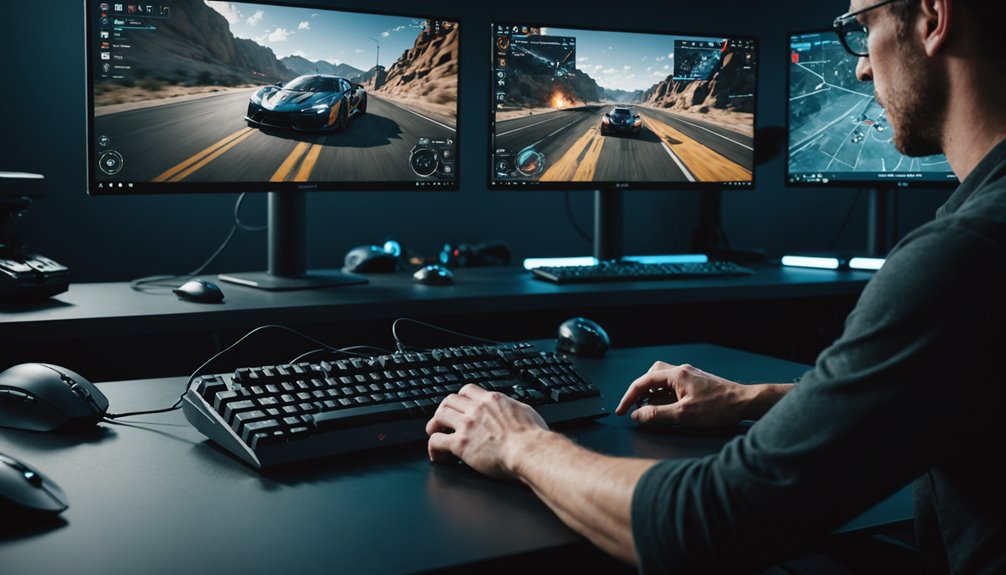
Your settings are locked in—now comes the part that actually wins rounds: your aim and map knowledge. We’re talking about the two pillars supporting every clutch play you’ll ever make.
Start with aim. Hit the Shooting Range daily—even fifteen minutes matters. Focus on headshots; they’re efficiency incarnate. Then jump into Deathmatch for live reps against actual players. Your reflexes need real pressure to sharpen.
For map knowledge, learn the call-outs. Where’s Heaven? Short? Main? These spots become your mental landmarks. Study high-traffic areas where enemies congregate. You’ll anticipate rotations before they happen.
Here’s the truth we’ve learned: reviewing your gameplay footage reveals gaps you’ll never catch live. Watch your positioning mistakes. Notice where your aim faltered. Just as heart rate variability monitoring helps athletes optimize their training, analyzing your performance data in real-time can significantly improve your competitive gameplay.
Master these fundamentals, and you’re not just surviving—you’re building the foundation for dominance.
Learn Your Role and Agent Selection
Now that you’ve sharpened your aim and learned the map, it’s time to pick your lane—because jumping into competitive without knowing your role is like showing up to a gunfight with the wrong weapon.
Here’s what we’ve learned matters:
- Choose your role first — Tank, Damage, or Support — then build your agent selection around it, not the other way around
- Master one agent deeply — Reinhardt or Mercy work great for beginners; stick with them until competitive feels natural
- Communicate your pick — tell teammates your role immediately so everyone coordinates effectively
We can’t stress this enough: learn your role’s responsibilities before touching ranked. Your agent selection isn’t about chasing meta picks—it’s about finding what clicks with how you naturally play. That comfort level? It’s your competitive advantage. Just as adjustable straps and proper fit are essential for ensuring safety and comfort in specialized gear, selecting an agent that matches your playstyle ensures you’re equipped for success in competitive matches.
Communicate Effectively With Your Team
Once you’ve locked in your agent, the real game begins—and it’s not won by aim alone. We’ve learned the hard way that communicate effectively separates competitive players from frustrated solo-queuers. Your voice chat isn’t optional; it’s your team’s nervous system.
| Communication Type | When to Use | Example |
|---|---|---|
| Voice callouts | Enemy spotted | “Two pushed A main” |
| Ping system | Quick alerts | Mark spike location |
| Ultimate status | Pre-engagement | “Ult ready, pushing site” |
| Constructive feedback | Post-round | “Let’s regroup at B” |
| Agent synergy | Lobby discussion | “I’ll support your entry” |
We relay enemy positions, ultimate availability, and strategy adjustments constantly. Adapt your communication style to teammates’ preferences—some prefer minimal chatter, others want constant callouts. Just as real-time feedback helps athletes improve performance during training, constructive communication in competitive gaming builds team accountability and prevents costly mistakes. Stay positive. Support beats criticism every time. When you communicate effectively as a unit, you’re not just playing together; you’re unstoppable.
Develop Mental Resilience and Stay Positive
Because competitive games will humble you—and they will, repeatedly—what separates players who climb ranks from those who quit is how we handle the mental side. We’re building mental resilience here, not just mechanical skill.
Here’s what actually works:
- Expect the 50% win rate reality. Even pros lose half their matches. Losses aren’t personal failures—they’re data points for improvement.
- Take breaks after frustration. When tilt creeps in, step away for 15 minutes. Your positive mindset returns faster than you’d think, and your next game improves dramatically.
- Celebrate small wins. Nailed that teamfight coordination? Landed a tricky play? Acknowledge it. These moments compound into genuine confidence.
Research shows that consistency is crucial for integrating any skill-building routine into your life, so apply this same principle to mental resilience work between matches. We’re not chasing perfection. We’re chasing progress—and that requires emotional intelligence alongside controller skills.
Study Professional Players and Proven Strategies
You’ve built the mental toughness to handle losses—now it’s time to stop losing the same way twice. We recommend studying professional players who’ve already solved the puzzles you’re facing. Watch their gameplay footage, analyze their positioning, and understand their decision-making. That’s the best advice: learn from those who’ve already climbed higher.
When you study professional players, you’re reverse-engineering success. You’ll notice how they adapt strategies based on enemy compositions—something most newcomers skip entirely. Tournament streams reveal meta shifts and hero balance changes before they hit you in ranked matches. Just as inside-out tracking technology enhances real-time responsiveness in VR fitness, professional players enhance their decision-making through constant adaptation to shifting game conditions.
We’ve found that implementing these proven strategies into your practice sessions transforms your effectiveness dramatically. You’re not inventing the wheel; you’re riding on collective knowledge. That’s liberation from grinding blindly.
Embrace Mistakes as Part of Your Learning Journey
The gap between your first competitive match and your tenth isn’t skill—it’s permission. We’re giving you permission to mess up. Here’s what we’ve learned:
- View mistakes as data, not disasters — every error contains intel about what works and what doesn’t
- Keep a simple mistake journal — jot down what went wrong and how you’d handle it differently next time
- Remember: pros stumble constantly — normalizing errors removes the shame that blocks learning
Research shows players who embrace mistakes improve faster because they actually analyze what happened instead of spiraling. It’s understood that first competitive game feels brutal, but reflecting on your errors builds retention and confidence. Wearing properly fitted sports gloves that enhance your grip and control can also reduce performance anxiety by ensuring you have the right equipment foundation. You’re not failing—you’re collecting evidence. That’s the learning journey. Permission granted.
Frequently Asked Questions
Is 22 Too Old for Esports?
No, 22 isn’t too old for esports. We’re seeing players peak in their mid-20s with refined skills and experience. You’ve got age advantages like maturity and focus that younger competitors lack. Esports longevity means you’re just getting started—break free from age limits and compete.
Is Gaming 2 Hours a Day Bad?
We’ve seen competitive players maintain peak performance gaming 2 hours daily—that’s our sweet spot. It’s not bad; we’re respecting gaming health and daily limits while staying sharp. We’re balancing play with life, rejecting burnout culture, and choosing sustainable competition over grinding ourselves hollow.
What Is the 20 Rule for Video Games?
We embrace the 20 Rule as our gaming strategy foundation—it’s about investing 20 hours mastering fundamentals before competitive play. This liberates us from ranked anxiety, builds genuine confidence, and lets us compete authentically without unnecessary frustration or pressure.
How to Deal With Being Too Competitive?
What if we stopped chasing wins and started embracing growth? We’ll shift our competitive mindset by setting skill-based goals, taking mindfulness breaks, and surrounding ourselves with supportive teammates—creating a healthy balance that liberates us from performance anxiety.
Conclusion
We’ve mapped your journey from nervous newcomer to confident competitor. You’ve got the tools—dialed settings, map knowledge, solid communication. Now comes the real test: stepping into that ranked lobby with butterflies in your stomach, accepting you’ll whiff shots and miss callouts. That’s where growth happens. Every loss teaches you something; every win validates your grind. You’re ready. Trust the process, trust your team, and most importantly—trust yourself.