
We’ve all been there—walking into that first practice, palms slightly sweaty, wondering if everyone’s already friends. Here’s the truth: they’re probably as focused on their own performance as you are. We’ve found that a simple firm handshake and genuine questions about your teammates go surprisingly far. But before you can nail those social moves, you need to understand what’s actually happening in your body during those opening minutes—and how to work with it, not against it.
Key Takeaways
- Use confident body language—stand tall, maintain eye contact, and offer a firm handshake to build immediate trust.
- Ask genuine questions about teammates’ goals and motivations while actively listening without distractions to foster connection.
- Channel nervous energy positively; recognize anxiety as investment in success and focus on learning opportunities ahead.
- Show up physically conditioned with proper warm-ups to demonstrate commitment and readiness for practice demands.
- Participate consistently in team activities and follow through on commitments to build trust and belonging over time.
Body Language: The Silent Powerhouse of First Impressions
When you walk into that first team practice, here’s what’s really happening: roughly 55% of what your teammates and coaches are picking up about you has nothing to do with your words.
We’re talking about your first impression—the silent negotiation happening before you even open your mouth. Stand tall, shoulders back. It signals you’re ready, not nervous. Lock eyes when meeting people; it builds trust instantly. Your handshake matters too—firm but not aggressive, friendly but professional.
Those open gestures? Nodding, uncrossed arms, forward leaning? They broadcast engagement. You’re not just present; you’re invested. These nonverbal cues create the supportive atmosphere teams thrive on. Just as mineral-based ingredients in sports sunscreen are formulated to reduce irritation during physical activity, your composed body language minimizes friction and builds rapport with teammates. Master your body language, and you’ve already won half the battle before practice even starts.
Crafting the Perfect First Hello
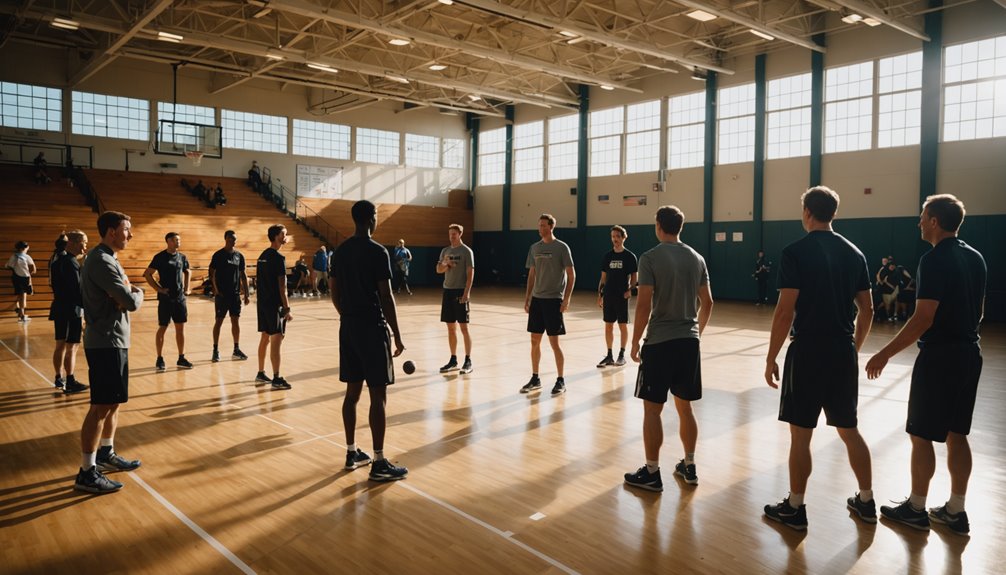
Your body language’s got the door open—now you’ve got to walk through it with words that stick. We’ve all fumbled introductions, but here’s what actually works at first practice.
| Element | Why It Matters |
|---|---|
| Clear name pronunciation | Teammates remember you instantly |
| Brief relevant experience | Builds authentic connection |
| Genuine enthusiasm | Shows real commitment |
| Open-ended questions | Sparks immediate dialogue |
| Active listening | Creates mutual respect |
Start by stating your name clearly—no mumbling. Share one quick story connecting your past to this team. Ask teammates genuine questions about themselves; they’ll appreciate you actually caring. Listen more than you talk. This isn’t about performing; it’s about establishing real relationships from day one. We’re breaking free from awkward small talk by being authentically interested in who’s standing beside us. Just as adjustable wrist closures help accommodate growing hands on the field, genuine communication grows stronger when you’re flexible and attentive to your teammates’ needs.
Engaging With Your Teammates: Building Bridges, Not Walls
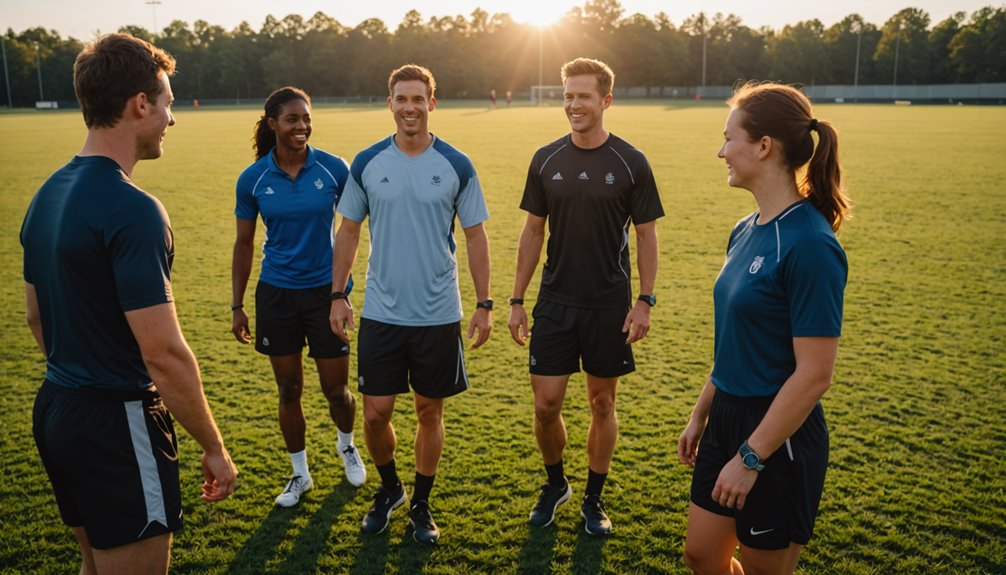
How do we move past the surface-level “hey, how’s it going?” exchanges and actually connect with the people we’re sweating alongside? We ask real questions. When you’re feeling nervous on day one, dig deeper than weather talk—ask teammates about their why. What drew them to this sport? What’s their biggest goal this season?
We listen actively, too. Put your phone away. Make eye contact. Show them they matter.
Sharing your own story—that embarrassing moment you had learning your position, that time you almost quit—creates common ground. It says, “I’m human too.”
Then we celebrate together. When someone nails a drill, we acknowledge it. Just as adjustable straps help distribute weight evenly and reduce strain on young hikers, recognizing your teammates’ efforts distributes confidence and support across the group. These small gestures build belonging faster than any team-building exercise ever could.
Understanding and Managing Those Pesky Nerves
All that connection we’re building with teammates? It’s your secret weapon against nerves. Here’s what we’ve learned: acknowledging those butterflies actually helps manage them—they’re proof you care about performing well. We’re not pretending jitters don’t exist; we’re channeling that energy into fuel. Similar to how deep tissue massage releases muscle tension and improves blood flow, managing nervous energy through acknowledgment helps break up mental knots and redirect that intensity productively.
| What We Feel | What It Means |
|---|---|
| Butterflies | Investment in success |
| Self-doubt | Desire to belong |
| Excitement | Ready for challenge |
| Anxiety | Caring deeply |
| Anticipation | Growth happening |
Your first day doesn’t require perfection—just presence. We’ve prepped our skills, familiarized ourselves with the team’s system, and we’re showing up as ourselves. That nervous energy? Channel it. Remember: every athlete on that court felt exactly what you’re feeling. You’re not alone in this. You’re ready.
Physical Readiness: Preparing Your Body for Day One
While mental preparation gets all the glory, we can’t ignore what our bodies need to show up strong on day one. Physical readiness isn’t optional—it’s your ticket to confidence and respect.
Start building your fitness now through structured workouts, gradually ramping up intensity so you don’t crash on practice day. We’re talking consistent cardio, strength training, and flexibility work. Contact your team leader about specific requirements and equipment needs; they’ll clarify expectations. Consider using a fitness tracker to monitor your heart rate and distance during training sessions, ensuring you’re hitting the right intensity zones for optimal conditioning.
Warm-ups and stretching aren’t luxuries—they’re non-negotiables that prevent injuries and boost performance. Show up conditioned, and you’ve already won half the battle. Your body’s preparedness signals commitment. You’ll move freely, breathe easier, and focus on learning instead of surviving. That’s liberation on the field.
What to Expect During Warm-Ups and Drills
Your body’s now primed and ready—so let’s talk about what actually happens when you step onto that field for the first time.
We’ll start with warm-ups, which typically run 10-15 minutes. Expect dynamic stretches and light exercises designed to boost blood flow—nothing fancy, just getting your muscles ready. A lot of times, you’ll notice teammates encouraging each other, so jump into conversations. It builds connections fast.
Then come the drills—20 to 40 minutes of skill-focused work. We’re talking passing, shooting, defensive moves. Your coach might throw in new variations to keep things fresh, which honestly keeps boredom away. You’ll rotate between individual skill work and team exercises, developing your abilities while collaborating with others. Stay adaptable. Staying mentally flexible matters as much as physical readiness here. Consider tracking your performance metrics like distance, pace, and elevation to monitor your improvement throughout the season.
Leaving a Lasting Impression Beyond the First Day
Because first impressions happen in about seven seconds—that’s roughly how long it takes to shake hands and exchange names—we’ve got to be intentional about how we show up from day one. Make sure you’re following up consistently after that initial meeting. We show genuine interest by asking open-ended questions about teammates’ experiences and actually listening to their answers. Show up actively in team discussions—your participation signals you’re invested, not just present. Acknowledge when teammates accomplish something worth celebrating; that enthusiasm builds real connection. Research shows that positive reinforcement from peers significantly boosts motivation and engagement within team settings, similar to how it enhances performance in collaborative environments. Remember, your first day’s handshake matters, but your second week’s follow-through matters more. We’re not locked into whatever impression we made on day one. Consistent presence and authentic engagement? That’s what transforms new teammates into trusted members of something bigger.
Frequently Asked Questions
What to Do on the First Day of Practice?
We’ll arrive early, introduce ourselves authentically, and engage actively during drills. We’re building team dynamics by asking genuine questions during breaks, using confident body language, and staying fully present. We’re breaking free from awkwardness by connecting openly with teammates.
What to Do on the First Day of Soccer Practice?
We’ll break free from first-day jitters by arriving early, introducing ourselves authentically, and diving into warm-ups with genuine enthusiasm. We’re creating team bonding through active participation, asking questions, and radiating confidence. We’re building our soccer family together—no pretense, just real connection.
What to Do on the First Day of Baseball Practice?
We’ll arrive early, introduce ourselves to build team dynamics, actively participate in warm-ups, and engage teammates with encouragement. We’re listening to coaches, asking questions, and breaking free from first-day nerves by showing genuine commitment to our squad’s success.
What Is the 24 Hour Rule for Coaches?
We’ve discovered that the 24-hour rule isn’t just bureaucratic—it’s liberating. We deliver feedback within 24 hours because that’s when athletes genuinely hear us. This coaching expectation breaks traditional hierarchies, freeing both coaches and players to grow authentically together without ego getting in the way.
Conclusion
So here’s the thing—we’ve walked you through the playbook, but your real test? It hasn’t started yet. You’ll step onto that court or field tomorrow, and everything we’ve covered—the handshakes, the questions, the breathing techniques—they’ll either click or they won’t. The difference? You’ve got this. We’ve all been there. Your authenticity beats perfection every single time. Now go show them who you are.




)