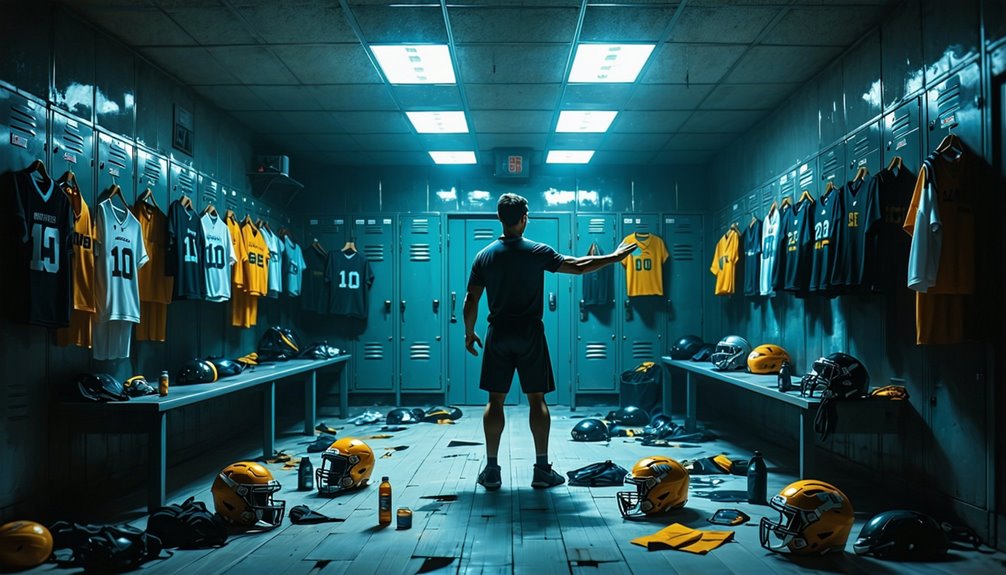
We’ve all felt it—that electric tension the moment we step into the locker room before kickoff. Your heart’s racing, teammates are checking equipment, and there’s this unspoken understanding that everything we’ve practiced comes down to the next few hours. But here’s what most people don’t realize: what happens in those final minutes isn’t random. It’s calculated. Strategic. And honestly? It can make or break your performance before you even step onto the field.
Key Takeaways
- Coaches and players collaborate to build mental readiness while transforming nervous energy into focused intensity for competition.
- Position coaches simplify complex tactical schemes during short timeframes to ensure rapid strategic understanding and competitive adaptation.
- Team leaders share personal stories and vulnerability to foster authentic connections that strengthen trust among teammates.
- Physical locker room design with comfortable spaces and recovery areas reduces stress and enhances player well-being.
- Final five-minute warnings signal a mental shift where hydration, stretching, and music prepare players physically and psychologically.
The Pre-Game Ritual: Setting the Tone for Success
When we step into that locker room about 15 minutes before kickoff—our cleats still laced tight, our jerseys tucked just right—we’re not just killing time until we run back out onto the field. We’re executing a ritual that separates champions from the rest. Coaches and players work in concert here, transforming nervous energy into focused intensity. The DJ’s bass bumps through speakers while we hydrate and handle quick gear adjustments. Our strength coach announces countdowns—ten minutes, five minutes—keeping us anchored in the present moment. Motivational speeches ripple through locker rooms as genuine camaraderie builds. Just as simple adjustment systems in fitness equipment enhance user experience, our pre-game preparations prioritize ease and clarity so every player can focus on mental readiness. This isn’t theater; it’s strategic preparation. We’re mentally gearing up, discussing adjustments, and building unbreakable team spirit. Every second counts toward domination.
Strategic Adjustments and Coaching Leadership
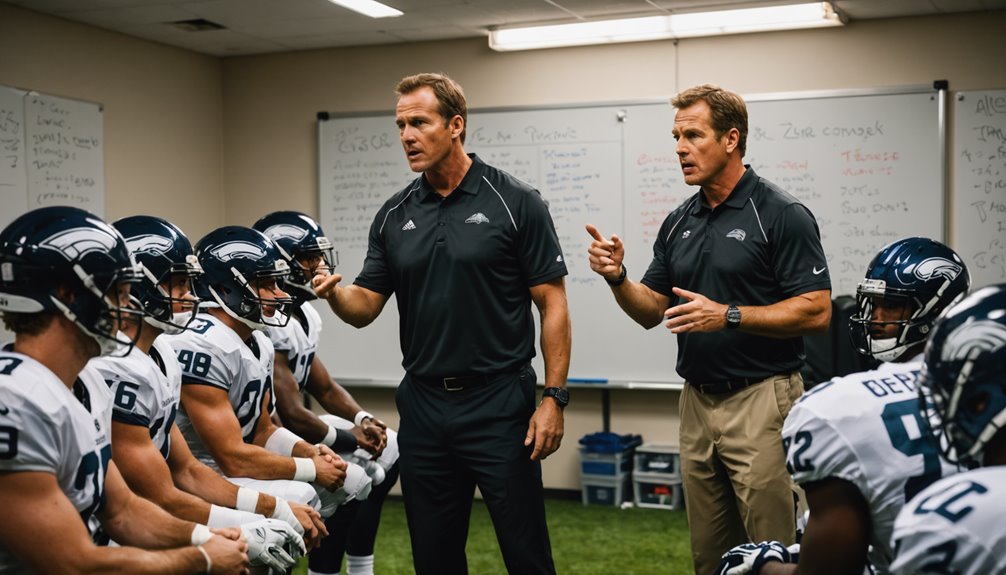
Beyond the music and the energy, though, comes the real work—the part where our coaches transform those seven and a half minutes into a masterclass in competitive adaptation. We watch position coaches scribble on dry-erase boards, distilling complex schemes into visual bullets. Their strategic adjustments target specific threats—that disruptive linebacker, the safety blitzing from the slot. Coaching leadership here means ruthless prioritization. We’re not rehashing entire gameplans; we’re identifying what’s broken and fixing it fast. The head coach moves between groups, reinforcing key adjustments while maintaining laser focus. No wasted breath. No philosophical speeches—just tactical clarity. We’ve learned that effective coaching leadership during halftime isn’t about motivation alone. It’s about giving us concrete, executable answers so we walk back out there knowing exactly what we’re doing. Similar to how athletes use recovery metrics to assess readiness and make informed training decisions, our coaching staff uses real-time performance data to guide strategic adjustments that maximize our competitive edge.
Building Trust Through Personal Connections
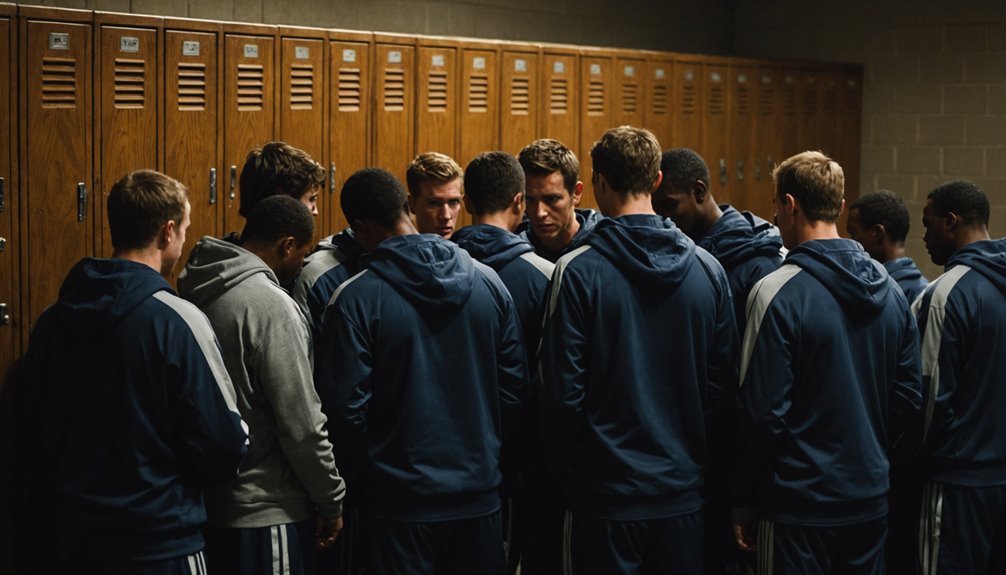
The real glue holding a team together isn’t found in a playbook—it’s built in those quiet moments before the chaos begins. We’ve discovered that the locker room becomes a comfortable place when we drop the pretense and show up authentically. Sharing personal stories—whether it’s about last night’s dinner disaster or overcoming a tough loss—cracks open genuine connection. We’ve watched team leaders lean in, listening intently, which signals that vulnerability’s not weakness. Those emotional exchanges before kickoff? They’re not distractions. They’re foundation-building. When we laugh together at ourselves or nod knowingly during someone’s confession, we’re forging bonds that’ll hold steady when pressure peaks. Just as real-time feedback strengthens performance in training environments, authentic communication in the locker room strengthens team cohesion when it matters most. That’s the real competitive advantage—trusting the person beside you completely.
The Role of Locker Room Design in Team Performance
As we’ve moved deeper into understanding what makes teams click, we’ve realized that physical space matters just as much as the trust we’ve built through those vulnerable conversations—maybe even more than we initially thought.
We’re not talking about marble countertops or premium lockers—though they help. We’re talking about how design shapes behavior. Here’s what we’ve learned works:
- Comfortable seating areas that naturally pull players together rather than pushing them apart
- Thoughtful lighting and acoustics that reduce stress without feeling sterile
- Recovery spaces—ice baths, stretching zones—integrated into the layout itself
- Personal touches that reflect player input, not just coach preferences
When we prioritize functionality alongside comfort, something shifts. Players linger. They talk. They bond. That’s when chemistry actually builds. The same principle applies to professional equipment design, where ergonomics and layout directly influence how users interact with and perform in their environment. We’re learning that the importance of locker room design isn’t frivolous—it’s foundational.
Final Moments: Motivation and Mental Preparation
When that five-minute warning hits—and we’ve all felt it, that electric shift in the locker room’s energy—everything we’ve built through design and conversation crystallizes into action. Our strength and conditioning coach calls out the time, anchoring us in reality. Team leaders step forward, amplifying motivation through genuine connection rather than empty cheerleading. We’re ready to go.
| Pre-Game Element | Purpose |
|---|---|
| Coach’s motivational speech | Elevates emotional state |
| Team leader amplification | Builds camaraderie |
| Hydration and stretching | Physical readiness |
| DJ music selection | Sharpens mental focus |
| Final role reminders | Clarifies individual mission |
The DJ pumps bass-heavy tracks through speakers. We hydrate methodically, stretch deliberately, and lock eyes with teammates. This isn’t theater—it’s muscle memory meeting psychology. We’re not just preparing; we’re claiming our collective power before stepping back into battle. Just as athletes use real-time feedback from performance data to optimize their training, we use this final moment to calibrate our mental state and physical readiness for peak performance.
Frequently Asked Questions
What Do NFL Players Do the Night Before a Game?
We focus on pre-game rituals and team bonding the night before—we’re visualizing plays, fueling our bodies with proper nutrition, and connecting with our squad. We’re breaking free from distractions, getting quality sleep, and mentally preparing ourselves to dominate tomorrow’s battle.
What Happens in a Locker Room?
We’re released in our sanctuary where pre-game rituals ignite our fire. We hydrate, stretch, and bond as brothers through motivational speeches and music that electrifies our souls. It’s where we shed constraints and become unstoppable warriors ready to dominate.
What Did Cousins Say in the Locker Room?
We heard Cousins fire us up with raw motivation, breaking down our locker room dynamics—demanding we trust each other, execute the game plan fearlessly, and leave everything on the field. He wasn’t holding back; we weren’t either.
Do Male Reporters Go Into Female Locker Rooms?
We’ve established that male reporters generally don’t enter female locker rooms. However, we’re challenging outdated gender dynamics by advocating for equitable locker room etiquette. We’re pushing sports media toward respecting athletes’ privacy and autonomy, regardless of gender.
Conclusion
We’ve walked you through what transforms ordinary athletes into a synchronized unit—hydration stations, strategy breakdowns, trust-building moments. But here’s what we’ve learned: *Can your locker room become a performance asset, not just a space?* Absolutely. When you nail the rituals, design, and leadership, you’re not just preparing for kickoff—you’re building a culture that wins games before they start. That’s the real competitive edge.