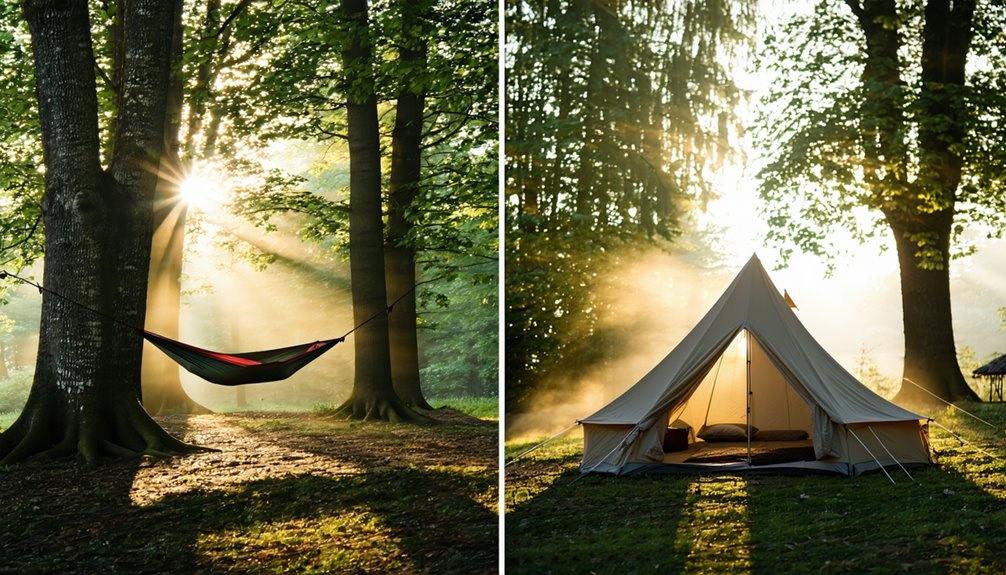
Most of us don’t realize that hammocks actually prevent the lower back pain that often plagues tent sleepers—they cradle your spine naturally instead of forcing it flat against uneven ground. We’ve found this game-changer transforms how we rest outdoors, but there’s a catch: setup matters enormously, and insulation becomes tricky in cooler months. So which option truly wins for your camping style? The answer depends on factors we’re about to explore.
Key Takeaways
- Hammocks offer superior sleep quality by eliminating pressure points and maintaining natural spine alignment compared to ground sleeping.
- Hammocks weigh significantly less (16 ounces) and pack smaller than tents, making them ideal for ultralight backpacking adventures.
- Hammock camping reduces environmental impact by minimizing ground disturbance and vegetation damage versus traditional tent camping.
- Tents provide better warmth retention and suit stomach sleepers, whereas hammocks require additional insulation gear and positional adjustments.
- Hammock setup demands mastery of rigging systems and knot techniques, presenting a steeper learning curve than tent installation.
Comfort and Sleep Quality Advantages
When you’re considering where to sleep on your next camping trip, comfort should be your top priority—and that’s where hammocks shine compared to traditional tents.
We’ve found that sleeping suspended eliminates pressure points that plague traditional ground sleeping. Your spine stays naturally aligned, meaning you’ll wake actually refreshed instead of achy.
The airflow underneath keeps you cooler on warm nights and prevents that clammy feeling tents trap. Uneven terrain won’t torment you anymore—no more rocks mysteriously appearing under your back at 3 a.m.
Studies show hammock sleeping genuinely improves sleep quality, boosting energy levels noticeably. The unique sleeping position reduces tossing and turning.
Pairing your hammock with a quality sleeping pad with good insulation enhances your thermal protection and overall comfort throughout the night. For camping enthusiasts seeking liberation from uncomfortable nights, hammock sleeping delivers tangible comfort advantages. You’re not just changing where you sleep; you’re transforming how well you actually rest.
Ground Versatility and Quick Setup
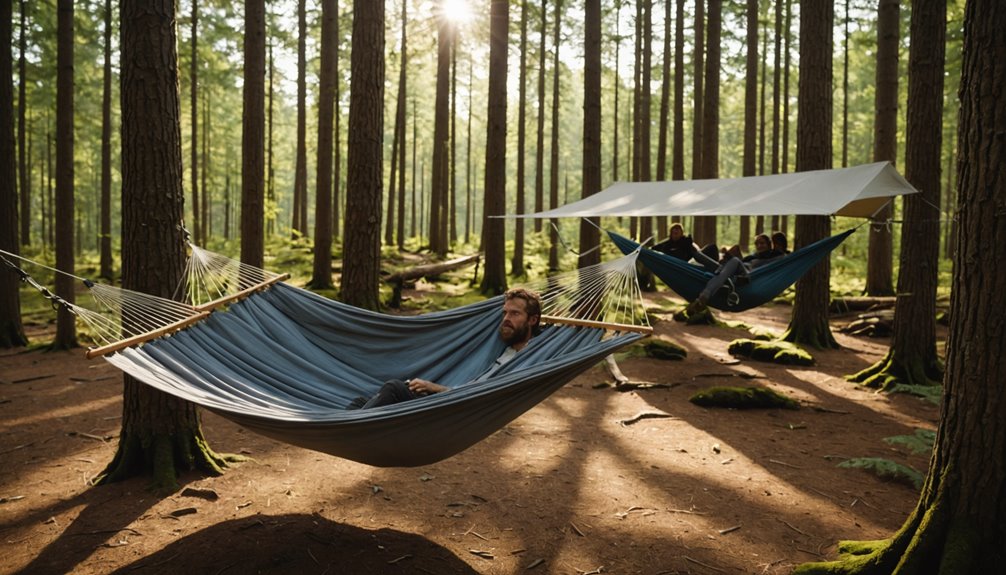
Because hammocks don’t demand a perfectly flat patch of earth, they’re genuinely game-changers for finding campsites.
We’ve ditched uncomfortable nights wrestling with rocks and roots—hammocks eliminate that entirely. Their lightweight design packs down to water bottle size, freeing us from terrain constraints that trap tent users.
The quick setup? Adjustable straps do the heavy lifting. We’re talking minutes, not the nail-biting search for level ground. Uneven terrain that’d wreck a traditional tent becomes irrelevant—hills, rocky slopes, whatever nature throws at us works fine.
Beyond sleeping, our hammocks serve as chairs, reading nooks, midday retreats. Hammocks made from ultralight materials like silnylon significantly reduce pack weight while maintaining durability.
That ground versatility transforms how we explore. We’re no longer slaves to finding the perfect flat spot; we’re free to roam wherever calls to us.
Enhanced Connection With Nature
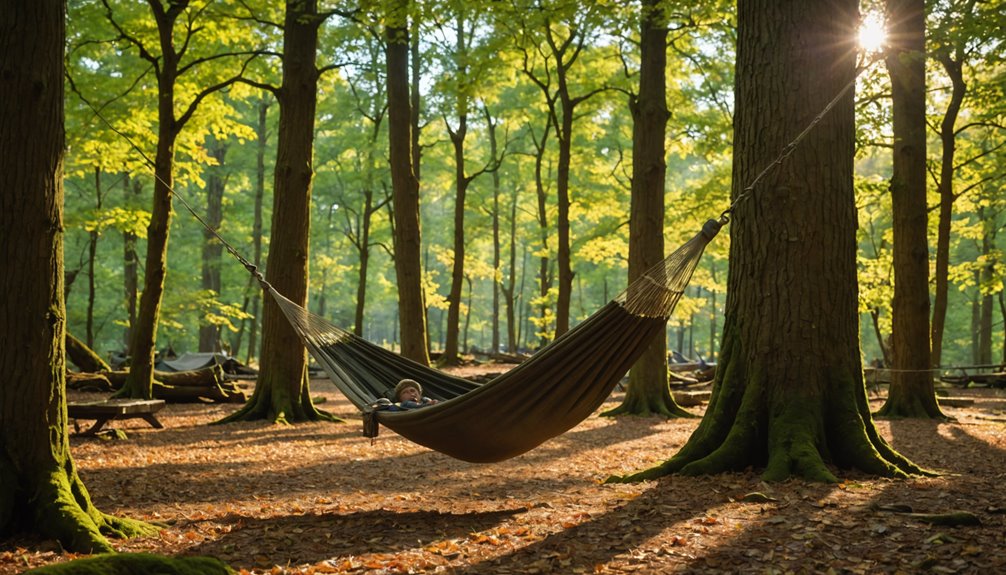
That freedom to choose your campsite anywhere? It’s where hammock camping truly shines. We’ve discovered that elevated sleeping transforms our entire camping experience—we’re breathing fresh air unfiltered by tent fabric, hearing nature’s symphony without ground vibrations muffling the sounds.
Hammocks blend seamlessly into forests because they don’t flatten vegetation or disturb soil ecosystems. Our ecological footprint shrinks dramatically compared to tent camping, which compacts earth and damages undergrowth. That matters when we’re serious about protecting the places we love. Proper gear maintenance, including air drying equipment after wet conditions, ensures your camping equipment lasts through many seasons of responsible outdoor use.
| Aspect | Hammocks | Tents |
|---|---|---|
| Ground Disturbance | Minimal | Significant |
| Immersion Level | Deep | Moderate |
| Ecological Footprint | Low | Higher |
The gentle rocking motion—that subtle pendulum effect—deepens our connection with surroundings. We’re not isolated; we’re genuinely part of nature’s rhythm. That’s the enhanced connection we crave: integration, not intrusion.
Modern Accessories and Customization Options
How’d we ever manage before modular hammock systems became the norm?
We’d honestly struggle—but today’s modern accessories transformed hammock camping into a genuinely customizable experience.
We’ve embraced systems that adapt to any season. Your sleeping system doesn’t lock you into one setup anymore.
Consider these essential components:
- Mosquito net – complete protection without chemicals
- Hammock tarp – rain shelter with cooking space underneath
- Underquilt – insulation below you (sleeping bags compress uselessly in hammocks)
- Top quilt – warmth above without bulk
- Modular straps – adjustable anchor points for any tree
We’ve ditched one-size-fits-all thinking.
Whether you’re tackling 4-season mountaineering or summer ultralight trips, our hammock gear adapts with waterproof membranes and durable materials that withstand harsh conditions.
That’s genuine freedom—building exactly what we need, nothing we don’t.
The community’s explosion means resources and support flourish everywhere now.
Portability and Lightweight Design
Weight—or rather, the lack of it—changes everything on the trail. We’ve discovered that lightweight hammocks tip the scales at just 16 ounces, packing down smaller than a Nalgene bottle. Our complete ADVENTURE SET weighs a mere 940 grams, compressing to the size of three drink cans. That’s liberation.
| Feature | Hammock | Traditional Tent |
|---|---|---|
| Weight | 16 oz | 1+ kg |
| Packed Size | Nalgene bottle | Bulky |
| Setup Time | Minutes | 15+ minutes |
| Pack Space | Minimal | Significant |
Quick setup lets us set up camp and move freely without wrestling tent poles. The modular design enables efficient packing—we customize our hammock setup by omitting non-essentials, maximizing portability. Like lightweight power stations, hammocks demonstrate how thoughtful design eliminates unnecessary bulk without sacrificing essential functionality. We’re not hauling dead weight; we’re carrying capability.
Protection From Ground Conditions and Wildlife
Beyond packing light, where you actually sleep matters just as much. We’ve discovered that sleeping in a hammock liberates us from ground hassles that ground-bound tent sleepers endure. Elevation changes everything—we’re protected from rocks, roots, and damp terrain that’d otherwise wreck our rest.
Here’s what makes hammocks our versatile advantage:
- Elevates us above uncomfortable, uneven ground
- Enables setup on slopes and rocky areas where tents fail
- Creates distance from crawling insects like ants and spiders
- Works seamlessly with bug nets for mosquito protection
- Positions us away from ground-level wildlife encounters
That elevation gap matters. We’ve ditched mornings spent picking pine needles from our backs. For additional gear protection, consider pairing your hammock setup with waterproof dry bags to keep your equipment safe from moisture and ground conditions.
Hammocks keep us clean, comfortable, and genuinely safer—whether we’re dodging insects or larger animals. It’s freedom from ground-level compromises, pure and simple.
Environmental Impact and Ecological Benefits
When we sling a hammock between two trees instead of pitching a tent, we’re actually making a real difference for the forest around us.
Hammock camping minimizes ground disturbance—we’re not crushing vegetation or compacting soil that takes years to recover. The lightweight design means fewer raw materials consumed during production, shrinking our overall environmental impact greatly.
We’ve found that the elevated position protects local flora and fauna from unnecessary damage.
Here’s what really matters: we can access sensitive areas where tents aren’t permitted, reducing our ecological footprint greatly. Plus, hammocks blend into natural environments far better than bright tent fabrics do, decreasing wildlife disruption. Many eco-conscious campers pair their hammocks with lightweight gear featuring durable materials like ripstop nylon, which resists tears while maintaining minimal environmental impact.
The sustainable camping benefits? Genuine.
We’re experiencing freedom while respecting the ecosystems supporting us. That’s not compromise—that’s actually winning.
Limitations and Challenges to Consider
That eco-friendly hammock dream we’ve been painting? It comes with real trade-offs we can’t ignore. Here’s what we’ve learned matters most:
- Set up a hammock requires mastering knots and tension—tent vs. hammock setup isn’t even close in complexity.
- Need a bug net plus underquilt for genuine comfort, adding weight and expense.
- Limited tree availability restricts where we can actually camp.
- Stomach sleepers face serious positional constraints.
- Stay warm requires proper insulation; cold air circulation causes significant heat loss.
- Just as dogs paddleboarding need proper buoyancy foam to stay safe and comfortable in water, hammock campers need quality insulation materials to prevent heat loss and maintain warmth throughout the night.
The important thing? Hammocks demand a learning curve.
We’re managing extra gear, wrestling with rigging systems, and constantly calculating whether today’s campsite even has suitable trees.
A sleeping pad alone won’t solve the warmth problem. Honest assessment beats romantic notions—sometimes a traditional tent simply works better for our actual needs.
Frequently Asked Questions
What Is Better, a Hammock or a Tent?
We’d say it depends on your freedom priorities. Hammocks win on portability factors and setup time, offering superior sleep posture and comfort. But we’ll choose tents when weather protection matters most. Your camping preferences and liberation from conventional ground camping ultimately decide which shelter lets you explore most authentically.
Is It Healthy to Sleep in a Hammock Every Night?
We’ve found hammock sleep benefits genuinely support nightly use—they’re offering superior pressure relief and spinal alignment that’ll liberate you from mattress constraints. Your sleep quality improves through relaxation techniques the gentle rocking provides, though personal preferences and outdoor experience matter most for sustained comfort.
What Are the Disadvantages of a Hammock?
We’ve found hammocks restrict our sleeping posture and comfort, expose us to weather without proper gear, demand specific trees for setup, require bug protection additions, and weigh us down with sleeping bags and extra equipment—limiting our freedom to sleep where we choose.
Can a Hammock Replace a Tent?
We’ve found hammocks can replace tents if you’re seeking freedom from terrain constraints. They’re lightweight for portability, offer superior sleep comfort, and setup faster. Yet we’d consider weather protection and cost analysis—hammocks don’t match tents’ shelter in extreme conditions.
Conclusion
We’ve found that hammocks aren’t universally “better”—they’re differently better. They’ve transformed our backpacking trips through superior comfort and minimal weight, yet they demand proper insulation and setup knowledge. So here’s the real question: are you willing to invest time learning a new system for genuinely better sleep? We say yes. Start with a quality hammock setup—we recommend ENO or Warbonnet—and you’ll understand why we’ve ditched tents entirely.