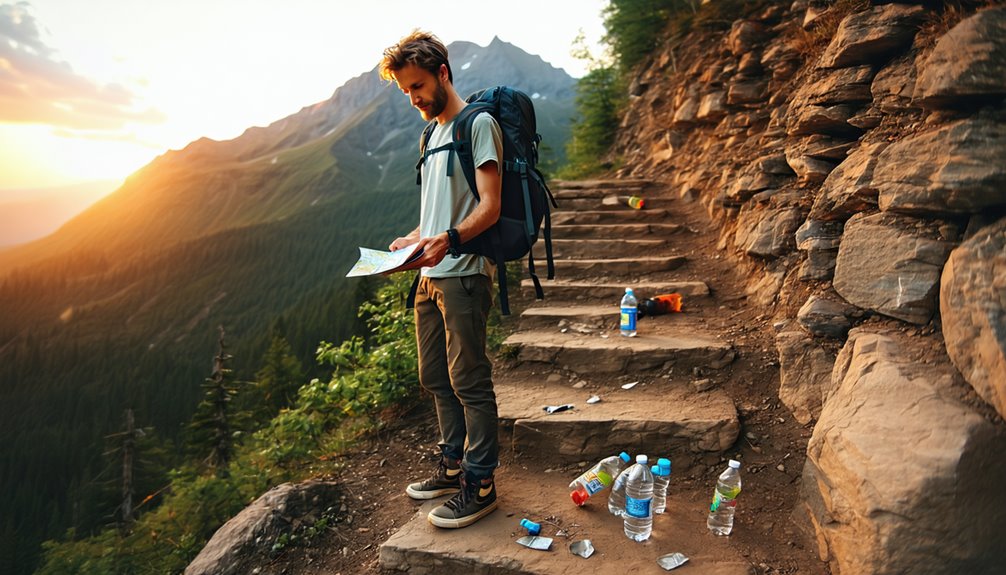
We’ve all heard it: roughly 3 million people attempt hiking annually, yet many don’t finish their first trail. We’ve been there—exhausted, blistered, parched—wondering what went wrong. The truth? Most beginner mistakes aren’t dramatic; they’re just preventable oversights. We’re going to walk you through the nine most common pitfalls we’ve encountered and conquered, starting with the one that’ll drain your energy fastest.
Key Takeaways
- Overpacking beyond 20-25% of body weight causes fatigue; prioritize lightweight, calorie-dense items instead.
- Wearing improperly broken-in or unsuitable footwear leads to blisters and foot pain on trails.
- Carrying insufficient water (less than one liter per ten miles) risks dehydration and exhaustion.
- Skipping trail research and the 10 essentials leaves you unprepared for emergencies or getting lost.
- Failing to inform others of your hiking plans prevents timely rescue if something goes wrong.
Overpacking and Carrying Unnecessary Weight
When we first started hiking, we’d stuff our packs like we were moving to the mountains permanently—and let me tell you, it nearly ruined the whole experience.
We learned the hard way that overpacking kills your day hike before it even starts. Your pack shouldn’t exceed 20-25% of your body weight; each extra pound burns 2% more energy. That’s brutal math.
Here’s what changed everything: we ditched unnecessary weight ruthlessly. Calorie-dense food—about 2 pounds daily—replaced bulky snacks.
We swapped camp chairs and oversized cooking sets for a lightweight 3-layer clothing system. Base layer, insulation, waterproof shell. Done.
Consider upgrading to ultralight titanium cookware that weighs under a pound, freeing up precious pack space while still allowing you to prepare hot meals on the trail.
Packing enough matters, but not like we once thought. Strip your hiking gear down to essentials.
Your comfort and performance depend on it. Freedom on the trail? That’s light shoulders.
Wearing the Wrong Footwear
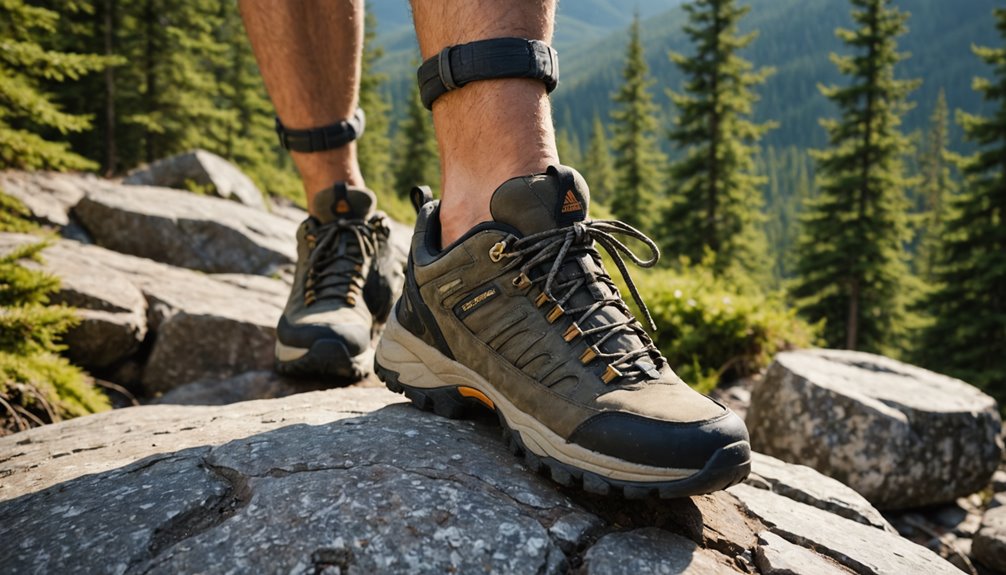
Because your feet are your foundation on the trail, they deserve better than whatever shoes you grabbed from your closet.
We’ve all made this mistake—wearing regular running shoes on uneven terrain and discovering, mid-hike, that we’re slipping everywhere. That’s when we learned: proper footwear matters enormously.
Hiking boots provide ankle support and stability on rocky ground, while trail runners offer lightweight alternatives for moderate distances.
We recommend breaking in new footwear beforehand to prevent blisters that’ll derail your adventure. Match your shoes to conditions—waterproof boots for wet trails, breathable options for heat.
Don’t overlook socks either.
Cotton retains moisture and causes blisters; synthetic or wool socks reduce friction dramatically. Just as moisture-wicking fabrics enhance comfort in hiking shirts by pulling sweat away from skin, quality socks work similarly to keep your feet dry and blister-free.
We’ve discovered that this single swap transforms your entire experience, freeing you to actually enjoy the trail instead of limping through it.
Not Bringing Enough Water
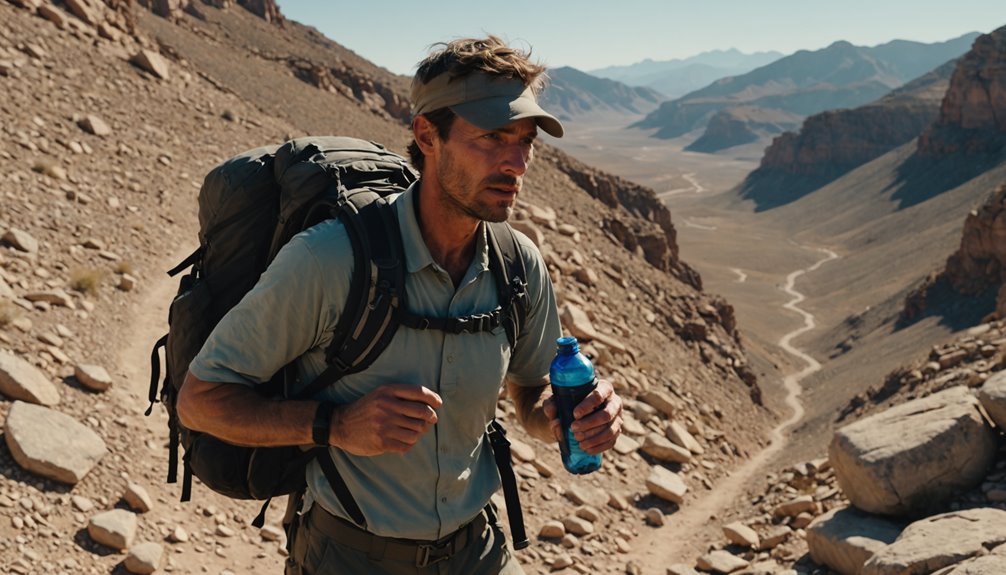
Dehydration sneaks up on you—one minute you’re feeling fine, the next you’re battling a pounding headache and wondering why your legs feel like concrete. We’ve all made this mistake.
Here’s the truth: you need at least one liter per ten miles of hiking, though we recommend 1.5 liters when you’re uncertain. That’s non-negotiable.
Before hitting the trail, know your water sources. Carry a lightweight filtration system—it’s liberation from anxiety about refilling. A hydration system, like a reservoir, beats fumbling with bottles and keeps you drinking regularly throughout your adventure. Studies show that hands-free hydration leads to nearly 30% more consistent water intake compared to traditional bottles.
Remember this rule: turn back when you’ve consumed half your water supply. No exceptions.
Adequate hydration prevents serious health issues, boosts performance, and transforms your hike from miserable to magnificent. Don’t learn this lesson the hard way.
Neglecting Weather Preparation
You’ve got your water sorted, your pack’s balanced, and you’re ready to roll—but here’s where most beginners stumble next: they ignore what the sky’s about to throw at them. Neglecting weather preparation is a common beginner backpacking mistake that’ll humble you fast.
Here’s what we should all do:
- Check the weather forecast at least a week out, then reassess the day before
- Pack appropriate layers—waterproof jackets, insulated base layers—because afternoon thunderstorms won’t wait
- Understand local climate patterns specific to your region
- Carry a real-time updates device like the Garmin inReach for mountain hikes
We’ve learned this the hard way. Unexpected temperature drops hit different when you’re unprepared. A GPS watch with topo maps can also help you make informed decisions about terrain and elevation changes that affect weather conditions on the trail.
Packing smart layers isn’t optional—it’s your safety and enjoyment non-negotiable. Don’t let weather catch you defenseless.
Skipping Trail Research and Planning
Most hikers learn this lesson the hard way—and we’re no exception. Skipping trail research before heading out? That’s a recipe for disaster.
We’ve gotten turned around on poorly marked paths and discovered closures mid-hike because we didn’t check current trail conditions using AllTrails or Peakbagger. Planning a hike without understanding its length and difficulty rating nearly left us exhausted miles from the trailhead.
Don’t repeat our mistakes. Research permit requirements and parking regulations beforehand—fines aren’t fun.
Check wildlife advisories for bear activity or poisonous plants in your area. Consider carrying a water-resistant backpack with hidden pockets to safely store your permits, maps, and emergency supplies during your hike. Download a reliable hiking app for offline access. Knowing trail specifics—elevation gain, water sources, terrain type—takes maybe thirty minutes but prevents genuine danger.
We’re talking freedom here: the confidence that comes from showing up prepared, knowing exactly what you’re facing. That’s hiking done right.
Ever wondered why your phone’s GPS works great in the city but becomes utterly useless the moment you venture into the backcountry?
We’ve all been there—panicking when signal dies.
Here’s the truth: relying solely on instinct when navigation tools fail us is how we end up miles off course.
Let’s break down what actually works:
- Bring essential navigation tools—map, compass, and a GPS device
- Download offline maps before you go; apps like onX Backcountry save lives
- Familiarize yourself with route planning ahead of time, not on the trail
- Learn to recognize trail markers and identify detours at junctions
Dedicated hiking watches outperform smartphone GPS by locking onto multiple satellite systems for steadier and more reliable location fixes in remote terrain.
Getting lost isn’t just frustrating—it’s dangerous.
We’ve learned through hard experience that ditching our phones and embracing real navigation gear transforms backcountry hiking from anxiety-inducing to genuinely liberating.
Underestimating Trail Difficulty
When we pick a trail labeled “easy” without checking the elevation gain, we’re setting ourselves up for a rude awakening—one that usually hits around mile three when our legs start screaming.
Here’s the truth: we beginner hikers chronically underestimate trail difficulty because trail ratings vary wildly by region. That “moderate” hike? It might demand serious elevation gain and challenging terrain that’ll crush our 1-2 miles-per-hour pace on flat ground.
We’ve got to stop trusting labels alone. Grab topographical maps and actual trail guides—they’ll reveal what “easy” really means regarding climbing and surface conditions.
Factor in our realistic hiking speed, plus break time. Just as campers need to understand R-value ratings to choose appropriate gear for different conditions, hikers must understand terrain metrics to gauge whether a trail matches their fitness level.
Elevation gain destroys us faster than distance ever could. Know the numbers before we commit. That’s how we stay safe and actually enjoy the freedom hiking promises.
Forgetting the 10 Essentials
Ten items stand between us and serious trouble on the trail—and we beginners skip them constantly, convinced we’ll be back before anything goes wrong.
We’re wrong. Forgetting the 10 essentials transforms a minor mishap into a genuine emergency. I’ve learned this the hard way. Here’s what we can’t afford to leave behind:
- Navigation tools (map, compass, GPS)
- Sun protection (sunscreen, sunglasses)
- First aid kit (band-aids, antiseptic wipes, pain relievers)
- Emergency shelter (bivy sack, emergency blanket)
Add extra food, extra water, insulation layers, a headlamp, fire starters, and repair tools.
Yeah, it’s bulky. But carrying these items isn’t about being paranoid—it’s about reclaiming our freedom to hike confidently, knowing we’re genuinely prepared for whatever the trail throws at us. Studies show that organized first aid kits reduce panic during emergencies and increase confidence in treating injuries on the trail, making a well-stocked kit an essential component of your hiking safety strategy.
Ignoring Leave No Trace Principles
Once we’ve packed our 10 essentials and hit the trail, we face a harder question: what do we leave behind?
We often ignore Leave No Trace principles—and honestly, it’s easier to trash our favorite spots than we’d like to admit. Packing out trash, digging catholes 200 feet from water, and using existing campsites aren’t just rules; they’re how we protect the places we love from human impact. Additionally, avoiding insect repellents with certain active ingredients on vegetation helps prevent contamination of water sources and protects aquatic ecosystems.
| Practice | Why It Matters | Your Action |
|---|---|---|
| Pack out trash | Prevents wildlife harm | Carry everything out |
| Proper human waste disposal | Protects aquatic life | Dig catholes away from water |
| Use existing campsites | Reduces vegetation damage | Camp responsibly |
We’re not just hikers—we’re environmental stewards. When we practice Leave No Trace, we foster responsibility in others and preserve these wild spaces for generations.
Not Informing Others of Your Plans
How many of us have slipped out the door without telling a soul where we’re headed?
We’ve all done it—and it’s risky. Informing others of your hiking plans isn’t about losing freedom; it’s about protecting it. When we skip this step, we’re gambling with our safety and worrying loved ones unnecessarily.
Here’s what your communication strategy should include:
- Share your specific trail name and expected return time with a designated contact person.
- Provide your itinerary—where you’re starting, which routes you’re taking, estimated stops.
- Establish a check-in system so they know you’ve returned safely.
- Choose someone reliable who’ll alert authorities if you don’t show up on schedule.
Many search and rescue operations start because hikers failed this basic step. Pairing this communication strategy with emergency preparedness tools like emergency whistles ensures rescuers can locate you if something goes wrong. We’re not being overprotective—we’re being smart. Your freedom matters more when someone knows where to find you.
Frequently Asked Questions
What Is the 20% Rule for Backpacking?
We’ve got to keep our backpacks at 20% of our body weight—that’s the golden rule for trail safety and freedom. Smart gear selection and efficient packing techniques liberate us from unnecessary burden, letting us move freely while protecting our bodies on every adventure.
What Is the #1 Etiquette Rule While Hiking?
We’ve got to yield to uphill hikers—that’s our #1 rule. It’s about trail sharing and hiker courtesy. We respect their momentum, maintain path right of way, and keep our noise levels down. Real group dynamics mean we’re all liberating ourselves through mindful wilderness respect.
Why Do Hikers Eat Gummy Bears?
We eat gummy bears because they’re our fuel—like tiny energy warriors conquering the trail. We’ve found these portable treats deliver quick carbohydrates and sugar rushes that don’t weigh us down. Their gummy bear benefits make ’em the ultimate hiking snacks for liberation-minded adventurers seeking freedom on every trek.
What Is Not Recommended for Hiking?
We don’t recommend hiking alone without a map, wearing inappropriate footwear, overpacking gear, ignoring weather forecasts, carrying insufficient hydration, or skipping warm-ups. These mistakes trap you in discomfort and danger. We’d encourage you to prepare freely and hike responsibly.
Conclusion
We’ve all been there—hiking Everest in our minds while our knees screamed otherwise. The good news? We learn. By ditching the extra gear, lacing up proper boots, and actually consulting a map, we’re not just avoiding blisters and getting lost—we’re respecting the trail and ourselves. Start small, stay informed, and tell someone where you’re headed. That’s it. You’ve got this.