You’re probably wondering if you can master surfing in a weekend or if it’ll take years. The truth? It’s somewhere in between, and it depends on several factors you can actually control. Your fitness level, the waves you’re practicing in, and how often you’re out on the board all play vital roles. But here’s what might surprise you about the real timeline.
Key Takeaways
- Baseline competency in surfing typically requires 1-2 lessons to master foundational skills like paddling and pop-ups.
- One week of consistent, structured surf lessons with multiple sessions weekly accelerates skill progression significantly faster.
- Fitness level, prior board sports experience, and wave access directly influence how quickly you progress as a surfer.
- Regular 2-hour sessions with experienced instructors in small groups provide personalized feedback that compresses learning timelines substantially.
- Consistent practice frequency and proper equipment selection build muscle memory and ocean confidence essential for authentic progression.
Our Definition of Learning to Surf
Success in surfing doesn’t happen overnight, but you’ll know when you’ve achieved it: you’re standing on your board, riding across a green wave with control.
Learning to surf means mastering this fundamental milestone—standing upright and maintaining a straight line through the wave’s face.
We’ve categorized skill progression into three distinct levels: Never Surfed Before, Beginner Surfer, and Advanced Beginner. Each represents your advancement from complete novice to developing competence.
Your first wave represents the breakthrough moment; it’s where foundational skills converge into actionable performance.
You’ll focus initially on paddling mechanics, the pop-up technique, and balance maintenance. These core competencies create your foundation.
Most people who’ve never surfed can achieve this baseline competency within one to two lessons, depending on your fitness level, prior athletic experience, and wave conditions.
Your commitment determines your trajectory.
Six Factors That Influence Your Learning Timeline

While your dedication matters, six concrete factors will shape how quickly you progress from paddling out to riding waves with control.
Your fitness level directly impacts your learning curve—stronger upper body strength and endurance accelerate skill acquisition at the beginner level.
Prior experience in skateboarding, snowboarding, or wakeboarding gives you a significant advantage through established balance awareness.
Consistent wave access matters tremendously; regular conditions beat sporadic opportunities every time.
Proper equipment sizing guarantees you’re not fighting your board instead of mastering it.
Session frequency determines progression speed—multiple weekly sessions outpace weekend-only practice substantially.
Finally, quality surf lessons from experienced instructors compress your learning timeline considerably.
Understanding these factors empowers you to optimize each session, transforming your beginner level experience into measurable advancement toward genuine surfing competency.
How Many Surf Lessons Do You Actually Need?
One question beginners consistently ask is whether they need to invest in multiple lessons or if a handful will suffice.
You’ll master foundational skills—paddling and popping up—in just 1-2 lessons. However, progressing to Advanced Beginner status demands commitment:
- Attend one week of structured surf lessons minimum
- Commit to 2-hour sessions allowing adequate practice time
- Schedule multiple lessons weekly rather than sporadic weekend sessions
- Join small groups (3-5 people) for personalized feedback
Consistent training accelerates your progress considerably. When you learn to surf with frequent lessons, you internalize techniques faster than infrequent sessions allow.
To improve your surfing considerably, regular practice with qualified instructors matters more than occasional heroic efforts. Your beginner surf lessons compound their effectiveness through repetition and immediate correction, freeing you from plateaus that plague self-taught surfers.
The Realistic Timeframe for Catching Your First Wave
After just a few hours of practice, you’ll likely catch your first wave. Learning how to surf demands roughly 5 to 20 hours of dedicated training before you successfully ride a wave, though your exact timeline depends on fitness level and prior athletic experience.
Your first time on a board matters less than your commitment to consistent practice. Multiple weekly sessions greatly accelerate progress compared to sporadic weekend attempts.
During your initial lessons, instructors teach paddling and popping up—foundational techniques that enable wave-catching ability. How long it takes to progress beyond this milestone hinges on environmental conditions and training frequency.
Favorable wave quality and regular practice compress your learning curve considerably, propelling you toward competency faster than inconsistent effort ever could.
Breaking Down the Surfing Learning Curve
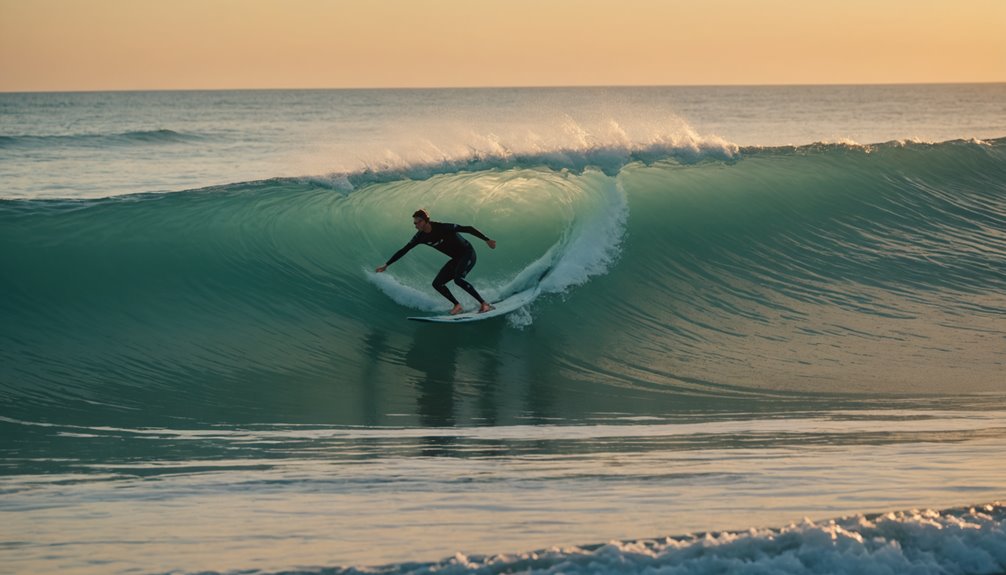
The surfing learning curve doesn’t progress linearly—you’ll experience distinct phases, each building on foundational skills you’ve mastered. Understanding this progression empowers you to set realistic expectations and track genuine advancement.
- Ocean comfort (2-4 weeks): You’ll develop water confidence and basic swimming proficiency before attempting waves.
- Whitewash mastery (2-6 weeks): You’ll catch and ride broken waves, establishing foundational pop-up mechanics.
- Green wave progression (6 weeks-5 months): You’ll graduate to unbroken waves, refining timing and takeoff precision to catch more waves consistently.
- Style refinement (6 months-2 years): You’ll develop personal technique, influenced by practice frequency, fitness, and instruction quality.
The time it takes depends on your commitment level and environmental conditions. This structured breakdown clarifies your learning path forward.
Physical Fitness and Prior Experience Matter
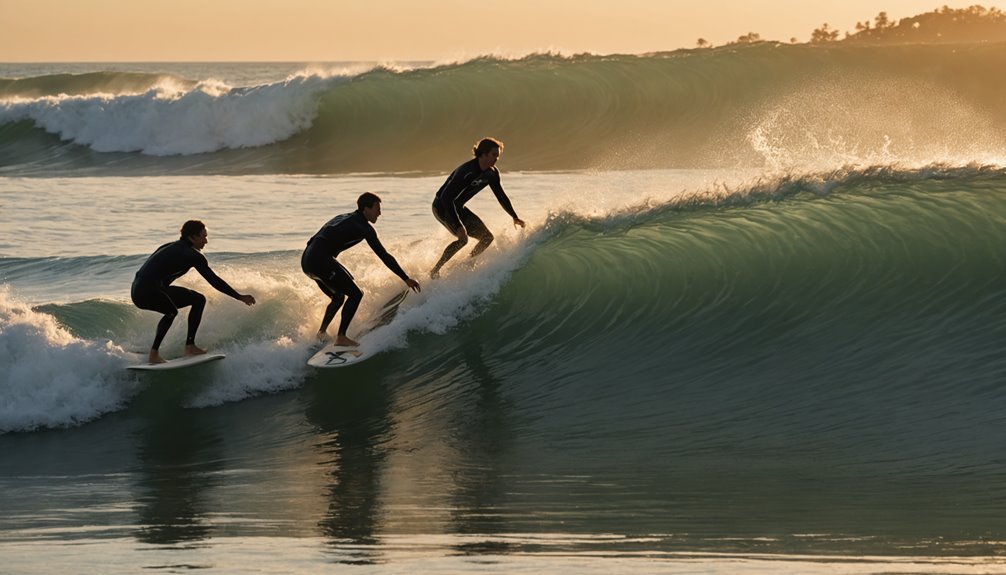
Your physical conditioning and athletic background won’t just give you a head start—they’ll fundamentally reshape your surfing trajectory. Higher fitness levels accelerate your learning curve considerably because upper body strength and endurance directly enable efficient paddling and sustained balance.
If you’ve wakeboarded, skateboarded, or snowboarded, you’ll progress faster since these sports transfer weight transfer and balance mechanics to surfing.
Research shows beginners need 5 to 20 hours to ride waves successfully, but this timeline compresses considerably with proper fitness and prior experience. Your consistency matters equally—surfers who practice multiple times weekly progress substantially faster than weekend-only athletes.
Don’t underestimate preparation. Tailored training maximizes your potential and accelerates skill acquisition.
Wave Quality and Equipment Selection
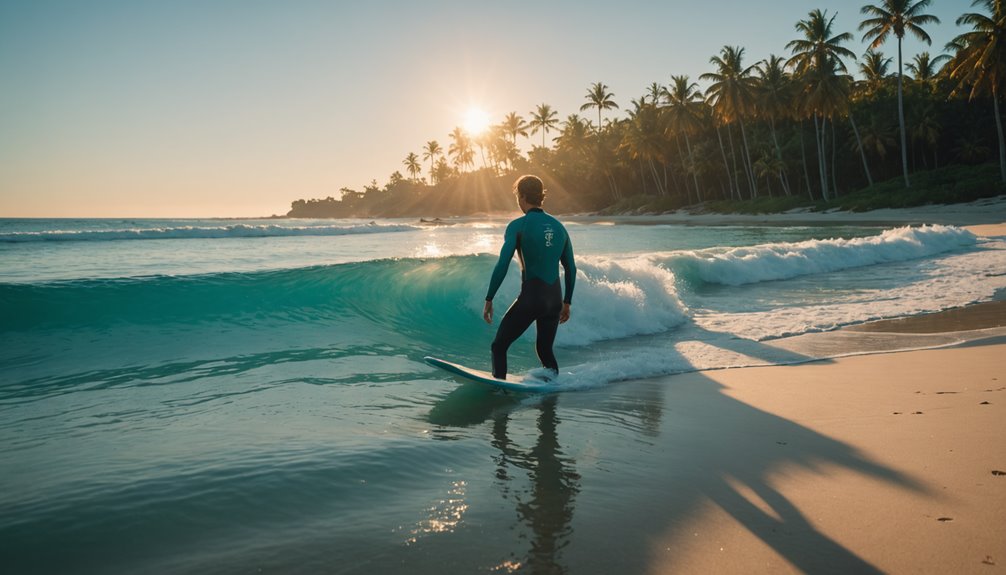
While your physical conditioning and training regimen establish the foundation for surfing success, what you’ll ride on—and where you’ll ride it—determines how quickly you’ll progress.
Strategic selection of your beginner surf environment and equipment directly accelerates skill acquisition.
- Access consistent, high-quality wave conditions that allow frequent practice in ideal settings
- Choose a surfboard for the first time that matches your height and weight for maximum balance and stability
- Invest in properly fitted wetsuits that enhance movement and thermal comfort during sessions
- Consider advanced equipment like performance fins to improve wave-catching ability and extend your practice time
Quality gear isn’t luxury—it’s infrastructure for liberation.
Your equipment investment directly impacts progression speed and session enjoyment.
Prioritize accessing reliable types of waves and properly sized boards to facilitate accelerated learning and genuine surfing freedom.
Consistency: Why Practice Frequency Determines Progress
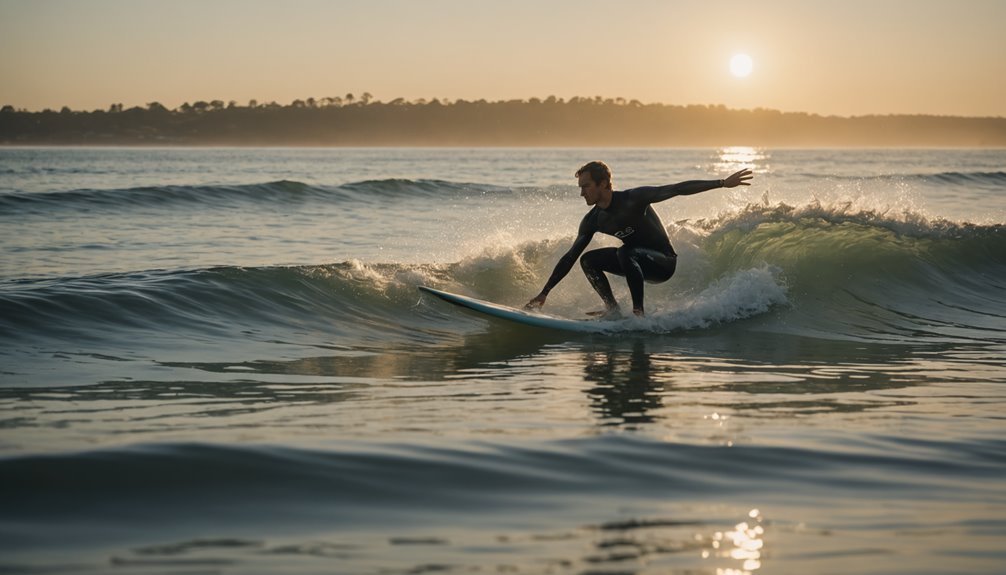
Because muscle memory solidifies through repetition, you’ll progress markedly faster when you’re surfing multiple times weekly rather than sporadically. Consistent practice accelerates your learning curve considerably, allowing you to retain techniques and build genuine competence rather than forgetting skills between sessions.
| Practice Frequency | Hours to Wave Mastery | Progress Timeline |
|---|---|---|
| Once monthly | 20+ hours | Slow, frustrating |
| Twice monthly | 15-18 hours | Moderate plateau |
| Weekly | 10-15 hours | Steady advancement |
| 3x weekly | 5-10 hours | Rapid mastery |
| Daily | 5-7 hours | Accelerated breakthrough |
Your initial 2-4 week learning stage demands relentless commitment. Each 2-hour lesson compounds your progress, but only if you maintain consistent momentum. You’ll develop genuine ocean confidence and swimming proficiency through regular engagement, freeing yourself from fear and releasing authentic surfing ability.
Accelerating Your Skills With the Right Support

Consistency alone won’t reveal your full potential—you’ll need strategic support to convert regular practice into measurable advancement. The right framework accelerates your progression dramatically:
- Structured surf lessons in dedicated locations compress your learning curve, moving you from beginner to advanced beginner in one focused week.
- Personalized feedback through small group instruction (3-5 surfers) targets your specific weaknesses, eliminating guesswork.
- Consistent practice paired with professional guidance multiplies your skill retention rate exponentially.
- Advanced equipment like the Boost Fin maximizes your water time by improving wave-catching ability.
You’ll liberate yourself from the frustration of plateauing when you combine regular sessions with expert instruction.
This synergy transforms your commitment into tangible results, ensuring every hour invested compounds your proficiency rather than repeating ineffective patterns.
Frequently Asked Questions
Is Surfing Difficult for Beginners?
Yes, surfing’s genuinely difficult initially. You’ll face beginner challenges mastering the pop-up change, steering the learning curve, and building physical fitness plus mental focus. However, you’re capable of breaking through these barriers within weeks through consistent, liberated practice in the ocean.
Why Do Surfers Look so Healthy?
You’ll transform into a bronzed specimen through surfing benefits: intense physical fitness demands engage every muscle, while mental health flourishes via ocean communion. You’re freed by community connection, cardiovascular gains, and vitamin D absorption—you’ll practically glow with energy.
Is 25 Too Old to Start Surfing?
You’re not too old at 25—you’re entering prime learning years. Age considerations shouldn’t limit you; you’ll harness surfing benefits quickly with commitment. Starting late’s a myth; you’re embracing lifelong learning that’ll liberate your body and spirit through consistent practice.
Can I Learn Surfing in a Week?
Yes, you’ll master surfing in a week—even with a rotary phone! Your week-long commitment succeeds through quality beginner lessons, ideal surfboard choices, consistent practice at local surf spots, and unwavering dedication to liberation from landlocked limitations.
Conclusion
You’ll master surfing’s fundamentals within 1-2 lessons, but reaching consistent proficiency requires weeks of dedicated practice. Your progress hinges on fitness, wave access, and instructor quality. Don’t put all your eggs in one basket—combine regular lessons with frequent independent sessions. You’re building muscle memory and wave reading skills simultaneously. Stay committed to structured training, maintain proper equipment, and you’ll accelerate your development markedly.