You’ve probably noticed how water seems to make movement easier—that’s not just a feeling. When you’re submerged, buoyancy reduces up to 90% of your body weight’s stress on your joints, creating an environment where you can strengthen without pain. But which aquatic exercises actually work best for your knees? The answer depends on understanding how water-based rehabilitation differs from traditional therapy.
Key Takeaways
- Water walking strengthens knee muscles and enhances circulation without joint compression or impact stress.
- Aqua therapy reduces joint load by 90% through buoyancy while building muscle strength safely.
- Warm water (83-88°F) decreases inflammation, enhances circulation, and relaxes muscles for optimal rehabilitation.
- Low-impact water exercises like leg lifts and aqua squats improve stability without damaging joints.
- Consistent water-based workouts restore mobility and independence while protecting joints from further damage.
Understanding Knee Pain and Its Impact on Daily Life
Because knee pain affects approximately 18 million Americans annually, you’re likely familiar with how markedly it can disrupt your mobility and quality of life.
Arthritis, injuries, and tendinitis commonly trigger chronic knee pain that compromises your ability to perform daily activities—from walking and climbing stairs to participating in sports and exercise.
Understanding your pain’s root cause is essential for effective management.
You’ll need to strengthen the muscles around your knee joint through targeted interventions.
Water-based exercises offer a proven solution, providing buoyancy that reduces joint stress while allowing you to build strength and flexibility simultaneously.
Why Water Exercise Is Ideal for Joint Health
When you’re managing knee pain, water-based exercise stands out as a scientifically-supported intervention that addresses the core challenge: reducing joint stress while building strength.
Water exercises leverage buoyancy to minimize gravitational load on your joints, creating an environment where you can strengthen muscles without triggering pain. Here’s why this matters for your knee health:
- Buoyancy reduces joint compression by up to 50%, enabling pain-free movement
- Water’s resistance builds muscle strength around the knee by up to 30%
- Warm water (83-88°F) decreases inflammation and enhances blood circulation
- Low-impact workouts improve flexibility and strength simultaneously
- You strengthen supporting muscles without aggravating existing joint pain
This evidence-based approach gives you genuine freedom—you can engage in effective exercise while protecting your joints from further damage.
Water-based workouts reclaim your mobility and independence.
The Science Behind Aqua Therapy and Buoyancy
As you move through water, you’re experiencing one of nature’s most effective therapeutic tools: buoyancy. When you’re submerged, water supports approximately 90% of your body weight, dramatically reducing stress on your joints and enabling pain-free movement during recovery from joint replacement or injury.
Aqua therapy harnesses water resistance to strengthen muscles without excessive strain. This natural resistance allows you to perform exercises that would be too demanding on land, protecting your overall joint health while building functional strength.
Warm water enhances circulation and relaxes muscles, further alleviating stiffness. Additionally, water pressure reduces swelling and pain, creating an ideal environment for rehabilitation.
Water Walking for Improved Circulation and Strength
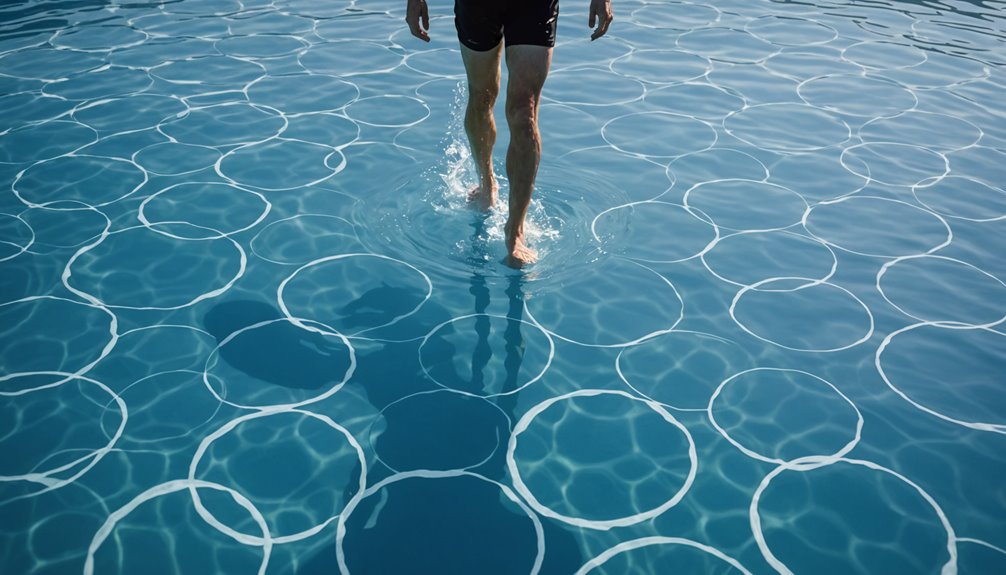
Water walking stands out as one of the most practical applications of aqua therapy’s therapeutic principles. You’ll engage in this low-impact activity while gaining remarkable results for knee pain management and muscular development.
When you walk in waist-deep water, you’re simultaneously:
- Enhancing circulation throughout your lower body
- Strengthening muscles around the knee without joint stress
- Building overall strength through forward and backward movements
- Reducing the impact on vulnerable joints through buoyancy
- Activating diverse muscle groups for extensive conditioning
You can achieve up to 30% increase in knee joint strength through consistent 10-15 minute daily sessions.
The water’s therapeutic properties work to reduce pain while supporting rehabilitation. By harnessing buoyancy, you reclaim your mobility without compromising safety—a genuine pathway to functional independence and pain-free movement.
Leg Lifts and Targeted Muscle Strengthening
By isolating and strengthening the muscles surrounding your knee, leg lifts provide a direct pathway to enhanced joint stability and reduced pain.
When you perform leg lifts at the pool’s edge, you’re engaging your hip and thigh muscles through 10-15 repetitions per leg while maintaining stability. This low-impact water aerobics exercise utilizes aquatic resistance to build muscle strength without straining your joints.
The water’s buoyancy allows you to work against resistance safely, protecting your knees while effectively targeting supporting musculature. Regular practice strengthens the stabilizer muscles that directly alleviate knee pain and improve mobility.
Aqua Squats for Low-Impact Joint Protection
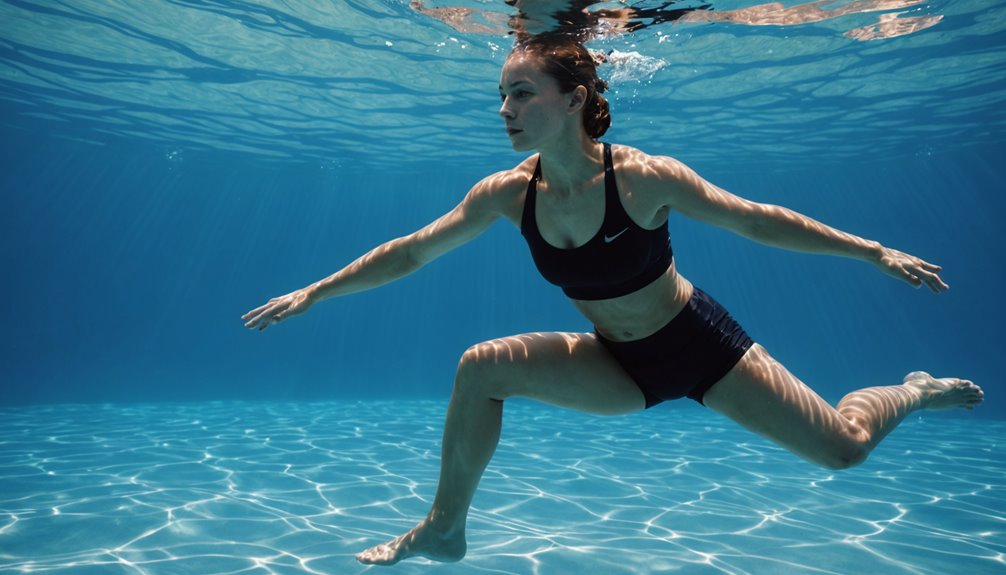
Aqua squats represent one of the most effective lower-body strengthening exercises for individuals managing knee pain, as they reduce joint impact by nearly 50% compared to traditional squats performed on solid ground.
You’ll perform these movements in shoulder-deep water, where buoyancy supports your body and enables greater range of motion without compromising form.
Key benefits you’ll experience:
- Decreased impact on your knees through water’s supportive properties
- Strengthened muscles that support knee stability
- Enhanced lower body strength through controlled resistance
- Improved joint stability with consistent practice
- Reduced knee pain through progressive conditioning
You’ll execute aqua squats by positioning your feet shoulder-width apart, then lowering your body with proper form.
Aim for 10-12 repetitions to effectively strengthen surrounding muscles while minimizing strain, reclaiming your mobility and independence.
Flutter Kicks and Core Stability in the Pool
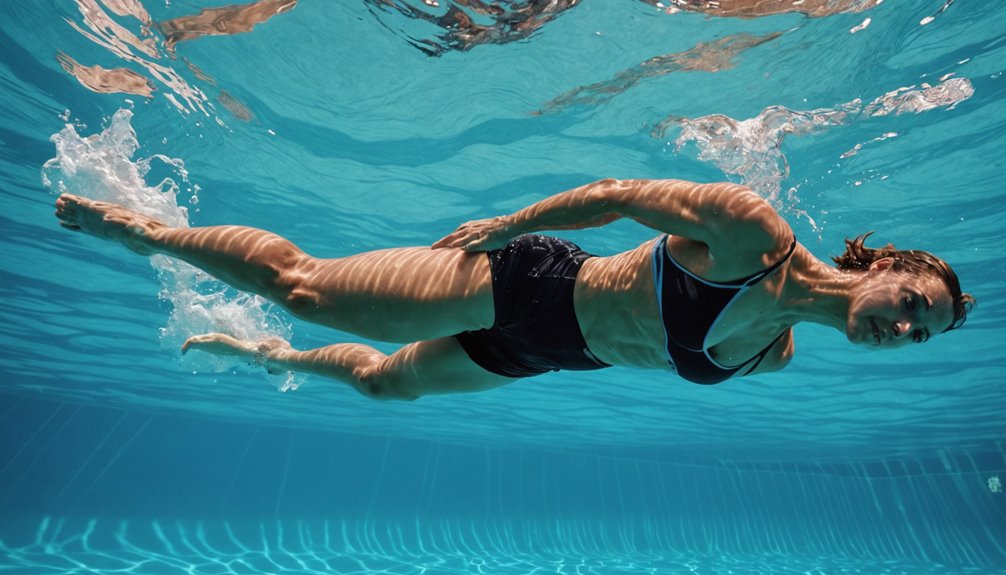
Three key advantages make flutter kicks an important pool exercise for managing knee problems: they strengthen your legs and core without impact stress, they’re simple to perform, and they’ll build the stability your knees need to function properly.
You’ll perform flutter kicks by alternating leg movements while floating or holding the pool edge, engaging your core through aquatic therapy’s buoyancy. Execute this low-impact exercise for 30 seconds to one minute, progressively building muscle strength and endurance.
Core stability during flutter kicks directly supports knee health by enhancing stabilizer muscles vital for pain prevention.
Using a kickboard provides additional support, allowing you controlled movement while reducing joint injury risk. Regular practice develops the muscular foundation your knees require for best mobility and function.
Seated Leg Extensions for Quadriceps Development
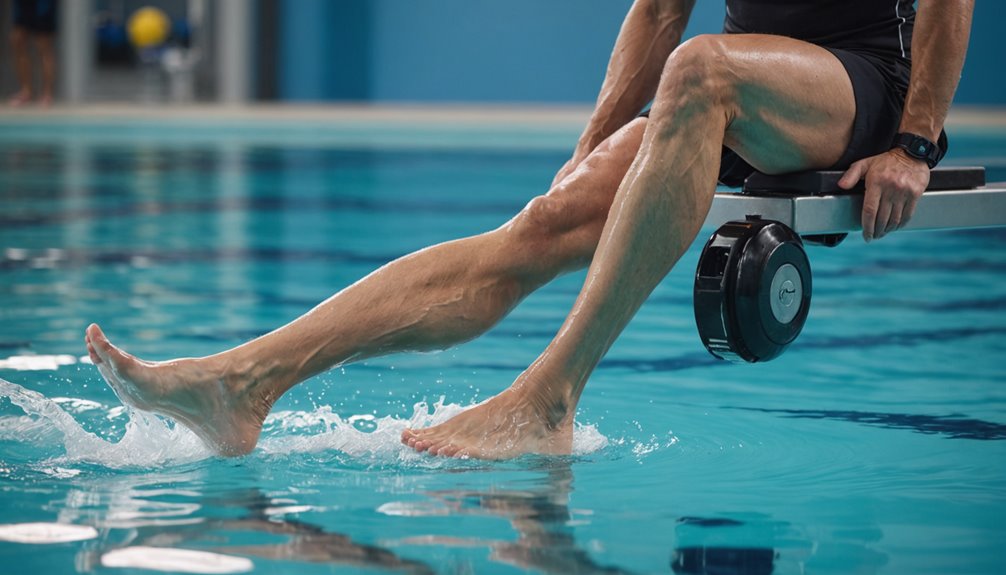
Strengthening your quadriceps through seated leg extensions delivers targeted muscle development while protecting your knee joints from harmful impact stress.
This low-impact water workout empowers you to reclaim knee function without compromise.
How to maximize your seated leg extensions:
- Sit on a pool noodle or deep bench in water
- Extend one leg until parallel to the pool bottom
- Hold each position for three counts
- Complete 10-15 repetitions per leg
- Progress gradually based on your tolerance
Seated leg extensions build critical muscle strength around your knee, directly reducing knee pain and enhancing stability.
The water’s buoyancy eliminates ground-reaction forces, allowing you to strengthen without aggravating existing conditions.
Consistent practice integrates this exercise into your regular water workout routine, promoting better mobility and restoring your capacity for daily activities.
You’re not just exercising—you’re reclaiming independence.
Setting Up a Home Water Exercise Program
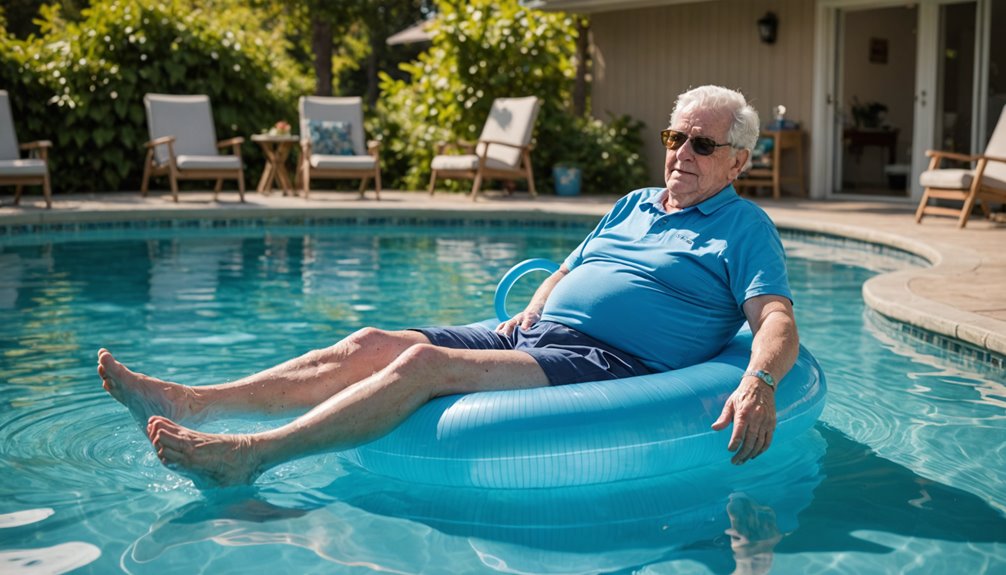
Building on the targeted strengthening you’ve developed through seated leg extensions, you can amplify your results by establishing a dedicated home water exercise program.
A Master Spas swim spa enables year-round training with adjustable water temperature and continuous currents.
Start with 10-15 minutes daily of gentle activities, gradually intensifying as your capacity improves.
Maintain water temperature between 92-98 degrees Fahrenheit to enhance circulation and muscle relaxation while reducing knee pain.
Incorporate aqua squats and leg raises to strengthen stabilizing muscles around your knees.
Water’s buoyancy minimizes joint stress while you stay active and build functional muscle strength.
Hydrotherapy jets provide additional muscle relief, complementing your exercise routine.
This systematic approach empowers you to reclaim mobility and independence without compromising joint integrity.
Getting Started With Your Aquatic Rehabilitation Journey
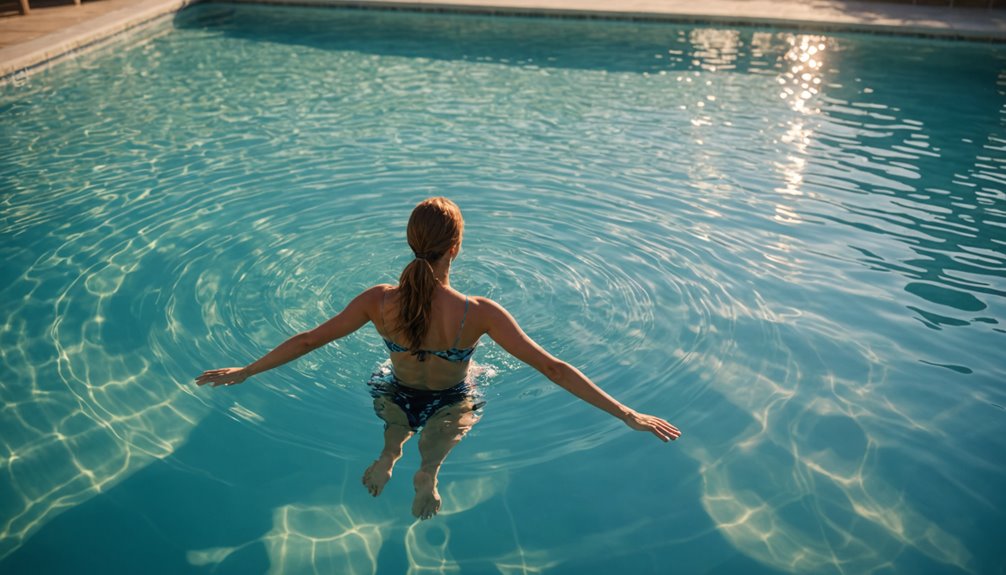
Before you immerse yourself in your aquatic rehabilitation program, you’ll want to select a warm water environment—ideally between 83 to 88 degrees Fahrenheit—to optimize muscle relaxation and joint mobility.
This therapeutic warmth prepares your overall body for targeted movement.
Consult your physical therapist before starting to guarantee safety and program efficacy, particularly if you have chronic knee pain or pre-existing conditions.
Your foundation includes:
- Water walking for 10-15 minutes daily to strengthen supporting muscles
- Leg lifts targeting hip and knee stability
- Aqua squats building functional strength without impact stress
- Buoyant tools like kickboards supporting seated leg extensions
- Flutter kicks engaging your core and stabilizing mechanisms
These exercises for knee pain progressively build muscle strength while minimizing joint strain, establishing sustainable progress in your rehabilitation journey.
Frequently Asked Questions
What Is the Best Water Exercise for Bad Knees?
You’ll find aqua squats deliver ideal results for bad knees—they’re your best water aerobics benefits choice. You’re reducing impact by 50% while you’re building strength through resistance training options. You’re experiencing genuine hydrotherapy effectiveness that’ll free you from pain limitations.
What Is the Best Sport for People With Bad Knees?
You’ll find swimming delivers ideal results for bad knees. It’s your most effective joint-friendly workout, combining water aerobics benefits with aquatic therapy options. You’re empowered to reclaim fitness freedom through buoyancy-supported movements that protect your joints while achieving your fitness goals.
What Is the Best Swimming Style for Bad Knees?
You’ll want to ditch butterfly—it’s basically knee torture. Instead, you’re free to embrace backstroke benefits and freestyle technique for ideal joint support. Add water aerobics and gentle breaststroke tips for injury prevention. Swimming frequency matters; consistent, low-impact sessions strengthen your knees without chains.
What Is the #1 Mistake That Makes Bad Knees Worse?
You’re making your knee pain worse by engaging in high-impact activities that strain your joints. You’ll regain control through exercise modifications, strengthening, stretching techniques, and proper footwear—liberating yourself from unnecessary suffering and reclaiming joint stability.
Conclusion
You’ve discovered that water exercises offer a clinically proven pathway to joint rehabilitation. By consistently engaging in aquatic activities, you’re leveraging buoyancy’s therapeutic benefits while strengthening supporting musculature. Remember, “no pain, no gain” doesn’t apply here—you’re building strength without joint stress. You’ll notice improved mobility and reduced inflammation as you progress through your program. Start gradually, monitor your response, and you’ll establish sustainable exercise habits that genuinely restore function and enhance your quality of life.