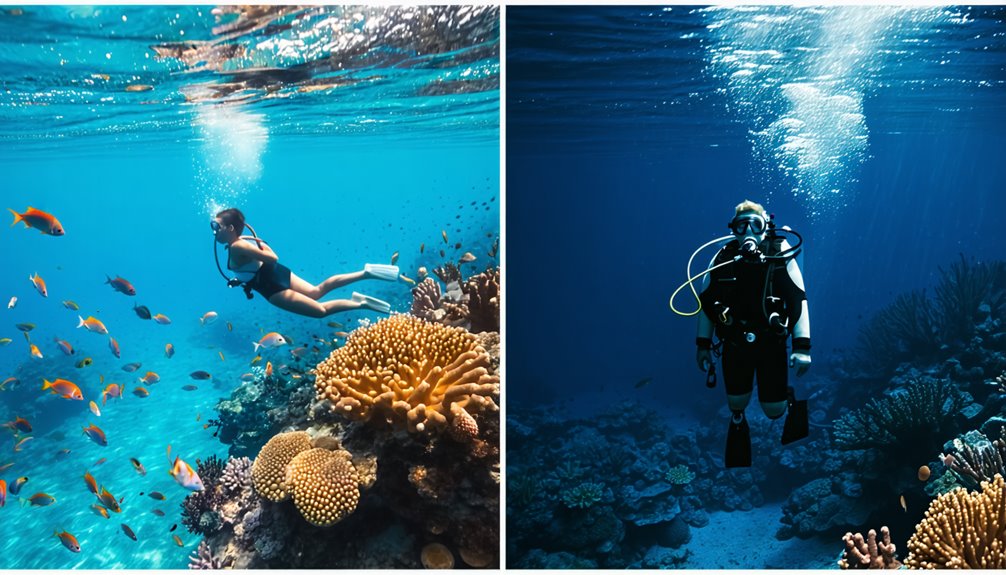
Imagine you’re standing at a tropical reef, wondering whether to simply float at the surface or descend into deeper waters. You’ll face critical decisions about training requirements, equipment costs, and safety protocols before entering the underwater environment. Each activity demands different physical capabilities and carries distinct risks. But which path truly suits your experience level and goals?
Key Takeaways
- Snorkeling requires no certification or training, making it the ideal first underwater experience for beginners.
- Snorkeling costs significantly less ($20–$60) than scuba diving ($100–$500+), reducing financial commitment for first-timers.
- Snorkeling is accessible to all ages and fitness levels, including non-swimmers with minimal physical exertion.
- Snorkeling sessions last 30–45 minutes, fitting conveniently into travel schedules without extensive time commitment.
- Start snorkeling first to build water confidence and comfort before pursuing scuba diving certification later.
Key Differences Between Snorkeling and Scuba Diving
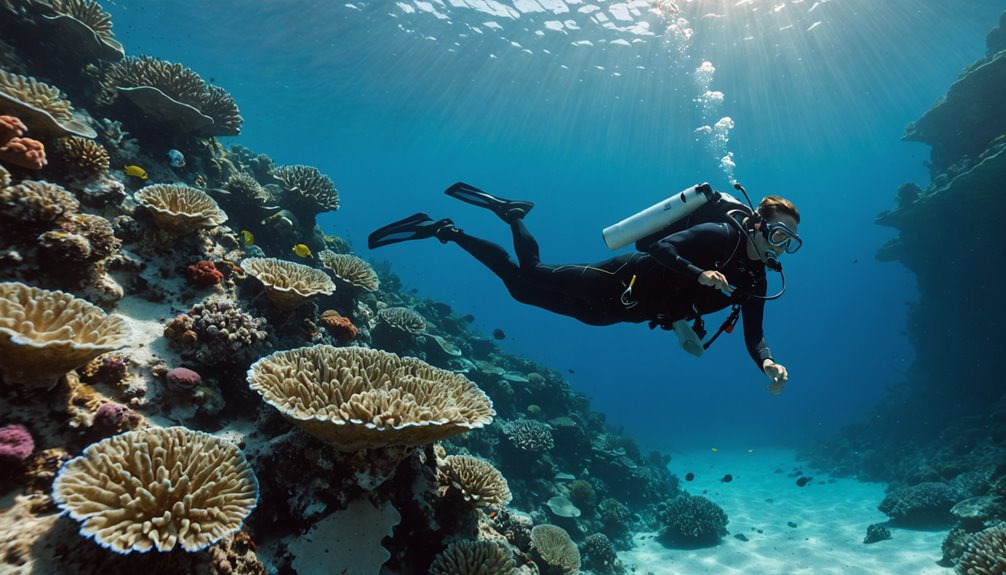
While snorkeling and scuba diving both offer underwater exploration, they’re fundamentally different activities with distinct requirements and limitations.
Snorkeling operates at shallow depths of 1-3 feet with minimal gear—just a mask, snorkel, and fins—requiring no certification for beginners.
Scuba diving descends to 12-18 meters, demanding complex equipment including tanks, regulators, and BCDs, plus formal training and certification from organizations like PADI or NAUI.
Duration differs greatly: snorkeling sessions last 30-45 minutes, while scuba dives extend longer depending on air supply.
Safety considerations matter too. Snorkeling accommodates all ages and non-swimmers, while scuba diving involves specific health restrictions.
Understanding these key differences helps you choose which underwater exploration suits your capabilities and goals.
Your liberation lies in selecting the activity matching your current experience level and physical readiness.
Physical Requirements and Skill Levels
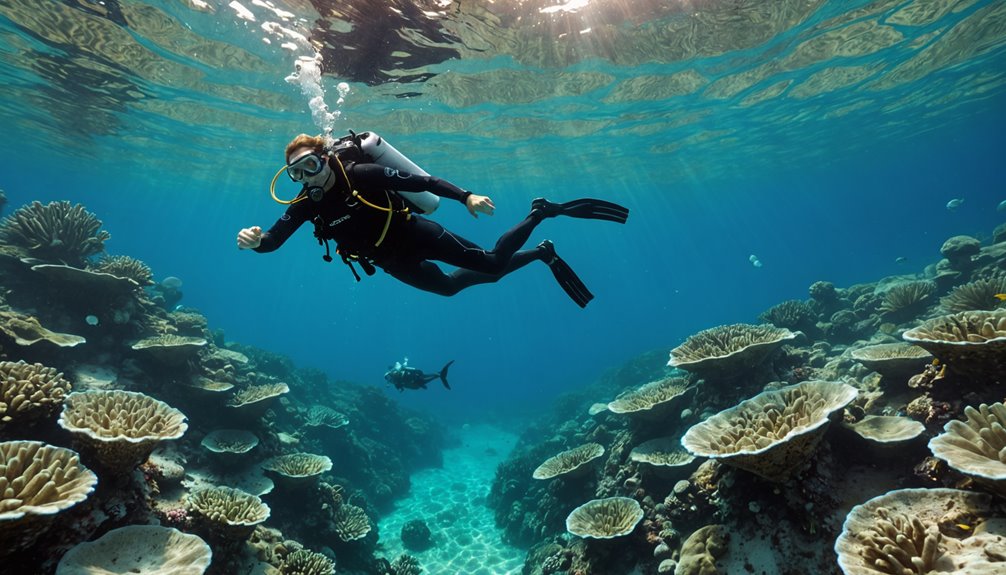
Because snorkeling demands minimal physical exertion, you’ll find it accessible regardless of your swimming ability or fitness level.
You’ll need no certification or formal training—just basic floating techniques you can master in minutes.
Scuba diving, conversely, requires genuine comfort in the water and solid basic swimming skills.
You’ll must obtain certification from organizations like PADI or NAUI before descending. This training guarantees you can safely manage specialized equipment and execute critical safety protocols.
Duration matters too.
Snorkeling sessions last 30-45 minutes, manageable for all ages.
Scuba diving excursions demand greater stamina and longer commitments.
Crucially, consider your health conditions.
Respiratory or heart issues may disqualify you from scuba diving‘s physiological demands.
Snorkeling remains viable for most people seeking accessible underwater experiences without extensive physical skill requirements or health restrictions.
Cost and Time Commitment Comparison
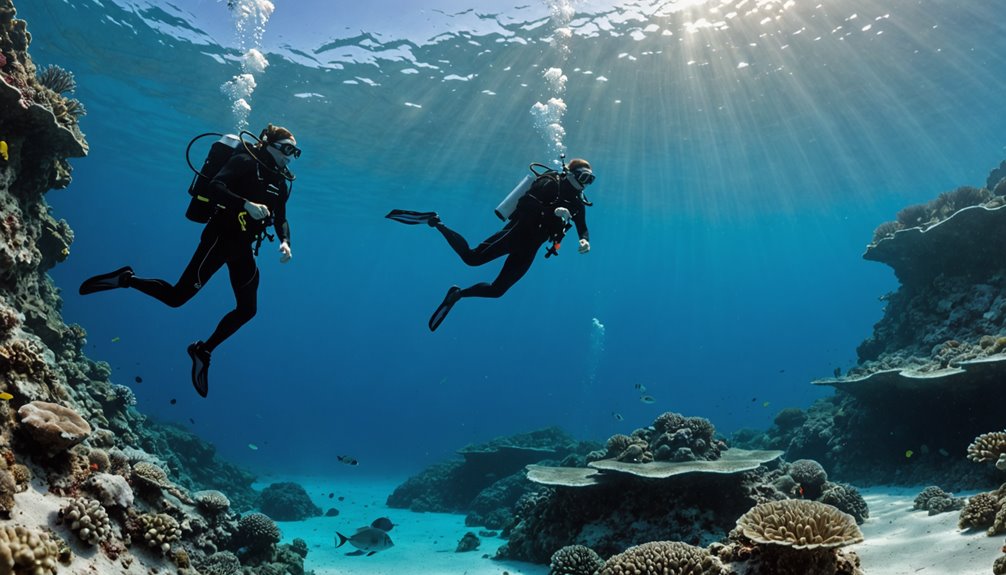
Your financial and temporal investment differs substantially between these activities.
Snorkeling costs between $20–$60 per session, making it highly affordable and accessible for budget-conscious travelers.
Scuba diving, conversely, ranges from $100–$500+, particularly for beginners requiring certification and specialized gear rental.
Time commitment reflects this disparity: snorkeling sessions last 30–45 minutes, fitting conveniently into travel schedules, while scuba dives extend beyond an hour depending on site conditions and experience level.
Snorkeling demands minimal preparation—no training required—whereas scuba diving necessitates instruction and gear familiarization before water entry.
Many boat tours include snorkeling equipment, eliminating additional expenses.
Scuba diving typically incurs extra fees for tanks and regulators.
If you prioritize financial freedom and flexibility, snorkeling offers immediate gratification without extensive commitment.
Safety Considerations for Each Activity
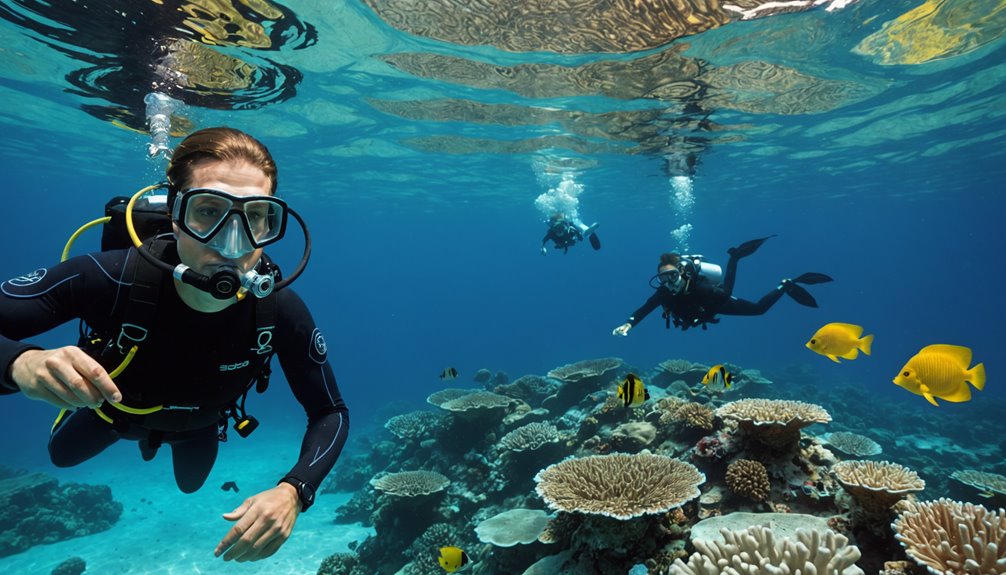
Though both activities carry inherent risks, they demand markedly different safety protocols and prerequisites. Snorkeling suits beginners—you’ll explore the underwater world with minimal training using flotation devices for security. Scuba diving requires formal training and certification from organizations like PADI or NAUI, ensuring you understand critical safety measures.
| Aspect | Snorkeling | Scuba Diving |
|---|---|---|
| Training Required | None | Formal certification mandatory |
| Health Screening | Basic | Thorough evaluation needed |
| Key Skill | Surface breathing | Pressure equalization |
| Equipment Focus | Reef-safe sunscreen | Air supply management |
| Physical Demands | Low | High |
Before pursuing either activity, evaluate your health conditions. Scuba diving demands rigorous buoyancy control device proficiency and air supply monitoring, presenting substantial risks for those with heart or lung issues. Snorkeling remains accessible to most, though you’ll avoid strong currents and apply reef-safe protection. Certified instructors guide both pursuits, prioritizing your liberation through knowledge.
Equipment Needs: What You’ll Use
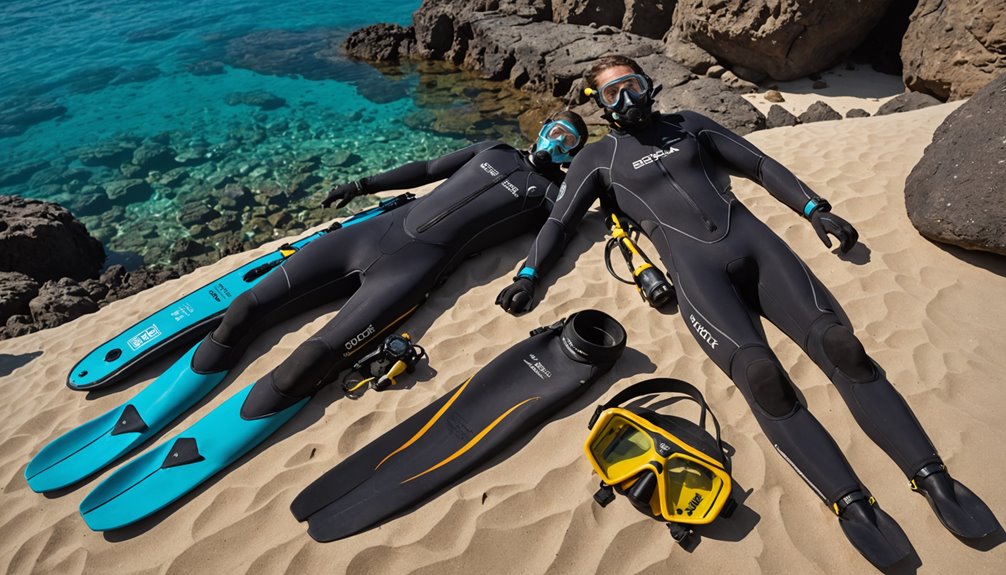
Since the gear you’ll select fundamentally determines your underwater experience, understanding the distinctions between snorkeling and scuba equipment proves essential for safe and effective exploration.
Snorkeling gear remains lightweight and easy to transport, comprising a mask and snorkel, swim fins, and optional thermal protection. This simplicity enables spontaneous diving experiences without extensive preparation.
Scuba diving equipment demands considerably more commitment. You’ll rely on a buoyancy compensator, scuba tank, and regulators to control your breathing underwater. Additionally, you’ll use a dive computer to monitor depth and no-decompression limits, ensuring safety during deeper underwater exploration.
The heavier and requires more preparation nature of scuba gear necessitates proper training and maintenance protocols. Your choice between these setups directly impacts your comfort, freedom, and capacity for underwater discovery.
Underwater Experience and Marine Life Encounters
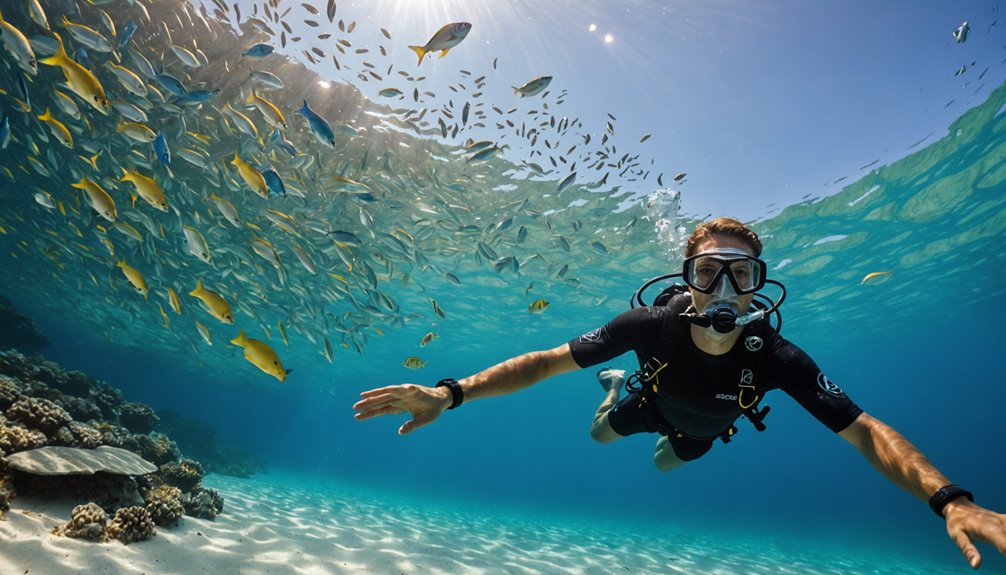
The depth you’ll explore fundamentally shapes what marine life you’ll encounter and how you’ll interact with it.
Snorkeling keeps you at 1-3 feet, where you’ll observe vibrant coral reefs, tropical fish, and sea turtles in their natural habitat. You’ll experience visibility exceeding 30 feet while maintaining surface-level interaction with marine ecosystems.
Scuba diving enables deeper exploration between 12-18 meters, granting access to unique underwater environments, shipwrecks, and larger creatures like sharks. Your dive gear facilitates immersion within species’ habitats. Some locations offer exceptional visibility—Silfra reaches over 300 feet—maximizing your underwater experience.
For beginners, snorkeling provides accessible marine life encounters without extensive training.
Scuba diving demands certification but opens up profound deeper exploration. Both activities at premier destinations like the Great Barrier Reef reveal remarkable biodiversity, empowering you to choose based on your comfort and adventure tolerance.
Making Your Decision: Which Should You Try First
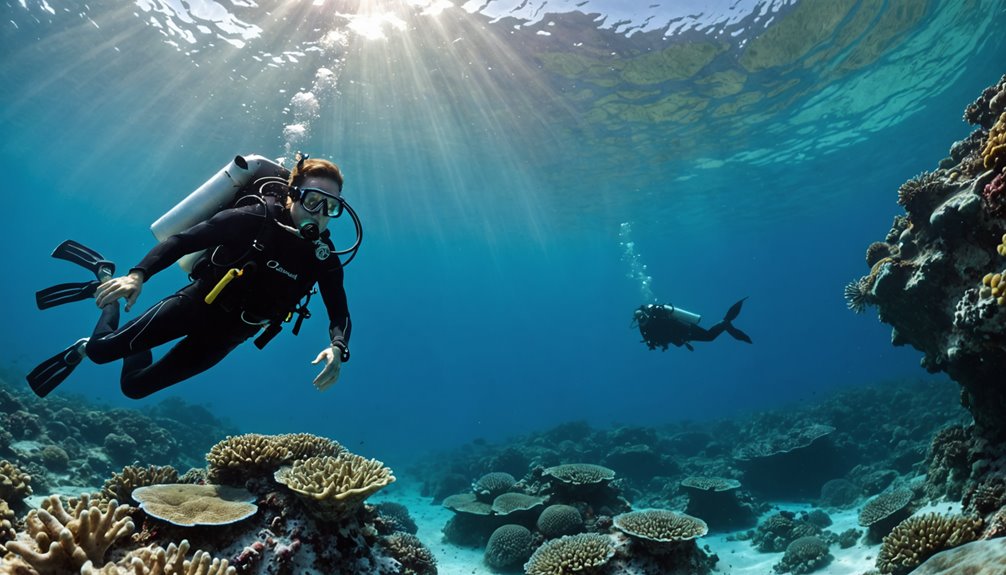
How do you determine which activity best suits your experience level and goals?
Consider these evidence-based factors:
- Accessibility and Training Requirements – Snorkeling demands no certification, while scuba diving requires formal training and underwater competency assessment before you explore deeper environments.
- Financial Investment – Snorkeling costs $20–$60 per session; scuba diving ranges $100–$500+, greatly impacting your budget for marine exploration.
- Time Commitment – Snorkeling sessions last 30–45 minutes, accommodating busy schedules. Scuba diving requires extended preparation and longer underwater duration, demanding greater temporal investment.
- Progressive Skill Development – Snorkeling builds foundational confidence observing shallow-water marine life, establishing the competency base necessary for advancing to scuba diving’s deeper, more complex underwater experiences.
Your liberation lies in understanding these distinctions. Choose snorkeling first for accessible marine encounters, then progress to scuba diving when you’ve gained sufficient confidence and experience steering underwater environments safely.
Frequently Asked Questions
What Is Easier, Snorkeling or Scuba Diving?
Snorkeling’s easier—you’ll master basic techniques quickly without complex scuba diving equipment. You’ll enjoy superior underwater visibility, minimal breathing techniques, and straightforward safety precautions. Try snorkeling first; it’s your liberated gateway to marine life exploration with zero certification demands.
What Is the 120 Rule in Scuba Diving?
You’ll respect the 120 Rule by limiting recreational dives to 120 feet, mastering nitrogen absorption management, consulting dive tables, maintaining proper ascend rates, monitoring air consumption, and completing safety stops to prevent decompression sickness.
Should I Snorkel Before Scuba Diving?
Yes, you’ll benefit tremendously from snorkeling first. You’ll gain water safety awareness, build confidence, and master mask techniques before progressing to scuba diving. This preparation reduces your physical requirements and training costs while enhancing your marine life appreciation and personal readiness for advanced diving certifications.
What Is the First Thing to Buy as a Scuba Diver?
You’ll purchase a well-fitting mask first—it’s non-negotiable scuba gear that guarantees clear underwater breathing visibility. Before you invest in other equipment, complete diving certifications and learn safety procedures. Proper mask selection liberates your underwater exploration.
Conclusion
You’ll find that roughly 70% of recreational divers started with snorkeling, validating its role as the ideal entry point. You’re positioned to assess your comfort level progressively—snorkeling provides immediate gratification with minimal risk, while scuba demands certification and rigorous safety protocols. You’ll maximize your underwater experience by building foundational skills first, ensuring you’re physiologically and psychologically prepared for deeper exploration. This graduated approach markedly reduces incident rates among novice divers.